

Reaching for the nearest couch cushion during a 3am feed feels completely reasonable when you’re exhausted. But that ordinary pillow is almost certainly making things harder, not easier. Dedicated baby propping pillows are engineered to solve very specific physical problems that random household cushions simply cannot address, from bringing your baby to the right height to keeping your spine in a sustainable position across feeds that can last 20 to 45 minutes at a stretch, multiple times a day. What follows is a clear, evidence-based guide to choosing, using, and caring for a propping pillow that genuinely protects both you and your baby.
Table of Contents
- Why pillow support matters for feeding comfort
- Choosing the right baby propping pillow: Features and fit
- Safety first: Updated guidelines for propping pillows in 2026
- Everyday best practice: Using and caring for your propping pillow
- The uncomfortable truth: Why experience doesn’t prevent common mistakes
- Explore ergonomic, safe feeding options with Zabbidoo
- Frequently asked questions
Key Takeaways
| Point | Details |
|---|---|
| Proper support reduces strain | A dedicated baby propping pillow relieves back, neck, and arm fatigue much more effectively than regular pillows. |
| Safety guidelines matter | Always use propping pillows only for supervised, awake feeds—never for sleep or lounging. |
| Features make a difference | Choose pillows with firmness, fit, and shape suited to your feeding style for maximum comfort and safety. |
| Stay updated on standards | Regulations change; always check your pillow meets the latest recommendations for safe use. |
Why pillow support matters for feeding comfort
Most new mums assume that any soft surface under the baby will do the job. The reality is quite different. Ergonomic breastfeeding comfort is built on a specific principle: the baby should come up to the breast, not the other way around. When you hunch forward to meet a baby lying too low, you place enormous strain on your neck, upper back, shoulders, and wrists, often without realising it until the pain becomes chronic.
Nursing pillows, often U-shaped or wedge designs, elevate the baby to nipple height, enabling upright posture for mothers and reducing the hunching that causes back, neck, shoulder, and wrist strain during feeding. That single ergonomic shift changes everything. Your arms are no longer bearing dead weight. Your shoulders drop away from your ears. Your lower back has a fighting chance of staying supported.
Research backs this up firmly. Breastfeeding pillows significantly reduce maternal discomfort compared to feeding with no pillow at all. Occupational therapists who specialise in feeding ergonomics report that musculoskeletal strain is one of the leading physical reasons mothers cut breastfeeding short, often well before they intended to stop.
Common physical complaints mothers experience without proper support include:
- Persistent neck and upper shoulder aching from leaning forward
- Wrist pain and tingling from awkward arm angles (sometimes mistaken for carpal tunnel syndrome)
- Lower back fatigue from poor seated posture over extended feeds
- Nipple soreness worsened by inconsistent latch caused by baby shifting downward
“Good support during feeding isn’t a luxury. It’s what makes sustainable feeding physically possible for most mothers over weeks and months, not just days.”
Support pillows for nursing comfort also benefit the baby. When your body is relaxed and positioned well, your baby achieves a deeper, more stable latch. Feeding becomes less frustrating for both of you.
Pro Tip: If you notice yourself tensing your shoulders or tilting your head during feeds, your pillow probably isn’t lifting your baby high enough. The baby’s mouth should naturally align with your nipple without you needing to lean.
With the need for better support made clear, let’s look at what actually sets a baby propping pillow apart from ordinary cushions.
Choosing the right baby propping pillow: Features and fit
Not all nursing pillows are created equal, and understanding the differences before you buy will save you a great deal of frustration. The market offers several main shapes, each designed with different feeding positions in mind.
The most common types are:
- U-shaped pillows wrap around your waist and provide support on both sides, making them well suited to cradle and cross-cradle holds. They’re particularly popular with first-time mothers because of their stability.
- Wedge pillows tuck under the baby at an angle and are compact, making them good travel options. They suit mothers who prefer a more minimal setup.
- C-shaped pillows curve around one side of your body and work well for the football hold, which is especially useful after a caesarean section or for mothers of twins.
- Adjustable strap pillows attach around your waist, preventing the pillow from sliding away during feeds. These are particularly helpful for mothers who are petite or larger, as adult waist sizing varies enormously.
When comparing features, feeding pillow design trends consistently point to firmness as the single most important quality. A soft, collapsible pillow might feel comfortable in your hands at the shop, but it will compress under your baby’s weight and defeat the purpose entirely. Firm support prevents the baby from sliding, while adjustable straps fit adult waists for ergonomic positioning across holds like cradle, cross-cradle, and football. Some designs also include arm rests or safety barriers that further stabilise the baby.
| Feature | Why it matters | What to look for |
|---|---|---|
| Firmness | Keeps baby elevated and prevents sliding | High-density foam or compression-resistant fill |
| Height | Determines whether baby reaches nipple level | At least 15 to 18cm lift recommended |
| Waist fit | Affects stability and posture for the mother | Adjustable strap or sizeable opening |
| Cover fabric | Breathability and ease of cleaning | Removable, washable cover, natural fibres preferred |
| Shape | Suits different holds and body types | Match to your preferred feeding position |
The multi-use nursing pillow benefits extend well beyond feeding. Quality pillows transition to tummy time support, infant floor play, and assisted sitting as your baby grows, making them a practical long-term investment rather than a single-purpose purchase.
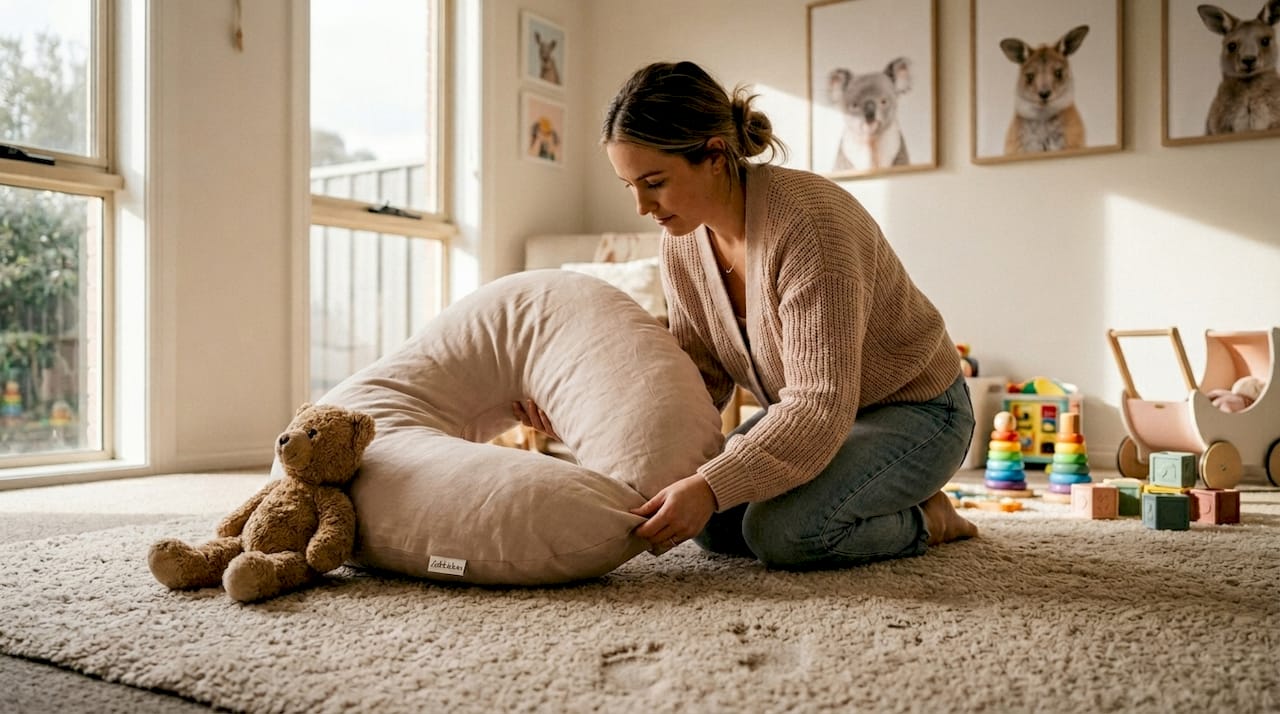
Pro Tip: When testing a pillow in store, press down firmly with your hand and hold for five seconds. If it compresses more than a centimetre or two and doesn’t bounce back quickly, it will collapse under your baby’s weight within weeks.
Pillow shape and posture are directly linked. The wrong shape for your preferred hold can actually worsen your position rather than improve it, so take time to think about how you plan to feed before choosing.
Now that you know the main features, it’s vital to understand the latest safety guidelines, especially with new standards that affect every mum’s purchase decision.
Safety first: Updated guidelines for propping pillows in 2026
This is where the conversation becomes genuinely serious. Baby propping pillows have been at the centre of significant safety discussions, particularly around their misuse as sleep props.
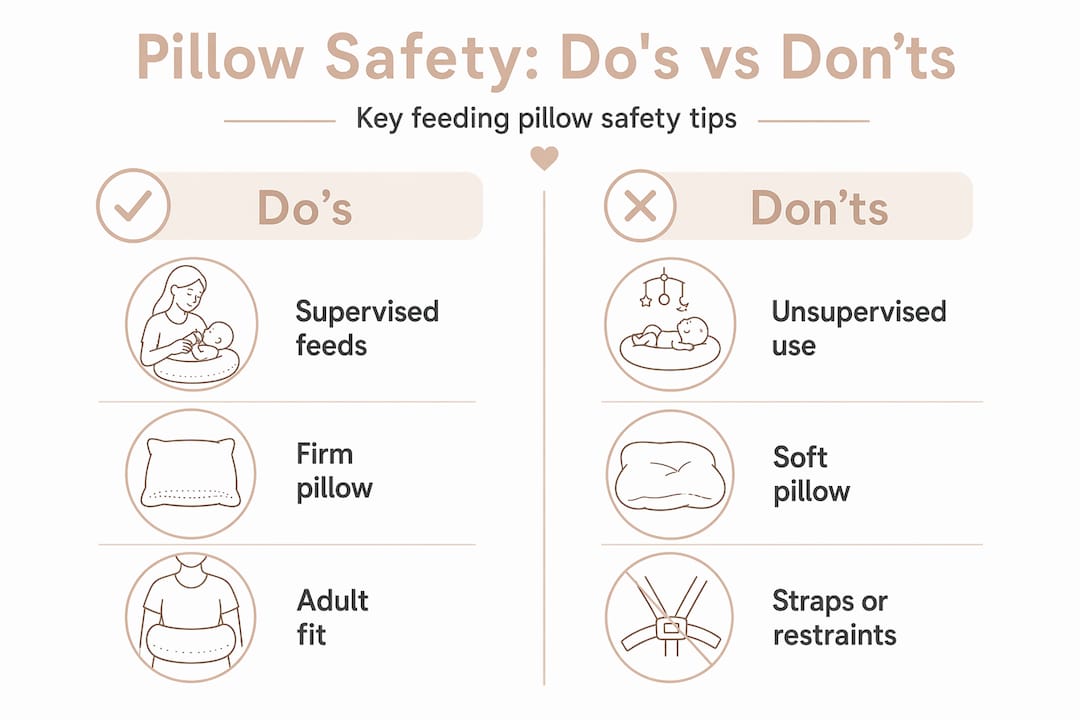
CPSC 2025 standards now mandate firmness to avoid airway occlusion, wider adult-fit openings, no infant straps or restraints, and permanent suffocation and sleep warnings. These standards were introduced in direct response to more than 150 deaths linked to misuse of nursing pillows as infant sleep surfaces. That is not a statistic to skim past.
The core issue is marketing confusion. Some products have been sold and labelled as “loungers” or “infant positioners,” blurring the line between a supervised feeding aid and a safe sleep surface. They are not the same thing. A nursing pillow is designed for use during awake, supervised feeds only.
Unsupervised use of nursing pillows raises SUID (Sudden Unexpected Infant Death) risk significantly, as soft objects in a baby’s sleep environment are a known hazard. The AAP and CPSC are both unambiguous on this point: these products are not sleep products, full stop.
Here is a practical overview of safe and unsafe use:
| Do | Don’t |
|---|---|
| Use during supervised, awake feeding | Leave baby on the pillow unsupervised |
| Store the pillow away after each feed | Use as a sleep prop or overnight positioner |
| Check for firmness and condition regularly | Purchase pillows without current safety certifications |
| Follow manufacturer washing instructions | Use pillows that have gone soft or lumpy |
| Read all warning labels before first use | Ignore marketing language that suggests “lounging” use |
Safer feeding in 2026 means being an informed consumer. Look for products that clearly state they comply with CPSC 2025 standards and carry permanent warning labels. If a product’s marketing is ambiguous about whether it can be used for sleep, treat that as a red flag.
Feeding pillow firmness is also a safety issue, not just a comfort one. A pillow that compresses too easily can shift and partially obstruct an infant’s airway if a baby slumps against it unsupervised, which is precisely why the new standards place so much emphasis on compression resistance.
With safety in sharp focus, the next step is simple: using and caring for your pillow the right way, every time.
Everyday best practice: Using and caring for your propping pillow
Good habits established early make every feed more consistent and less stressful. Here is a step-by-step approach to building a safe, ergonomic nursing routine:
- Set yourself up before the feed begins. Sit in a supportive chair with your feet flat on the floor. Position the pillow around your waist and secure any adjustable strap before you pick up your baby.
- Place your baby, then relax your arms. Let the pillow carry the baby’s weight. Your arms should guide and stabilise, not hold your baby up.
- Check your posture mid-feed. Notice if your shoulders have crept up or if you’re leaning forward. Adjust the pillow height with a rolled towel underneath if needed.
- Remove the pillow as soon as the feed ends. Per AAP and CPSC guidance, never leave a baby on the pillow unsupervised, even briefly.
- Inspect the pillow after each feed. Look for spit-up, compression wear, or damage to seams.
Regular cleaning is essential for hygiene. Your nursing pillow care tips checklist should include:
- Removing and washing the cover after every spit-up incident and at least twice a week regardless
- Checking the insert for odour, lumping, or permanent compression
- Following the manufacturer’s instructions on washing the inner fill
- Storing the pillow in a clean, dry location when not in use, away from pet hair and damp environments
- Replacing the pillow if it no longer holds its shape under baby’s weight
Pro Tip: Keep a spare pillow cover on rotation so you never have to skip a feed waiting for laundry to dry. Covers in breathable natural fibres like French flax linen also dry faster than synthetic alternatives.
Your nursing pillow setup steps will need adjustment as your baby grows. A newborn at three kilograms requires different positioning to a four-month-old at six kilograms. Periodically reassess whether the pillow is still lifting your baby to the right height, or whether it needs supplementing. Your pillow hygiene guide is equally worth revisiting as routines change.
Understanding how to use your pillow every day is just the start. Let’s look at why even experienced mums sometimes get caught out by marketing or forgotten risks.
The uncomfortable truth: Why experience doesn’t prevent common mistakes
Second-time mothers often assume they’ve got this sorted. They’ve been through it once. They know the basics. But this confidence can actually work against them, because it lowers the guard exactly when the stakes are still high.
The most common trap is convenience. Exhausted mums, even experienced ones, will reach for whatever is nearby at 2am. That “just this once” becomes a habit. The pillow stays in the cot. The baby dozes off on it. Nothing goes wrong tonight, so the risk feels abstract. This is precisely how accidents happen, gradually and invisibly.
Marketing language makes this worse. The word “lounger” implies something passive and relaxed, not a supervised-only feeding aid. When a product looks beautiful on a lifestyle blog with a drowsy baby nestled in it, it sends a completely different message to the safety warnings printed in small text on the tag. AAP, Dr. Harvey Karp, and other experts consistently endorse supervised feeding use while warning that the same products pose serious risk when used for sleep or lounging.
Friends and family add another layer of confusion. Well-meaning relatives will tell you they used a rolled blanket, or a regular cushion, or nothing at all, and their children are fine. That’s survivorship bias, not safety advice. The fact that something didn’t cause harm doesn’t mean it wasn’t risky.
Our view at Zabbidoo is that the solution isn’t more anxiety. It’s clearer information and better products. When a pillow is firm enough, safe enough, and comfortable enough to do exactly what it’s supposed to do, the temptation to improvise disappears. You don’t reach for a couch cushion when you have something that genuinely works. Good ergonomic design removes the problem before it starts. Support pillows transform comfort not just physically, but practically. They reduce the small daily frustrations that lead to shortcuts.
Trust your instincts as a mother. But always double-check your safety choices against current evidence, not just anecdote.
Explore ergonomic, safe feeding options with Zabbidoo
If this article has made one thing clear, it’s that the pillow you choose genuinely matters for both comfort and safety. Zabbidoo was built around this exact realisation.

Our nursing pillow sits 18cm high to bring your baby to you, not the other way around. It’s built with compression-resistant fill so it holds its shape feed after feed, covered in breathable French flax linen that washes easily and stays cool against skin. Everything about it is designed to make the right choice the easy choice. Explore our full range at Zabbidoo, including accessories and resources created specifically for Australian mothers navigating those early feeding months. Because average pillows collapse. Zabbidoo supports.
Frequently asked questions
Are baby propping pillows safe to use overnight?
No. Baby propping pillows should never be used for sleep or left with a baby unsupervised, as they pose a serious suffocation risk in sleep environments.
What should I look for when choosing a baby propping pillow?
Look for firmness, adjustable fit, adult waist compatibility, and a shape that suits your preferred feeding position. Firm support with adjustable straps allows safe ergonomic positioning across different holds like cradle, cross-cradle, and football.
How do baby propping pillows help with breastfeeding?
They bring your baby up to nipple height so you don’t hunch forward. Nursing pillows reduce back, neck, shoulder, and wrist strain by enabling an upright maternal posture throughout the feed.
How often should I clean my nursing pillow?
Remove and wash the cover after every spit-up incident and at least twice a week as a routine. Always check the manufacturer’s label before washing the inner fill.
Is it safe to use second-hand or hand-me-down propping pillows?
Only if the pillow is firm, undamaged, and meets current CPSC 2025 standards, which require firmness, adult-fit openings, and permanent suffocation warnings. When in doubt, buy new.