

Most mums assume that buying a nursing pillow means feeding becomes easier and safer overnight. The reality is more layered than that. When used correctly and under supervision, a quality nursing pillow genuinely reduces physical strain and supports a better latch. But over 150 infant deaths were linked to nursing pillow misuse between 2010 and 2022, making this one of the most underestimated risks in the newborn period. This guide cuts through the confusion with practical advice, 2025 safety standards, and honest expert insights, so you can feed with confidence and keep your baby safe.
Table of Contents
- Understanding the role of baby pillows in feeding
- Current safety risks and common pitfalls
- What’s new for 2025–2026: Updated nursing pillow standards explained
- Alternatives and expert opinions: Do you really need a nursing pillow?
- Our take: Why comfort matters but safe habits are non-negotiable
- Support your feeding journey with safe, quality pillows
- Frequently asked questions
Key Takeaways
| Point | Details |
|---|---|
| Never for sleep | Nursing pillows must only be used during active, supervised feeding to avoid suffocation risk. |
| 2025 standards matter | Buy pillows with firmer fill, no straps, and clear safety warnings for best protection. |
| Pillows are optional | Many mums find comfort with pillows, but expert guidance and alternatives can be just as effective. |
| Comfort equals confidence | Using safe, ergonomic support makes breastfeeding easier while reducing strain on your body. |
Understanding the role of baby pillows in feeding
A nursing pillow is not just a comfort accessory. It is a functional feeding tool designed to bring your baby to the right height, reduce the strain on your back, neck, and wrists, and support a consistent latch. Most pillows come in three shapes, each serving a slightly different purpose.
- U-shaped pillows wrap around your waist and support the full length of your baby’s body, making them popular for cradle and football holds.
- C-shaped pillows sit along one side and offer a more compact option, useful for mums with smaller frames.
- O-shaped pillows provide a circular ring of support and tend to suit bottle feeding or tummy time as your baby grows.
U and C-shaped pillows wrap around the waist, supporting your baby’s full body weight and enabling feeding positions like cradle and football hold, with adjustments available for different body types.
Beyond shape, the real value of a nursing pillow is in what it prevents. Without adequate support, mums tend to hunch forward to bring their body to their baby, which loads the lumbar spine and strains the neck and shoulders during feeds that can last 20 to 45 minutes. A well-designed pillow reverses that dynamic by bringing your baby up to your breast rather than the other way around.
Some situations call for a nursing pillow more than others. Recovering from a caesarean section, for example, makes it uncomfortable to hold dead weight against your abdomen. Feeding twins simultaneously is almost impossible without bilateral support. And for longer feeds during growth spurts, arm fatigue becomes a real issue without something to take the load.
That said, not every mum needs one. Some lactation consultants prefer teaching clients pillow-free first, so they are not dependent on a prop to achieve a good latch. If you are wondering how to get the most out of yours from day one, setting up a nursing pillow correctly makes a noticeable difference.
“A nursing pillow, when used well, should feel like an extra pair of arms. It holds your baby in position so your body can relax rather than compensate.”
Pro Tip: Place your pillow flat against your stomach before latching your baby, not after. Sliding the pillow into position mid-feed disturbs the latch and increases the risk of a poor position.
For a full breakdown of how these pillows reduce discomfort across multiple feeding stages, the nursing pillow benefits extend well beyond the newborn phase.
Current safety risks and common pitfalls
Here is where things get critical. The biggest danger with nursing pillows is not using them during feeding. It is what happens when they are left in use after feeding ends.
The AAP and CPSC warn clearly against using nursing pillows for sleep due to suffocation and entrapment risks. Over 150 infant deaths were linked to misuse between 2010 and 2022, a figure that shocked many paediatric safety advocates who believed current warning labels were sufficient.
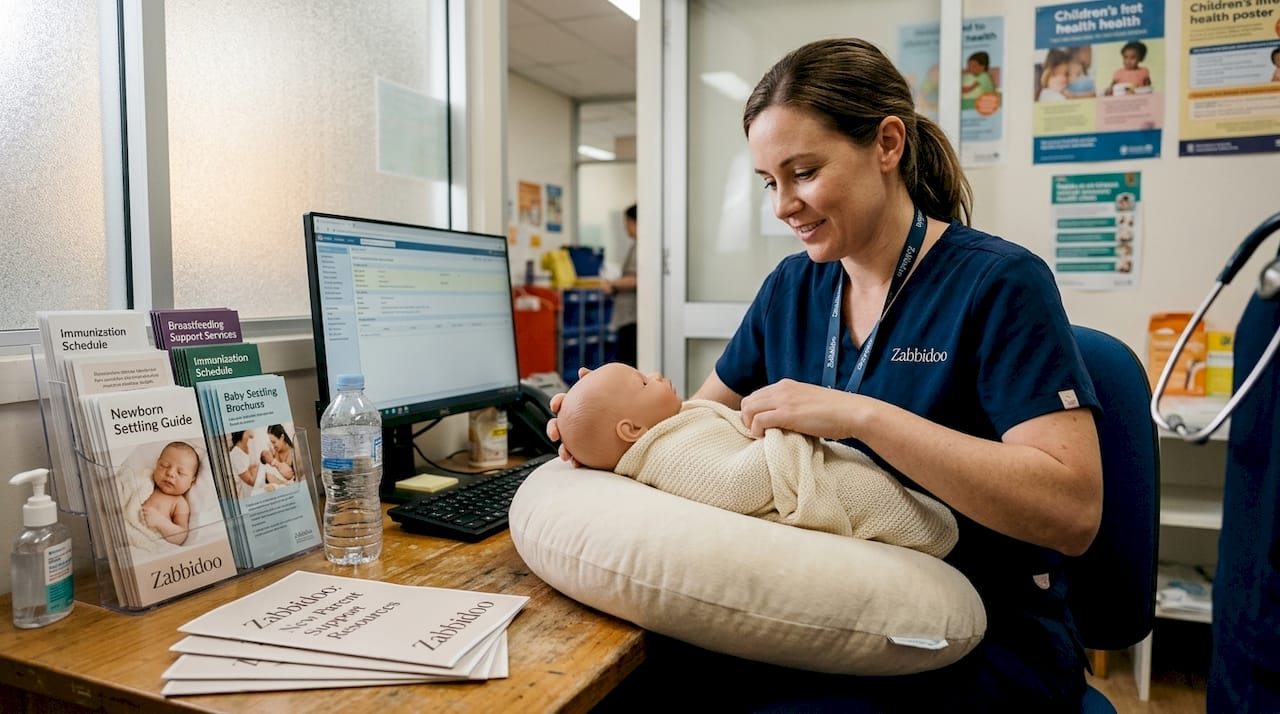
The mechanics of why this is so dangerous come down to infant anatomy. Newborns cannot reposition their heads if their airway becomes obstructed. A pillow that shifts even slightly during sleep can press against a baby’s face with enough force to restrict breathing, without triggering any obvious alarm.
Common mistakes mums make include:
- Leaving a baby on the pillow when they fall asleep at the breast, assuming close proximity makes it safe.
- Using soft, over-stuffed pillows that allow a baby’s face to sink in.
- Feeding in a reclining armchair and drifting off while the baby remains on the pillow.
- Ignoring manufacturer warning labels or assuming warnings are legal boilerplate rather than clinical guidance.
“The most common scenario we see is not neglect. It is exhaustion. A mum feeds in the early hours, baby falls asleep, and she does too, without removing the pillow.”
This is also where reducing mum’s physical strain matters beyond comfort. When you are not fighting your own fatigue and body tension during feeds, you stay alert longer, which is a genuine safety factor.
For full safe sleep guidance from the American Academy of Paediatrics, which remains the most cited standard internationally, including in Australian paediatric practice, the rules are consistent: flat, firm surfaces only for infant sleep, with no pillows, soft objects, or loose bedding.
The essential rules to follow every single time:
- Always supervise your baby during pillow-assisted feeds.
- Remove the pillow the moment your baby finishes feeding or shows signs of drowsiness.
- Never prop a pillow in a pram, car seat, or cot.
- Check your pillow regularly for compression or flattening, which signals it is no longer providing safe, stable support.
What’s new for 2025–2026: Updated nursing pillow standards explained
Regulations have caught up with the data. The 2025 CPSC standards represent the most significant update to nursing pillow safety rules in over a decade, and many mums shopping right now are not yet aware of what to look for.
The new 2025 CPSC standards require firmer pillow fill, wider openings to prevent face obstruction, removal of infant straps, and prominent warnings against using pillows for sleep or lounging.
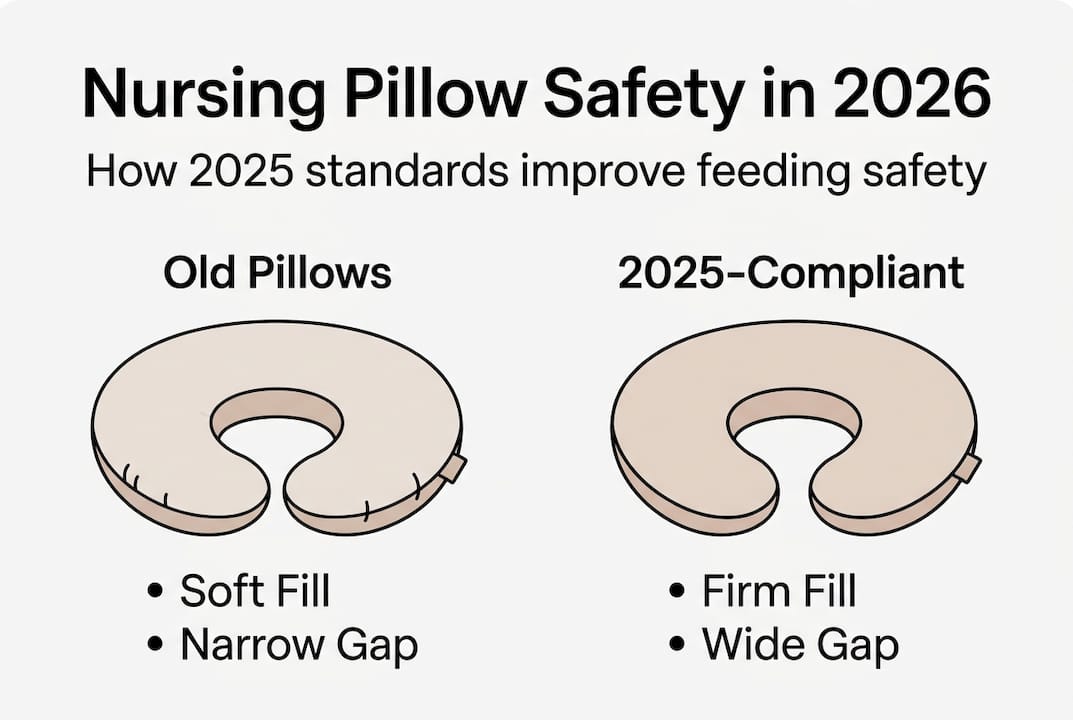
Here is a summary of the key changes:
| Feature | Pre-2025 pillows | 2025-compliant pillows |
|---|---|---|
| Fill firmness | Variable, often soft | Firm fill required |
| Opening width | Narrow openings common | Wider openings mandated |
| Infant straps | Sometimes included | Prohibited |
| Warning labels | Small, often hidden | Prominent, mandatory |
| Lounging design | Common marketing feature | No longer permitted |
What this means practically is that pillows previously marketed as “infant loungers” or “newborn nappers” are no longer compliant. If a pillow has a strap meant to keep your baby in place, or if it is shaped to encourage lying flat in a curved position, it does not meet current standards.
When shopping, look for these markers of compliance:
- Clear warning against unsupervised use on the packaging.
- No infant restraint straps or buckles.
- Firm resistance when you press into the surface with your hand.
- Breathable fabric with a wide, open centre.
How a pillow breathes is just as important as how it supports. You can read more about airflow and pillow comfort and why fabric choice directly affects both safety and the feeding experience. For day-to-day upkeep, guidance on caring for your nursing pillow helps you maintain shape and hygiene long-term.
Pro Tip: Press firmly into the centre of any pillow you are considering. If your hand sinks more than a couple of centimetres, the fill is too soft to meet 2025 standards and too soft to safely support your baby during feeding.
Alternatives and expert opinions: Do you really need a nursing pillow?
The honest answer is: it depends. And that is not a hedge, it is the actual clinical position.
Lactation consultants are divided on whether nursing pillows are essential. Many IBCLCs prefer teaching a pillow-free technique first, so the mum can feed in any setting without being reliant on a prop. Safety risks, they note, only arise from misuse, not from the pillow itself.
For those who want to explore IBCLC pillow-free methods, the core principle is building arm, shoulder, and positional awareness so your body provides the support naturally.
That said, certain situations genuinely benefit from a well-designed pillow:
- Post-surgical recovery, where placing weight near an incision causes pain.
- Twin feeding, where both hands need to be free or positioned simultaneously.
- Extended feeding sessions, where arm fatigue causes positional drift and a weakening latch.
- Mums with hypermobility or joint conditions, who need external stabilisation to maintain a consistent hold.
Here is how the main options compare:
| Support option | Cost | Portability | Latch support | Stability |
|---|---|---|---|---|
| Quality nursing pillow | Medium to high | Moderate | High | High |
| Rolled towel | Near zero | High | Low to medium | Low |
| Standard cushion | Low | Moderate | Medium | Medium |
| Pillow-free technique | Zero | Highest | Variable | Depends on mum |
For mums who want the benefits of adjustable lift without committing to one design, height-adjustable pillow options provide flexibility as your baby grows. And before you settle on any model, testing pillow stability gives you a practical framework for evaluating whether a pillow will actually hold its shape under real feeding conditions.
Our take: Why comfort matters but safe habits are non-negotiable
We have spoken with a lot of mums. And the pattern we see most often is this: safe habits are strongest in the newborn weeks, when everything feels new and parents are vigilant. They start slipping around weeks six to ten, when routines feel established and fatigue is at its peak. That is precisely when the risk is highest.
Some mums grow out of needing a nursing pillow entirely by three or four months. Their bodies adapt, their babies get stronger at latching, and the pillow becomes optional. That is a great outcome. What never becomes optional is removing the pillow once feeding ends.
The biggest trap is the “just this once” mindset. One drowsy feed in the armchair with the pillow still in place is all it takes. Comfort and safety are not in opposition, but comfort can quietly erode vigilance if you let it.
There is also real confidence that comes from knowing you are doing this safely. Mums who understand the risks and actively manage them tend to feel more in control of the feeding experience overall. For insight into what holds up over time, pillow durability lessons are worth reading before you invest. Trust your instincts, and check for updated safety guidance regularly because the standards do evolve.
Support your feeding journey with safe, quality pillows
Ready for confident, comfortable feeding without second-guessing safety? Zabbidoo’s nursing pillows are designed to meet current standards without compromising on the support that makes feeding genuinely easier. With an 18cm lift, compression-resistant fill, and breathable French flax linen, Zabbidoo’s nursing pillow range is built to bring your baby to you, not the other way around.

Every pillow ships with clear, honest safety information because we believe informed mums are confident mums. Explore the full range and, as a little welcome, grab a free pacifier clip chain with your order. Good feeding starts with the right support, and we are here to help you find it.
Frequently asked questions
Can my baby sleep on a nursing pillow if I’m watching closely?
No. Even with supervision, suffocation risks remain because infants cannot reposition their airway if it becomes obstructed. Babies should always be moved to a firm, flat surface for sleep.
How do I know if a pillow is compliant with 2025 standards?
Look for firm fill, wide openings, no infant straps, and prominent safety warnings on the packaging. 2025 CPSC requirements prohibit lounging designs and any restraint features, so if a pillow has those, it does not meet current standards.
Are there safe alternatives if I don’t want to use a nursing pillow?
Yes. Rolled towels or firm cushions can provide temporary support, and some mums feed successfully without any prop once they have practised their technique with an IBCLC.
How often should I clean my nursing pillow?
Wash the cover weekly and inspect the inner pillow regularly for compression or flattening. A pillow that has lost its firmness should be replaced, as it no longer provides safe, stable support during feeds.
Recommended
- How to test feeding pillow stability: safe breastfeeding – Zabbidoo
- Why a multi-use nursing pillow eases feeding discomfort – Zabbidoo
- Step-by-step nursing pillow setup for comfortable feeding – Zabbidoo
- Testing nursing pillows explained: Safe support for mums – Zabbidoo
- Healthy baby essentials checklist: Sustainable choices — Hello Charlie