

Most new mums toss their nursing pillow into the washing machine without a second thought. It feels logical. It looks like a pillow, so surely it washes like one? The reality is more nuanced. Different materials, fills and cover types each need their own approach, and getting it wrong can shorten your pillow’s life, affect its firmness, or leave behind residue that irritates your baby’s skin. With updated safety regulations now shaping how nursing pillows are designed and used, understanding proper care has never been more relevant. This guide walks you through everything from daily maintenance to stain emergencies, so your pillow stays clean, safe and supportive throughout your feeding journey.
Table of Contents
- Why nursing pillow care matters
- Step-by-step cleaning guide for nursing pillows
- Spot cleaning and handling tough stains
- Safety tips: Post-2025 pillow regulations and best use
- Practical tips for extending lifespan and comfort
- Our take: What most mums miss about nursing pillow care
- Find your perfect nursing pillow and accessories
- Frequently asked questions
Key Takeaways
| Point | Details |
|---|---|
| Check care labels first | Always read pillow care instructions to prevent damage or loss of shape. |
| Spot clean straight away | Handle stains and spills promptly to keep your pillow clean and safe for baby use. |
| Comply with safety rules | Use only regulation-compliant pillows for supervised feeding and never for sleeping. |
| Rotate and refresh regularly | Regularly air out, sun-dry and check your nursing pillow to extend its lifespan and comfort. |
Why nursing pillow care matters
A nursing pillow is not just a comfort item. It is a piece of baby equipment that sits close to your newborn’s face during every feed. That proximity makes hygiene a genuine safety concern, not just a preference. Milk spills, spit-up, sweat and skin contact happen constantly, and without regular cleaning, bacteria and mould can build up inside the fill or on the cover fabric.
“Proper pillow firmness and cleanliness are essential for baby safety and comfort.”
Beyond hygiene, a well-maintained pillow simply works better. When the fill stays firm and evenly distributed, your baby is held at the right height and angle for a good latch. When the cover is clean and fresh, you are more likely to use the pillow consistently, which means better posture for you and less strain on your neck, back and wrists during feeds.
Poor maintenance creates a cascade of problems. A pillow that has been machine washed incorrectly may lose its shape and compress under your baby’s weight. A flat pillow forces you to hunch forward, which is exactly the posture that causes the aches and fatigue so many breastfeeding mums experience. Choosing from quality nursing pillow options is only the first step. Keeping that pillow in good condition is what sustains the support over weeks and months.
Here is a quick summary of what is at stake when care is neglected:
- Hygiene risks: Bacteria, mould and allergens can accumulate in damp or soiled fill material
- Skin irritation: Residual cleaning products or trapped moisture can cause rashes on your baby’s sensitive skin
- Loss of firmness: Incorrect washing breaks down fill structure, reducing the height and support your pillow provides
- Shortened lifespan: Rough handling or heat damage degrades fabric and fill faster than normal use would
- Safety concerns: A deformed or compressed pillow may not meet firmness standards required for safe feeding use
With a clear understanding of why pillow care is important, let’s look at practical cleaning steps.
Step-by-step cleaning guide for nursing pillows
Before you clean anything, check the care label. This sounds obvious, but many mums skip it. The label tells you whether the cover is removable, what temperature is safe, and whether the insert can be washed at all. Ignoring it is the fastest way to ruin an otherwise good pillow.
Here is a practical breakdown of cleaning by frequency:
- Daily maintenance: After each feed, wipe down the cover with a damp cloth if there are minor drips or residue. A quick wipe takes thirty seconds and prevents build-up.
- Weekly deep clean: Remove the cover and wash it according to the label. Most fabric covers handle a gentle machine cycle in cold or warm water. Lay flat or hang to dry rather than using a dryer, which can shrink fabric or damage waterproof linings.
- Insert care: Most inserts should not go in the washing machine. Spot clean immediately for spills or stains; brands like Leachco recommend no machine wash for inserts to preserve their shape and firmness.
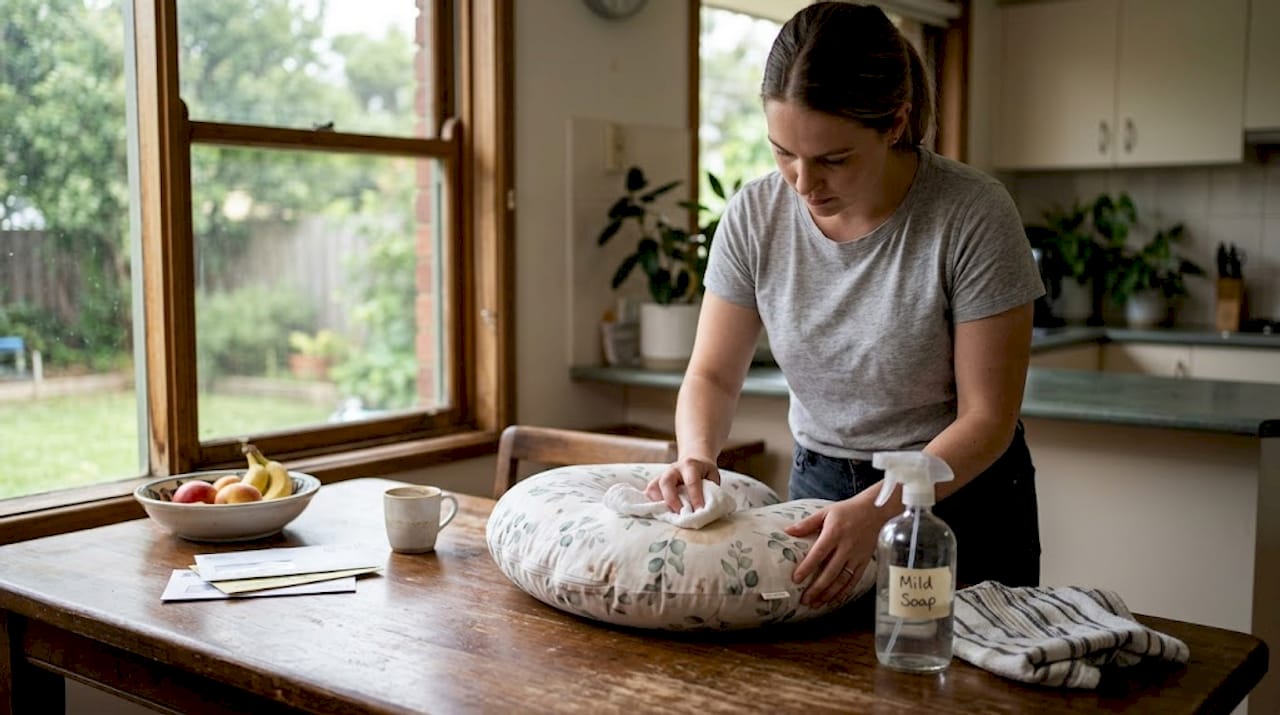
- Emergency spills: Act fast. Blot (do not rub) the area with a clean cloth, then treat with mild soap and cold water. Rinse thoroughly and allow to air dry completely before using again.
- Secondhand pillows: Give the cover a full wash before first use. If the insert shows any signs of odour, staining or compression, consider replacing it rather than attempting a deep clean.
| Pillow part | Cleaning method | Frequency |
|---|---|---|
| Removable cover | Machine wash, gentle cycle | Weekly or as needed |
| Insert (washable) | Hand wash or gentle cycle | Monthly or after major spills |
| Insert (non-washable) | Spot clean only | As needed |
| Waterproof liner | Wipe with damp cloth | Daily or after spills |
Pro Tip: Always dry your pillow insert fully before putting the cover back on. Even slight dampness trapped inside can lead to mould growth within days, especially in humid climates like many parts of Australia.
Now you know how key care is, so let’s dig into the exact cleaning process for your pillow.
Spot cleaning and handling tough stains
After understanding routine cleaning, you may need specialised spot treatment for unpredictable spills or stains. Milk, formula and spit-up are protein-based stains, and they respond best to cold water rather than hot. Heat sets protein stains permanently, so always start cold.
For fresh spills, follow these steps:
- Blot immediately with a clean, dry cloth to absorb as much liquid as possible before it soaks in
- Apply cold water to dilute the stain, then blot again
- Use a small amount of mild, fragrance-free soap and work it gently into the fabric with your fingertip
- Rinse thoroughly with cold water, making sure no soap residue remains
- Air dry completely before using the pillow again, ideally in a well-ventilated spot or in indirect sunlight
Secondhand pillows may need thorough spot cleaning or washing the cover, with extra caution for inserts that cannot be machine washed. If you have inherited or purchased a used pillow, inspect the insert carefully for any signs of mould, persistent odour or significant compression before deciding whether to keep it.
Here is a quick comparison to help you understand washability across pillow types:
| Pillow type | Cover washable | Insert washable | Spot clean only |
|---|---|---|---|
| Standard with removable cover | Yes | Sometimes | Insert if needed |
| All-in-one (no removable cover) | No | No | Entire pillow |
| Delicate fabric (e.g. linen) | Gentle cycle only | No | Insert |
| Waterproof-lined cover | Yes (wipe or gentle wash) | No | Insert |
Pro Tip: Avoid using enzyme-based stain removers directly on the insert. They can break down certain fill materials and may leave a chemical residue that is difficult to fully rinse out. Stick to mild soap and water for anything that touches your baby’s skin zone.
Always ensure the pillow is bone dry before your next feed. A damp pillow is not just uncomfortable. It is a breeding ground for bacteria and mould, which defeats the purpose of cleaning it in the first place.
Safety tips: Post-2025 pillow regulations and best use
Spot cleaning is crucial for hygiene, but responsible use is equally vital for safety. In recent years, infant product safety has come under much closer scrutiny, and nursing pillows are no exception. Post-2025 CPSC regulations require firmer pillows to prevent suffocation, with use restricted to supervised feeding only.
This is a significant shift. Softer, squishier pillows that were once popular are now considered a risk because a baby who slips or rolls can become trapped against a surface that does not provide enough resistance to allow them to breathe freely.
Here is what the updated guidelines mean for everyday use:
- Never use a nursing pillow for unsupervised sleep. Even a brief nap on the pillow without a parent present is not safe
- Do not use the pillow as a lounger or prop. It is designed for active, supervised feeding sessions only
- Check firmness regularly. A pillow that has lost significant loft or compresses easily under light pressure may no longer meet safety standards
- Look for compliance labelling when buying new pillows, particularly if purchasing online from international retailers
- Replace worn pillows promptly. A degraded pillow is both a safety risk and a comfort issue
When shopping for a new pillow, choosing pillows compliant with regulations gives you confidence that the product has been designed with current safety standards in mind. Firmness, height and material quality all factor into compliance, and they also directly affect your comfort and your baby’s latch.
Practical tips for extending lifespan and comfort
With safety rules covered, let’s focus on making your nursing pillow last and stay comfy day after day. A quality nursing pillow is an investment, and with the right habits, it can serve you well for the full duration of your breastfeeding journey and potentially beyond, into tummy time and supported sitting.
Follow these steps to get the most out of your pillow:
- Rotate the pillow regularly. If your pillow has a directional shape, rotate it so wear is distributed evenly across the fill rather than concentrated in one spot.
- Sun-dry when possible. Placing your pillow in indirect sunlight after cleaning helps kill residual bacteria naturally and refreshes the fill without heat damage.
- Inspect the shape monthly. Press down on the pillow with your palm. If it compresses more than a centimetre or two and does not spring back, the fill may need replacing or the pillow may be past its useful life.
- Store it properly between uses. Keep the pillow in a clean, dry spot away from direct sunlight when not in use. A breathable cotton bag protects it from dust without trapping moisture.
- Freshen between washes. Sprinkle a small amount of bicarbonate of soda on the cover, leave for fifteen minutes, then brush off. This absorbs odours without any moisture or chemicals.
Gentle care and following use guidelines are repeatedly emphasised across expert sources, and for good reason. Consistent small habits make a far bigger difference than occasional deep cleans. You can also look into protecting your purchase from the moment it arrives, which is especially worth considering for premium materials like French flax linen.
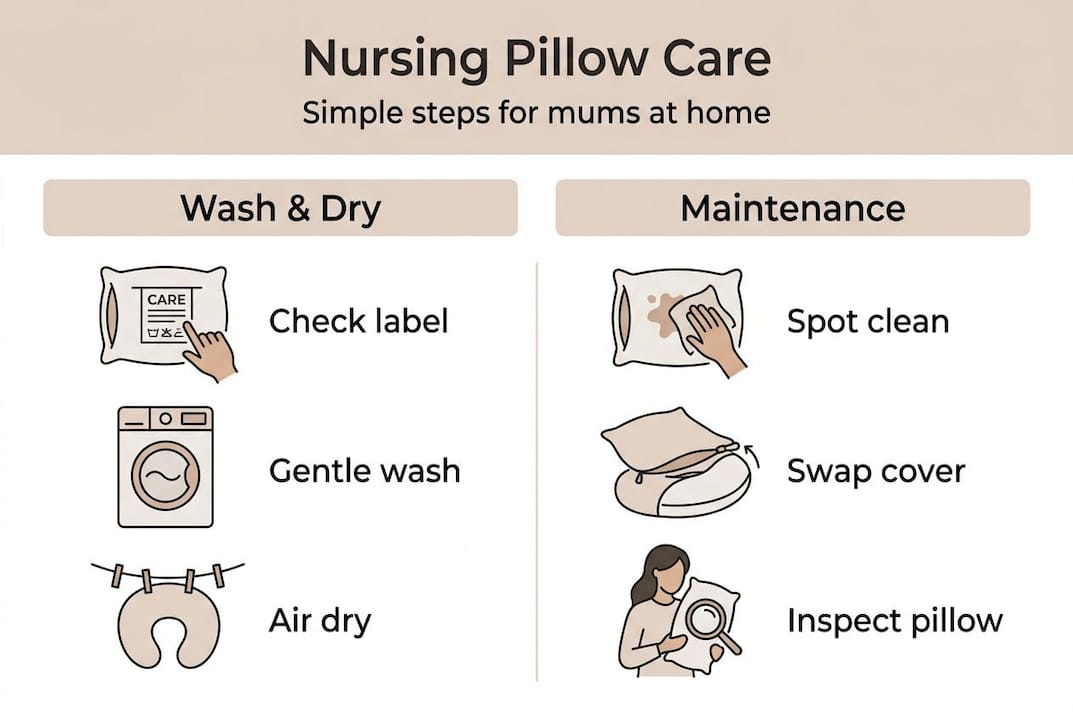
Pro Tip: Keep a spare cover on hand so you can swap it out immediately after a spill and put the soiled one straight in the wash. You never have to pause a feed or use a damp pillow.
Our take: What most mums miss about nursing pillow care
Here is something most care guides will not tell you: perfectionism is the enemy of consistency. New mums are exhausted. A care routine that requires fifteen steps and a dedicated drying rack will be abandoned by week two. The mums who keep their pillows in the best condition are the ones who build tiny, realistic habits rather than heroic cleaning sessions.
The most common mistake we see is waiting too long between cleans because the pillow does not look dirty. Milk residue and skin oils are invisible at first. By the time you notice a smell or discolouration, the build-up is already significant. A quick daily wipe and a weekly cover wash takes less than ten minutes total across the whole week.
Another overlooked factor is drying. Most damage happens not during washing but during drying, when mums rush the process and put a slightly damp cover back on. That trapped moisture is what causes the musty smell that no amount of washing seems to fix.
All credible sources place high value on gentle, consistent care for both safety and comfort. If you want to give a nursing pillow as a gift, pairing it with a care guide is genuinely thoughtful. You can explore nursing pillow gifts that make the whole experience feel considered and complete.
Find your perfect nursing pillow and accessories
If your current pillow is losing its shape, failing the firmness test, or simply not giving you the height and support you need, it may be time for an upgrade. Zabbidoo’s nursing pillow range is designed to meet post-2025 safety standards while solving the real comfort problems that most pillows ignore, including the hunching, the repositioning, and the gradual collapse that makes feeds harder over time.

Our pillows use premium French flax linen covers that are breathable, durable and easy to care for, making your cleaning routine simpler from day one. And because we know feeding comes with a lot of little extras to manage, we also offer a free pacifier clip to help keep your essentials within reach during every session. Reach out to the Zabbidoo team if you need help finding the right fit for your feeding style.
Frequently asked questions
Can I put my nursing pillow insert in the washing machine?
Most brands recommend only washing removable covers in the machine. Leachco recommends no machine wash for inserts, as it can break down the fill and cause the pillow to lose its supportive shape.
How do I clean stains or spills from my nursing pillow?
Spot clean immediately using mild soap and cold water, blotting rather than rubbing. Always allow the pillow to dry completely before your next feed to prevent mould.
Are there new safety rules for nursing pillows in 2026?
Post-2025 CPSC regulations require firmer pillows to reduce suffocation risk and restrict nursing pillow use to supervised feeding sessions only, not sleep or unsupervised lounging.
How often should I deep clean my nursing pillow?
Deep clean the removable cover weekly, or sooner if a major spill occurs. Always follow the care label for the insert, and spot clean as needed rather than attempting a full machine wash on non-washable fills.