

Many mums, even those on their second baby, discover that a poorly positioned nursing pillow creates more tension than it relieves. You end up hunching forward, wrists aching, neck stiff, and your baby still not quite at the right height. The frustrating part is that the pillow itself is rarely the problem. Setup is. With the right preparation and a few key adjustments, nursing can shift from a physically draining chore into a genuinely comfortable part of your day. This guide walks you through everything you need, step by step, so you can feed with confidence and far less strain.
Table of Contents
- What you need for an effective nursing pillow setup
- Step-by-step guide to positioning your nursing pillow
- Common mistakes and troubleshooting tips
- Maintaining hygiene and care for your nursing pillow
- Expected results and how to know your setup is right
- A realistic take: Why flexibility and comfort matter more than perfection
- Discover comfortable solutions for nursing support
- Frequently asked questions
Key Takeaways
| Point | Details |
|---|---|
| Right pillow matters | Choosing a well-shaped, supportive nursing pillow can make feeding much more comfortable. |
| Proper setup steps | Correct position and height are crucial for a pain-free and effective feeding routine. |
| Clean pillows regularly | Frequent cleaning keeps your nursing pillow safe and long-lasting for daily use. |
| Adapt for comfort | Adjust your pillow setup as needed and prioritise both your and your baby’s comfort. |
What you need for an effective nursing pillow setup
Having established the importance of a proper setup, let’s make sure you have everything ready before you begin. A successful nursing session starts well before your baby is in your arms. Getting your space organised means fewer interruptions, less repositioning, and a calmer experience for both of you.
Here’s what to gather before each feeding session:
- A quality nursing pillow with firm, compression-resistant fill (pillows that collapse under weight defeat their purpose entirely)
- A clean, fitted pillow cover that stays in place and is easy to remove for washing
- A burp cloth within arm’s reach so you’re not scrambling mid-feed
- A supportive chair or couch with a firm back, ideally with armrests at a comfortable height
- A footstool or rolled blanket to raise your feet slightly and reduce lower back pressure
- Water bottle and snack because feeding is hungry, thirsty work
Nursing pillows can reduce physical strain during feeding, which is exactly why the type of pillow you choose matters so much. Not all pillows are built the same.
| Pillow shape | Best for | Key advantage | Potential drawback |
|---|---|---|---|
| C-shaped | Breastfeeding, bottle feeding | Wraps around waist easily | Can shift during longer sessions |
| U-shaped | Twins or larger babies | Stable on both sides | Bulkier to store |
| Wedge/flat | Travel, tummy time | Compact and versatile | Less height lift for feeding |
| Elevated wrap | Ergonomic feeding | Brings baby to breast height | Requires correct placement |
When choosing a nursing pillow, prioritise height and firmness above all else. A pillow that lifts your baby to nipple level means your arms rest naturally, your shoulders stay down, and your back stays straight.
Pro Tip: Set up your entire feeding area before you pick up your baby. Fill your water bottle, place the burp cloth, and position the pillow. Once your baby is hungry, you won’t want to be searching for anything.
Step-by-step guide to positioning your nursing pillow
Now that you have what you need, here’s exactly how to position your pillow for a comfortable experience. The difference between a good session and a painful one often comes down to these specific steps.
- Sit down first. Settle into your chair with your back fully supported before you do anything else. Your feet should be flat on the floor or resting on a footstool.
- Place the pillow around your waist. Slide it snugly against your body so the inner curve sits flush against your torso. There should be no gap between the pillow and your midsection.
- Check the height. The top surface of the pillow should sit roughly at nipple level. If it’s too low, add a folded blanket underneath. If it’s too high, try a thinner base layer beneath your feet.
- Pick up your baby and lay them on the pillow. Their body should be turned fully towards you, tummy to tummy, with their head at breast height without you needing to lean forward.
- Relax your arms. Your arms should rest on top of the pillow, not hold your baby’s full weight. If you’re still gripping tightly, the pillow isn’t doing its job.
- Check your baby’s airway. Make sure their chin isn’t tucked into their chest and their nose is clear. Their head should be in a neutral, slightly tilted-back position.
- Make final adjustments before latching. Slide the pillow forward or back until everything feels stable, then bring your baby to the breast rather than leaning down to meet them.
“When a nursing pillow provides genuine hands-free support, mums can finally relax their shoulders, breathe deeply, and focus on their baby rather than managing their own discomfort.”
Correct positioning prevents muscle aches and back strain, which is especially important across multiple daily feeds that can add up to hours of physical effort each week.

Pro Tip: Adjust pillow height before latching your baby. Once they’re feeding, repositioning becomes much harder without disrupting the latch.
Common mistakes and troubleshooting tips
Even with the steps, mums may run into hiccups, so let’s look at common mistakes and how to quickly solve them.
- Pillow sitting too low. This is the most common issue. When the pillow is too low, you instinctively hunch forward to meet your baby, which strains your neck and upper back within minutes. Fix: add a folded blanket or firm cushion beneath the pillow to raise it.
- Pillow placed too far from the body. A gap between the pillow and your waist means your baby is further away than they should be, and your arms end up bearing their weight. Fix: push the pillow firmly against your torso before placing your baby.
- Using a pillow that compresses under weight. Soft, fluffy pillows feel comfortable in the shop but collapse during use, dropping your baby’s position and forcing you to compensate. Fix: choose a pillow with firm, resilient fill that holds its shape.
- Forgetting to support your own back. The nursing pillow supports your baby, but you still need lumbar support. Feeding in a soft couch without back support undoes much of the benefit. Fix: use a small cushion or rolled towel behind your lower back.
- Rushing the setup. Skipping steps because your baby is crying leads to a rushed, uncomfortable position. Fix: try to begin setup before your baby reaches peak hunger.
Incorrect pillow placement can lead to discomfort for both mother and baby, and the effects compound across multiple feeds throughout the day.
Pro Tip: Keep a rolled towel near your feeding chair. It’s surprisingly useful for filling gaps, propping an elbow, or adding a little extra height when you need it most.
Maintaining hygiene and care for your nursing pillow
After setting up and using your pillow correctly, it’s essential to keep it clean and in top condition. A nursing pillow is in close contact with your baby’s face and skin at every feed, so hygiene is non-negotiable.
Quick care habits to build into your routine:
- Remove and wash the pillow cover every two to three days, or immediately after any spit-up or milk spill
- Spot clean the pillow insert with a damp cloth and mild detergent as soon as accidents happen
- Air the pillow out between uses rather than storing it in an enclosed space while still warm
- Check seams and fill regularly for any signs of wear, compression, or uneven distribution
- Sanitise any attached accessories such as clips or rings separately
Regular cleaning helps maintain infant safety and pillow lifespan, which matters when you’re using the pillow multiple times a day for months.
| Cleaning method | Frequency | Notes |
|---|---|---|
| Cover machine wash | Every 2 to 3 days | Use a gentle cycle and mild detergent |
| Insert spot clean | As needed | Avoid soaking the full insert |
| Full insert wash | Monthly or per care label | Air dry thoroughly before use |
| Accessory sanitising | Weekly | Check individual care instructions |
When it comes to keeping accessories clean, a quick weekly wipe-down prevents bacterial build-up on items your baby regularly contacts. If you’re on the go, think about protecting your pillow during travel to keep it in good condition between uses.
Store your pillow in a breathable bag or open shelf rather than a sealed plastic container, which can trap moisture and encourage mould.
Expected results and how to know your setup is right
Once you’ve completed your setup, here’s how to confirm you’re on track and enjoying the key benefits. A well-positioned nursing pillow should feel almost invisible. You shouldn’t be thinking about it at all.
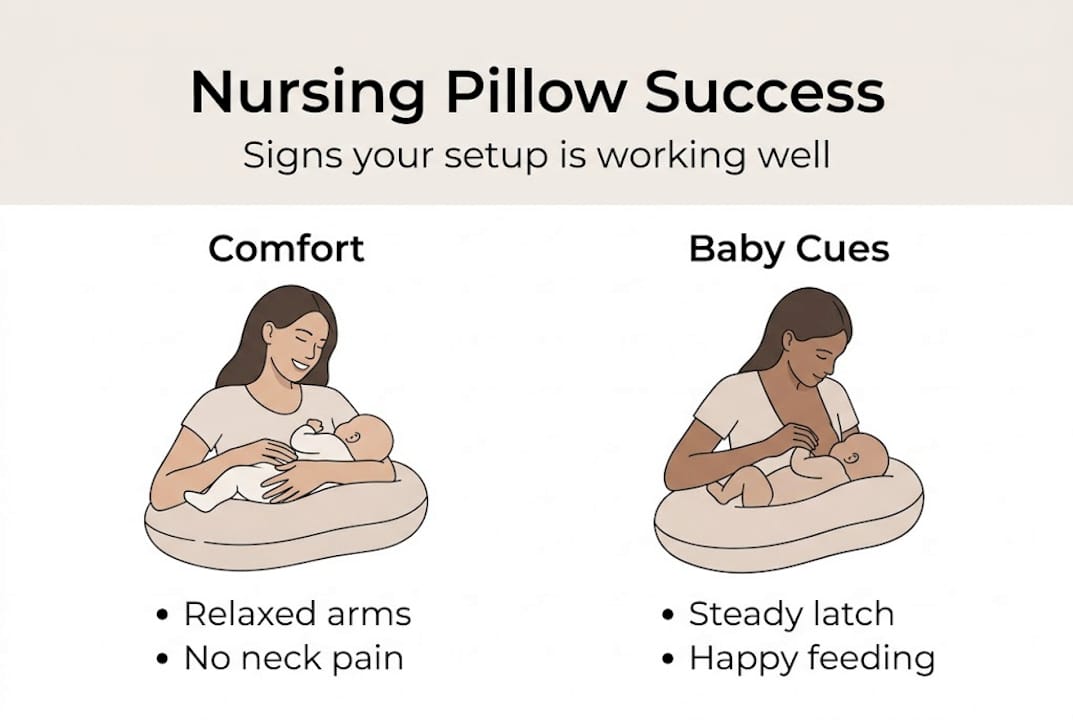
| Sign of correct setup | Sign of incorrect setup |
|---|---|
| Shoulders relaxed and down | Shoulders raised or tense |
| Arms resting, not gripping | Arms holding baby’s full weight |
| Back straight against chair | Leaning or hunching forward |
| Baby at nipple height naturally | Baby too low, mum bending to reach |
| Comfortable latch without straining | Repeated repositioning needed |
| No neck or wrist pain after feeding | Aching within minutes of starting |
Mums who use a correctly fitted nursing pillow report less back pain and greater feeding confidence, particularly during longer overnight sessions when fatigue makes posture harder to maintain.
The most reliable indicators are your own body and your baby’s behaviour. If you finish a feed without neck or shoulder tension, and your baby latched well without excessive fussing, your setup is working. If either of you seems uncomfortable, revisit the height and positioning before the next session.
Exploring the health advantages of nursing pillows can also help you understand why consistent, correct use makes such a measurable difference over weeks and months of feeding.
Proper setup reduces feeding strain and improves comfort for both mum and baby, and the cumulative effect across hundreds of feeds is significant.
A realistic take: Why flexibility and comfort matter more than perfection
Here’s something the instruction manuals won’t tell you: no two feeds are identical. Your baby grows, your body changes, and what worked perfectly at week two may need adjusting by week six. Real mums rarely find one fixed setup that works every single time, and chasing that perfect position can actually add stress to what should be a calming experience.
The steps in this guide are a strong starting point, not a rigid formula. Some sessions you’ll need extra height. Others, your baby will want a slightly different angle. That’s completely normal. The goal is a setup that’s good enough to protect your posture and support your baby’s latch, not one that’s technically flawless.
Your comfort matters just as much as your baby’s. Feeding through pain, stiffness, or awkward positioning isn’t dedication. It’s a problem worth solving. Give yourself permission to adjust, experiment, and adapt. A nursing pillow that works for your body and your baby is one you’ll actually keep using.
Pro Tip: If a session feels off, pause and reset your pillow position before continuing. Thirty seconds of adjustment saves ten minutes of discomfort.
Discover comfortable solutions for nursing support
If you’re ready to enhance your comfort and support, here’s where to find trusted products that make feeding easier.

At Zabbidoo, we’ve built our range specifically around the problems mums actually face during feeding. Our ergonomic nursing pillow lifts your baby 18cm to bring them to you rather than forcing you to hunch down. It holds its shape under pressure, stays stable during longer sessions, and is made from breathable French flax linen that’s kind to sensitive skin. Pair it with our free pacifier clip chain to keep essentials within reach during every feed. Browse Zabbidoo’s nursing solutions and find the setup that genuinely supports you.
Frequently asked questions
How high should I position my nursing pillow?
The pillow should raise your baby to nipple level so your arms can relax at your sides without hunching. Correct height prevents muscle strain that builds up across multiple daily feeds.
Can I use a nursing pillow for bottle feeding?
Yes, nursing pillows work for both breastfeeding and bottle feeding to provide support and comfort. Nursing pillows suit all feeding methods and keep your posture consistent regardless of how you feed.
How often should nursing pillows be cleaned?
Wash pillow covers every few days and the pillow insert as needed, following the care label instructions. Regular cleaning is vital for infant safety and keeping the pillow hygienic between uses.
What if my baby still seems uncomfortable?
Try adjusting the pillow position or add rolled towels for extra support until you both find a comfortable fit. Comfort may require adjusting positions and extra supports, especially as your baby grows and their needs change.