

Most mums assume a firmer nursing pillow means less comfort. That instinct is completely understandable, but it is also one of the most common misconceptions about feeding pillow design. The truth is, firmness is precisely what supports your posture and keeps your baby at the right height, so you are not hunching forward all feed. Recent safety standard changes have rewritten what a well-designed nursing pillow actually looks like, and understanding those shifts helps you make a genuinely informed choice. This guide walks you through what has changed, why it matters for your body, and how to find the pillow that works best for you.
Table of Contents
- The evolution of feeding pillow safety and design
- How design impacts comfort and posture during feeding
- Standout features in current feeding pillow design
- Real-world advice for choosing your ideal feeding pillow
- Why feeding pillow trends demand an evidence-based approach
- Explore ergonomic feeding pillows and accessories
- Frequently asked questions
Key Takeaways
| Point | Details |
|---|---|
| Safety standards matter | New 2025 regulations changed pillow design to prevent risks and support safe feeding. |
| Firmness improves comfort | Contrary to myths, firmer modern pillows reduce pain and support good posture. |
| Custom features add value | Options like adjustable height, washable covers, and multi-use designs help mums find their best fit. |
| Personal needs come first | Test for comfort, fit, and safety certification—don’t just follow trends or flashy designs. |
The evolution of feeding pillow safety and design
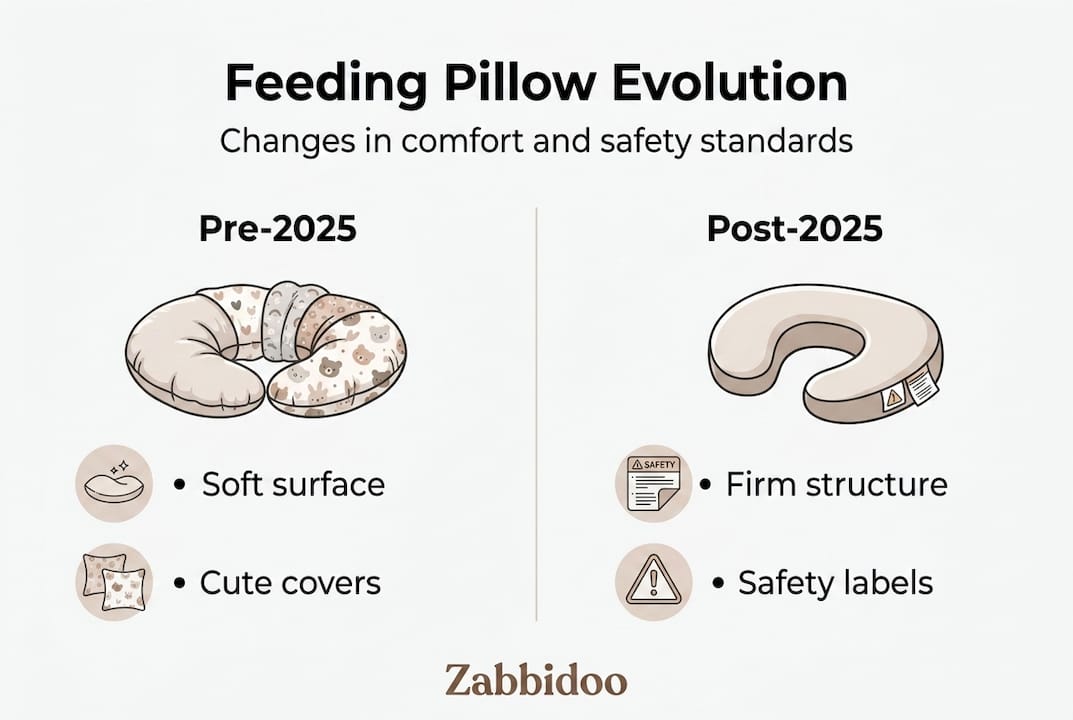
For years, nursing pillows were designed with softness in mind. Plush, squishy, and often adorned with cute covers, they looked the part but failed at the function. Then came a significant regulatory shift that changed everything.
Post-2025 federal safety standards mandate firmer construction, wider U-shaped openings for adult waists, permanent warning labels against sleep and lounging use, and no infant restraint straps. These changes were tied directly to infant suffocation risks, with over 150 deaths linked to unsafe pillow designs between 2010 and 2022. That is not a small number, and it is a sobering reminder that product aesthetics and infant safety do not always align.
The new standards do more than prevent tragedy. They also improve the feeding experience for mothers. Firmer surfaces stop the baby from sinking, which means less repositioning mid-feed. Wider openings allow the pillow to sit flush against the torso, which naturally encourages an upright posture. These design requirements are not restrictions. They are upgrades.
| Feature | Pre-2025 design | Post-2025 design |
|---|---|---|
| Firmness | Soft, compressible | Firm, compression-resistant |
| Opening width | Variable, often narrow | Wider U-shape for adult torso |
| Safety labels | Optional or minimal | Permanent, mandatory warnings |
| Infant straps | Sometimes included | Prohibited entirely |
| Cover materials | Decorative focus | Washable, breathable priority |
If you are curious about how specific pillows perform under these new benchmarks, the team at Zabbidoo has done deep dives into testing nursing pillows for safe support, breaking down what the numbers actually mean in practice.
Beyond product design, having access to the right postpartum care support during the early weeks can also help you understand which products genuinely serve your recovery and which ones just look good on Instagram.
Key design changes to know about:
- Firmer core construction to maintain shape under pressure
- No-strap design to eliminate entrapment risk
- Wide U-shaped openings that fit around an adult waist securely
- Permanent safety labelling on the product itself, not just packaging
How design impacts comfort and posture during feeding
Once safety is covered, the next question is what a pillow actually does for your body during those long feeding sessions. The answer comes down to three things: height, firmness, and shape.
When a pillow is too low or collapses under baby’s weight, you instinctively lean forward to compensate. That forward flexion puts enormous strain on the thoracic spine, the mid-to-upper back region. Research confirms this is not just anecdotal. Thoracic spine pain affects 22.5% of postpartum women, with poor feeding posture a primary contributing factor.
The same EMG study measured neck muscle activity across different feeding holds, including cradle, cross-cradle, and football. The finding was striking: no significant difference in neck muscle strain was observed between hold styles when a pillow was used for support. This tells us that the pillow itself is doing the heavy lifting, not the hold you choose.
Shape matters too, particularly for different body types. U-shaped pillows wrap around the torso and are ideal for mums who feed in an armchair or with back support. C-shaped designs offer a more compact fit and suit smaller frames. Wrap-around styles offer the most adjustability but can be bulky to manage in the early weeks when fatigue is high.
How to position your pillow for proper posture:
- Sit upright in a chair with your back fully supported against the seat
- Place the pillow around your waist with the opening snug against your torso
- Lay your baby on the pillow surface so their mouth aligns with your nipple without you leaning forward
- Check that your shoulders are relaxed, not raised or rounded
- Adjust pillow height with a rolled towel underneath if needed until you find the right level
Pro Tip: Match your pillow shape to your preferred feeding hold. If you favour the football hold, a C-shaped or wrap-around pillow will give you the lateral support you need. If you prefer cradle, a wider U-shape keeps the baby stable across your front.
The multi-use nursing pillow benefits go beyond feeding too. A well-designed pillow that maintains its shape also works for tummy time and seated support as your baby grows. For practical setup guidance, the nursing pillow setup guide covers everything from first use to adjusting position as your baby gains weight.
If height is your biggest challenge, especially if you have a longer torso, exploring height-adjustable pillow options gives you a clearer view of what is available and what to prioritise.

Standout features in current feeding pillow design
Knowing the science is one thing. Knowing what to actually look for in a product is another. The feeding pillow market in 2026 has moved well beyond basic U-shapes, and some features are genuinely worth seeking out.
Research confirms that pillow effectiveness comes down to height and stability, not hold position. So features that enhance those two qualities deserve the most attention.
Standout features worth prioritising:
- Adjustable height inserts allow you to customise lift so baby reaches your breast without you leaning down
- High-density foam core that resists compression and holds its shape across multiple feeds each day
- Removable, washable covers because spills happen every single day and hygiene matters
- Support wings or wrap design for lateral stability that keeps baby from rolling or sliding
- Breathable outer fabrics such as French flax linen, which regulate temperature and feel comfortable against sensitive skin
- JPMA certification as an independent signal that the product meets current safety benchmarks
- Compact carry design for mums who move between rooms or need to feed in different locations
When it comes to materials, breathability is underrated. Synthetic fabrics trap heat, which makes long feeds uncomfortable for both mum and baby. Natural fibres like linen wick moisture and stay cooler, which becomes especially important during warmer months.
For washing, zip-off covers that are machine washable make a real difference to daily life. Look for covers rated for frequent washing without pilling or shrinkage. The nursing pillow care guide covers exactly how to extend the life of your pillow without compromising hygiene or shape.
Pro Tip: Always check for JPMA certification before purchasing. It is one of the clearest signals that a pillow has been independently tested for safety and construction quality, not just reviewed by the brand itself.
For mums juggling feeds, tummy time, and solo play support, a pillow designed for multi-use pillow workflow reduces the number of separate products you need across the early months.
Real-world advice for choosing your ideal feeding pillow
With features in mind, how do you confidently select a pillow that supports you? The process works best when you take a structured approach rather than buying on impulse or based on looks alone.
Steps to choose the right pillow:
- Assess your needs first. Consider your body type, preferred feeding hold, and whether you plan to breastfeed, bottle-feed, or both. Your torso length matters more than your overall height.
- Check safety certification. Look for JPMA certification and confirm the product meets current safety standards with firm construction and no restraint straps.
- Test firmness and height. Press the surface firmly with your hand. A good pillow should resist compression rather than sink flat. If height adjustment is available, check that the range suits your frame.
- Confirm fit around your torso. The opening should fit snugly at your waist without gaps. A loose fit means the pillow will shift during feeds.
- Plan for cleaning. Check whether the cover is fully removable and machine washable. If it is not, reconsider regardless of how good everything else looks.
“Never use a nursing pillow as a sleep surface or leave an infant unattended on one. The pillow is a feeding aid, not a resting place, and the two uses carry very different risks.”
The most common pitfall is choosing based on softness. Soft feels kind, but a pillow that compresses under your baby’s weight forces you to hunch, which is the exact posture problem you are trying to solve. For a practical look at how to evaluate testing pillow stability, the hands-on approach makes the difference clear immediately.
Another overlooked factor is postpartum planning. Building a postpartum care plan that includes the right feeding equipment makes the early weeks considerably smoother. When you are ready to compare your options side by side, you can browse nursing pillows and filter by the features that matter most to your situation.
Why feeding pillow trends demand an evidence-based approach
Here is an uncomfortable truth about the nursing pillow market: many of the most popular products on social media are popular because they photograph beautifully, not because they perform well. Pastel colours, matching sets, and influencer endorsements drive enormous sales for pillows that may compress on the first use.
At Zabbidoo, we believe the only honest approach is to lead with evidence. That means looking at what EMG research says about neck and back strain. It means understanding why regulators tightened standards. And it means being upfront that a firmer, plainer pillow often outperforms a prettier, softer one every single time.
Trend chasing in baby products is understandable. New mums are overwhelmed with choices and often rely on community recommendations. But the mums who come back and tell us a pillow changed their feeding experience are never the ones who chose based on the cover design.
Before you buy anything, test the firmness yourself, check the certification, and read about testing pillows for real safety beyond the marketing language. Evidence, fit, and function should always come first.
Explore ergonomic feeding pillows and accessories
Finding a pillow that genuinely supports your posture and meets current safety standards should not feel like a research project. Zabbidoo has done that work for you.
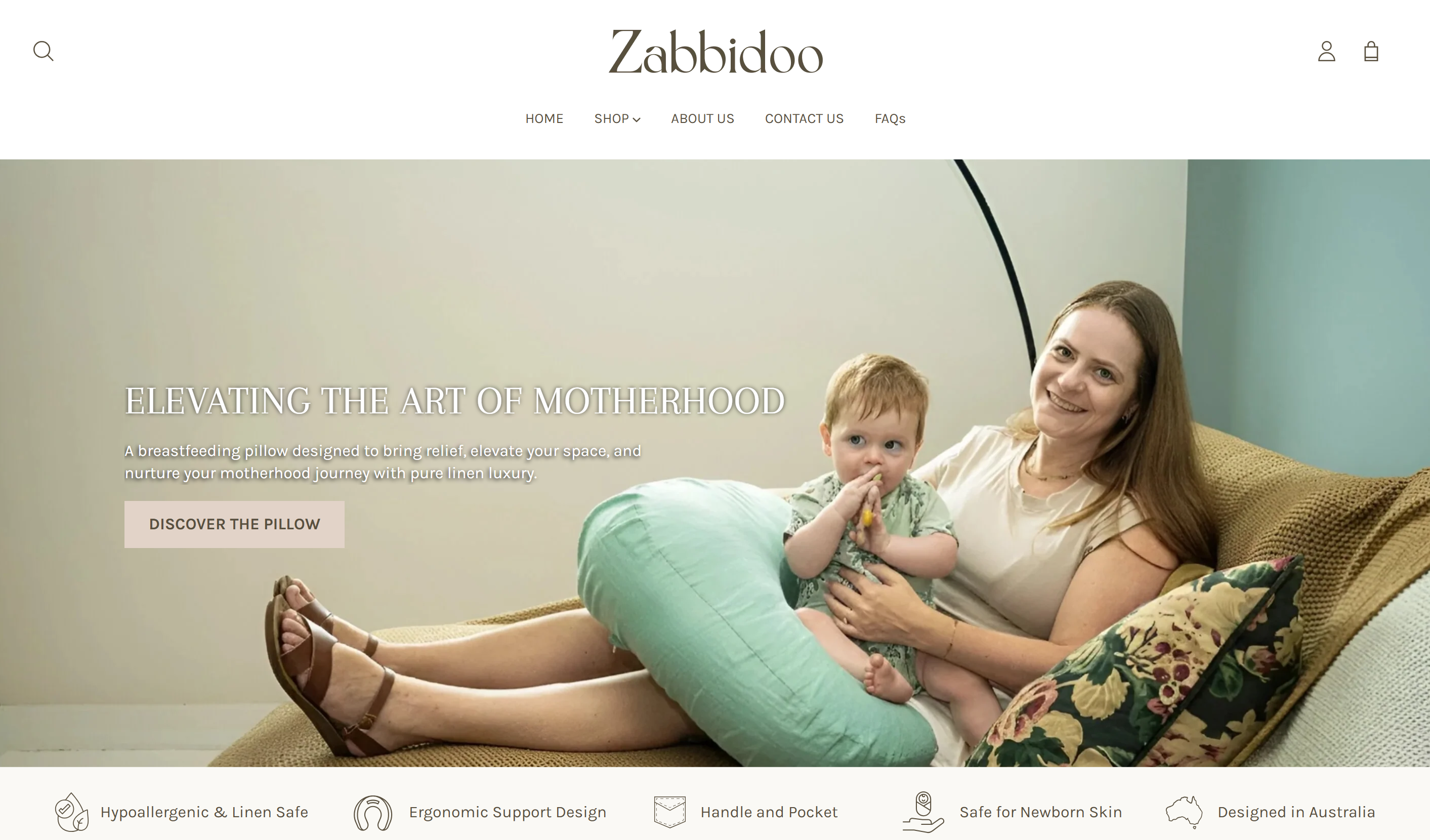
The Zabbidoo nursing pillow is built to the post-2025 safety benchmarks, with an 18cm lift that brings your baby to you rather than pulling you down, a high-density core that holds its shape across every feed, and a breathable French flax linen cover that is easy to remove and wash. When you are ready to explore, you can shop nursing pillows and find the right fit for your body and feeding style. Looking for a gift? Add thoughtful gift wrapping at checkout, or grab a free pacifier clip chain to complete your feeding setup.
Frequently asked questions
What makes a feeding pillow ‘safe’ after 2025?
A safe pillow is firm, wide, labelled to warn against sleep use, and free of any infant restraint strap. Post-2025 standards mandate these features specifically to prevent suffocation risks.
Does pillow shape or hold technique matter more for comfort?
The pillow matters more. No significant difference in neck strain was found across cradle, cross-cradle, and football holds when a supportive pillow was in use, so firmness and height are the real variables.
How often should I wash my feeding pillow cover?
Wash the cover at least once a week, or immediately after any spill, to keep things hygienic and comfortable for both you and your baby.
Are height-adjustable pillows better for all body types?
They offer more flexibility, particularly for mums with longer or shorter torsos. Height and stability are the two design factors most linked to reduced strain, making adjustability a genuine advantage rather than a marketing feature.
Recommended
- Step-by-step nursing pillow setup for comfortable feeding – Zabbidoo
- Why a multi-use nursing pillow eases feeding discomfort – Zabbidoo
- How to test feeding pillow stability: safe breastfeeding – Zabbidoo
- Multi-use nursing pillow workflow: cut strain by 18cm – Zabbidoo
- Portable Seating Trends 2025: Complete Guide