

Aching arms, a sore neck, and a baby who just won’t latch properly. If that sounds familiar, you’re not alone. Many mums assume any nursing pillow will do the job, but that’s rarely how it plays out. The reality is that a poorly designed pillow can make feeding harder, not easier. A multi-use nursing pillow is built differently, offering genuine ergonomic support across multiple stages of your baby’s development. In this article, we’ll break down exactly what these pillows are, the real benefits they offer, how the main types compare, and how to choose the one that truly fits your body and your life.
Table of Contents
- What is a multi-use nursing pillow?
- Key benefits for mums and babies
- Types of multi-use nursing pillows: Features compared
- Choosing and using your pillow: Practical tips
- What most parents miss about nursing pillows
- Find your ideal nursing pillow
- Frequently asked questions
Key Takeaways
| Point | Details |
|---|---|
| Ergonomic feeding support | Multi-use nursing pillows help reduce discomfort and promote better feeding posture for mums. |
| Versatility for baby’s stages | They’re useful beyond feeding, supporting tummy time and sitting-up practice. |
| Personalised fit matters | Choosing the right firmness and shape makes feeding sessions more comfortable and effective. |
| Evidence-backed benefits | Studies show significant pain relief for mums using ergonomic support during feeding. |
What is a multi-use nursing pillow?
A multi-use nursing pillow is an ergonomically contoured cushion designed to support your baby during feeding, whether you’re breastfeeding or bottle feeding, and to serve a range of other developmental purposes as your baby grows. Unlike a standard cushion or a simple foam wedge, these pillows are shaped and constructed to position your baby at the correct height and angle for comfortable, effective feeding.
The most common shapes are the C-shape and the U-shape. C-shaped pillows wrap around your waist from the front, keeping your baby close and elevated. U-shaped models offer a broader surface and can prop your baby up on either side. Some newer designs include adjustable inserts or straps that let you customise the fit for your body shape.
What truly sets a multi-use pillow apart from a standard nursing pillow is the range of functions it handles beyond feeding. According to best nursing pillows, these pillows serve as propping tools for newborns, tummy time supports, and early sitting aids as babies develop. That versatility means you’re not buying one product for newborn feeding and another for the next stage.
Here’s a quick comparison to illustrate the difference:
| Feature | Standard nursing pillow | Multi-use nursing pillow |
|---|---|---|
| Primary use | Breastfeeding only | Feeding, tummy time, sitting |
| Firmness | Often soft | Firmer, shape-retaining |
| Adjustability | Rarely adjustable | Often adjustable or modular |
| Lifespan | Newborn stage only | Newborn through toddler |
| Body type fit | One size | Inclusive sizing options |
The key advantages of multi-use models include:
- Sustained elevation that keeps your baby at the right height without you hunching
- Compression resistance so the pillow doesn’t flatten under your baby’s weight
- Versatile positioning for feeding holds, propping, tummy time, and supported sitting
- Adjustable straps or inserts for a personalised fit across different body types
If you want to explore how adjustability changes the feeding experience, height-adjustable nursing pillows offer a useful deep dive into why height matters more than most parents expect.
Key benefits for mums and babies
With a clear understanding of what these pillows are, let’s see why they’re highly recommended by feeding specialists and mums alike.
For mums, the most immediate benefit is reduced physical strain. Holding a newborn at breast or bottle height for 20 to 40 minutes per session, multiple times a day, places enormous repetitive stress on your neck, shoulders, back, and wrists. A well-designed nursing pillow offloads much of that effort. Research into lumbar support and postpartum pain confirms that proper support reduces back, neck, and shoulder strain and measurably improves pain and disability scores in postpartum women.

The physical relief also extends to fatigue. When you’re not bracing your body to hold your baby up, you’re not burning energy just sitting still. Many mums report they can feed for longer, feel less drained, and feel more confident about positioning.
For babies, the benefits are equally real. A stable feeding surface helps your baby maintain a consistent latch, which reduces feeding frustration and improves milk transfer. A pillow that holds its shape means your baby isn’t sliding or shifting mid-feed, which is one of the most common sources of discomfort for both of you.
Beyond feeding, multi-use pillows support two critical developmental milestones:
- Tummy time: Propped at a gentle incline, babies can build neck and shoulder strength without the full challenge of flat floor tummy time
- Early sitting support: The pillow creates a soft barrier that encourages upright posture without the risk of toppling
For practical setup tips, a nursing pillow setup guide walks you through correct positioning so you get the full benefit from your first session.
It’s also worth considering broader postnatal care considerations when planning your recovery toolkit, especially if you’re managing feeding alongside other physical recovery needs.
Worth knowing: No nursing pillow replaces good feeding technique or professional lactation support. These pillows are a powerful tool, but they work best alongside proper guidance, not instead of it.
The cumulative effect matters too. Saving even a small amount of physical effort across ten feeding sessions a day adds up significantly across weeks and months of the newborn period.
Types of multi-use nursing pillows: Features compared
Armed with the benefits, it’s time to consider which style could be the right fit for your home.
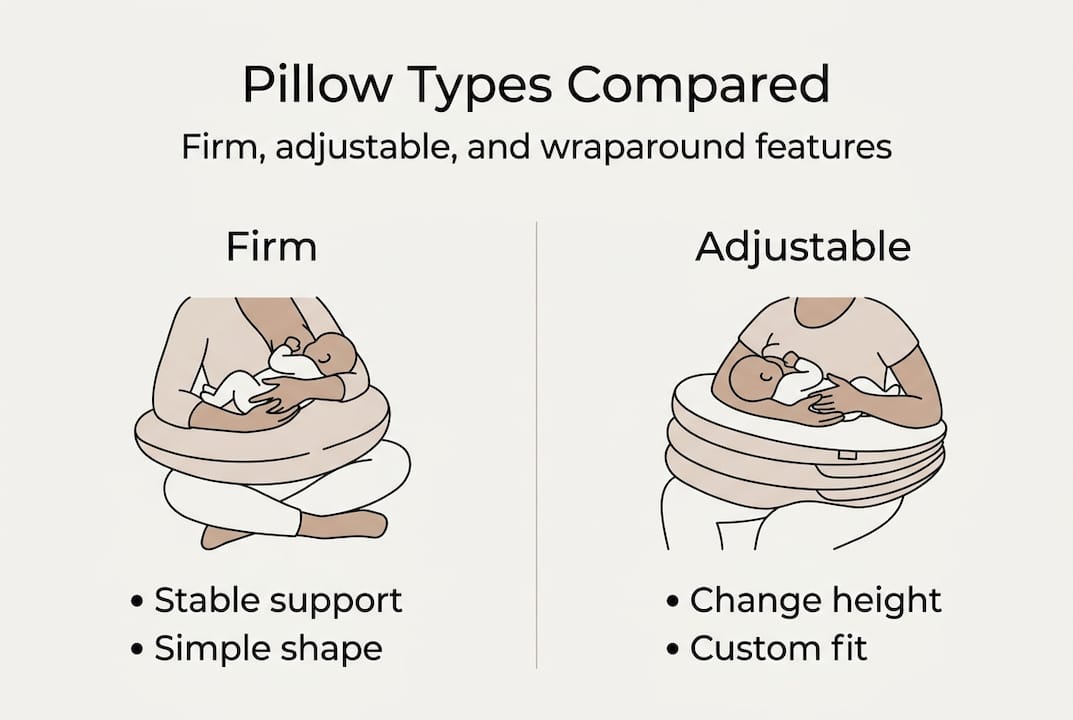
Not all multi-use nursing pillows are built the same. The main categories break down roughly into firm, adjustable wraparound models and plush, versatile designs that prioritise adaptability.
| Pillow type | Best for | Key feature | Cleaning |
|---|---|---|---|
| My Brest Friend | Latch-focused feeding | Firm, flat ledge, waist strap | Removable cover |
| Boppy | Multi-stage use | Curved, lightweight | Machine washable |
| Momcozy | Adjustable fit | Flexible fill, inclusive sizing | Zip-off cover |
| Zabbidoo | Posture and lift | 18cm height, compression-resistant | Premium washable cover |
Here’s how to think about the main options:
- Firm wraparound models (e.g. My Brest Friend) are excellent for mums focused on latch quality. The rigid waist strap holds the pillow in place so it can’t shift during feeding. Less versatile beyond feeding, but excellent at its primary job.
- Curved versatile models (e.g. Boppy) are lightweight and work well across feeding, tummy time, and sitting. The trade-off is that they’re softer, which means more compression and less height over time.
- Adjustable fill models (e.g. Momcozy) allow you to add or remove filling to customise firmness. A great option for mums who want flexibility, though fill consistency can vary.
- Height-priority models (e.g. Zabbidoo) are built specifically to bring the baby up to the mum, rather than relying on the mum to bend down. At 18cm of firm, compression-resistant lift, the focus is on proper posture from the very first feed.
Pro Tip: Always check for safety certifications and washable covers before purchasing. A pillow you can’t clean easily becomes a hygiene liability very quickly with a newborn.
For long-term value, it also pays to understand how to care for your nursing pillow properly, since correct washing and storage significantly extends the life of both the cover and the inner cushion.
Choosing and using your pillow: Practical tips
Having explored your options, here’s how to make the most informed and comfortable choice.
The number one mistake mums make is buying based on appearance or brand name alone. Fit and firmness matter far more than aesthetics. Safety certifications and adjustable, firm designs are the most important factors to prioritise, especially for plus-size mums where one-size options often fall short.
Follow this process when choosing:
- Assess your body type first. A pillow that sits too high or too low for your torso will force you to compensate with your posture, defeating the purpose entirely.
- Test the firmness. Press your hand into the pillow firmly. If it bottoms out quickly, it won’t support a baby’s weight for long.
- Check the adjustability. Look for waist straps, adjustable inserts, or modular designs that let you adapt as your body changes postpartum.
- Confirm the certifications. Look for safety and material certifications, especially if you’re concerned about off-gassing or allergens near your newborn.
- Think about cleaning. A removable, machine-washable cover is not optional. It’s essential.
When using your pillow, the most common mistake is letting it drift away from your body during feeding. This forces you to reach forward, reintroducing exactly the strain you’re trying to avoid. A waist strap or a pillow with good body contact will prevent this.
Pro Tip: Position the pillow so your baby’s head rests near your elbow, not in the crook of it. This small adjustment dramatically improves your wrist angle and reduces hand fatigue over long feeds.
For a detailed walkthrough of positioning options by feeding hold, choosing the right pillow covers the specifics for cradle, cross-cradle, and football holds.
What most parents miss about nursing pillows
Here’s something the marketing rarely tells you: many parents feel quietly disappointed by their nursing pillow within the first few weeks. The pillow didn’t solve everything. The feeding is still hard. The discomfort hasn’t vanished.
The honest truth is that no pillow is a miracle. Most of the existing support for nursing pillows comes from broader ergonomic posture research, not large-scale nursing-specific clinical trials. That doesn’t mean they don’t help. It means the benefit is real but gradual, and highly dependent on whether the product actually fits your body.
The mums who get the most from these pillows tend to share one thing: they matched the product to their actual needs rather than to a bestseller list. A soft, popular pillow might be ideal for one mum and completely inadequate for another with a larger frame or a baby with a shallow latch.
Small daily improvements really do accumulate. Better posture during one feed becomes easier posture across all feeds. Less strain today means less tension tomorrow. For practical guidance on getting comfortable with feeding, start with the basics and build from there.
Find your ideal nursing pillow
If you’ve made it this far, you already know more about nursing pillows than most parents do before they buy. The next step is finding the one that’s actually right for you.
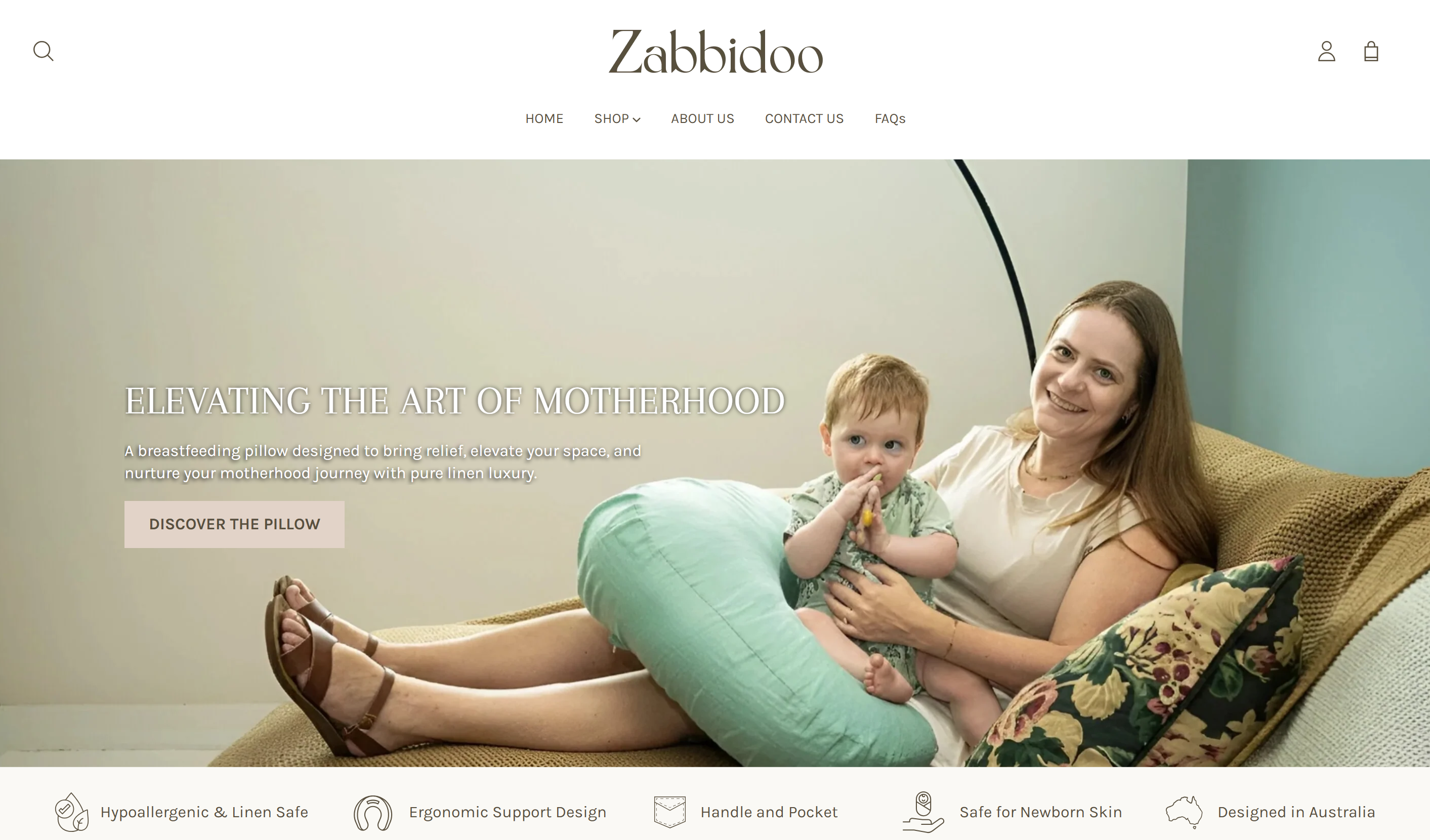
At Zabbidoo, every product is chosen with ergonomic function and real mum comfort in mind. Browse our range of multi-use nursing pillow options, designed to deliver proper lift, posture support, and long-term versatility. While you’re there, pick up a free pacifier clip chain to complete your feeding kit. Gifting for a new mum? Our gift wrapping for new mums makes it easy to give something genuinely useful.
Frequently asked questions
Can I use a multi-use nursing pillow for bottle feeding as well?
Yes, these pillows are designed for both breast and bottle feeding. As noted in guidance on various feeding holds, they support your baby’s position and reduce your physical strain regardless of how you feed.
Are multi-use nursing pillows safe for tummy time and helping baby sit up?
Used with supervision, they’re effective tools for both. Guidance on tummy time milestones confirms that pillows help prop babies safely, building strength at a manageable incline.
How do I clean and care for my nursing pillow?
Most quality nursing pillows include a removable, machine-washable cover. Always follow the specific care instructions provided to maintain the pillow’s shape and hygiene over time.
Which type is best for plus-size mums?
Adjustable, firm, and wraparound designs with inclusive sizing offer the most comfortable and supportive fit. One size rarely suits all, so look for models with body-type flexibility built in.