

Most mothers assume feeding pillow hygiene is purely about keeping things clean for baby. That’s only half the story. A well-maintained pillow does far more than pass a sniff test — it actively supports your posture, reduces neck and back strain, and keeps every feeding session more comfortable than the last. Washability and ease of cleaning are recurring priorities for good reason: regular care keeps the pillow comfortable and effective long after those newborn days. This guide breaks down practical routines, material choices, and expert insights to help you get the most from your feeding pillow.
Table of Contents
- Why feeding pillow maintenance matters for comfort and hygiene
- Daily, weekly, and monthly feeding pillow routines
- Choosing and caring for covers: material and ease of cleaning
- Maintaining firmness and ergonomic support: what most mums miss
- Troubleshooting: odour, sagging, and wear
- Our take: why maintenance routines beat ad-hoc cleaning every time
- Discover ergonomic support and easy maintenance with Zabbidoo
- Frequently asked questions
Key Takeaways
| Point | Details |
|---|---|
| Regular care extends lifespan | Consistent maintenance preserves both pillow hygiene and comfort, reducing replacement frequency. |
| Machine-washable covers simplify cleaning | Choosing removable, washable covers makes quick, effective cleaning easy for busy mums. |
| Firmness is essential for support | Monitor and maintain your pillow’s firmness to ensure both comfort and good posture during feeding. |
| Address odour and wear promptly | Quick response to odour and signs of wear helps keep the pillow supportive and inviting. |
Why feeding pillow maintenance matters for comfort and hygiene
To understand how to maintain your feeding pillow, it’s best to start with why maintenance is crucial in the first place.
Feeding pillows go through a lot. Milk spillage, sweat, baby dribble, and hours of daily compression all take a toll on the filling and cover. Over time, a neglected pillow becomes squishy and shapeless, loses its height, and stops doing its core job — bringing baby up to breast level so you do not have to hunch down. That slow, silent loss of support is where most posture problems actually begin.
Regular care and maintenance helps keep your pillow comfortable and effective, and this matters more than most people realise during those long early feeding sessions. When the pillow holds its shape, your baby sits at the right height. When it doesn’t, you unconsciously lean forward, round your shoulders, and strain your neck and wrists to compensate. The discomfort feels like a feeding problem, but it’s actually a maintenance problem.
Here are the key reasons consistent maintenance is worth every effort:
- Hygiene and odour control: Milk residue and sweat create a warm, moist environment where bacteria and mould can develop if the pillow is left without regular cleaning.
- Shape retention: Frequent use compresses filling. Without proper care — fluffing, airing, and washing — the pillow loses its firmness far sooner than it should.
- Posture protection: A flat pillow means a hunched mum. Good maintenance preserves the height your pillow was designed to provide.
- Skin comfort: A freshly washed, breathable cover reduces skin irritation for both mum and baby during skin-to-skin contact.
- Longer lifespan: Consistent care extends the life of the pillow significantly, saving you from premature replacement costs.
“A feeding pillow that has lost its support is no longer a tool — it becomes an obstacle. Maintenance is not about perfection; it’s about keeping the tool working.”
Pro Tip: After each feed, take ten seconds to plump and reshape your pillow. This single habit dramatically slows down the compression that leads to sagging over time.
For more detailed nursing pillow care tips, it helps to have a reference point that covers both daily habits and deeper cleaning steps together.
Daily, weekly, and monthly feeding pillow routines
With the value of maintenance established, let’s break down the specific routines that keep your feeding pillow in top condition.
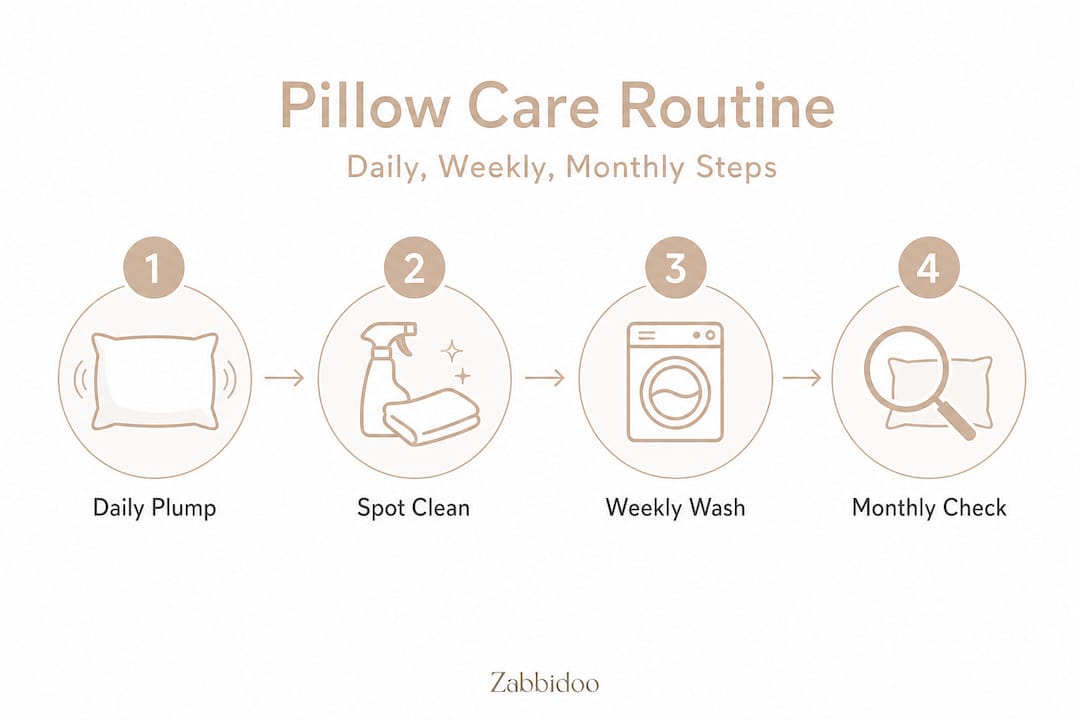
The secret to effortless maintenance is making it predictable. Rather than waiting until the pillow smells or sags, scheduling care at different intervals prevents problems before they take hold. Think of it like dental hygiene — small, regular effort beats an emergency appointment every time.
Here is a structured routine to follow:
- Daily (2 to 5 minutes): After each use, plump the pillow firmly to redistribute filling. Wipe down the cover with a damp cloth if any spillage has occurred. Leave the pillow in a well-ventilated area rather than tucking it into a closed bag or drawer.
- Weekly: Remove the cover and wash it according to the care label. Products with removable machine-washable covers are strongly recommended because frequent cover washing is simply non-negotiable when you are feeding several times a day.
- Monthly: Inspect the pillow insert itself. Check whether the filling has shifted, compacted in areas, or developed any uneven lumps. If the pillow insert is washable, follow the care instructions carefully and allow it to dry completely before use. Air the pillow insert in indirect sunlight for at least two hours to freshen it naturally.
- Every three months: Do a full assessment of both the cover and insert. Look for thinning seams, fading fabric, persistent odours, or signs of filling breakdown. This is also a great time to check whether the pillow still provides adequate height and firmness.
| Frequency | Action | Time required |
|---|---|---|
| Daily | Plump and reshape; spot clean if needed | 2 to 5 minutes |
| Weekly | Remove and wash the cover | 30 to 60 minutes (wash and dry) |
| Monthly | Inspect and air the insert; wash if applicable | 2 to 3 hours |
| Every 3 months | Full condition check; assess replacement need | 15 minutes |
Understanding feeding pillow firmness is essential here because how much compression your pillow endures each day will directly influence how often it needs deeper care. Heavier use means shorter cleaning intervals.
Pro Tip: On sunny days, place your pillow insert outside in indirect sunlight after your morning feed. UV light naturally neutralises odour-causing bacteria, and gentle warmth helps restore the loft of the filling without any effort from you.
For a full breakdown of regular cleaning routines that go beyond the basics, it’s worth bookmarking a dedicated care resource so you always have it on hand.
Choosing and caring for covers: material and ease of cleaning
While regular cleaning is key, your choice of pillow cover can make all the difference in both hygiene and comfort.
The cover is the first point of contact between your baby, your skin, and the world. It takes every spill, every drop of milk, and every bit of heat generated during a feed. Choosing the right material from the start makes your entire maintenance routine easier and more effective.
Removable cotton covers that are machine washable are widely regarded as an ideal choice, and for good reason. Cotton breathes well, softens with repeated washing, and holds up to frequent laundering without degrading quickly. That said, each material has its own profile worth understanding before you buy.
| Material | Breathability | Ease of cleaning | Durability | Best for |
|---|---|---|---|---|
| Cotton | Excellent | Machine washable; easy | Very good | Everyday use; sensitive skin |
| French flax linen | Outstanding | Machine washable; gentle cycle | Excellent | Warm climates; long-term use |
| Bamboo | Very good | Machine washable; gentle cycle | Good | Moisture-wicking; hot weather |
| Polyester | Moderate | Machine washable; easy | Very good | Budget-conscious; quick drying |
| Velour/plush | Poor | Delicate wash; slow to dry | Moderate | Decorative; infrequent use |
Here are the key signs that it is time to replace your pillow cover:
- Persistent staining that does not lift after two or more washes.
- Pilling or rough texture that makes the surface uncomfortable for baby’s skin.
- Thinning fabric around high-contact areas like seams or the inner curve.
- Fading elasticity on the zipper or elastic bands, causing the cover to shift during feeds.
- Odour that survives washing, which signals the fabric has absorbed compounds too deeply to be effectively cleaned.
Easy-removal designs matter more than most mothers expect. A cover that takes two minutes to wrestle off a pillow is a cover that gets washed less often. Look for full-zip openings or envelope-style closures that allow one-handed removal during a nappy emergency.
Keeping an eye on design trends for 2026 is genuinely useful here — modern cover designs are increasingly focused on functional simplicity, with removability built into the product from the ground up rather than treated as an afterthought.
Maintaining firmness and ergonomic support: what most mums miss
Keeping your pillow clean is just one part of the equation — what many miss is the silent impact of lost firmness on your comfort and health.
Firmness is not just a comfort preference. It is a functional requirement. A pillow that sits at the correct height brings your baby to your breast rather than forcing you to lean down. The moment that height starts to drop, your posture begins to compensate. Your shoulders round. Your neck cranes forward. Your wrists bear more weight. All of this builds into the kind of chronic tension that makes feeding sessions dread-inducing rather than restorative.
Here is what to monitor and how to respond:
- Check height regularly: Place the pillow around your waist as you would during a feed, and notice whether your arms feel relaxed or raised. If you are lifting your elbows, the pillow has lost too much loft.
- The squeeze test: Apply firm hand pressure to the pillow and release. The filling should bounce back within two to three seconds. If it stays compressed, it is time to investigate replacement or refilling options.
- Fluffing technique: Do not just pat the surface. Push your hands deep into the pillow from both sides and work the filling back toward the outer edges where compression happens fastest.
- Rotate your pillow: If your pillow has a seam that runs along the inside curve, rotate it every week to distribute wear evenly across the filling.
- Mind the cover tightness: A cover that fits too snugly compresses the filling from the outside, accelerating loft loss. If the cover seems to be pulling the pillow into an unusual shape, size up.
“If your pillow feels too squishy or sits at the wrong height, comfort can degrade and posture may suffer — calibrate position and height regularly.”
Understanding nursing pillow setup principles is the foundation here, because even a well-maintained pillow provides limited benefit when it is not positioned correctly for your body type. Combine good setup with consistent maintenance and the difference in comfort is remarkable.
For mothers using their pillow beyond feeding, exploring multi-use pillow benefits is worthwhile because tummy time, infant lounging, and propped sitting all place different compression demands on the filling.
Pro Tip: Once a month, remove the cover completely and hold the insert up to a bright light. Uneven shadows across the filling indicate areas of compaction that need targeted fluffing before they become permanent.
Troubleshooting: odour, sagging, and wear
Even the best pillows can encounter trouble — here’s how to stay a step ahead of common problems and keep feeding time comfortable.
Regular cleaning and care prevent odour and keep pillows providing support over time, but knowing exactly what to do when problems do arise saves significant frustration.
Tackling persistent odour:
- Mix equal parts white vinegar and water in a spray bottle and lightly mist the insert. Allow to air dry fully in indirect sunlight before replacing the cover.
- Add half a cup of baking soda to your washing machine drum alongside the cover for extra odour-neutralising power.
- Never put a damp pillow cover back onto the insert. Trapped moisture is the fastest route to mould-related odours.
- Avoid fabric softener on pillow covers — it leaves a residue that traps odour compounds over time.
Addressing sagging and flattening:
- For polyester-filled pillows, machine washing on a gentle cycle followed by a low-heat tumble dry with a couple of clean tennis balls is remarkably effective at restoring loft.
- For memory foam inserts, the only solution is air. Lay the insert flat and allow gravity to do the work over several hours.
- If the pillow cannot be restored through fluffing or washing, it is genuinely time to replace it. A compromised insert does more harm than good for your posture.
Spotting wear early:
- Run your fingers along every seam monthly. Small separations are easy to hand-stitch; ignored, they become tears that spill filling and ruin the pillow entirely.
- Check the zip pull and zipper tape for corrosion or stiffness. A failing zip makes cover changes more difficult and means you wash less often.
Pro Tip: Keep a spare pillow cover on hand so washing never feels inconvenient. When one cover goes into the machine, the replacement goes straight on — zero downtime, no reason to delay the wash.
For questions related to baby pillow safety, understanding both maintenance and safety standards together gives you a complete picture of how to protect your baby while caring for your equipment.
Our take: why maintenance routines beat ad-hoc cleaning every time
There is a deeper philosophy behind how you care for a feeding pillow, and it has less to do with cleaning products and more to do with mindset.
Most mothers clean their pillow when something goes wrong. A smell appears, a stain sets, or the pillow suddenly feels flat during a feed at 2am. That reactive approach is understandable — new motherhood is exhausting, and adding tasks to the mental load feels impossible. But here’s what we know from the feedback we hear constantly: the mothers who set up a simple, scheduled routine spend less overall time on maintenance, not more.
A two-minute plump after each feed. A weekly cover wash. A monthly inspection. These micro-habits prevent the kind of deterioration that eventually demands real intervention — soaking, scrubbing, or replacing an entire pillow before you expected to.
The long-term benefits are also striking. Mothers who maintain their pillows consistently report fewer posture complaints, less neck and shoulder tension, and longer overall pillow lifespans. The pillow keeps doing its job properly because it never quietly stopped doing it without anyone noticing.
There is also a self-care dimension here that deserves naming directly. Looking after your feeding equipment is, in a meaningful way, looking after yourself. The pillow is the thing standing between you and forty-five minutes of hunched discomfort. Treating it as a precision tool rather than a soft prop changes how you relate to the entire feeding experience.
A well-designed multi-use pillow workflow extends this logic further. When your pillow is genuinely maintained, it adapts to every use case — feeding, tummy time, infant support — without compromising on any of them.
Prevention, not reaction. That is the real maintenance philosophy worth adopting.
Discover ergonomic support and easy maintenance with Zabbidoo
Having learnt what maintenance really means, here’s how Zabbidoo helps you care for both your comfort and your pillow.
Zabbidoo’s ergonomic nursing pillow was designed with maintenance realities in mind — a removable French flax linen cover that launders beautifully, high-compression-resistant filling that holds its 18cm height session after session, and a stability-focused shape that does not require constant repositioning. This is a pillow built to support you through the full maintenance lifecycle, not just the first few weeks.

Pair it with practical accessories like the pacifier clip chain and you have a feeding setup that is genuinely built for real life. Less fussing, more feeding, and the confidence that your pillow is doing its job every single time you sit down.
Frequently asked questions
How often should feeding pillows be washed?
Wash removable covers weekly and the pillow itself monthly, or more often if spills occur. Regular maintenance keeps the pillow comfortable and effective across the full feeding journey.
Can I put my feeding pillow in the washing machine?
Most feeding pillow covers are machine-washable; always check the manufacturer’s care label first. Machine-washable covers are specifically recommended because frequent laundering is essential for hygiene.
What if the pillow starts to sag or feel flat?
If fluffing does not restore shape and support, it may be time to replace the pillow or its filling. A pillow that feels too squishy can degrade comfort and cause posture problems, so do not delay reassessment.
How do I remove persistent odours from my feeding pillow?
Air the pillow thoroughly in indirect sunlight and use a mild white vinegar solution to neutralise smells. Regular cleaning prevents odour from becoming embedded in the first place, so consistent care is your best defence.