

Not all nursing pillows are made equal, and the difference often comes down to what they’re wrapped in. The fabric covering your nursing pillow isn’t just aesthetic — it directly influences how well you and your baby manage heat, moisture, and skin contact during feeds. Breathable materials like organic cotton, bamboo, and mesh promote airflow, wick moisture, and reduce overheating, rashes, and suffocation risks for babies during feeding. In this guide, we break down the most common nursing pillow fabrics, what they actually deliver, and how to make the right call for your comfort and your baby’s safety.
Table of Contents
- Why fabric matters in nursing pillows
- Comparing organic cotton, bamboo, and synthetic fabrics
- How fabric impacts ergonomics, support, and the feeding experience
- Practical tips: Choosing and caring for nursing pillow fabrics
- The hidden cost of neglecting fabric choice in real life
- Discover comfort-driven nursing solutions
- Frequently asked questions
Key Takeaways
| Point | Details |
|---|---|
| Breathable fabrics provide safety | Moisture-wicking, breathable covers like organic cotton and bamboo minimise overheating and reduce baby risks. |
| Material affects ergonomic support | The cover’s texture and structure shape overall feeding comfort and how well the pillow holds position. |
| Choose fabrics for sensitive skin | Organic cotton and bamboo are top picks if allergies or skin irritation are a concern for mum or baby. |
| Consider maintenance and durability | Synthetics offer stain resistance and fast drying but may trade off breathability and chemical sensitivities. |
| Caring for fabrics matters | Proper cleaning extends pillow life and ensures ongoing hygiene and comfort. |
Why fabric matters in nursing pillows
When you think about what makes a nursing pillow effective, you might first consider shape, height, or firmness. Fabric rarely tops the list. But the cover material is in constant contact with both your skin and your baby’s — often for many hours each day across multiple feeds. That sustained contact makes the fabric one of the most consequential decisions in your pillow selection.
Breathability is the single most important fabric property for nursing comfort. During a feed, your baby’s body heat and your own warmth combine quickly. Without proper airflow, that heat builds up beneath your baby, raising the risk of overheating and restlessness. A fabric that traps heat doesn’t just make feeds uncomfortable — it can make your baby fussy, shorter-tempered, and harder to settle.
Skin sensitivity is the other major concern. Newborns have delicate skin that reacts quickly to friction, chemicals, and moisture. Fabrics that haven’t been processed carefully may contain residual dyes, flame retardants, or synthetic coatings that irritate sensitive skin. For mothers recovering postpartum, skin around the torso and arms is often tender too, making fabric texture a comfort issue for both parties.
Here’s what poor moisture management actually causes in practice:
- Heat build-up leading to excessive sweating and discomfort
- Skin rashes and redness from trapped moisture against sensitive skin
- Baby fussiness during feeds, leading to shorter sessions and disrupted latch
- Increased risk of mould or bacterial growth in the pillow if moisture isn’t managed
- Postpartum skin irritation for mothers with already-compromised tissue
The airflow and comfort stats around nursing pillow fabric genuinely surprise most new mothers. Many assume that all modern pillows meet some baseline standard. They don’t. Fabric quality varies enormously across price points and brands, and that variation shows up in every single feed.
Pro Tip: Run your hand across the inside of the pillow cover before purchasing. If it feels plasticky, rough, or synthetic against your palm, imagine that against your baby’s cheek for 30 minutes at a time.
Comparing organic cotton, bamboo, and synthetic fabrics
Understanding the fabric stakes, let’s compare the most popular nursing pillow materials side by side. Each has genuine strengths, but the trade-offs are significant when you’re weighing long-term safety and comfort.
Organic cotton is widely regarded as the gold standard for infant-contact fabrics. It’s soft, breathable, and free from the synthetic chemicals that conventional cotton is typically treated with. Organic cotton covers are GOTS-certified, supporting skin health without irritants, unlike synthetics that may contain flame retardants or VOCs. For babies with eczema, dermatitis, or simply reactive skin, organic cotton reduces the likelihood of contact irritation significantly.
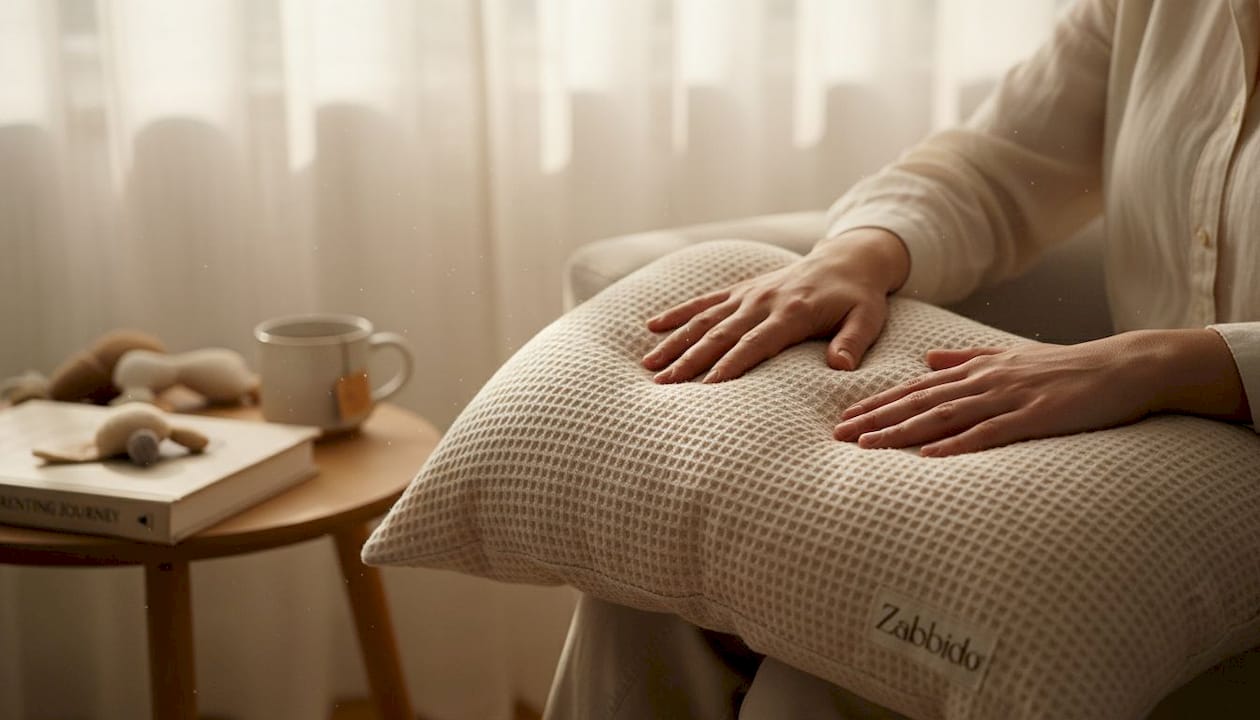
Bamboo is the rising favourite in ergonomic baby products. It’s naturally antimicrobial, which helps keep the pillow hygienic between washes. It’s also exceptionally moisture-wicking, pulling sweat away from both your skin and your baby’s during longer feeds. Bamboo fabric tends to feel silky and cool to the touch, which many mothers find soothing during postpartum recovery. Its breathability is comparable to organic cotton, sometimes superior in warm climates.
Synthetic fabrics and blends (polyester, microfibre, and synthetic-cotton mixes) have their place but come with caveats. Polyester and synthetic blends offer quick-drying, moisture-wicking, and stain resistance but may trap heat or off-gas compared to natural fibres. They’re easier to care for in the chaos of early motherhood. However, they’re generally less breathable overall and may cause heat build-up in warmer conditions.
| Fabric | Breathability | Hypoallergenic | Moisture-wicking | Ease of care | Chemical risk |
|---|---|---|---|---|---|
| Organic cotton | Excellent | Yes | Good | Moderate | Very low |
| Bamboo | Excellent | Yes | Excellent | Moderate | Very low |
| Polyester blend | Moderate | No | Good | High | Low to moderate |
| Conventional cotton | Good | Partial | Good | Moderate | Low to moderate |
| French flax linen | Excellent | Yes | Very good | Moderate | Very low |
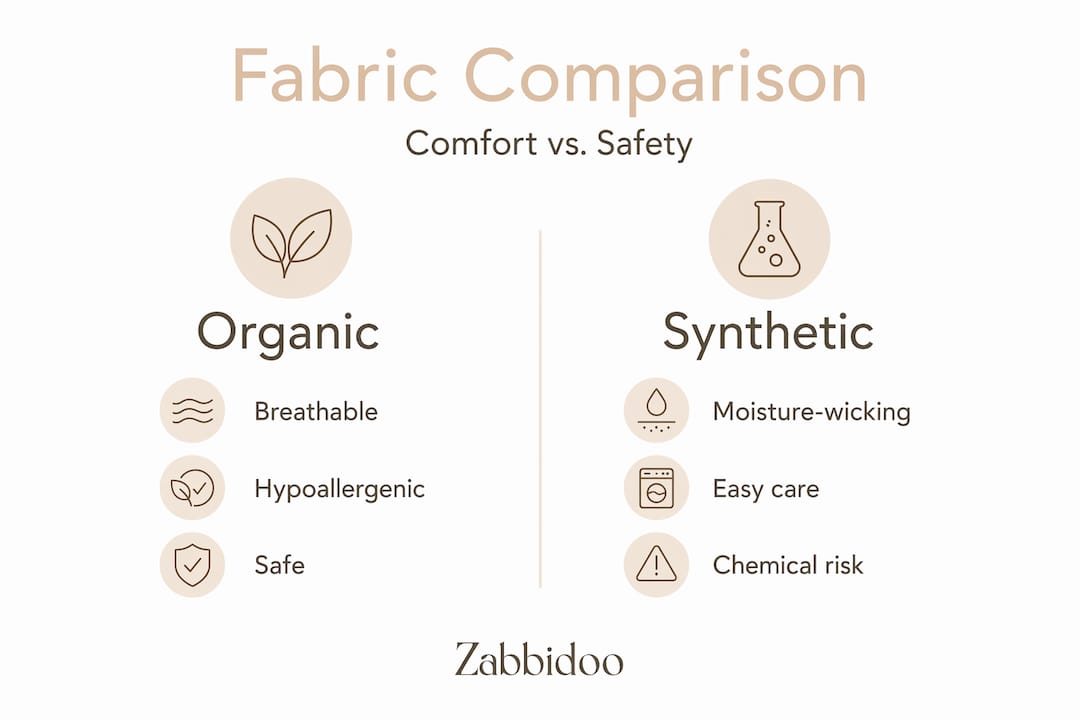
French flax linen, used in Zabbidoo’s nursing pillow, is worth a separate mention. It’s one of the most breathable and durable natural fabrics available, and it becomes softer with each wash rather than wearing down. It’s temperature-regulating, meaning it stays cool in summer and doesn’t feel icy in winter — genuinely useful for a product you’ll use year-round.
Pro Tip: Look for GOTS (Global Organic Textile Standard) certification on any organic cotton product. This certification guarantees the fabric was grown and processed without toxic pesticides or synthetic dyes, giving you confidence that “organic” isn’t just a marketing term.
Understanding the performance features for comfort that each fabric enables will help you prioritise what matters most in your specific situation — whether that’s maximum breathability, antimicrobial properties, or ease of laundering.
Key advantages of natural fibres over synthetics:
- Reduced risk of chemical exposure during prolonged skin contact
- Better thermal regulation across seasonal temperature changes
- Gentler texture for sensitive newborn and postpartum skin
- Naturally antimicrobial (especially bamboo and linen) without added treatments
- Longer-term softness and durability when cared for correctly
How fabric impacts ergonomics, support, and the feeding experience
Having compared what fabrics offer, it’s crucial to see how these choices genuinely play out in practice for both mum and baby. Fabric doesn’t just sit on top of a pillow — it interacts with the structural support beneath it in ways that directly affect your feeding posture.
A textured or grippy fabric surface helps keep your baby stable during feeds, reducing how often you need to reposition. A slippery synthetic cover does the opposite. Even a small amount of baby movement during a latch can cause you to hunch forward or twist your wrist to compensate — exactly the kind of micro-adjustments that accumulate into neck, shoulder, and wrist strain over weeks of feeding.
“For ergonomic comfort and postpartum recovery, breathable hypoallergenic covers minimise arm and back strain through stable positioning and reduce skin irritation risks — two things that directly affect how long you can comfortably sustain a feed.”
Fabric breathability directly impacts feeding duration comfort. Poor moisture management causes fussiness, while optimal wicking supports longer sessions — something that genuinely matters for postpartum recovery and milk supply establishment.
Here’s a step-by-step way to assess whether your pillow’s fabric is helping or hindering your ergonomic setup:
- Check temperature after ten minutes. Place your hand between the pillow and your body after a short feeding session. If it’s noticeably warm or damp, the fabric isn’t managing moisture well.
- Observe your baby’s positioning. Is your baby sliding or shifting frequently? A grippy natural fabric surface provides more friction and stability than a smooth synthetic.
- Notice your own posture adjustments. If you’re leaning forward or twisting to keep your baby in position, the fabric surface may be contributing to instability.
- Check for any redness. After feeds, look at your forearms and your baby’s cheek. Contact redness or heat rash in those spots suggests the fabric is trapping heat or moisture.
- Smell the pillow. A faint chemical or plasticky odour after unboxing can indicate off-gassing from synthetic materials, which may be worth considering if your baby has respiratory sensitivity.
The support for comfort that a well-designed nursing pillow provides is only as effective as the fabric allows. A firm, high-lift pillow covered in a slippery synthetic loses much of its positional benefit. The fabric needs to work with the structure, not against it.
| Fabric property | Ergonomic impact | Feeding session outcome |
|---|---|---|
| Grippy texture | Reduces baby sliding, less repositioning | Longer stable feeds, less maternal strain |
| Breathability | Reduces heat build-up | Calmer baby, more relaxed feeds |
| Moisture-wicking | Prevents sweat-related discomfort | Improved feeding duration |
| Smooth/slippery surface | Increases repositioning frequency | More posture compensation, more fatigue |
For mothers exploring the multi-use pillow workflow, fabric quality becomes even more relevant. When a pillow transitions between nursing support, tummy time, and sitting support, the cover needs to handle varied contact pressures and cleaning cycles without degrading quickly.
Practical tips: Choosing and caring for nursing pillow fabrics
Now that you know how much fabric matters, here’s how to confidently choose the best option and keep your nursing pillow fresh and safe throughout the feeding journey.
How to choose the right fabric:
- Prioritise hypoallergenic materials if your baby has shown any skin sensitivity or if you have a family history of eczema or allergies.
- Look for GOTS certification on organic cotton products to confirm the claim is backed by independent verification.
- Choose moisture-wicking fabrics (bamboo or linen) if you live in a warm climate or if your feeds tend to run long.
- Assess the cover’s removability. A cover that zips off easily for washing is far more practical than one that’s sewn on or requires the whole pillow to be laundered.
- Check whether replacement covers are available. Pillow covers wear out faster than the inner foam or fill, so being able to replace the cover extends the life of the whole product.
Care tips to keep your nursing pillow clean and safe:
- Wash the cover at least weekly during the newborn phase, more often if there are frequent milk spills or nappy leaks
- Use fragrance-free, dye-free laundry liquid on all baby-contact fabrics
- Avoid fabric softeners on natural fibres as they can coat the fibres and reduce breathability over time
- Air-dry when possible. Natural fibres like linen and bamboo can shrink or weaken with excessive heat from dryers
- Never use bleach on organic cotton or bamboo, as it degrades the fibres and may leave residual chemicals
Natural fabrics excel in breathability and safety for sensitive skin but dry slower than synthetics, so factor in your drying routine when making a choice.
For mothers who want practical guidance on pillow durability and maintaining quality over the full feeding period, the fabric care routine is just as important as the initial purchase decision.
Pro Tip: Buy two covers if possible. Rotating between covers means one is always clean and ready while the other is in the wash — a small investment that removes a lot of stress from those early weeks.
When it comes to setup for comfortable feeding, the fabric condition of your cover matters as much as your posture. A pilling, stretched, or moisture-damaged cover compromises both grip and breathability, so replacing covers as they wear is part of ongoing ergonomic care.
The hidden cost of neglecting fabric choice in real life
Here’s the perspective many new mothers don’t get until it’s too late: the cheapest nursing pillow is almost never the best value. It’s often the most expensive in the long run.
When a pillow cover uses substandard synthetic material, mothers frequently report one or more of the following within the first few weeks: contact rashes on their baby’s cheek, increased fussiness during feeds, their own skin irritation from sweating against non-breathable fabric, and pillows that lose shape faster because the cover stretches out under frequent washing. Every one of those outcomes costs something — whether that’s a GP visit, a replacement product, or simply the very real toll of struggling through feeds that should be manageable.
Occupational therapists who work with postpartum mothers consistently point to the fabric quality as an underestimated factor in feeding comfort. A pillow that keeps your baby cool, stays grippy under pressure, and doesn’t cause skin irritation removes friction from an already demanding process. Removing that friction is what allows a mother to focus on the feed itself rather than managing the environment around it.
There’s also the allergy angle that catches many parents off guard. Synthetic fabric coatings and flame retardant treatments can trigger low-grade contact reactions that present as general irritability, skin redness, or disrupted sleep — all of which get attributed to feeding issues, colic, or reflux before anyone thinks to check the pillow. It’s worth testing pillow safety before committing to a product, particularly if your baby is showing early signs of skin sensitivity.
The mothers who find their nursing pillows genuinely helpful tend to share one thing in common: they chose based on material quality first, not price or aesthetics. Start with fabric, then consider everything else.
Discover comfort-driven nursing solutions
If the information in this guide has shifted how you think about nursing pillow fabric, you’re already better equipped to make a choice that genuinely supports you and your baby.
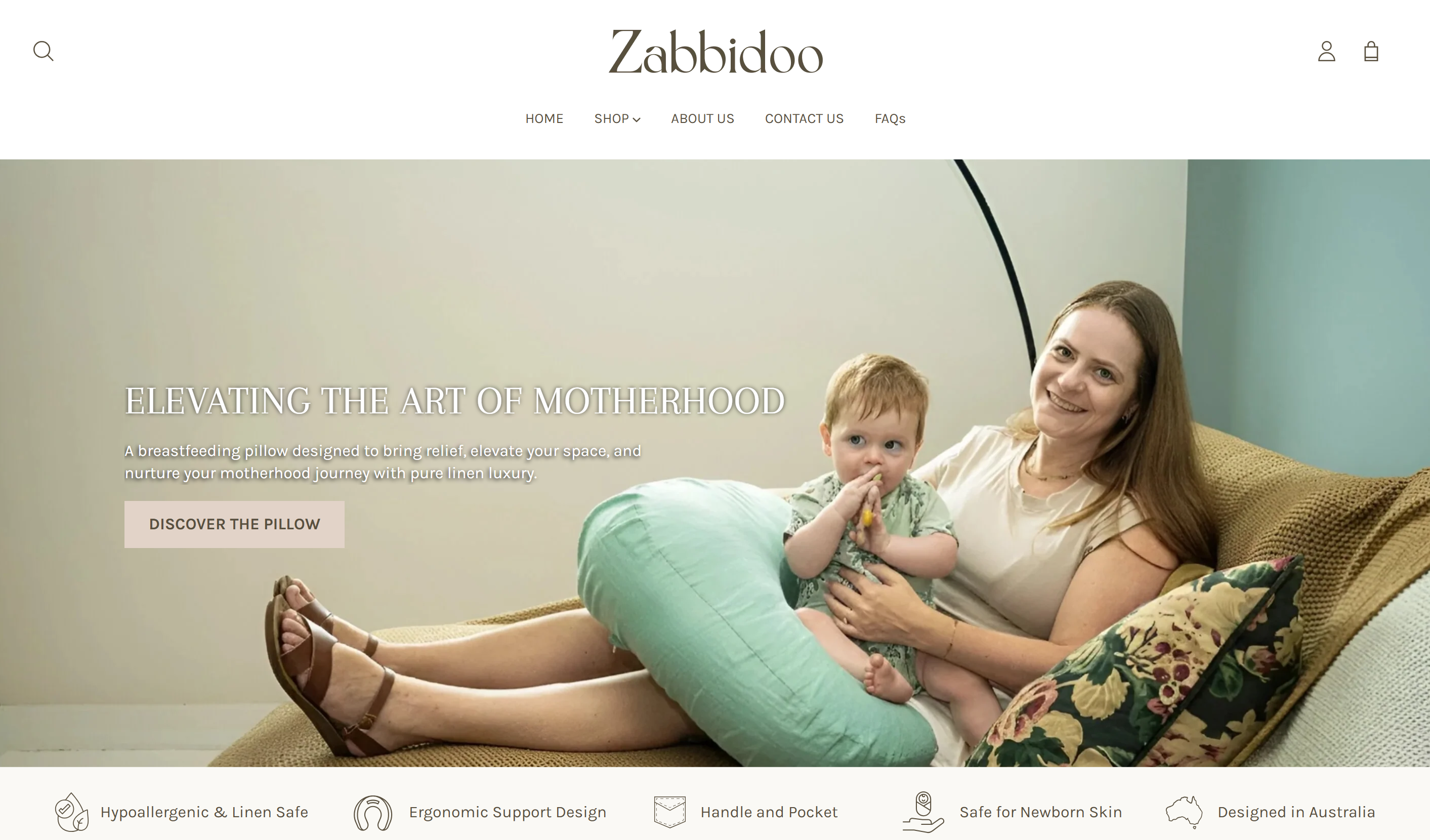
Zabbidoo’s nursing pillow is designed around the principles explored in this guide. French flax linen cover for breathability and durability. An 18cm lift that brings baby to mum rather than making mum hunch. A compression-resistant core that holds its shape through every feed, every day. These aren’t just product features — they’re solutions to the real problems that fabric shortcuts create. Explore our ergonomic nursing pillows and discover how the right materials feel in practice. And while you’re getting set up, our complimentary pacifier clip is a small but genuinely useful addition to your feeding toolkit.
Frequently asked questions
Which fabric is safest for babies with sensitive skin?
Organic cotton is widely considered the safest option, as GOTS-certified cotton covers are free from flame retardants and VOCs that can trigger reactions in sensitive skin.
Do synthetic fabrics cause overheating during feeding?
They can. Polyester blends may trap heat more than natural fibres, increasing overheating risk during longer feeds — particularly in warm Australian conditions.
How do I clean and care for organic cotton nursing pillows?
Most organic cotton covers are machine-washable on a gentle cycle using fragrance-free detergent. Always check the label and air-dry where possible to preserve softness and shape.
Why does fabric breathability affect feeding duration?
Fabrics with poor breathability allow heat and moisture to build up quickly, making babies fussy and feeds shorter. Optimal moisture wicking supports longer, more comfortable sessions that benefit both milk supply and postpartum recovery.