

Most mums assume that any nursing pillow will do the job. You buy one, you use it, and if feeding still hurts, you blame your posture or your latch. But here is what rarely gets talked about: the shape and firmness of your nursing pillow directly influence how much your neck, back, and wrists suffer through every single feeding session. With newborns nursing anywhere from eight to twelve times a day, that adds up fast. This guide walks you through exactly what to look for in a nursing pillow shape so you can feed with less pain, better posture, and far more confidence.
Table of Contents
- Why pillow shape matters for nursing comfort
- Comparing common nursing pillow shapes
- Material and firmness: The long game
- Special scenarios: C-section recovery and postpartum pain
- The overlooked truth about pillow shape and mum support
- Discover ergonomic nursing solutions
- Frequently asked questions
Key Takeaways
| Point | Details |
|---|---|
| Shape impacts posture | The pillow’s shape determines mum’s feeding posture and risk of physical strain. |
| Firmness boosts comfort | Firm pillows maintain height and support, resisting flattening during longer feeds. |
| Material matters | Memory foam offers safety and durability compared to fibre-fill, which compresses quickly. |
| Special shapes for recovery | Mums recovering from C-section or pelvic pain benefit from football hold and lumbar support pillow designs. |
| Long-term support wins | Selecting a stable, strap-secured pillow ensures lasting ergonomic benefit for both mum and baby. |
Why pillow shape matters for nursing comfort
Let us look at the science behind why pillow shape, not just material, affects your feeding experience.
Most new mums choose a nursing pillow based on how soft it looks, the colour of the cover, or what was on sale. This is completely understandable. When you are sleep-deprived and buying for a baby you have not met yet, visual appeal and price win. But softness and aesthetics tell you almost nothing about whether a pillow will actually support your body during a 30-minute feed.
Pillow shape determines how your body positions itself around the baby. A flat pillow forces you to lean forward to meet your baby at breast height, rounding your spine and tightening your shoulders. A C-shaped pillow wraps around one side of your body, which works well for cradle holds but leaves gaps for other positions. A U-shaped or wraparound design covers more of your lap and torso, distributing the baby’s weight more evenly and reducing the load on your arms.
Here is the biomechanical reality: when your pillow sinks under your baby’s weight, you hunch. When you hunch, your neck muscles compensate. Over a 45-minute feed, those muscles are essentially holding isometric tension for the entire session. Do that eight times a day, and you have a recipe for chronic neck and upper back pain.
“Firmness is critical. Pillows must resist compression under baby weight to maintain height and support posture over 10 to 45 minute sessions.”
This is why memory foam preferred over fibrefill has become the consistent recommendation from consumer safety experts. Fibrefill flattens. And a flat pillow stops being a support tool and starts being a decorative cushion on your lap.
Key things pillow shape affects:
- Feeding height: A taller, firmer pillow brings baby up to breast level rather than forcing you to bend down
- Weight distribution: Wraparound shapes spread your baby’s weight across more surface area, reducing arm and wrist fatigue
- Hold flexibility: Some shapes only suit one feeding position; others support cradle, football, and side-lying holds
- Stability during letdown: A wobbly pillow means constant repositioning, which breaks latch and adds frustration
Understanding these mechanics is the first step. For more on safer feeding with baby pillows, it helps to see how shape interacts with feeding safety.
Comparing common nursing pillow shapes
Now that we understand why shape matters, let us compare the most common nursing pillow designs and their unique benefits.
Not all nursing pillows are created equal, and the shape you choose should match your body type, your preferred feeding positions, and your recovery situation. Here is how the main designs stack up:
| Shape | Best for | Pros | Cons |
|---|---|---|---|
| Flat with strap | Most body types, latch support | Firm, stable, adjustable fit | Less wraparound coverage |
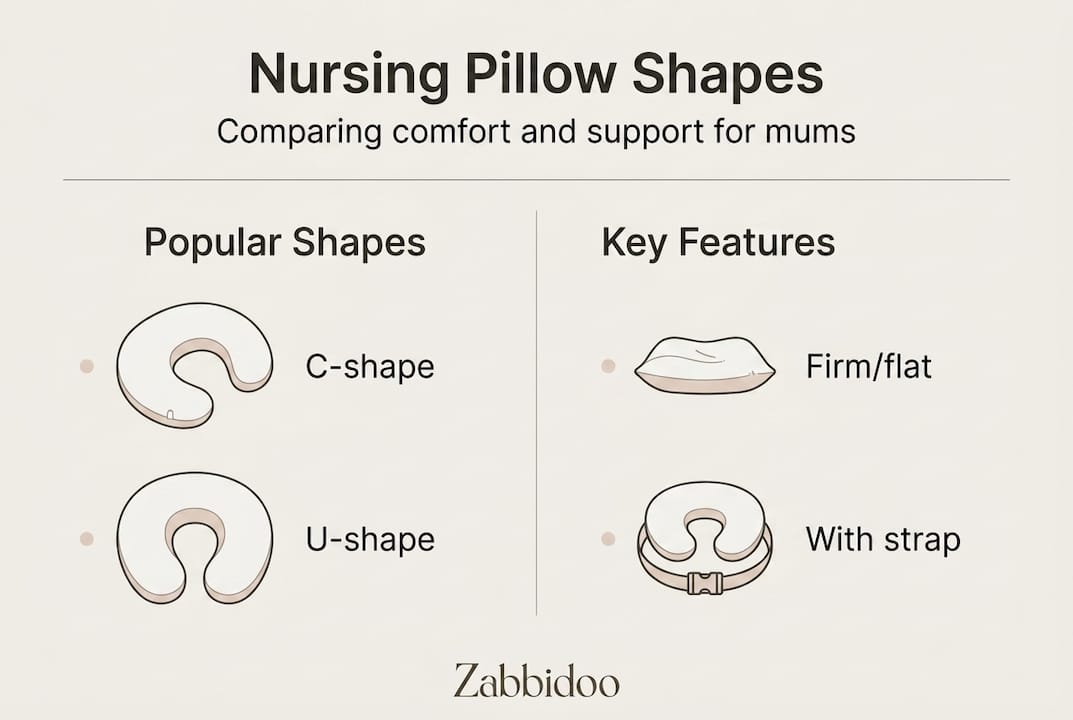
| C-shaped | Cradle hold, petite frames | Good one-side support | Limited position variety |
| U-shaped | Larger frames, twins | Full wraparound, versatile | Bulky, harder to store |
| Wraparound/horseshoe | General use, back strain | Even weight distribution | Can shift without strap |
The flat, firm design with an adjustable strap deserves special attention. According to research reviewed by consumer safety experts, My Brest Friend’s flat firm design with adjustable strap provides optimal alignment, stability for various body types, and reduces muscle strain. It is recommended by lactation consultants specifically for latch quality and safety. The strap prevents the pillow from slipping during feeds, which is a bigger deal than it sounds. A pillow that slides mid-feed means you are gripping your baby tighter with your arms to compensate, and that tension goes straight to your wrists and forearms.
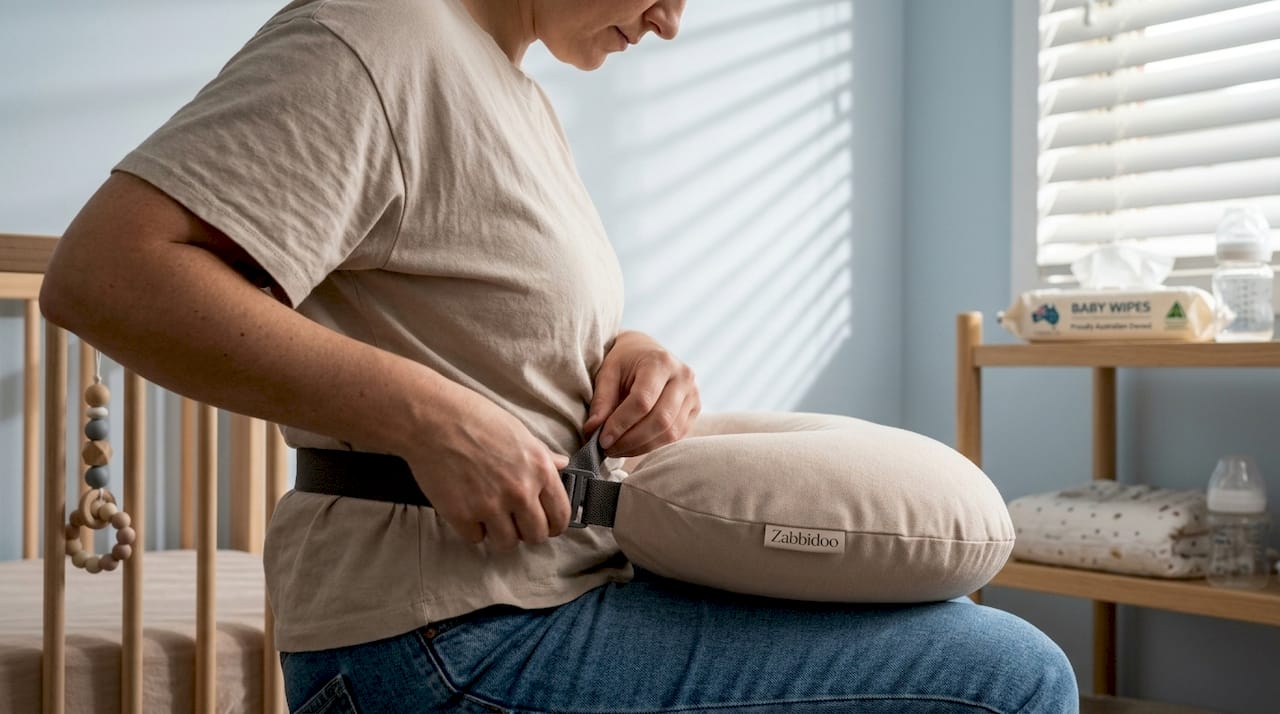
C-shaped pillows are popular and widely sold, but they work best for mums with smaller frames who predominantly use the cradle hold. If you are taller, have a larger torso, or want to switch between positions, a C-shape will feel limiting fairly quickly.
U-shaped pillows offer the most coverage but come with trade-offs. They are bulky, harder to carry between rooms, and if they are not firm enough, the weight of your baby pushes the middle section down, which brings you back to the hunching problem.
Pro Tip: If you are exploring height-adjustable nursing pillows, look for ones that maintain their loft after repeated use. A pillow that starts at 18cm and compresses to 10cm within two weeks is not serving your posture.
A few things to look for regardless of shape:
- Non-slip base: Keeps the pillow from sliding off your lap during longer sessions
- Removable, washable cover: Spillage is inevitable; ease of cleaning matters more than you expect
- Firm core material: Shape means nothing if the inside collapses
- Position versatility: A good pillow should support at least two or three different feeding holds
If you are interested in getting more value from your pillow beyond feeding, explore comfort with multi-use nursing pillows, which covers how the same pillow can support tummy time, post-feed positioning, and infant development.
Material and firmness: The long game
After looking at shapes, material and firmness present another critical layer of decision-making.
Here is a truth that most pillow marketing glosses over: how your pillow feels on day one is almost irrelevant compared to how it performs on day 60. Nursing is not a short-term commitment. You may be feeding for six months, twelve months, or longer. The pillow that feels luxuriously soft at the start of your postpartum journey may become a liability by week three.
The debate between memory foam and fibrefill is not complicated once you understand the physics. Fibrefill compresses under sustained weight. Memory foam displaces and then returns to shape. For something that needs to hold firm through eight to twelve daily sessions, the difference is significant.
| Material | Compression resistance | Shape retention | Safety suitability |
|---|---|---|---|
| Memory foam | High | Excellent | Preferred by experts |
| Fibrefill | Low to moderate | Poor over time | Conditional |
| Latex | High | Good | Suitable, check for allergies |
| Microbeads | Moderate | Moderate | Variable |
Safety standards reinforce this. Consumer safety research confirms that safety standards mandate firm/flat pillow surfaces to prevent suffocation risk. A nursing pillow that softens and sinks creates a surface that a baby’s face could press into if positioning shifts. Firmness is not just about your comfort; it is also a safety baseline.
Some mums genuinely find soft pillows more comfortable at first, particularly in the early weeks when everything feels tender and sensitive. That preference is understandable. But softer pillows compress over time while firm pillows outperform them in the long run per lactation expert guidance. The short-term cosiness trades off against the long-term strain it introduces.
What to look for in a firm, durable pillow:
- Density rating: Higher density foam resists compression better
- Cover breathability: Foam can retain heat; a breathable cover like French flax linen regulates temperature
- Structural integrity: Press down hard on the pillow in the shop. It should spring back quickly and fully
- Wash durability: Some foam pillows degrade after repeated washing; check care instructions
For a deeper look at real-world performance, testing safe nursing pillow support covers how different pillows hold up under extended use. And if you want practical guidance on keeping your pillow performing well over time, nursing pillow durability tips is worth bookmarking.
Special scenarios: C-section recovery and postpartum pain
Beyond general needs, some mums face extra challenges where pillow shape can make an even bigger difference.
If you have had a caesarean, your situation requires specific consideration. The incision site means pressure against your abdomen is not just uncomfortable but potentially painful during early recovery. This changes which pillow shapes work for you and which holds are practical.
Here is a simple approach to choosing and using your pillow during C-section recovery:
- Prioritise the football hold initially. Tucking baby under your arm rather than across your abdomen avoids pressure on the incision and gives you better visibility of your baby’s latch.
- Choose a firm, C or wraparound shape with side support. A firm pillow with side coverage keeps baby stable without requiring you to press it against your stomach.
- Avoid classic cradle holds in early recovery. The traditional cradle position sits the baby directly across the lower abdomen, which is exactly where you need the least pressure.
- Use a rolled towel or additional small pillow as a buffer between the pillow edge and your incision site if needed.
Research confirms that C-section recovery favours football hold with side support, and many lactation consultants make this their first recommendation for post-surgical mums.
Pro Tip: If you are recovering from a caesarean and struggling with positioning, ask your hospital’s lactation consultant to show you the football hold with your actual pillow before discharge. Getting this right once is worth more than reading ten guides.
For mums dealing with postpartum pelvic girdle pain, the research is genuinely encouraging. A 2025 study found that lumbar support pillows reduced pelvic pain more effectively than pelvic belts, improving pain scores, disability levels, and motor control in postpartum women. This is a meaningful finding because it suggests that the right pillow support, used consistently during feeding, can have therapeutic benefit beyond just comfort.
Pelvic girdle pain during feeding often worsens when you are sitting in poor posture for extended periods, which is exactly what a collapsing or badly shaped nursing pillow encourages. A pillow that maintains lumbar support and keeps you upright reduces the sustained pressure on your pelvis and sacroiliac joints. For mums juggling nursing with pelvic recovery, a multi-use pillow to cut strain can also support positioning between feeds, not just during them.
The overlooked truth about pillow shape and mum support
Having covered special cases, let us pause for a frank look at the big-picture lessons mums and brands often miss.
Here is something we believe strongly at Zabbidoo: the nursing pillow industry has spent too much energy selling comfort and not enough time solving posture. Softness photographs beautifully. Firmness does not. So marketing gravitates toward the plush, the cosy, and the visually appealing, even when those qualities work against the mum using the product.
The result is that mums buy soft pillows expecting relief, find themselves hunching anyway, and conclude that nursing is just supposed to hurt. It is not. The pain is often a design failure, not an inevitable part of feeding.
What the evidence actually points to is clear: firm, wraparound pillows with straps consistently outperform softer alternatives in long-term physical outcomes. Stability reduces muscle fatigue. Height prevents hunching. Compression resistance maintains both safety and posture over the full length of a feed. These are not luxury features; they are functional necessities.
The other thing worth saying plainly is that most mums underestimate how cumulative feeding strain is. A few millimetres of extra height on a pillow sounds trivial. But across hundreds of hours of feeding over six to twelve months, that height difference represents the gap between chronic neck pain and a comfortable experience. Design choices at the small end of the scale have enormous long-term consequences.
We are also seeing a shift in how the best nursing products are designed. Rather than optimising for showroom appeal, forward-thinking brands are prioritising physical health outcomes, working with ergonomics principles and real postpartum physiology. The design trends in feeding pillows are moving firmly in this direction, and mums who understand what to look for are in a much better position to choose well.
The uncomfortable truth is this: if your pillow feels too soft to press firmly against, it is probably not doing enough. A good nursing pillow should feel almost surprisingly firm in your hands before you use it.
Discover ergonomic nursing solutions
Ready to find the right ergonomic support for your feeding journey? Here is where to start.
At Zabbidoo, every pillow is designed around one core idea: your comfort should not require compromising your posture. The Zabbidoo nursing pillow lifts your baby 18cm, resists compression throughout long feeding sessions, and is made with breathable French flax linen that keeps both of you comfortable. It is built for the mums who want something that works as hard as they do.
Beyond the pillow itself, Zabbidoo’s range includes accessories that make the feeding routine smoother and less stressful. Whether you are looking for practical add-ons or trying to build a setup that supports your recovery, the Zabbidoo collection is worth exploring. Visit zabbidoo.com to find the right fit for your body, your baby, and your feeding journey.
Frequently asked questions
What pillow shape is best for C-section recovery?
A firm, wraparound pillow or a C-shaped pillow with side support works best for C-section recovery, as it supports the football hold and avoids pressure on the incision site. Look for a pillow with an adjustable strap to keep it stable without requiring abdominal tension.
Is memory foam safer than fibre-fill for nursing pillows?
Memory foam is generally preferred by experts because it resists compression, maintaining height and a safe, stable surface throughout feeding sessions. Fibrefill flattens over time, which can compromise both posture and baby safety.
How does pillow firmness affect breastfeeding comfort?
Firm pillows provide a stable platform that keeps baby at breast height, reducing the hunching that leads to neck and back strain. Soft pillows compress under baby weight and lose their shape, which forces mums to compensate with muscle tension throughout the feed.
Can nursing pillows help with postpartum pelvic pain?
Yes. Research shows that lumbar support pillows outperform pelvic belts in reducing postpartum pelvic girdle pain, with improvements in pain levels, disability, and motor control. Using a supportive nursing pillow consistently during feeds can contribute meaningfully to pelvic recovery.