

Most mums spend hours researching nursing pillows, comparing firmness, shape, and price. Yet one factor that dramatically affects feeding comfort gets almost no attention: airflow. When you’re feeding for 20 to 40 minutes at a stretch, heat and moisture build up fast between your body and your baby’s. That microclimate of warmth and sweat makes both of you uncomfortable, disrupts latching, and shortens how long you can feed without repositioning. This article explains why airflow matters, how new 2025 safety standards have quietly changed pillow design, and exactly what to look for when choosing a pillow that keeps you both cool and supported.
Table of Contents
- Why airflow matters in nursing pillows
- Latest safety standards: Balancing firmness, support, and airflow
- How materials affect airflow and overall comfort
- Making the right choice: Ergonomics, breathability, and safety
- Our perspective: What most don’t realise about airflow in nursing comfort
- Explore ergonomic nursing pillows with optimal airflow
- Frequently asked questions
Key Takeaways
| Point | Details |
|---|---|
| Airflow prevents overheating | Breathable nursing pillows reduce heat build-up, keeping both mum and baby comfortable during feeding. |
| Safety standards matter | Post-2025 compliant pillows maintain necessary airflow while prioritising firmness and accident prevention. |
| Materials impact comfort | Selecting the right cover and filler materials ensures both support and breathability for extended use. |
| Shop wisely | Look for pillows with tested airflow, ergonomic design, and Australian certifications for the safest experience. |
Why airflow matters in nursing pillows
Feeding is a warm business. Your body temperature rises with the effort of milk production, and your baby radiates heat like a tiny furnace. Press the two of you together over a dense foam pillow for half an hour and you’ve created a humid pocket of trapped warmth. The result is sweaty skin, friction, irritation, and a restless baby who keeps unlatching.
This is called microclimate discomfort, and it’s more than just annoying. Persistent heat and moisture against delicate newborn skin can cause redness and rashes. For you, it means constant fidgeting, repositioning, and the kind of fatigue that has nothing to do with sleep deprivation.
Good airflow interrupts that cycle. When a pillow allows air to circulate between layers and around the contact points, it carries heat and moisture away from the skin. Sessions that were cut short by discomfort can extend naturally, which matters enormously for establishing milk supply and a reliable latch.
There’s a posture angle here too. Airflow enhances feeding comfort by preventing that microclimate buildup, which lactation consultants recognise as directly supporting better latch and ergonomic positioning without strain. When you’re not shifting around to escape discomfort, you hold a steadier posture. Your shoulders drop, your back relaxes, and the baby stays in a consistent position for a deeper latch.
Here’s what poor airflow typically produces during a single feeding session:
- Sweating along the forearms and inner wrists where the pillow contacts skin
- Skin-on-skin redness on the baby’s cheek and your abdomen
- Frequent repositioning that breaks the latch
- Shortened session length due to discomfort
- Increased neck and shoulder strain from hunching to compensate
“A breathable pillow isn’t a luxury feature. It’s part of what makes extended, comfortable feeding physically possible for most mothers.”
Getting your nursing pillow setup right from the first session makes a measurable difference, and airflow is a big part of that equation. Checking nursing pillow safety guidelines also helps you understand which designs are built for real comfort rather than just marketing claims.
Pro Tip: Press your palm flat against a pillow and hold it there for 30 seconds. If it feels warm and stuffy when you lift your hand, airflow is poor. If it feels neutral or slightly cool, that’s a good sign.
Latest safety standards: Balancing firmness, support, and airflow
If you’ve shopped for nursing pillows recently, you may have noticed that newer models feel noticeably firmer. That’s not a coincidence. New federal standards effective April 2025 require firmer pillow construction to prevent suffocation, along with wider openings and mandatory warnings against using pillows for infant sleep or lounging.
Those firmer, less conforming materials have an unexpected benefit: they tend to support better airflow. Soft, plush pillows compress and mould around your body, sealing off any gap where air could circulate. A firmer pillow maintains its shape, preserving space between surfaces and allowing heat to dissipate.
The statistics behind these standards are sobering. Between 2010 and 2022, 154 infant deaths were linked to nursing pillow misuse, predominantly from infants left unsupervised or placed in positions that restricted breathing. The new safety recommendations for nursing pillows make clear that these products are feeding aids only, never sleep surfaces.
| Design element | Pre-2025 standard | Post-2025 standard |
|---|---|---|
| Fill firmness | Variable, often soft | Firmer, less conforming |
| Opening width | Narrower common | Wider opening required |
| Sleep use warning | Inconsistent | Mandatory labelling |
| Overheating guidance | Rare | Built into design intent |
The relationship between firmness and airflow is worth understanding. A pillow that holds its shape under your baby’s weight doesn’t collapse to form a sealed pocket of trapped warmth. Air continues to move around and through the structure. This is why height-adjustable pillows designed with structural integrity tend to score better on breathability in real-world use.
Key points to remember from the 2025 standards:
- Firmness is now a safety requirement, not a preference
- Pillows must display warnings against infant sleep and lounging
- Wider openings reduce entrapment risk and improve ventilation
- Compliance with these standards should be a baseline, not a bonus, when you’re shopping
How materials affect airflow and overall comfort
Safety standards shape what’s allowed, but the materials inside and around your pillow determine your daily experience. Not all breathable-sounding fabrics perform equally, especially in Australia’s warmer climate.
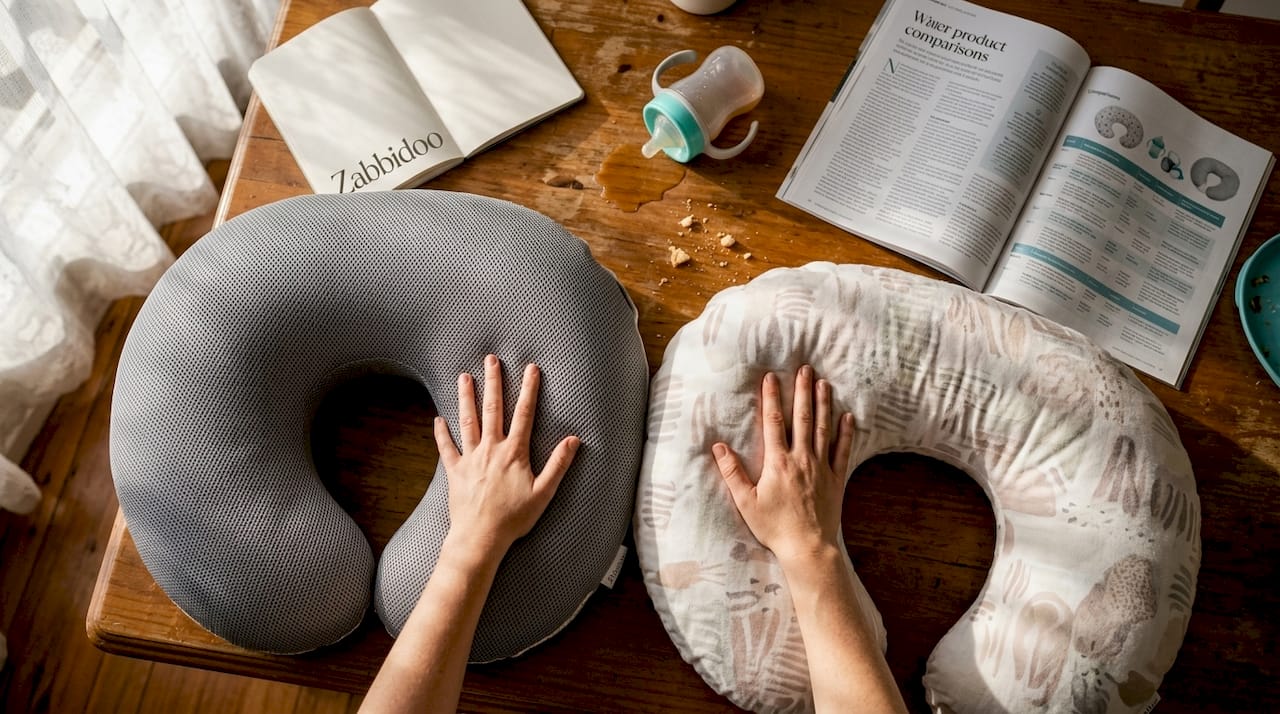
Cotton and mesh covers are the standout performers for airflow. Cotton is natural, soft against skin, and allows moisture to wick away from the surface. Mesh is even more breathable, with an open weave that promotes active air circulation. Both are far superior to polyester blends, which trap heat and feel synthetic against sensitive postpartum skin.
Fill material matters just as much. Firm foam with an open-cell structure allows air to move through the pillow itself rather than being sealed inside. Microbeads can offer a degree of breathability depending on their casing, but dense memory foam and polyester fiberfill tend to compress and retain heat. Ergonomic support reducing strain on your neck, back, arms, and shoulders only works long-term if the fill holds its shape and doesn’t turn into a sweaty, compressed mass after a few weeks of use.
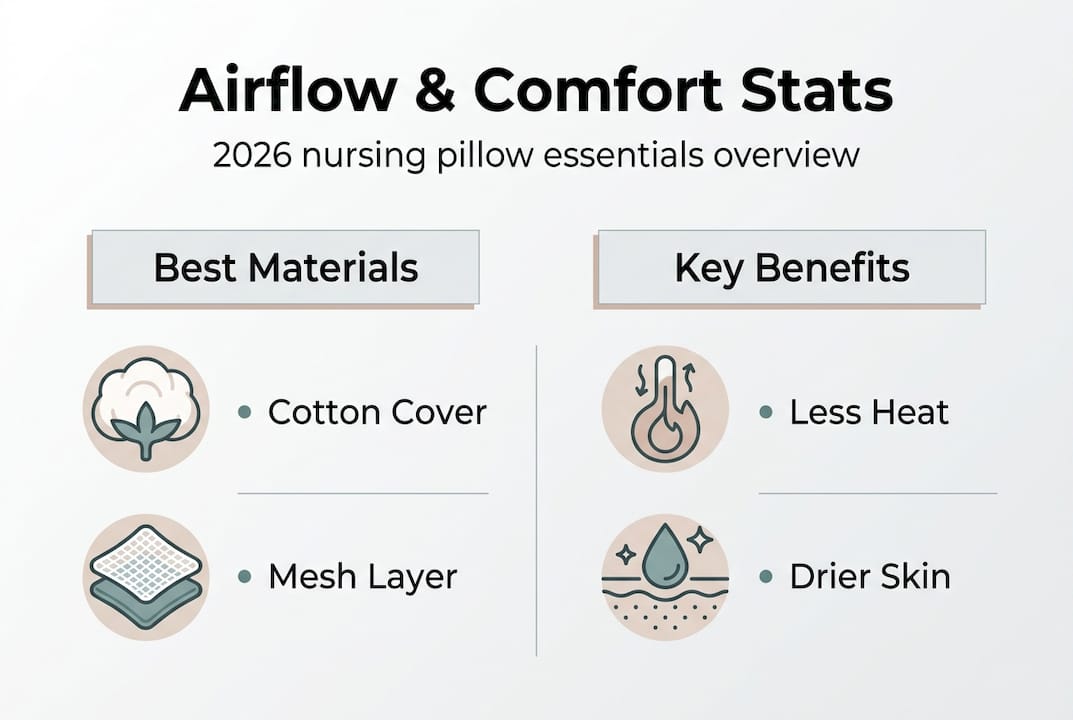
Here’s a quick comparison of common materials for Australian conditions:
| Material | Breathability | Shape retention | Ease of cleaning |
|---|---|---|---|
| Cotton cover | High | N/A (cover only) | Machine washable |
| Mesh cover | Very high | N/A (cover only) | Machine washable |
| Open-cell foam fill | Good | Excellent | Spot clean |
| Microbead fill | Moderate | Good | Varies |
| Memory foam fill | Poor | Excellent initially | Spot clean only |
| Polyester fiberfill | Poor | Compresses quickly | Machine washable |
A few practical pointers for choosing based on material:
- Look for pillows with removable, washable covers as the standard, not an add-on
- Linen blends like French flax linen combine breathability with durability and feel genuinely cool against skin
- Avoid pillows where the cover and fill are permanently bonded, as you can’t clean or air them separately
- Check that ventilation holes or perforations exist in the fill layer, not just the outer cover
Good nursing pillow care is also part of the airflow story. Regular washing and proper drying of covers removes the moisture and oils that clog fabric fibres and reduce breathability over time. Even high-quality pillow cover materials lose their airflow properties when they’re overdue for a wash.
Pro Tip: When shopping in a store, hold the pillow cover up to a light source. If you can see light through the weave, air moves through it. Tightly woven or coated fabrics that block light will also block airflow.
Making the right choice: Ergonomics, breathability, and safety
You now understand the science. Here’s how to put it into practice when you’re actually choosing a pillow.
Start with a numbered checklist and move through it in order:
- Compliance first. Confirm the pillow meets post-2025 federal safety standards. Look for explicit firmness ratings and sleep-use warnings on the packaging.
- Cover material. Prioritise cotton, linen, or mesh covers. Avoid polyester blends for anything more than a backup cover.
- Fill type. Choose open-cell foam or quality microbead fill over memory foam or polyester fiberfill.
- Removable cover. Non-negotiable for hygiene and maintaining long-term airflow performance.
- Height and lift. A pillow that raises your baby to breast height prevents you from hunching, which keeps your torso more upright and aids natural ventilation around your body.
- Shape retention. Squeeze the pillow firmly and release. It should return to its original shape quickly. Collapse means poor support and reduced airflow gap.
- Certifications. Look for OEKO-TEX or similar certifications confirming the materials are free from harmful chemicals, which matters for what’s pressed against your baby’s face.
When testing breathability at home or in-store, press the cover flat and feel for airflow resistance. A well-designed pillow should feel open and neutral. Note that firmer designs balancing support and airflow require supervised feeding only, which is a genuine safety rule, not fine print.
Pro Tip: If you’re buying online, search specifically for the fill material in the product description. Vague terms like “ultra-soft fill” almost always mean poor airflow and quick compression.
A few additional buying considerations:
- Does the pillow suit your body shape? A pillow that gaps away from your torso creates instability, not just comfort issues
- Can it be used for tummy time and seated support as your baby grows, maximising your investment
- Is the pillow setup for comfort clearly described by the brand, indicating they’ve thought about real-world use
When you’re ready to compare options, reviewing what’s available among well-designed shop nursing pillows gives you a clear picture of what a purpose-built ergonomic pillow actually looks and feels like.
Our perspective: What most don’t realise about airflow in nursing comfort
Most buying guides treat airflow as a secondary feature, something to mention after firmness, shape, and price. We think that order is backwards, particularly in Australia where feeding through summer is a genuinely physical challenge.
What we’ve found testing pillows is that even highly rated models can fail on breathability. A pillow that scores beautifully for latch support can still leave you both drenched and uncomfortable after 15 minutes in warm weather. That discomfort leads to shorter sessions, more frustration, and an avoidable reduction in milk supply.
The real mistake is treating airflow as a comfort bonus rather than a functional requirement. When you’re feeding 8 to 12 times a day, those small moments of heat and friction add up to something genuinely exhausting. A pillow that breathes well quietly removes one source of strain from every single session.
If you’re reconsidering your current setup, exploring adjustable pillows for comfort with breathable materials is a practical starting point. Airflow belongs near the top of your checklist, not buried at the bottom.
Explore ergonomic nursing pillows with optimal airflow
Understanding airflow is one thing. Feeling the difference in a well-designed pillow is another entirely.
Zabbidoo’s ergonomic nursing pillows are built around the exact principles covered in this article: breathable French flax linen covers, firm compression-resistant fill that holds its shape under real feeding conditions, and an 18cm lift that brings your baby to you rather than forcing you to hunch. Every design decision prioritises your comfort across a full day of feeds. And while you’re exploring, the pacifier clip chain rounds out your feeding kit so everything you need stays within easy reach.
Frequently asked questions
What materials offer the best airflow in nursing pillows?
Cotton and mesh covers with firm foam or microbead fillers provide excellent breathability. Airflow aids comfort in prolonged sessions by reducing the heat and moisture that build up between mother and baby.
Are airier nursing pillows still safe under the new 2025 regulations?
Yes, the new 2025 standards require firmness that prevents suffocation while still allowing safe airflow during supervised feeding. Firmer materials actually tend to support better ventilation than soft, conforming fills.
Can I use a nursing pillow with good airflow for co-sleeping?
No. Nursing pillows are not safe for infant sleep or co-sleeping regardless of how breathable they are. The 2025 safety standards mandate explicit warnings against sleep and lounging use on all compliant products.
How do I check if a nursing pillow allows enough airflow?
Look for breathable covers, open-cell fill, and avoid sealed or plush designs. Preventing microclimate buildup through good ventilation is a sign that a pillow has been genuinely designed for extended feeding comfort.
Recommended
- Step-by-step nursing pillow setup for comfortable feeding – Zabbidoo
- Nursing pillow durability: What new mums need to know – Zabbidoo
- How to care for your nursing pillow: tips for mums – Zabbidoo
- Best height-adjustable nursing pillows for mum comfort – Zabbidoo
- Двулицев матрак 2026: 18% по-добър комфорт с покет пружини