

Not all nursing pillows are created equal, and the difference between a well-tested pillow and a poorly designed one can be more serious than most mums realise. 154 infant deaths and 64 injuries were linked to nursing pillows between 2010 and 2022, with most involving babies under three months old. That is a confronting statistic, but it is also a call to action. This guide cuts through the confusion around nursing pillow testing, explains what safety standards actually mean in practice, and helps you find a pillow that genuinely supports both you and your baby during feeds.
Table of Contents
- Why testing nursing pillows matters
- How nursing pillows are tested: Safety and comfort explained
- Comparing popular nursing pillow types and what testing reveals
- Safe use at home: Applying what testing shows
- Our take: Why real-world testing beats assumptions every time
- Explore tested pillow comfort with Zabbidoo
- Frequently asked questions
Key Takeaways
| Point | Details |
|---|---|
| Firmness is safety | A properly tested, firm nursing pillow reduces risk and offers genuine ergonomic support. |
| Choice matters | Testing shows not all pillow types are equally safe—know which has passed checks. |
| Never for sleep | Nursing pillows should only be used for feeding, not for infant sleep or unsupervised time. |
| Home checks help | Test and maintain pillows regularly to keep them safe and comfortable with daily use. |
Why testing nursing pillows matters
The word “nursing pillow” sounds straightforward, but the reality is that design quality varies enormously between products. Some pillows are too soft, lose their shape within weeks, or have covers that shift during a feed. Others are marketed as ergonomic without any evidence to back that claim up. For mums who are already exhausted and focused on getting a good latch, these flaws are not just inconvenient. They can be dangerous.
Nursing pillows were involved in 17.9% of sudden unexpected infant deaths in the Georgia study when used on adult beds, highlighting how critical proper use and pillow design really are.
The risks associated with poorly tested pillows tend to fall into a few clear categories:
- Too soft or compressible: A pillow that collapses under baby’s weight creates an uneven surface that can cause a newborn’s head to roll or tilt, restricting airways.
- Poor shape retention: Pillows that flatten after a few uses force mum to hunch forward, increasing strain on the neck, back, and wrists.
- Loose or ill-fitting covers: Covers that bunch or shift can create gaps around baby’s face or cause unexpected repositioning mid-feed.
- Unstable base: A pillow that slides on your lap or shifts position puts both baby and mum at risk of an awkward fall or sudden movement.
Ergonomic design is genuinely valuable, but only when it is backed by proper testing. A pillow that lifts baby higher (reducing the need for mum to lean down) is a real benefit, but that height means nothing if the pillow compresses the moment baby is placed on it. Good design and good testing must work together.
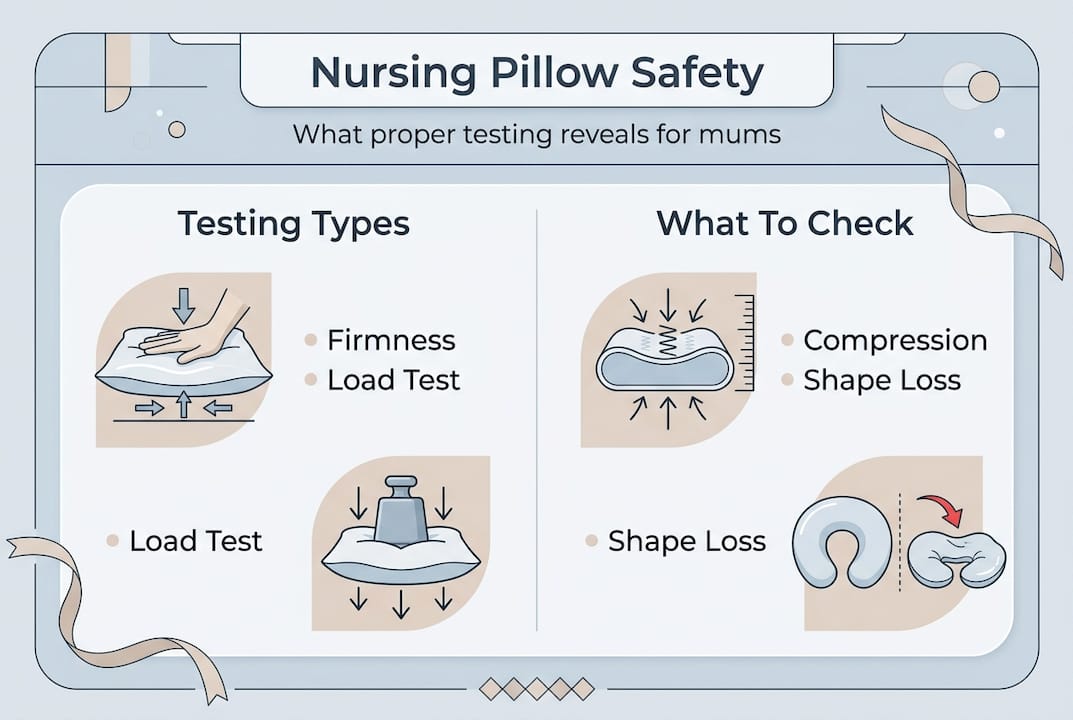
Before every feed, it is worth taking a few seconds to check that your pillow is firm, positioned correctly, and that the cover is sitting flat and secure. For a full walkthrough, the pillow setup steps on the Zabbidoo blog are a practical starting point. And if you want your pillow to last, knowing how to care for your nursing pillow properly makes a real difference to its long-term performance.
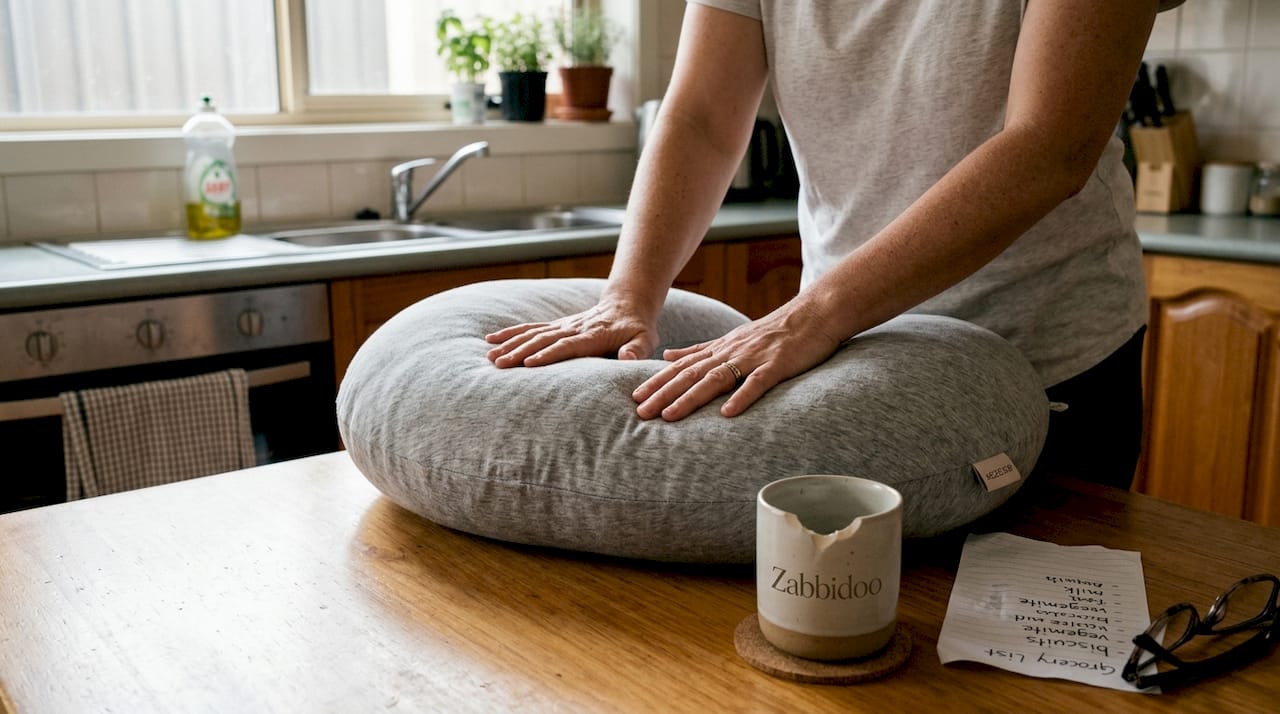
Pro Tip: Before each feed, press the centre of your nursing pillow firmly with your palm. It should push back against your hand, not sink in. If it sinks and stays down, the pillow has lost the firmness it needs to safely support your baby.
How nursing pillows are tested: Safety and comfort explained
Now that we have established the risks, it helps to understand what rigorous testing actually looks like. Proper nursing pillow testing is not just about whether a product feels comfortable in a shop. It involves systematic checks across multiple performance areas.
Here is how a thorough testing process typically works:
- Load testing: The pillow is subjected to sustained weight to check whether it maintains its shape and height over time. A pillow that compresses significantly under a baby’s weight fails this test.
- Compressibility testing: Testers measure how much the pillow depresses under pressure and how quickly it recovers. High compressibility is a red flag for both safety and ergonomic support.
- Fabric and fill safety: Materials are checked for harmful chemicals, breathability, and hypoallergenic properties. This is especially important for babies who spend time in direct contact with pillow surfaces.
- Cover fit assessment: The cover is tested for how securely it stays in place during movement, whether it bunches or shifts, and how easy it is to remove and wash.
- Stability testing: The pillow is assessed for how well it stays in position on a mum’s lap during feeding, including during position changes or when mum shifts her weight.
As Wirecutter’s nursing pillow review notes, firm support is prioritised for safe posture and comfort during long feeds, with the ideal pillow being firm but not rigid. That balance is what good testing is designed to confirm.
| Test type | What it checks | Red flag |
|---|---|---|
| Load testing | Shape and height under sustained weight | Significant height loss |
| Compressibility | Recovery after pressure | Slow or incomplete rebound |
| Fabric safety | Chemical content, breathability | Strong odour, non-breathable |
| Cover fit | Security and ease of removal | Slipping, bunching, tight zipper |
| Stability | Grip and position on mum’s lap | Slides or rotates easily |
For a closer look at how stability is assessed in real feeding conditions, the testing pillow stability guide walks through practical checks you can do at home. If you want to understand how long a well-tested pillow should last, the pillow durability guide is worth a read.
Pro Tip: At home, press your palm firmly into the centre of your pillow and hold for five seconds. A well-tested pillow bounces back fully. If it sinks and stays compressed, it is no longer providing the support your baby needs.
Comparing popular nursing pillow types and what testing reveals
Understanding individual tests is one thing. Seeing how different pillow types perform across those tests brings the picture into focus. There are three main nursing pillow designs on the market, and they do not all perform equally.
| Pillow type | Firmness | Shape retention | Stability | Safety rating |
|---|---|---|---|---|
| U-shaped | High | Strong | Excellent | High |
| Wrap-around | Medium to high | Good | Good | High |
| Multi-purpose | Variable | Moderate | Moderate | Moderate to high |
As Wirecutter recommends, U-shaped and wrap-around pillows offer the strongest combination of ergonomic and safety benefits when properly tested. Here is what testing typically reveals across types:
- U-shaped pillows consistently score highest for stability and firmness. Their rigid curve keeps baby positioned close to mum’s body, reducing the need to lean forward.
- Wrap-around pillows perform well for adjustability and are particularly useful for mums who feed in different positions. They tend to score slightly lower on firmness but higher on versatility.
- Multi-purpose pillows (designed for feeding, tummy time, and sitting support) show the most variability in test results. Some perform excellently, while others compromise firmness in favour of softness for floor play.
For mums who want a pillow that genuinely brings baby up to the right height rather than forcing a hunch, height-adjustable pillows are worth exploring. And if you are interested in a pillow that works beyond feeding sessions, understanding the multi-use pillow benefits can help you decide whether that trade-off is right for you.
The key takeaway from comparing types is this: a pillow that looks supportive is not the same as one that tests supportive. Shape, firmness, and stability must all hold up under real conditions, not just in a product photo.
Safe use at home: Applying what testing shows
Having compared types, the next step is translating those lab findings into daily practice. Testing tells us what a pillow can do. How you use it determines what it actually does for you and your baby.
The most important finding from safety research is that infant deaths and injuries occur mainly when nursing pillows are misused for sleep or lounging, not feeding. This is not a minor distinction. A pillow that is safe during a supervised feed becomes a hazard the moment it is used as a sleep surface.
Here is a practical checklist for daily use:
- Set up correctly before each feed: Position the pillow snugly around your waist, check the cover is flat, and confirm the pillow sits at the right height for your baby’s mouth to reach your breast without you leaning forward.
- Check firmness before placing baby: Press the surface firmly. If it does not rebound, do not use it for that feed.
- Supervise every moment: Never leave baby unattended on a nursing pillow, even for a few seconds.
- Clean covers regularly: Wash covers according to manufacturer instructions and check the inner pillow for lumps, compression, or odour after each wash. The pillow cleaning tips guide covers this in detail.
- Know when to replace: If the pillow no longer bounces back, has developed a permanent flat spot, or the cover no longer fits securely, it is time for a new one.
Pro Tip: Never use a nursing pillow for infant sleep, even briefly. The same design features that support a baby during feeding (curved shape, raised edges) can become entrapment risks the moment supervision ends.
Our take: Why real-world testing beats assumptions every time
Here is something the baby product industry does not always say out loud: a beautiful pillow is not a safe pillow. Marketing images, celebrity endorsements, and five-star reviews based on aesthetics tell you very little about whether a pillow will actually hold its shape at 3am during your fourth consecutive feed.
We have seen mums choose pillows based on colour, cover fabric, or brand recognition, only to find the pillow has compressed to half its original height within a month. The ergonomic benefit disappears. The safety margin disappears with it.
Real-world testing means pressing the pillow before every use, following proper set up advice, and understanding what the pillow is actually designed to do. It means prioritising compression resistance over softness, and stability over aesthetics.
A pillow that genuinely supports you is one that has been designed with evidence, tested against real standards, and used correctly every single time. That is not a high bar. It is just the right one.
Explore tested pillow comfort with Zabbidoo
If this guide has made one thing clear, it is that the right nursing pillow is not about looks. It is about performance you can trust, session after session.
Zabbidoo’s nursing pillow range is built around exactly the principles covered here: 18cm of firm, compression-resistant lift, a stable base that stays in place, and premium French flax linen that breathes and lasts. Whether you are feeding for the first time or navigating a second baby with hard-won experience, Zabbidoo is designed to support you properly. Pair your pillow with a free pacifier clip chain or add gift wrapping if you are buying for a new mum who deserves the real thing.
Frequently asked questions
How do I test if a nursing pillow is firm enough?
Gently press down on the centre of the pillow with your palm. A pillow with adequate firmness will spring back immediately rather than staying compressed. Wirecutter recommends firm support as a key marker of both safety and ergonomic quality.
Can I use a nursing pillow for infant sleep?
No. Never use a nursing pillow for sleep. The CDC findings show most deaths and injuries involved babies under three months when pillows were misused for sleep or lounging rather than supervised feeding.
What are the biggest signs my nursing pillow needs replacing?
Replace your pillow if it no longer bounces back after pressing, has developed a permanent flat spot, or if the cover has become loose, torn, or no longer fits securely around the inner pillow.
Are height-adjustable nursing pillows safer or more comfortable?
Height-adjustable pillows can offer improved ergonomic comfort by bringing baby to the right position without mum needing to hunch. Always check that adjustment mechanisms are stable and test firmness before each use. Wirecutter notes that comfort and tested stability should both be present.
How do I clean and care for a nursing pillow?
Follow the manufacturer’s care instructions, wash the cover regularly, and inspect the inner pillow after each wash for lumps, odour, or signs of mould. A well-maintained pillow retains its shape and safety properties for longer.