

Most mums assume that if a feeding pillow is on the shelf, it’s been rigorously tested for stability. That assumption is worth questioning. Unlike car seats or cots, feeding pillows are not subject to formal lab-based compression or drop tests. Instead, stability is assessed through real-world use, focusing on firmness, resistance to shifting, and whether a baby can roll or sink. What that means for you is simple: the burden of testing often falls on the mum. This guide will show you exactly what feeding pillow stability looks like in practice, how to evaluate it yourself, and what features genuinely matter for safer, more comfortable feeds.
Table of Contents
- What is feeding pillow stability and why does it matter?
- How feeding pillow stability is tested: Real-world vs lab tests
- Key features of a stable feeding pillow
- Choosing and comparing stable feeding pillows: What mums should look for
- Most mums miss this crucial step in testing for feeding pillow stability
- Find your perfect stable feeding pillow at Zabbidoo
- Frequently asked questions
Key Takeaways
| Point | Details |
|---|---|
| Stability means real support | Firmness, non-slip designs, and a flat base reduce rolls and discomfort during feeds. |
| Test at home, not just in store | Simulate actual feeding movements to truly assess your pillow’s support and stability. |
| Regulations matter | Always choose pillows that comply with post-2025 safety standards for peace of mind. |
| Features to look for | Prioritise firm, adjustable, and compliant pillows recommended by health professionals. |
What is feeding pillow stability and why does it matter?
Stability in a feeding pillow is not just about whether it feels firm when you press it in the shop. It covers three distinct qualities working together: firmness (the pillow holds its shape under your baby’s weight), non-slip behaviour (it doesn’t slide off your lap mid-feed), and roll prevention (your baby cannot sink into a gap or tip sideways). When all three are present, feeding becomes noticeably easier and safer.
Why does this matter so much? Because instability creates a cascade of problems. A pillow that compresses too easily forces you to hunch forward to keep your baby at breast height. That hunching strains your neck, shoulders, and lower back over dozens of feeds per week. A pillow that shifts sideways means you’re constantly repositioning, which interrupts latch and adds frustration to an already demanding time.
Here’s what a truly stable feeding pillow does for you:
- Keeps your baby lifted to breast height so you sit upright, not hunched
- Maintains its shape throughout a full feed, not just the first five minutes
- Stays on your lap when you lean slightly or shift your weight
- Prevents your baby from rolling inward or outward during feeding
- Reduces the number of times you need to reposition per session
Lactation consultants are consistent on this point. Firm, flat surfaces are strongly preferred for optimal infant alignment and stability during feeding. A surface that gives way under pressure compromises both latch quality and your posture simultaneously.
“A pillow that collapses under baby’s weight isn’t just uncomfortable, it’s working against the feed. Firmness is non-negotiable for good latch support.” — Lactation consultant perspective aligned with Consumer Reports guidance.
For mums exploring options, height-adjustable nursing pillows address the lift problem directly, bringing baby up to mum rather than forcing mum to bend down. That single design shift changes everything about posture during a feed.
How feeding pillow stability is tested: Real-world vs lab tests
Here’s something that surprises most mums: there is no standardised lab test for feeding pillow stability. No machine presses the pillow 500 times and measures compression loss. No drop test simulates a baby’s weight shifting. Instead, stability is judged qualitatively by how well a pillow supports during extended feeds and movement in real-life conditions.
What does real-world testing actually look like? Experienced reviewers and testers use scenarios that mirror what happens in your lounge room at 2am. These include:
- Sitting with the pillow for a full feed duration (20 to 40 minutes)
- Shifting weight side to side to see if the pillow moves with you
- Leaning forward slightly to simulate repositioning a baby
- Attempting what testers call an “errant lurch,” a sudden sideways movement to see if the pillow stays put
Wirecutter’s methodology, for example, includes testing for sturdiness by attempting to knock pillows off the lap with an errant lurch. Firm pillows that stay in place are preferred. That kind of test tells you far more about real-world performance than a lab compression number ever could.
| Test type | Method | What it reveals |
|---|---|---|
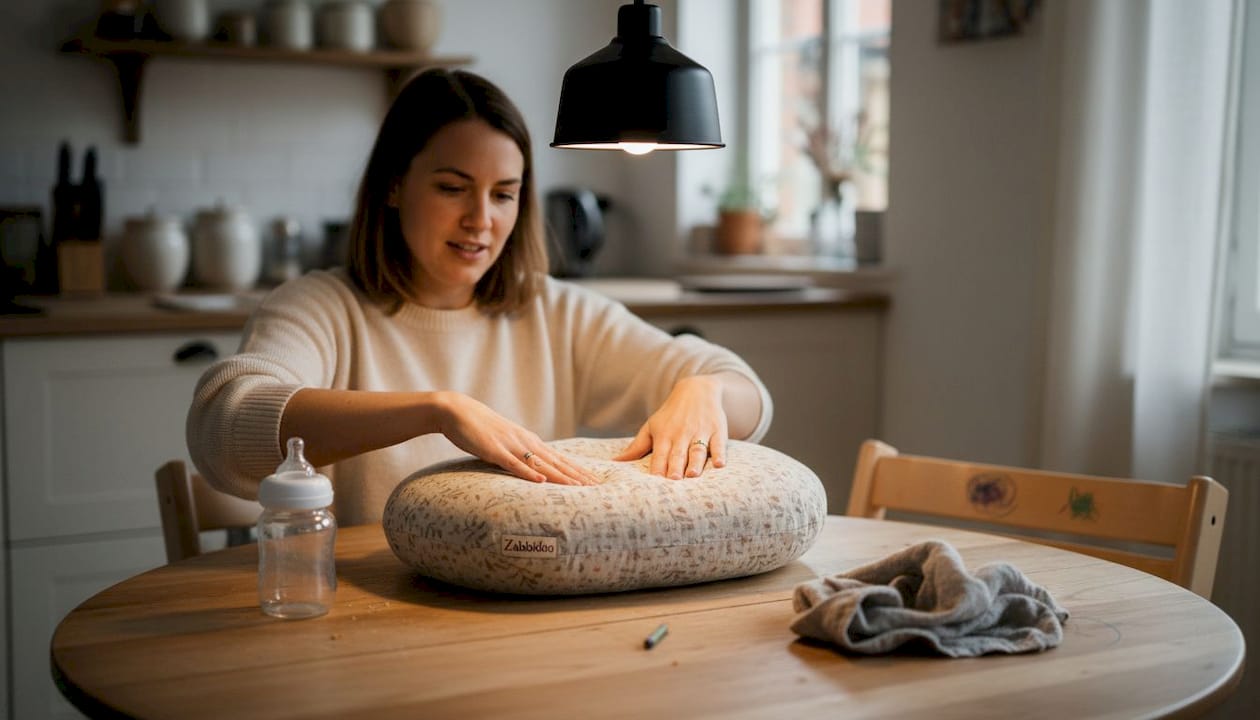
| Compression test | Press firmly with both hands | Whether fill collapses under baby’s weight |
| Shift test | Move hips side to side while wearing | Whether pillow slides on your lap |
| Lurch test | Sudden sideways lean | Whether pillow stays in position under movement |
| Duration test | Wear for a full 30-minute feed | Whether firmness holds throughout |
| Position test | Try side-lying or upright positions | Whether pillow adapts without losing shape |
The absence of formal lab data is not a flaw in the system. It actually reflects how feeding pillows are used. No two bodies, babies, or feeding styles are identical. A qualitative, movement-based approach captures nuance that a single compression number cannot.
Pro Tip: Before buying, try the pillow in the shop by sitting with it on your lap and shifting your weight deliberately. If it slides or compresses noticeably under your hands, it will do the same during a feed. A solid nursing pillow setup guide can also help you position it correctly once you’re home.
Key features of a stable feeding pillow
Knowing how pillows are tested helps, but you also need to know what to look for in the design itself. Stability is not accidental. It comes from specific physical features that either work together or don’t.
Here are the key features to check before you buy:
- Firmness of fill. The fill material must resist compression under your baby’s weight. Memory foam and high-density polyester fills outperform loose fibrefill, which flattens quickly.
- Flat, wide base. A flatter base sits more securely on your lap and reduces the risk of the pillow rocking or tipping. Curved or crescent shapes with thin bases are more prone to shifting.
- Non-slip underside. A textured or rubberised base grips your clothing and reduces lateral movement during feeds.
- Adjustable straps or buckles. These secure the pillow to your body, keeping it in place even when you lean forward or stand briefly.
- Compliance with current safety standards. As of April 2025, CPSC regulations mandate firmness standards, flatter design, wider waist openings, no baby straps, and clear warning labels on all new nursing pillows.
That last point is significant. The 2025 regulatory update was a direct response to suffocation risks associated with soft, deep-sided pillows. Any pillow manufactured after April 2025 must meet these standards. If you’re looking at a pillow without updated labelling, it predates these requirements.
Physiotherapy guidance also supports firmness as a posture tool. Pregnancy physiotherapy consistently highlights that unsupported feeding postures contribute to chronic neck and upper back pain in new mothers. A firm, stable pillow is part of the solution, not just a comfort accessory.
You can explore the full range of features in Zabbidoo’s nursing pillow product details to see how these design principles come together in practice.
Choosing and comparing stable feeding pillows: What mums should look for
With the right features in mind, comparing pillows becomes much more straightforward. The goal is to find a pillow that scores well across firmness, non-slip design, adjustability, and current compliance, without sacrificing comfort for you or your baby.
| Feature | Firm wraparound style | Crescent/C-shape | Flat bolster style |
|---|---|---|---|
| Firmness | High | Variable | High |
| Non-slip base | Often included | Rarely included | Sometimes included |
| Adjustable strap | Yes | Rarely | No |
| Post-2025 compliance | Check label | Check label | Check label |
| Best for posture | Yes | Moderate | Yes |
For experienced mothers especially, firm multi-use pillows offer a useful benchmark. Pillows that stay secure when standing and support posture without strain are consistently rated highest by both testers and lactation professionals.
Here’s a practical checklist for evaluating any pillow before and after purchase:
- Check the label for post-April 2025 compliance markings
- Press the fill firmly with both hands to test compression resistance
- Try it on in the shop and shift your hips to test for lateral movement
- Attempt feeding in your usual position and one alternative position
- Check for a non-slip base by placing it on your lap without holding it
- Reject any pillow that sinks noticeably under moderate hand pressure
Once you’re home, keep testing. Your body changes in the weeks after birth, and what felt fine in the shop may need adjusting as your posture and feeding style settle. Good nursing pillow care tips also help maintain the fill integrity over time, so your pillow stays as firm as the day you bought it.
Most mums miss this crucial step in testing for feeding pillow stability
Here’s an honest observation: most mums read reviews, check star ratings, and maybe squeeze a pillow in the shop. Very few actually simulate a real feed before committing to a purchase. That gap between passive evaluation and active testing is where a lot of poor decisions happen.
Spec sheets and influencer reviews cannot tell you how a pillow performs when your baby suddenly arches backward at 3am, or when you need to stand up mid-feed without putting your baby down. Those moments reveal true stability, and they can only be assessed through movement.
The errant lurch test described earlier is one of the most useful things you can do. Sit with the pillow in place and make a deliberate sideways movement. Does it shift? Does it stay? That five-second test tells you more than ten five-star reviews.
Stability judged qualitatively through user feedback on extended feeds and movement is precisely why personal testing matters more than any product description. No reviewer’s body is your body.
Pro Tip: Pair your in-store impressions with at least two full feeds at home before deciding whether to keep or return a pillow. The benefits of pillow adjustability also become clearest during real feeds, not in a shop setting.
Find your perfect stable feeding pillow at Zabbidoo
You now know what stability actually means, how it’s tested, and what features to look for. The next step is finding a pillow that puts all of that into practice.
At Zabbidoo, every nursing pillow is designed around the features that genuinely matter: firm fill that holds its shape, an 18cm lift that brings baby to you, and a stability-focused design that reduces repositioning and strain. Our pillows meet current safety standards and are built from breathable premium materials that last. Whether you’re feeding for the first time or looking to upgrade from a pillow that’s let you down, explore the full nursing pillow range and find the support your body actually deserves.
Frequently asked questions
Are feeding pillows required to pass any safety tests in Australia?
Feeding pillows manufactured after April 2025 must meet firmness, flatness, and labelling standards aligned with international CPSC guidance, including wider waist openings and clear warning labels.
How can I test if my feeding pillow is stable enough?
Press the fill firmly, try feeding in multiple positions, and check whether the pillow shifts when you move your hips. Any pillow that sinks or shifts under moderate movement should be reconsidered.
Should I upgrade my old feeding pillow to a newer model?
Yes. Any pillow made before April 2025 may not meet the latest firmness and safety standards designed to reduce suffocation risks, so upgrading is a sensible step.
What are the most important features for feeding pillow stability?
Firmness, a wide flat base, adjustable straps, and current compliance labelling are the four features that lactation experts consistently recommend for safe and stable feeding support.