

Sustainable pillow filling is defined as natural, renewable material sourced from plants or animals and processed without synthetic chemicals, pesticides, or formaldehyde. The most common types are organic cotton, wool, natural latex (GOLS-certified), kapok, and buckwheat. These materials last 8–10 years or more, compared to synthetic polyester fills that need replacing every 6–12 months. For eco-conscious parents, that lifespan difference is not just a convenience. It means less landfill waste, fewer chemical exposures for your family, and better long-term value for your money.
What is sustainable pillow filling and which materials qualify?
Sustainable pillow filling covers five main materials, each with distinct properties that suit different sleepers and needs.
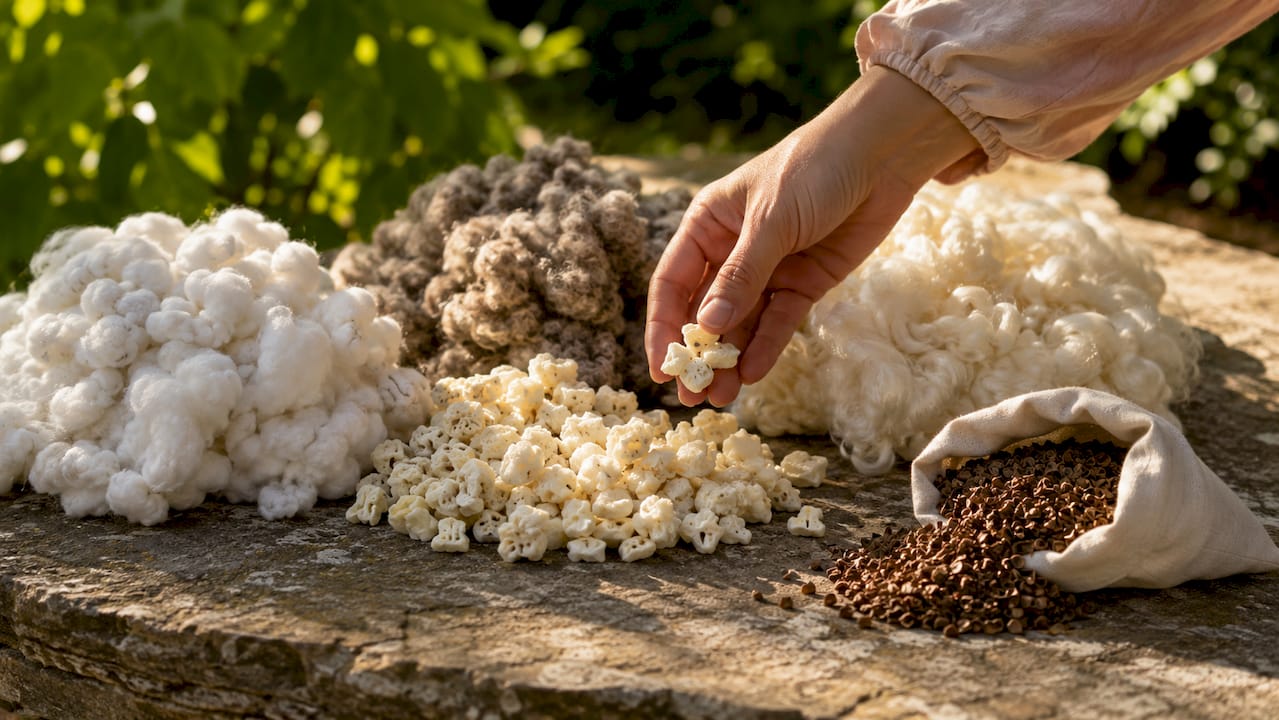
Organic cotton is the most familiar option. It is soft, breathable, and grown without synthetic pesticides under GOTS (Global Organic Textile Standard) certification. Cotton fills compress over time, but many quality pillows include a zip so you can top up the fill and extend the pillow’s life well past a decade.
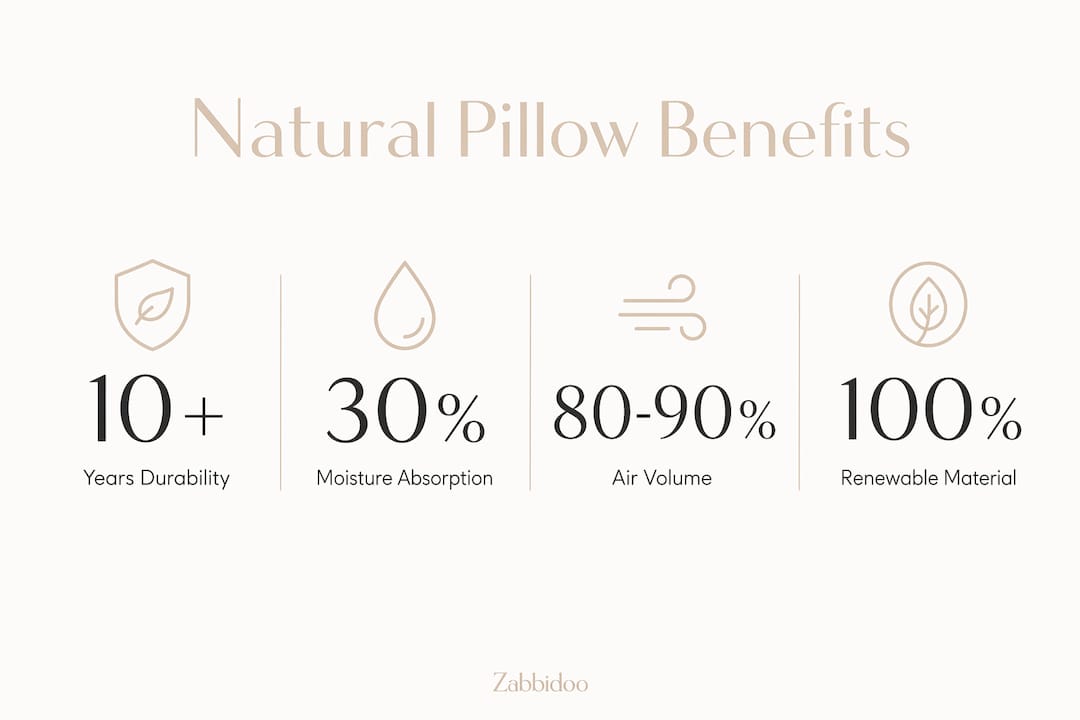
Wool is the standout performer for allergy-prone families. Wool absorbs up to 30% of its weight in moisture, and its natural lanolin coating makes dead skin flakes indigestible to dust mites. That means dust mite resistance without any chemical treatment. For parents managing eczema or asthma in young children, wool is worth serious consideration.
Natural latex (GOLS-certified) offers firm, responsive support that does not flatten under sustained pressure. It suits back and side sleepers who need consistent loft. Latex is also naturally antimicrobial, which reduces the need for chemical treatments over its lifespan.
Kapok is the least well-known but one of the most interesting. Kapok fibre is 80–90% air by volume, giving it a loft similar to down without any animal sourcing. Its natural waxy coating repels water, mould, and mildew without any added treatment. The result is a very light, breathable fill that suits warm sleepers.
Buckwheat hulls provide firm, adjustable support. Buckwheat hulls flex under weight and interlock to hold their shape, unlike synthetic fills that compress quickly and stay flat. Buckwheat pillows last over 10 years with periodic hull refreshes, making them one of the most durable natural options available.
| Material | Durability | Breathability | Allergen resistance | Eco impact |
|---|---|---|---|---|
| Organic cotton | 8–10+ years | Good | Moderate | Biodegradable, GOTS-certified |
| Wool | 10+ years | Excellent | High (lanolin) | Renewable, biodegradable |
| Natural latex | 10+ years | Moderate | High (antimicrobial) | GOLS-certified, biodegradable |
| Kapok | 5–8 years | Excellent | Moderate | Renewable, chemical-free |
| Buckwheat | 10+ years | Excellent | Moderate | Renewable, refillable |
Pro Tip: If you share a bed with a partner who runs hot, kapok or buckwheat are the most breathable natural options. Both allow significant airflow through the fill itself, not just the cover fabric.
How do certifications like GOTS and GOLS protect you from greenwashing?
Certifications are the only reliable way to verify that a pillow filling is genuinely sustainable. The two most important standards are GOTS and GOLS.
GOTS (Global Organic Textile Standard) certifies that textile fibres like organic cotton and wool meet strict organic farming and chemical-free processing requirements across the entire supply chain. A GOTS label confirms the absence of pesticides, synthetic dyes, and formaldehyde from farm to finished product.
GOLS (Global Organic Latex Standard) applies specifically to natural latex. It certifies that the latex is tapped from organically managed rubber trees and processed without harmful chemical additives. A GOLS label on a latex pillow is the clearest signal of genuine organic integrity.
Greenwashing is widespread in the pillow market. Brands use terms like “natural,” “eco-friendly,” and “plant-based” without any third-party certification to back those claims. Some products marketed as plant-based alternatives actually contain PLA, a bioplastic derived from corn starch that lacks organic certification and does not biodegrade reliably. Processed “down alternatives” are a common example of this pattern.
What to look for on a label:
- GOTS or GOLS certification logo with a valid licence number
- Named fibre source (e.g. “organic cotton from India” rather than just “natural fibres”)
- Country of origin for both the fill and the cover fabric
- Third-party certifier name (not just a brand’s own “eco” badge)
Red flags to avoid:
- “Natural” or “eco” claims with no certification logo
- Vague terms like “plant-derived fill” or “down alternative” without fibre identification
- No sourcing information on the product page or label
- Certifications that only apply to the cover fabric, not the fill itself
Pro Tip: Search the GOTS public database at global-standard.org to verify a brand’s certification number before you buy. It takes under a minute and removes all doubt.
What health and comfort benefits do natural fills offer families?
Natural fills offer functional health advantages that synthetic fills cannot replicate without chemical intervention.
Wool’s moisture-wicking ability is the clearest example. Because wool resists dust mites without chemical treatments, it is one of the safest fill choices for children and adults with allergies or asthma. Synthetic fills can harbour dust mites at much higher rates, and chemical anti-allergen treatments applied to synthetics degrade with washing.
Breathability is the second major advantage. Natural fills like kapok and buckwheat allow air to circulate through the fill itself, regulating temperature through the night. This matters most for nursing mothers, who often experience elevated body temperature, and for babies during supervised tummy time on a support pillow. The breathability of natural materials directly reduces heat build-up at the contact surface.
There is also a comfort adjustment period worth knowing about. Different natural fills have distinct feels, and most people need 1–2 weeks to adapt. Here is what to expect with each:
- Organic cotton: Soft and familiar from day one, but compresses noticeably within the first few weeks. Top up the fill early if loft drops.
- Wool: Slightly springy at first. Settles into a medium-firm feel after a week of use.
- Natural latex: Firm and responsive immediately. No real adjustment period, but some people find the initial firmness surprising.
- Kapok: Light and down-like. Adjust fill volume through the zip to find your preferred loft.
- Buckwheat: The most different feel. Firm and moveable. Most people need 5–7 nights to appreciate the support it provides.
Durability also contributes directly to health outcomes. A pillow that holds its shape provides consistent support for the neck and spine. Synthetic fills that flatten within months create postural strain over time. Natural fills maintain support far longer, which matters especially for nursing mothers spending extended time in feeding positions.
How to choose and care for sustainable pillows
Choosing the right eco-friendly pillow stuffing starts with three questions: How firm do you prefer your pillow? Do you have allergies or chemical sensitivities? And how much maintenance are you willing to do?
Firm sleepers and back sleepers do best with buckwheat or natural latex. Side sleepers generally prefer wool or a full organic cotton fill. Kapok suits stomach sleepers and anyone who wants a lighter, softer feel. If allergies are a primary concern, wool is the first choice, followed by natural latex.
Sustainable pillows cost more upfront, typically starting around $100–$169 compared to $30–$60 for synthetic options. Over 10 years, the cost per year of a sustainable pillow is significantly lower because you are not replacing it every 6–12 months. That total cost of ownership calculation is the mindset shift that makes sustainable buying make sense.
Caring for natural fills requires a different approach than caring for synthetics. Natural fills are not machine washable as a rule. Improper washing causes clumping and fibre degradation that cannot be reversed. Follow these guidelines to protect your investment:
Do:
- Spot clean spills immediately with a damp cloth and mild soap
- Air your pillow in indirect sunlight monthly to reduce moisture and odour
- Use a quality pillow protector to extend time between deep cleans
- Refill organic cotton or kapok pillows through the zip when loft drops
- Refresh buckwheat hulls by spreading them in sunlight for a few hours
Don’t:
- Machine wash natural latex, wool, or buckwheat fills
- Use heat to dry natural fills (heat degrades fibres and hulls)
- Store natural pillows in plastic bags, which trap moisture and cause mould
- Ignore compression. A flat pillow is not just uncomfortable. It is not supporting you properly.
A pillow hygiene routine that includes regular airing and a good protector will keep a natural fill pillow performing well for years without a full wash.
Key takeaways
Sustainable pillow filling outperforms synthetic alternatives on durability, allergen resistance, and long-term cost, provided you verify certifications and follow natural care guidelines.
| Point | Details |
|---|---|
| Define the material first | Sustainable fills come from renewable sources like wool, kapok, latex, cotton, and buckwheat. |
| Certifications are non-negotiable | Only GOTS and GOLS logos confirm genuine organic integrity and chemical-free processing. |
| Wool leads for allergy families | Lanolin makes wool naturally dust mite resistant without any chemical treatment. |
| Natural care extends lifespan | Spot clean, air regularly, and refill through zips to keep natural fills performing for 10+ years. |
| Upfront cost is not the full picture | Sustainable pillows cost more initially but deliver lower cost per year over a decade of use. |
What I have learned from testing natural pillow fills
I spent a long time assuming that “natural” on a label meant something. It does not. The first time I bought a pillow marketed as a “plant-based down alternative,” I felt good about it. Then I looked into the fill and found it was PLA fibre, a bioplastic with no organic certification and questionable biodegradability. That experience changed how I shop entirely.
The certification step feels tedious until you realise how easy it actually is. Checking a GOTS licence number on the global-standard.org database takes less time than reading a product description. Once you do it once, it becomes automatic.
What surprised me most was the buckwheat adjustment period. The first three nights felt strange. By night seven, I could not imagine going back to a synthetic fill. The support is genuinely different, and the breathability through summer is something no synthetic fill I have tried comes close to matching.
My honest advice for parents on a budget: start with wool. It is not the cheapest natural option, but it delivers the broadest range of benefits, especially for families managing allergies. You do not need to replace every pillow in the house at once. Start with the one you use most and build from there. Small, deliberate choices add up faster than you expect.
The greenwashing problem is real, but it is also solvable. You just need to know what to look for and be willing to spend two minutes verifying a claim before you buy.
— Marietjie
Zabbidoo’s nursing pillow: built for mums who care about materials
For nursing mothers who want the benefits of premium materials without compromise, Zabbidoo’s nursing pillow is designed with exactly that in mind.
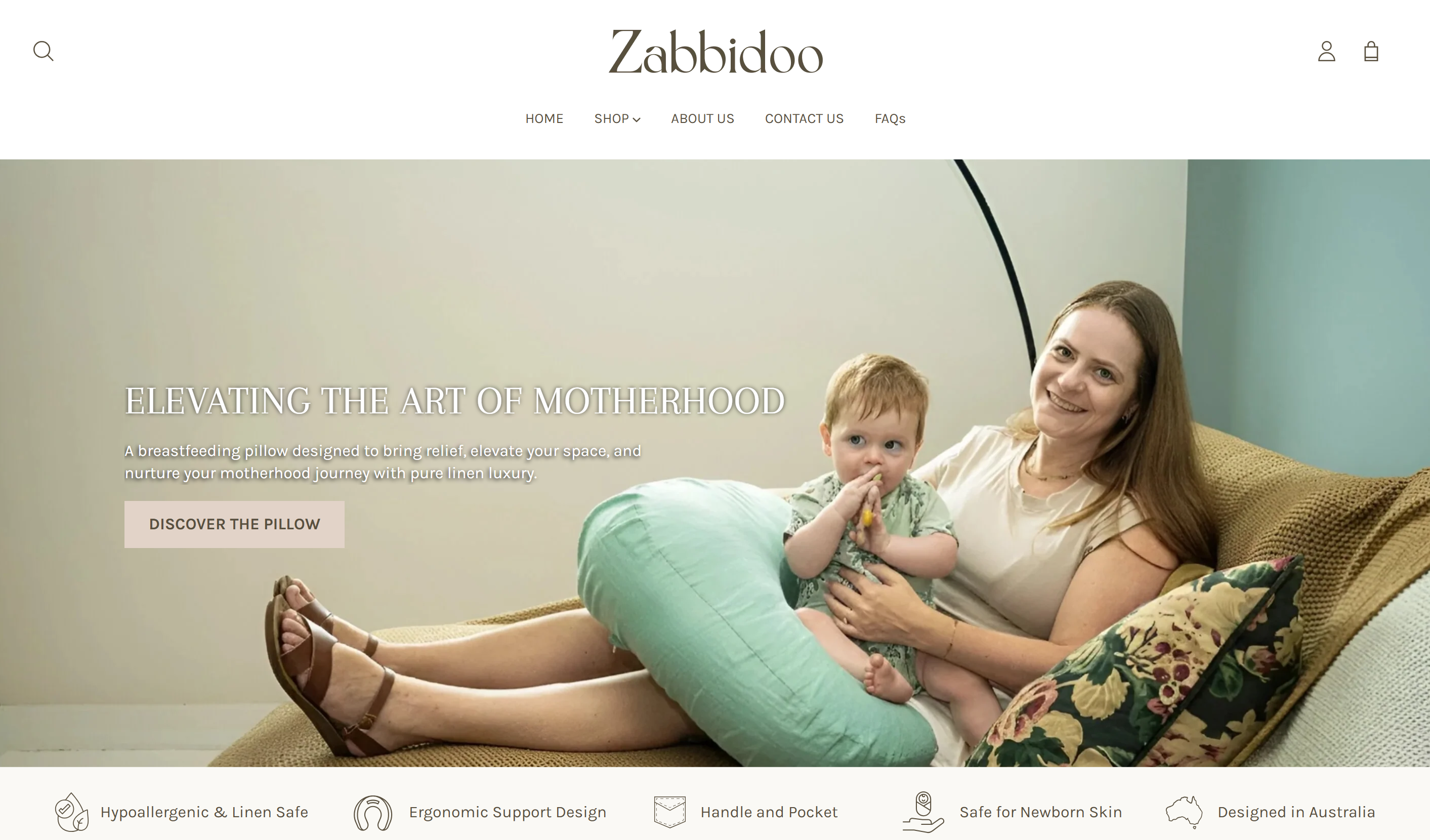
The Zabbidoo nursing pillow lifts your baby 18cm closer to you, reducing the neck, back, and wrist strain that comes from hunching into a low pillow. The cover uses French flax linen, a breathable, durable natural fabric that aligns with the same values behind sustainable filling choices. The pillow holds its shape under sustained pressure, which matters during long feeding sessions. For eco-conscious parents who want a pillow built to last and made with materials they can trust, Zabbidoo is worth a close look.
FAQ
What is sustainable pillow filling made from?
Sustainable pillow filling comes from renewable natural sources including organic cotton, wool, natural latex, kapok, and buckwheat hulls. These materials are processed without synthetic chemicals and are biodegradable at end of life.
How long do natural pillow fills last?
Natural fills typically last 8–10 years or more, compared to synthetic polyester fills that need replacing every 6–12 months. Many natural pillows include a zip for refilling, which extends their life further.
Are natural pillow fills safe for babies and allergy sufferers?
Wool is the safest choice for allergy-prone families because its lanolin coating resists dust mites without chemical treatment. Natural latex is also naturally antimicrobial, making both strong options for parents managing allergies or asthma.
How do I know if a pillow fill is genuinely organic?
Look for GOTS certification on cotton and wool fills, and GOLS certification on latex fills. Both standards verify organic farming and chemical-free processing across the full supply chain, not just the finished product.
Can I wash a natural fill pillow in the washing machine?
Most natural fills cannot be machine washed. Wool, latex, and buckwheat require spot cleaning or specialised care. Machine washing causes clumping and fibre degradation that permanently reduces the pillow’s performance.