

Pillows collapse when their internal fill materials lose structural integrity under repeated pressure, moisture, and heat. For parents and caregivers using nursing pillows during feeding sessions, this isn’t a minor inconvenience. A flattened pillow forces you to hunch forward, straining your neck, back, and wrists at the exact moment you need stable, consistent support. Understanding the science behind pillow flattening issues gives you the knowledge to choose better materials, care for them correctly, and know when replacement is overdue.
Why pillows collapse: the mechanics behind lost support
Pillow collapse is fundamentally a materials science problem. Fibres lose their crimp and structural geometry under sustained heat, pressure, and moisture, and once that geometry is gone, no amount of fluffing restores it.
The average human head weighs 10 to 12 lbs, and that concentrated load forces fill material outward from the centre within 30 minutes of use. That’s not a slow, gradual process. It happens in a single session. For nursing pillows supporting a baby’s weight across multiple daily feeds, the cumulative effect compounds quickly.
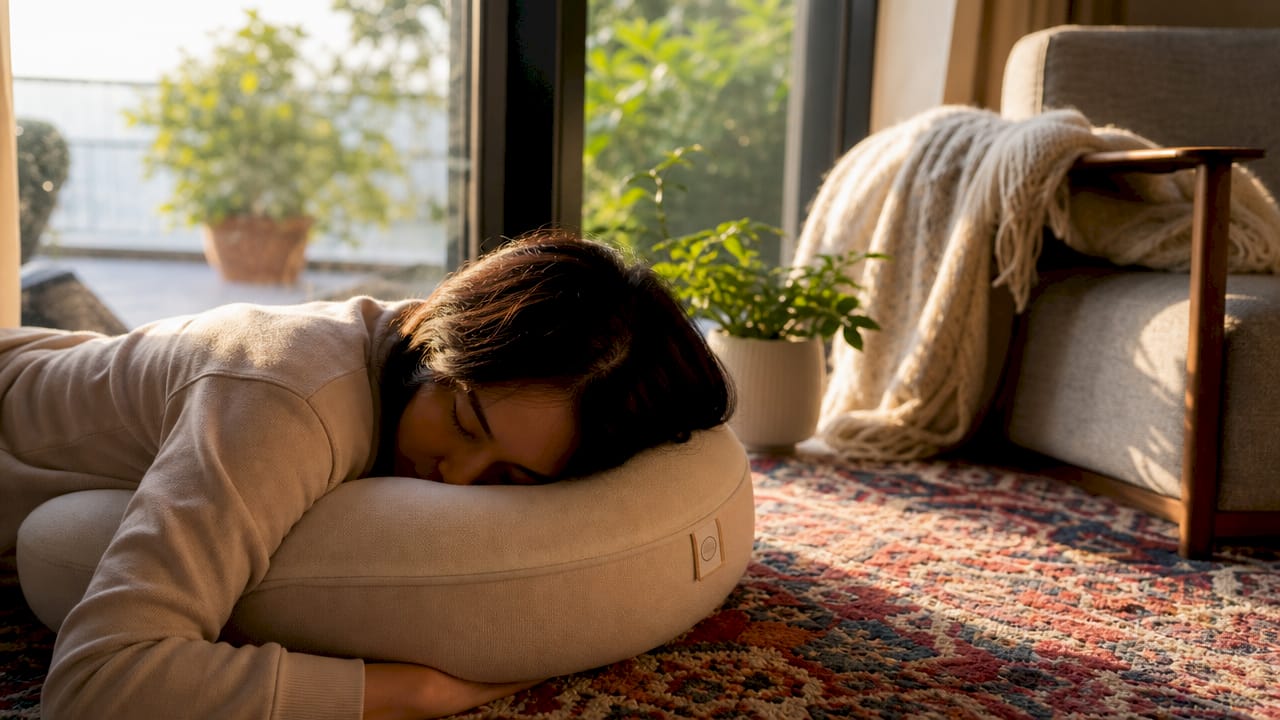
The design problem runs deeper than most people realise. Traditional pillows focus on neck support rather than the crown of the head, which means the heaviest part of the load lands on the area with the least structural reinforcement. This accelerates the sinking effect and puts the neck into hyperextension. For a nursing pillow, the equivalent failure is a pillow that starts at the right height and drops mid-feed, pulling the caregiver’s posture down with it.
Pro Tip: If your nursing pillow flattens noticeably during a single feeding session, the fill material has already lost its compression resistance. Fluffing between feeds is a temporary fix, not a structural solution.
The causes of pillow collapse are not random. They follow predictable patterns based on fill type, load distribution, and environmental exposure. Knowing this means you can anticipate failure rather than react to it.
How moisture and body oils speed up pillow flattening
Mechanical pressure alone doesn’t fully explain why pillows go flat so quickly. Environmental factors play an equally significant role, and they’re often overlooked.
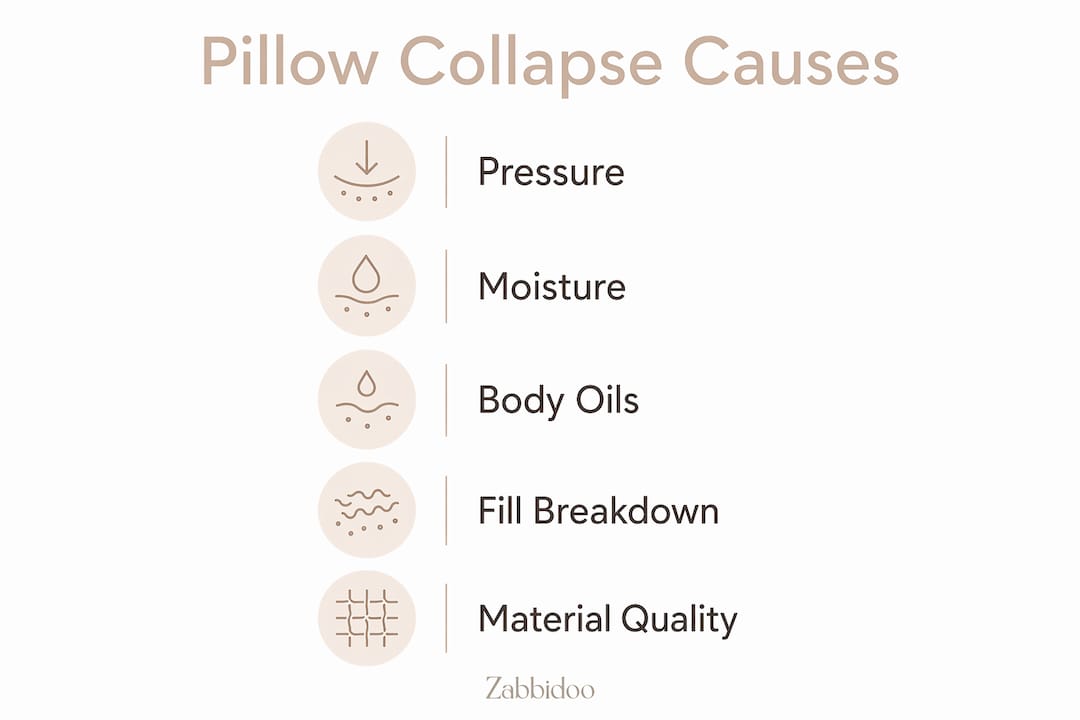
Body oils, sweat, and humidity bind fibres together, forming clumps that accelerate structural breakdown. Think of it like this: dry fibres can spring back after compression because they slide past each other freely. Once coated in oils and moisture, they stick together and mat down permanently. This is why pillows used in warm, humid environments or during physically demanding activities like breastfeeding degrade faster than those used in cooler, drier conditions.
For nursing pillows specifically, the combination of a warm baby, a postpartum body running hot, and extended contact time creates a high-moisture environment. Without a protective cover or regular airing, the fill inside can begin matting within weeks of regular use. The smell that develops in neglected pillows is a direct indicator of this fibre breakdown process.
Here are four practical steps to reduce moisture-related degradation:
- Use a removable, washable cover on every nursing pillow from day one. Covers intercept oils and sweat before they reach the fill.
- Air the pillow daily by placing it in a well-ventilated spot for 30 to 60 minutes after use. This allows trapped moisture to evaporate before it binds fibres.
- Wash the cover weekly during the newborn period when feeding frequency is highest and sweat exposure is greatest.
- Dry the pillow thoroughly after any washing. Incomplete drying leaves residual moisture inside the fill, which accelerates matting faster than the original sweat exposure.
Pro Tip: French flax linen covers, like those used on the Zabbidoo nursing pillow, are naturally moisture-wicking and breathable. They reduce the rate at which oils and sweat penetrate to the fill, extending the pillow’s useful life significantly.
Good pillow hygiene for nursing is not just about cleanliness. It’s directly tied to how long the pillow maintains its structural support.
Which fill materials resist collapse the longest?
Not all fills fail at the same rate. The physical properties of each material determine how it responds to pressure, moisture, and repeated use. This is where the reasons pillows become deflated differ dramatically depending on what’s inside.
Synthetic polyester fibres last 12 to 24 months under normal use, while high-quality down pillows can last five or more years with proper care. That’s a significant gap, and it comes down to fibre geometry. Fibres with complex spiral crimps retain air pockets better than hollow-core fibres, which straighten and collapse faster under load. Budget polyester pillows use simpler fibre structures, which is why they flatten so quickly.
The data on loft loss is stark. Budget pillows lose 30% of their loft in six months and 55% by 18 months. Premium pillows lose roughly 15% at six months and 30% at 18 months. That difference in compression resistance directly affects how much support a nursing pillow delivers at the six-month mark, which is also when many parents are still feeding multiple times per day.
| Fill type | Typical lifespan | Primary collapse cause |
|---|---|---|
| Synthetic polyester | 12 to 24 months | Fibre crimp loss under pressure |
| High-quality down | 5 or more years | Moisture sensitivity, clumping |
| Memory foam (solid) | 2 to 3 years | Cell structure breakdown with heat |
| Shredded foam | 1 to 2 years | Fill migration and lumpiness |
| Buckwheat hulls | 3 to 5 years | Minimal compression, shifts rather than flattens |
| Adjustable fill | Varies by fill type | Extended by redistribution and top-up |
Shredded foam deserves a specific note. Frequent fill migration in shredded foam pillows causes uneven support and lumpiness over time. Reshaping helps temporarily, but it doesn’t restore the original distribution. For a nursing pillow, this means the support height becomes inconsistent, which is exactly the problem you’re trying to avoid.
Adjustable-fill pillows offer a practical advantage here. By adding or redistributing fill as compression occurs, you extend the pillow’s useful life without replacing it entirely. This is particularly relevant for nursing pillows, where the height requirement changes as the baby grows.
The fabric choice for nursing pillows also influences how quickly moisture reaches the fill, making the outer material as important as what’s inside.
How to prevent pillow collapse in nursing and feeding pillows
Preventing premature collapse requires consistent habits, not occasional interventions. The good news is that the most effective steps take less than five minutes a day.
Fluffing only temporarily redistributes fill and does not reverse internal material breakdown. Once fibres have lost their crimp, the structural failure is permanent. Fluffing buys time between replacements but should not be mistaken for a fix.
Flipping and alternating pillow sides reduces heat and moisture buildup by allowing fibres to dry and cool between uses. For a nursing pillow used multiple times daily, this simple habit can meaningfully slow degradation. Rotate the pillow 180 degrees every few days so the same area isn’t absorbing the full load every session.
Knowing when to replace a pillow matters as much as knowing how to maintain one. The fold test is the most reliable indicator of internal integrity. Fold the pillow in half and release it. If it doesn’t spring back promptly, the internal structure is permanently compromised and replacement is overdue. For nursing pillows, a compromised pillow means inconsistent height, which forces postural compensation and increases strain on the caregiver’s back and neck.
- Replace synthetic polyester nursing pillows every 12 to 18 months under regular use.
- Use a pillow protector under the removable cover to add a second barrier against oils and moisture.
- Avoid tumble drying foam-fill pillows on high heat, as this accelerates cell structure breakdown.
- Store nursing pillows in a dry, ventilated space rather than compressed in a bag or under other items.
For more detail on caring for your nursing pillow through every stage of the feeding journey, consistent maintenance is the single biggest factor in how long support lasts.
Key takeaways
Pillow collapse is a predictable materials failure driven by pressure, moisture, and fill quality, and the right maintenance habits can significantly extend support life.
| Point | Details |
|---|---|
| Pressure causes rapid flattening | A 10 to 12 lb head load thins pillow fill within 30 minutes of use. |
| Moisture accelerates fibre matting | Body oils and sweat bind fibres together, causing permanent structural breakdown. |
| Fill material determines lifespan | Polyester lasts 12 to 24 months; quality down can last five or more years. |
| Fluffing is not a fix | Fluffing redistributes fill temporarily but cannot restore degraded fibre structure. |
| The fold test reveals true condition | A pillow that won’t spring back after folding needs replacing, not fluffing. |
What I’ve learned about collapsed pillows and nursing comfort
By Marietjie
After working closely with new mums and watching how quickly nursing pillows lose their shape, I’ve come to believe that most parents replace their pillows too late, not too early. The common assumption is that a flat pillow is still “good enough” because it still provides some cushioning. It isn’t. A nursing pillow that has lost even 30% of its loft changes your posture in ways you don’t immediately notice. You lean forward slightly. Your shoulders round. By the end of a feed, your neck aches and you’re not sure why.
The misconception I hear most often is that regular fluffing keeps a pillow functional. It doesn’t. Fluffing moves fill around. It cannot rebuild the fibre geometry that gave the pillow its height in the first place. I’ve seen mums fluffing a pillow before every single feed for months, convinced they’re maintaining it, when the fill had structurally failed long before.
What I find parents consistently overlook is the moisture factor. The newborn period is intense, feeds are frequent, and nobody is thinking about airing out a pillow. But that’s exactly when moisture damage accumulates fastest. A washable cover and 30 minutes of daily airing would extend most nursing pillows by months.
My honest view is that pillow height for breastfeeding is not a luxury consideration. It’s a postural one. A pillow that starts at the right height and holds it throughout a feed is doing real structural work. One that collapses mid-session is making every feed harder than it needs to be.
— Marietjie
Why Zabbidoo nursing pillows are built to hold their shape
Most nursing pillows are designed to look supportive on a shelf. Zabbidoo’s nursing pillow is designed to stay supportive through months of daily feeds.

The Zabbidoo nursing pillow sits at 18cm, bringing baby up to mum rather than pulling mum down to baby. The fill is selected for compression resistance, not just initial softness, and the French flax linen cover actively wicks moisture away from the fill to slow fibre degradation. For parents who’ve watched other pillows go flat within weeks, the difference is immediate. If you’re ready to stop compensating for a collapsing pillow, explore the Zabbidoo nursing pillow and see what sustained support actually feels like.
FAQ
Why do pillows lose their shape so quickly?
Pillows lose shape because their fill fibres compress under repeated pressure and absorb moisture that causes them to mat together permanently. Budget synthetic pillows can lose up to 30% of their loft within six months of regular use.
Can fluffing a pillow restore its original support?
Fluffing temporarily redistributes fill but cannot restore fibres that have lost their structural crimp. Once internal breakdown occurs, the only real solution is replacement.
How do I know when a nursing pillow needs replacing?
Use the fold test: fold the pillow in half and release it. If it doesn’t spring back, the internal structure is compromised and the pillow should be replaced. For synthetic fill nursing pillows, plan for replacement every 12 to 18 months.
Does moisture really affect how fast a pillow collapses?
Yes. Body oils, sweat, and humidity bind fill fibres together, accelerating structural breakdown significantly. Using a washable cover and airing the pillow daily are the two most effective ways to slow this process.
What fill material lasts longest in a nursing pillow?
High-quality down resists collapse for five or more years with proper care, but it is moisture-sensitive. For nursing pillows, adjustable-fill designs offer the best practical longevity because compression can be compensated by redistributing or adding fill over time.