

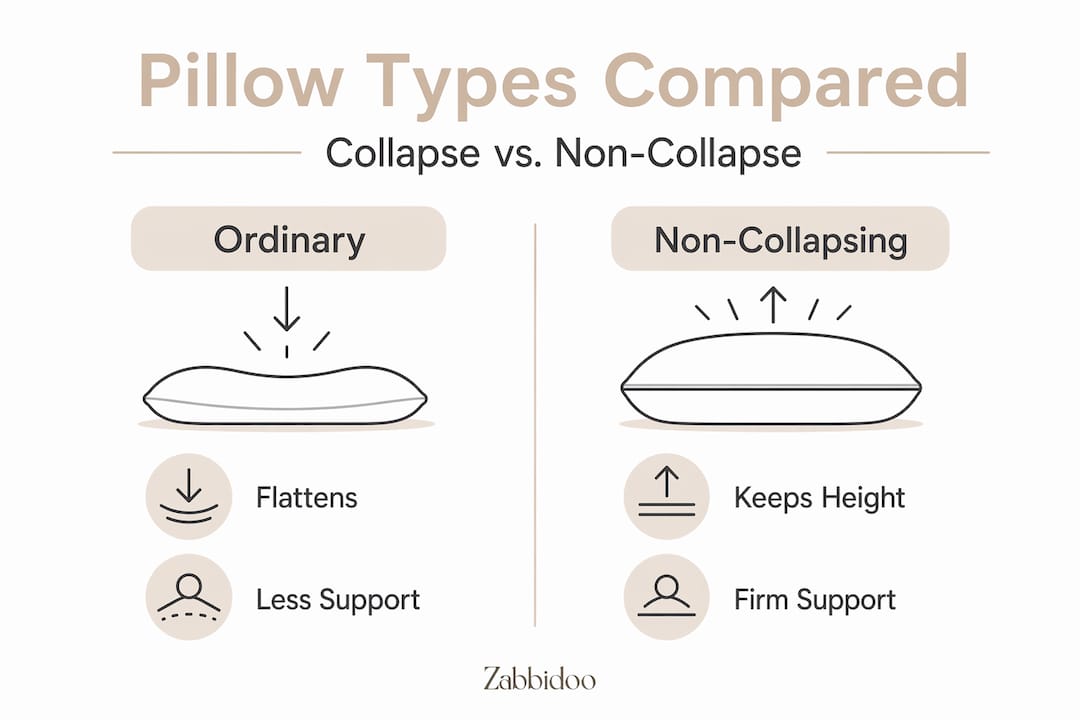
If you have ever sat down to feed your baby only to feel your nursing pillow slowly sink beneath the weight of your arms and your infant, you already understand the problem. A non-collapsing pillow is exactly what the name promises: a pillow that holds its shape and height no matter how long a feed takes or how much pressure is placed on it. For nursing parents, that difference is not minor. It determines whether you hunch over your baby or whether your baby comes up to meet you, whether your neck aches by the third feed or stays comfortable all day.
Table of Contents
- Key takeaways
- What is a non-collapsing pillow?
- Non-collapsing pillow benefits for nursing parents
- Comparing non-collapsing pillow types for nursing
- Choosing and caring for your nursing pillow
- Common misconceptions about non-collapsing pillows
- My honest take on nursing pillow choices
- How Zabbidoo supports nursing parents properly
- FAQ
Key takeaways
| Point | Details |
|---|---|
| Non-collapsing design | A quality non-collapsing pillow maintains its height and firmness throughout a full nursing session without flattening. |
| Material matters | Buckwheat hulls, Talalay latex, and memory foam each offer compression resistance, but suit different comfort preferences. |
| Posture protection | Consistent loft keeps your baby at the right height, reducing strain on your neck, back, and wrists during feeding. |
| Proper fit is critical | Shoulder width and nursing position determine which pillow height and shape will actually support neutral alignment. |
| Adjustment period is normal | Switching to a firmer, non-collapsing pillow can take three to seven nights or a few sessions to feel natural. |
What is a non-collapsing pillow?
A non-collapsing pillow is one that maintains its height and structural integrity throughout use without flattening or compressing under the weight placed on it. That sounds straightforward, but most pillows on the market fail this test after the first few minutes of use. Polyester fill compresses quickly. Cheap foam bounces back only partially. The result is a pillow that starts at one height and ends up considerably lower by the time you need it most.
The engineering behind a genuinely non-collapsing pillow comes down to two things: the material and the construction.
Materials commonly used in non-collapsing pillows:
- Buckwheat hulls: Dense, naturally firm, and they do not compress under pressure. Each hull holds its position, so the pillow holds its overall shape. The trade-off is a rustling sound when the pillow shifts.
- Talalay latex: Responsive and springy, this material compresses when you press into it and immediately returns to full height when pressure is released. It is durable, breathable, and particularly good at maintaining consistent loft over time.
- Shredded or moulded memory foam: Memory foam conforms to shape rather than collapsing away from it. High-density formulations resist the gradual flattening that plagues cheaper foam pillows.
Beyond material, shape plays a role. Ergonomic designs with cervical curves, head cradles, and shoulder cut-outs physically guide the body into correct alignment rather than relying on firmness alone. For nursing pillows specifically, a crescent or U-shape wraps around the midsection and keeps a baby positioned without requiring constant manual adjustment. The pillow does the structural work so you do not have to.
Non-collapsing pillow benefits for nursing parents
This is where the difference between an ordinary nursing pillow and a non-collapsing one becomes very clear, and very personal.

When you sit down to feed a newborn, you are often doing it eight to twelve times a day. Each session can last anywhere from ten minutes to forty-five. If your pillow is slowly compressing during that time, you unconsciously lean forward to compensate. Your shoulders round. Your neck angles down. By the end of a feed you feel stiff, and by the end of a week, that stiffness becomes genuine pain. Stable non-collapsing pillows facilitate a neutral neck position, deeper tissue relaxation, and reduced pain, a clinical perspective supported by physiotherapists working with postpartum mothers.
Here is what a non-collapsing nursing pillow actually changes in practice:
- Your baby stays at the right height. A pillow that holds its loft brings your baby up to breast or bottle level rather than forcing you to hunch down. That single shift reduces neck and shoulder fatigue significantly across a full day of feeds.
- Your latch improves. When a baby is positioned consistently at the right height and angle, achieving and maintaining a good latch becomes far easier. You are not adjusting constantly because the pillow underneath has shifted.
- Your hands and wrists get a genuine rest. Parents often hold their baby’s weight with their arms when the pillow underneath collapses. A firm, non-collapsing surface absorbs that weight properly.
- Non-collapsing pillows reduce the need for frequent repositioning, which is particularly valuable during night feeds when you are already fatigued and coordination suffers.
- Different positions become accessible. Whether you prefer the cradle hold, the football hold, or laid-back feeding, a pillow that stays firm gives you a stable platform regardless of position.
Pro Tip: If your baby tends to slide or roll during feeds, that is often a sign the pillow underneath is compressing unevenly. A non-collapsing nursing pillow with a consistent, firm surface should hold an infant in position without the parent needing to compensate with their hands.
This matters beyond pure comfort. Keeping your baby correctly positioned during feeding also reduces the risk of them pulling off the latch repeatedly, which affects milk transfer and can cause nipple pain. Good support is also safer support.
Comparing non-collapsing pillow types for nursing
Not every non-collapsing pillow is built the same, and not every type suits every parent. Here is a practical comparison to help you choose.
| Type | Firmness | Adjustability | Noise | Best suited for |
|---|---|---|---|---|
| Buckwheat hull | Firm | Yes, removable hulls | Rustling | Parents wanting customisable loft |
| Talalay latex | Medium-firm | No | Silent | Those needing responsive, durable support |
| Shredded memory foam | Medium | Yes, removable fill | Silent | Parents wanting a softer non-collapse feel |
| Moulded memory foam | Medium-firm | No | Silent | Those wanting a fixed ergonomic shape |
Buckwheat hull pillows are firm and maintain their structure reliably, but roughly 20% of users find the rustling sound disruptive, particularly during quiet night feeds. Memory foam options are quieter and can mould to a shape without collapsing away from it. Talalay latex sits in between: it is responsive and bounces back immediately, making it one of the most durable long-term choices.
Shape is equally important for nursing use:
- Crescent or C-shape: Wraps around the body, best for standard cradle hold nursing. Compact and easy to position.
- U-shape: Provides bilateral support, excellent if you alternate sides frequently or use the football hold on both sides.
- Contour/wedge styles: Used for propped feeding or tummy time support as the baby grows.
For parents interested in how the right fabric choice on these pillow types affects both comfort and safety, nursing pillow fabric choices are worth understanding before you buy. Breathability matters as much as firmness when a baby’s face is close to the surface.
Adjustable pillows with removable fill or booster layers allow you to personalise firmness as your baby grows and your feeding position changes. Premium options often come with trial periods of around 30 nights to make sure the fit is right, which is worth seeking out given how personal pillow preference can be.
Choosing and caring for your nursing pillow
Selecting a non-collapsing nursing pillow is not just about material. Correct pillow sizing based on shoulder width and feeding position is critical to achieving the neutral alignment that actually reduces strain. A pillow that is too low will not bring your baby up far enough. One that is too high will tip them away from you.
A few practical considerations before you buy:
Think about your body size and typical nursing position. A shorter mum nursing in a reclining chair needs different loft than a taller mum sitting upright on a firm sofa. Some brands offer height specifications; Zabbidoo’s nursing pillow, for example, sits at 18cm, which is specifically designed to bring a baby up to the right height without requiring the mum to lean forward.
When it comes to care, most nursing pillow covers should be machine washable at a minimum. Inner cores vary: buckwheat hulls can be aired in sunlight to freshen them and replaced when compressed; memory foam cores should be spot-cleaned only; latex should be kept out of direct heat to avoid degradation.
Pro Tip: Check your pillow’s loft every few weeks by pressing your hand firmly into the centre and releasing. It should return to full height within a second or two. If it does not, the fill is breaking down and it is time to add fill or replace the pillow entirely.
Signs it is time to replace or refurbish your pillow: it no longer returns to its original height after use, you notice you are leaning forward again during feeds, or the cover fabric has worn thin enough to reduce grip.
Common misconceptions about non-collapsing pillows
There are a few ideas about non-collapsing pillows that cause parents to either avoid them or feel disappointed when they try one.
- “Firm means uncomfortable.” Firmness in a non-collapsing pillow does not mean hard. The goal is compression resistance, not rigidity. A well-designed pillow feels supportive without feeling like a board, because the shape distributes pressure rather than concentrating it.
- “If it feels strange at first, it is wrong for me.” Non-collapsing pillows often require an adjustment period of three to seven nights as your body adapts to new positioning. This is especially true with buckwheat hulls. Give it at least a week before deciding it is not working.
- “All nursing pillows are the same.” Standard nursing pillows and non-collapsing nursing pillows are fundamentally different products. The former may provide initial positioning, but collapses under sustained weight. The latter maintains that position for the entire feed.
- “A non-collapsing pillow is good for any position.” Firm, taller pillows are not ideal for stomach-down positions, and parents who tend to lean back very deeply may need to combine a non-collapsing nursing pillow with additional lumbar support. One pillow does not solve every ergonomic challenge on its own.
The right approach is understanding that selecting a pillow based on shoulder width and sleeping or feeding position is fundamental. Firmness alone does not equal correct support.
My honest take on nursing pillow choices
I have spoken with a lot of parents who bought a standard nursing pillow because it looked the part, used it for a few weeks, and quietly accepted the neck pain that came with it as just part of new parenthood. That frustrates me. The pain is not inevitable. It is the pillow.
What I have learned is that most parents are not thinking about ergonomics when they choose a nursing pillow. They are thinking about colour, price, and whether it looks soft and welcoming. Those things matter, but they come second to whether the pillow will actually hold up through the tenth feed of the day.
The adjustment period is real. A firmer, non-collapsing pillow will feel different from what you are used to, and that can make the first few sessions feel awkward. Push through it. The difference in posture, latch quality, and physical comfort on the other side is worth it every single time.
My one piece of advice for any parent reading this: do not judge a nursing pillow in the first session. Judge it after a full week of regular use. That is when the non-collapsing design either proves its value or reveals its limitations.
— Marietjie
How Zabbidoo supports nursing parents properly

Zabbidoo built its nursing pillow specifically around the problem this article describes. The 18cm lift brings your baby up to you rather than forcing you to hunch down. The compression-resistant fill holds that height through every feed. The French flax linen cover is breathable, durable, and kind to sensitive skin. It is also designed for multi-use: feeding, tummy time, and propped sitting support as your baby grows. If you want to understand more about what makes a nursing pillow high-performance, Zabbidoo’s blog goes deep on the design choices that matter. For parents who want support that actually holds, this is where to start.
FAQ
What does non-collapsing mean in a nursing pillow?
A non-collapsing nursing pillow maintains its loft and firmness under the weight of your arms and baby throughout the entire feeding session, rather than flattening progressively the way standard pillow fill does.
How does a non-collapsing pillow work?
It uses compression-resistant materials such as buckwheat hulls, Talalay latex, or high-density memory foam that push back against downward pressure and return to full height rather than permanently compressing.
What are the main benefits of a non-collapsing nursing pillow?
The core benefits include consistent baby positioning, reduced neck and shoulder strain for the parent, better latch support, and fewer interruptions during feeding due to the need to readjust.
Are non-collapsing pillows suitable for all nursing positions?
Most non-collapsing nursing pillows suit cradle and football hold positions well. Those with a very laid-back or reclined nursing style may need to pair the pillow with additional lumbar support for full comfort.
How long do non-collapsing nursing pillows last?
With proper care, a quality non-collapsing nursing pillow using latex or buckwheat fill typically maintains its structure for two to five years. The key sign it needs replacing is when it no longer returns to full height after use.