

Neck pain from feeding a newborn is caused by sustained forward head posture and unsupported arms during repeated daily feeds. Clinically, this is known as postural cervical strain, and it is one of the most common physical complaints among new mothers. Newborns require 8–12 feeds per day, which means your neck and shoulders absorb that load dozens of times every single day. The good news is that breastfeeding neck pain is almost entirely a posture and setup problem. Fix the ergonomics, and you fix the pain.
Why does neck pain from feeding newborns happen?
The cause is biomechanical, not inevitable. When you lean forward to bring your breast to your baby, your head drops forward and your shoulders round inward. For every 2.5 centimetres your head moves forward from neutral, the effective load on your cervical spine roughly doubles. Now multiply that by 8–12 daily feeds lasting 20–40 minutes each, and you have a recipe for chronic neck stiffness, headaches, and upper back tension.
There are several specific physical patterns that drive this pain:
- Forward head posture. Hunching forward to latch places excessive load on the neck and upper back. Multiplying daily feeds by sustained poor posture leads directly to neck stiffness and headaches.
- Shoulder shrugging. Unsupported arms cause shoulder shrugging, which recruits the upper trapezius muscles and creates chronic tension across the neck and shoulders.
- Static muscle fatigue. Holding a fixed position for 20–40 minutes exhausts postural muscles faster than most people realise. Your neck extensors were not designed for that kind of sustained load.
- One-sided strain. Most mothers favour one side for feeding, which creates muscular imbalance over time and compounds the pain.
- Phone use during feeds. Looking down at a phone during feeding adds to neck curl posture and increases upper trapezius tension significantly.
The key insight from Foothills Physical Therapy is that nursing neck is a posture problem, not a breastfeeding problem. That distinction matters because it means the solution is practical and within your control.
What are the best feeding positions for neck pain relief?

Feeding position is the single biggest variable you can change today. The three positions below each affect your neck load differently, and understanding the trade-offs helps you choose what works for your body and your baby.
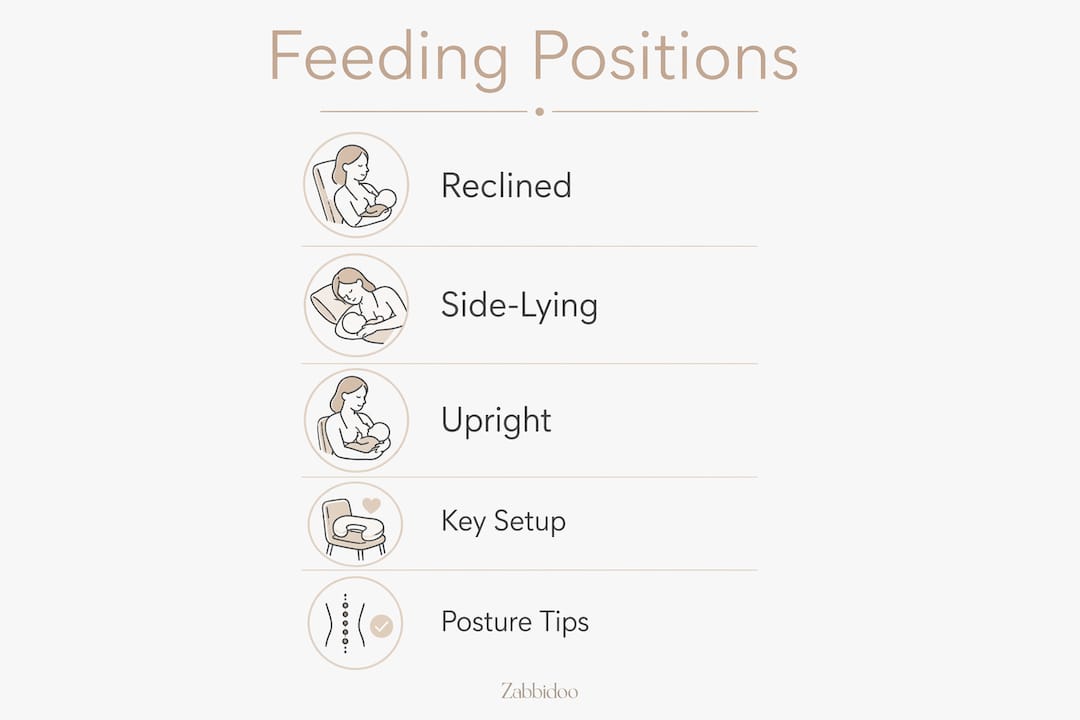
| Position | Neck strain level | Best for | Key requirement |
|---|---|---|---|
| Reclined (approx. 45 degrees) | Low | Most mothers, post-C-section | Supported back and head |
| Side-lying | Very low | Night feeds, recovery | Firm mattress, pillow between knees |
| Upright sitting | Moderate to high | Established feeding | Full arm, back, and foot support |
Reclined feeding
Reclined positions reduce muscle effort by using gravity to support the baby against your body. At roughly 45 degrees, your baby rests on your torso rather than being held up entirely by your arms. This takes the load off your upper trapezius and allows your neck to stay in a far more neutral position. For mothers recovering from a caesarean section, reclined feeding also avoids pressure on the abdominal wound, making it the recommended starting position in the early postpartum weeks.
Side-lying feeding
Side-lying is the lowest-strain position available. You lie on your side with your baby facing you at breast height, supported by a rolled towel or small pillow behind their back. Your neck rests on a pillow in neutral alignment, and your arms bear almost no load. This position is particularly useful for night feeds when fatigue compounds poor posture.
Upright sitting
Upright sitting is the most common position and the most commonly done wrong. Without arm support, back support, and a firm surface under your feet, your posture collapses within minutes. The baby drops, you lean forward to compensate, and the neck strain cycle begins. When set up correctly with a firm nursing pillow, a supported back, and feet flat on the floor or a footstool, upright sitting is perfectly sustainable.
Pro Tip: Try reclined feeding for your next feed. Lean back in a supported chair or on the couch at roughly 45 degrees, let your baby lie tummy-down on your chest, and notice how much less effort your neck and shoulders are doing.
How to set up your feeding space to reduce neck strain
The right setup does more work than willpower ever will. Leaning back fully with hips supported shifts the mechanical load from your postural muscles to the chair and pillows, reducing neck strain during feeding. That principle should guide every decision you make about your feeding station.
Here is what a well-set-up feeding station looks like in practice:
- Firm nursing pillow at the right height. A pillow that collapses under the baby’s weight forces you to compensate by leaning down. Using firm nursing pillows or stacked cushions raises the baby to breast height so you never need to hunch. La Leche League GB describes this as “bring baby to breast, not breast to baby”, and it is the single most effective posture principle for nursing mothers.
- Forearm support. Supporting forearms with pillows prevents unsupported shoulder elevation and reduces neck strain. Rest your forearms on the nursing pillow or armrests so your shoulders can drop completely.
- Back support. Sit all the way back in your chair so the backrest supports your lumbar spine. Perching on the edge of a seat removes all back support and forces your postural muscles to work overtime.
- Foot support. Feet dangling off the floor destabilise your pelvis and cause a chain reaction up the spine. Use a footstool, a thick book, or a folded blanket to bring the floor up to your feet.
- Pillow height matters. Read more about why pillow height affects posture and how getting it right changes everything about your feeding comfort.
Pro Tip: Before your next feed, spend 60 seconds setting up your space. Adjust the pillow height, check your back is fully supported, and place something under your feet. That one minute of preparation will save you hours of neck pain.
Exercises and habits that relieve breastfeeding neck pain
Ergonomic setup prevents the problem. These exercises and habits address the tension that has already built up.
- Chin tucks. Sit tall and gently draw your chin straight back, as if making a double chin. Hold for 5 seconds and repeat 5–10 times. Chin tucks and scapular squeezes strengthen the deep neck flexors and counteract the forward head posture that builds up during feeds.
- Scapular squeezes. Sit upright and squeeze your shoulder blades together as if holding a pencil between them. Hold for 5 seconds and repeat 10 times. This directly counteracts the rounded shoulder posture that drives upper trapezius tension.
- Doorway chest stretch. Stand in a doorway with your arms at 90 degrees on the frame. Lean gently forward until you feel a stretch across the chest and front of the shoulders. Hold for 20–30 seconds. Tight chest muscles pull the shoulders forward and worsen neck strain.
- Thoracic extension. Sit in a chair and place a rolled towel behind your mid-back. Gently extend backwards over the towel, opening the chest and reversing the forward curve that builds up during feeding.
- Warm heat pack before feeds. Applying a warm heat pad for 15–20 minutes before feeding relaxes tense muscles and increases immediate relief. This is especially useful first thing in the morning when muscles are stiff.
Beyond exercises, two behavioural habits make a significant difference. Switch feeding sides regularly to prevent one-sided muscular imbalance. And keep your phone at eye level during feeds, or put it down entirely. Keeping devices at eye level breaks the cycle of repetitive neck strain that builds up across dozens of daily feeds.
Pro Tip: Set a reminder on your phone to do a posture reset every time you finish a feed. Roll your shoulders back, lengthen your neck, and take two deep breaths. It takes 10 seconds and prevents the tension from compounding.
When should you see a professional about neck pain?
Most nursing-related neck pain responds well to posture correction and the exercises above. Some symptoms, however, signal that professional assessment is needed.
Seek help from a licensed physiotherapist or your GP if you experience:
- Persistent pain that does not improve after a week of posture corrections and exercises.
- Numbness or tingling in the arms or hands. Persistent neck pain with numbness or tingling may indicate nerve involvement and requires professional assessment.
- Frequent headaches that appear to be linked to your feeding posture. These are a recognised sign that the cervical spine is under sustained load.
- Pain that is worsening rather than plateauing or improving.
There is one additional reason not to delay. If neck pain becomes persistent or severe, it may affect milk production and should be treated early to avoid lasting issues. Chronic pain affects sleep, stress levels, and the physical relaxation needed for letdown. Treating it early is not just about your comfort. It is about your feeding relationship with your baby.
A women’s health physiotherapist is the most appropriate first referral. They specialise in postpartum musculoskeletal issues and can assess your feeding position directly, which a general physiotherapist may not do.
Key takeaways
Neck pain from feeding a newborn is a posture and setup problem, and correcting your ergonomics with a firm nursing pillow, proper arm support, and position changes is the most effective way to resolve it.
| Point | Details |
|---|---|
| Root cause is posture | Forward head posture during 8–12 daily feeds creates cumulative cervical strain. |
| Position changes work fast | Reclined and side-lying positions reduce neck muscle effort immediately. |
| Setup prevents pain | Firm pillow height, forearm support, and foot support are non-negotiable for upright feeding. |
| Exercises rebuild strength | Chin tucks, scapular squeezes, and chest stretches reverse the postural damage from feeding. |
| Know when to get help | Numbness, tingling, or persistent headaches require a physiotherapist, not just posture tips. |
What I have learned about nursing neck pain that most articles miss
By Marietjie
Most articles about breastfeeding neck pain focus on what you should do. Very few talk about why mothers keep doing the wrong thing even when they know better.
The real issue is that looking down at your baby feels natural and loving. There is an instinct to gaze at your newborn during feeds, and that gaze pulls your head forward every single time. No amount of advice about neutral spine changes that instinct. What does change it is making the correct position feel just as connected and comfortable as the hunched one.
That is why setup matters more than willpower. When your baby is at the right height on a firm, supportive pillow, you can look down with a gentle chin tilt rather than a full forward head drop. The difference in neck load is enormous, and the difference in connection with your baby is zero.
I also think mothers underestimate how quickly postural habits form in the newborn period. The positions you default to in the first few weeks become the positions you use for months. Getting the setup right early is far easier than trying to correct ingrained habits at week eight when the pain has become chronic.
Give yourself permission to spend two minutes setting up before every feed. You are not being precious. You are protecting your body so you can keep feeding your baby comfortably for as long as you choose to.
— Marietjie
How Zabbidoo helps you feed without the pain

The advice in this article only works if your nursing pillow actually does its job. Most standard pillows compress under the baby’s weight within minutes, dropping your baby below breast height and pulling you straight back into the hunch. Zabbidoo’s nursing pillow is built with an 18cm lift and compression-resistant fill, so your baby stays at the right height from the first feed to the last. The French flax linen cover keeps things breathable during long sessions, and the stable, wrap-around shape means less repositioning and less frustration. If you want to understand exactly how pillow lift improves nursing posture, Zabbidoo’s blog breaks it down clearly. Your neck will thank you.
FAQ
What causes neck pain when feeding a newborn?
Neck pain from feeding a newborn is caused by sustained forward head posture and unsupported arms during repeated feeds. Newborns feed 8–12 times per day, and each session in a poor position adds cumulative strain to the cervical spine.
How can I relieve neck strain while nursing my baby?
Switch to a reclined or side-lying feeding position, support your forearms on a firm nursing pillow, and do chin tucks and scapular squeezes between feeds. Applying a warm heat pad for 15–20 minutes before feeding also relaxes tense muscles and provides immediate relief.
Does a nursing pillow actually help with neck pain?
Yes, provided it is firm enough to hold its shape. A pillow that collapses forces you to lean down to the baby, which recreates the forward head posture that causes pain. A firm pillow that raises the baby to breast height removes the need to hunch entirely.
When should I see a physiotherapist for breastfeeding neck pain?
See a physiotherapist if you have persistent pain after a week of posture corrections, or if you experience numbness or tingling in the arms. Frequent posture-linked headaches are also a sign that professional assessment is needed.
Can a neck posture brace help during feeding sessions?
A neck posture brace can provide gentle postural feedback and support between feeds, but it is not a substitute for correcting your feeding setup. Use it as a short-term reminder tool while you build better postural habits.