

Neck pain, sore shoulders, and that constant hunch over a tiny baby. If this sounds familiar, you’re not alone. 51.7% of mothers report breastfeeding-related neck pain, which means the discomfort you feel is real and common. But here’s the thing: the position you choose matters more than most people realise. Small adjustments to how you hold your baby can change everything from your baby’s latch quality to how your shoulders feel after a 3am feed. This article walks you through the main feeding positions, how they compare for comfort and strain, and how to find what genuinely works for you.
Table of Contents
- What to consider before choosing a feeding position
- The main feeding positions explained
- How each position affects your comfort
- Comparing feeding positions for everyday situations
- Our honest perspective on finding the right feeding fit
- Getting the right support for blissful breastfeeding
- Frequently asked questions
Key Takeaways
| Point | Details |
|---|---|
| Mix feeding positions | Switching holds across feeds can reduce muscle strain and support better posture. |
| Comfort aids are valuable | Using nursing pillows can ease neck and shoulder pain during breastfeeding. |
| No single perfect hold | All main positions are effective—choose what suits your body and your baby, and adapt as needed. |
| Support is key | Good alignment and effective use of supports help most with preventing discomfort. |
What to consider before choosing a feeding position
Before you try every hold in the book, it helps to know what you’re actually looking for. Picking a position isn’t just about what feels instinctive in the moment. It’s about what keeps your body in a sustainable posture across dozens of feeds a day.
Here are the key things to evaluate:
- Body alignment: Your neck and shoulders should stay neutral. If you’re craning forward or rotating your head to look at your baby, that hold is already working against you.
- Latch quality: The position directly affects whether your baby can feed efficiently. A poor latch often means more repositioning, which adds up to more strain over time.
- Prop support: Armrests, firm cushions, and purpose-built pillows can make a significant difference. Multi-use nursing pillow benefits go beyond comfort, actively reducing the load on your arms and back.
- Recovery needs: If you’ve had a caesarean section, positions that avoid abdominal pressure are essential. Mums of twins also need to think about bilateral support and efficient feeding logistics.
- Injury prevention: Changing positions regularly helps reduce the cumulative strain on the same muscle groups.
One factor many new mums underestimate is pillow height. Most standard nursing pillows sit too low, which pulls you into a forward hunch. Height-adjustable nursing pillows are specifically designed to bring the baby up to breast level, so you’re not doing the heavy lifting with your arms and neck.
Pro Tip: Set up your feeding station before you sit down. Have your pillow placed, a drink bottle within reach, and your back properly supported. Trying to arrange everything with a hungry baby in your arms is a recipe for a compromised position.
The right setup isn’t about perfection. It’s about building small habits that protect your body across what could be thousands of feeding sessions in the first year alone.
The main feeding positions explained
There are four holds you’ll encounter most often as a new mum. Each has its strengths and its weaknesses. Understanding them properly means you can make an informed choice rather than defaulting to whatever worked in the hospital.
- Cradle hold: This is the classic position, and it’s no surprise that 94% of mothers use it. Your baby lies across your body, supported by your forearm. The common mistake is letting your arm drop without support, which causes your shoulder to round forward and your neck to tilt down.
- Cross-cradle hold: Similar to the cradle but your opposite hand supports your baby’s head, giving you much more control over positioning. This is particularly useful for newborns who are still learning to latch, as you can guide their head more precisely.
- Football (or rugby) hold: Your baby is tucked under your arm like a footy, with their legs behind you and head at your breast. This is ideal if you’ve had a caesarean section as it keeps baby’s weight off your abdomen. It also works well for mums of twins who can feed both babies simultaneously.
- Side-lying position: You and your baby lie facing each other on a firm surface. This position is genuinely restful and brilliant for overnight feeds or mums in early postpartum recovery. The key is maintaining a safe sleep environment and ensuring you don’t fall asleep in an unsafe situation.
Getting your nursing pillow setup right is especially important for the cradle and cross-cradle holds, where arm fatigue often leads to postural collapse.
The position your midwife showed you in hospital may not be the one that suits you at home. Give yourself permission to experiment.
Pro Tip: Try each hold at least five or six times before deciding it doesn’t work. The first few attempts are learning the mechanics. The comfort comes after muscle memory kicks in.
How each position affects your comfort
You might assume that some positions are inherently harder on your neck than others. The research is actually more nuanced than that.
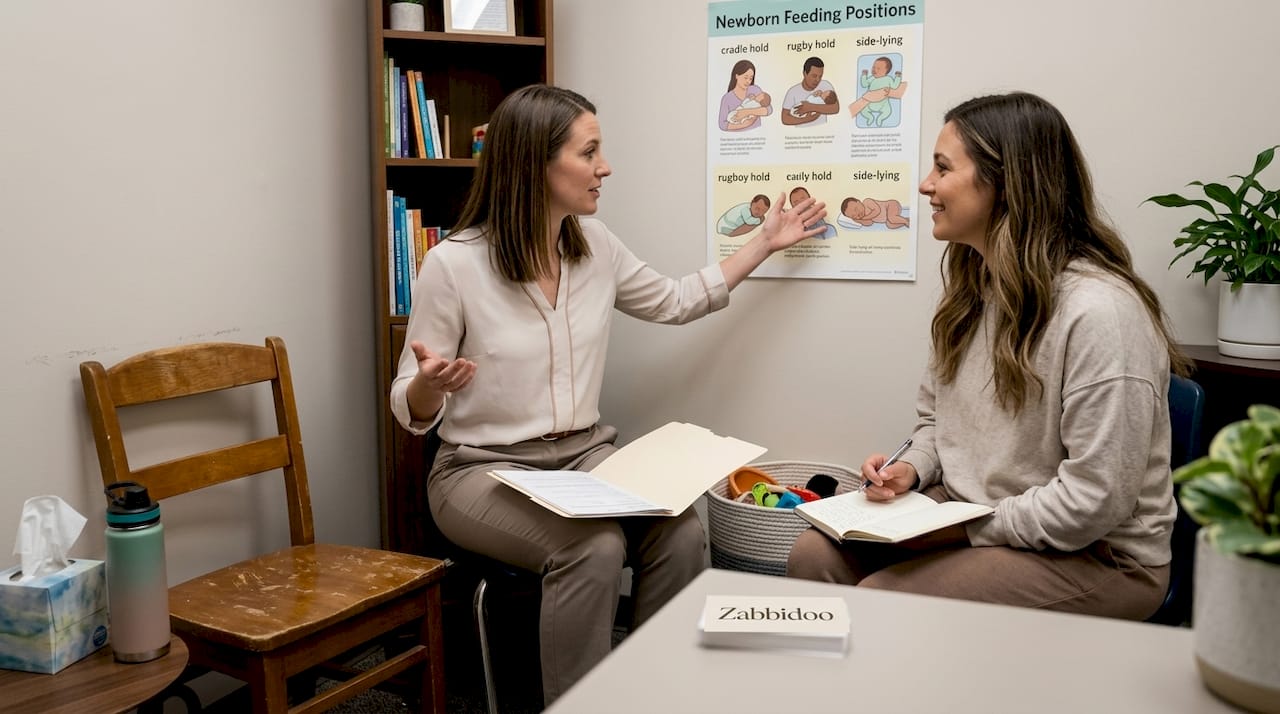
An EMG study on neck muscles found no significant difference in neck muscle activity across the cradle, cross-cradle, and football holds. In other words, none of these three positions is dramatically safer for your neck than the others when measured objectively.
What this means for you is that posture and support matter more than the specific hold itself. Here’s a quick breakdown:
| Position | Neck strain risk | Key comfort factor | Best support tool |
|---|---|---|---|
| Cradle hold | Moderate | Arm and shoulder support | Nursing pillow |
| Cross-cradle hold | Moderate | Wrist and hand fatigue | Pillow plus armrest |
| Football hold | Moderate | Back support | Firm cushion or pillow |
| Side-lying | Low to moderate | Surface firmness | Bed or firm mat |
Moderate-intensity neck pain is reported in over half of breastfeeding mothers regardless of which position they use, which reinforces the point: it’s less about switching holds and more about actively managing how you’re supported in any hold.
The most effective strategies for reducing strain include:
- Using a pillow workflow for strain relief to keep your baby elevated consistently
- Keeping your chin level rather than tilting it down to watch your baby feed
- Alternating the breast and arm you lead with across feeds
- Taking a posture reset break every 15 to 20 minutes during longer sessions
When testing nursing pillow support, look for a pillow that holds its shape under the weight of your baby. A pillow that compresses flat defeats the purpose entirely.
Comparing feeding positions for everyday situations
Real life throws specific challenges at new mums. Night feeds, recovery from surgery, multiples, and feeding on the go all call for different approaches. Here’s how each position performs across common scenarios.
| Situation | Best position | Why it works |
|---|---|---|
| C-section recovery | Football or side-lying | Avoids pressure on abdominal wound |
| Newborn with latch difficulty | Cross-cradle | More head control for better latch |
| Twins | Football hold (both sides) | Feed both simultaneously |
| Night or rest feeds | Side-lying | Minimises effort and movement |
| Feeding away from home | Cradle hold | Easiest to manage without props |
These aren’t rigid rules. They’re starting points. The football hold is often recommended for C-section recovery, but if it causes you wrist discomfort, the side-lying position may serve you better. Changing feeding positions can help prevent and alleviate neck pain by distributing load across different muscle groups.
A few practical tips for adapting across situations:
- Use a rolled-up towel or firm cushion behind your lower back when feeding in an unsupportive chair
- When feeding in bed, place a pillow under your top arm in the side-lying position to prevent shoulder collapse
- For feeding away from home, a compact travel feeding pillow can recreate the support you have at home
To test pillow stability, press your forearm down with moderate pressure. If the pillow flattens noticeably, it won’t maintain its support through a full feed. You want a pillow that pushes back.
As your baby grows and gains more head control, the holds that felt essential in the early weeks may become less critical. Stay flexible and trust your body when something doesn’t feel right.
Our honest perspective on finding the right feeding fit
Here’s the thing we genuinely believe: the obsession with finding the perfect position can actually hold new mums back. It implies there’s a single correct answer when in reality, your body changes, your baby changes, and what works on day five may not work on day fifty.
The most helpful shift isn’t from one position to another. It’s from trying to get it right to getting comfortable with ongoing adjustment. Feeding aids and props aren’t shortcuts or signs of struggle. They’re tools, and good tools make hard jobs manageable.
We’ve seen mums feel guilty for needing a pillow to breastfeed comfortably. That guilt is unnecessary. Using a well-designed ergonomic support means you’re actively protecting your body for the long haul. Read more about what to look for in nursing pillow durability tips when choosing your long-term support setup.
Listen to your body. Change positions often. Use what helps. That’s it.
Getting the right support for blissful breastfeeding
If the comparisons above have shown you anything, it’s that proper support makes every position more effective. You don’t have to white-knuckle through sore shoulders and arm fatigue to breastfeed well.

Zabbidoo’s ergonomic nursing pillows are built with an 18cm lift to bring your baby to you, not the other way around. The firm, compression-resistant fill keeps its shape through every feed, so you’re not constantly readjusting. And because comfort should extend beyond feeding, every order from Zabbidoo comes with a free pacifier clip chain as a bonus. If you’re ready to feel genuinely supported through every session, this is your next step.
Frequently asked questions
Which feeding position reduces neck pain the most?
No single position is proven to be best for neck pain. Changing positions regularly combined with good prop support is the most effective approach.
Is it normal to feel neck or shoulder pain while feeding?
Yes, it is very common. Over half of breastfeeding mothers report neck pain, and addressing posture and support early makes a meaningful difference.
Can I use a nursing pillow with all feeding positions?
Yes, most positions can be adapted with a nursing pillow. A firm, height-appropriate pillow adds support across cradle, cross-cradle, and football holds.
What if my baby prefers one position over others?
Follow your baby’s cues, but try gently rotating the arm or breast you lead with to spread the physical load on your body over time.
Should I change positions if I’ve had a C-section?
Absolutely. The football hold and side-lying position are generally more comfortable after a caesarean as they avoid placing pressure on the abdominal wound area.
Recommended
- Step-by-step nursing pillow setup for comfortable feeding – Zabbidoo
- Why a multi-use nursing pillow eases feeding discomfort – Zabbidoo
- How to test feeding pillow stability: safe breastfeeding – Zabbidoo
- Multi-use nursing pillow workflow: cut strain by 18cm – Zabbidoo
- Newborn care guide for dads: Build confidence and bond