

Soothing a newborn during feeds means recognising hunger cues early, using paced feeding techniques, and applying calming physical contact to keep your baby comfortable and engaged. The Mayo Clinic recommends newborns feed 8 to 12 times every 24 hours, which means you will spend a significant portion of your day at the breast or bottle. Getting soothing right during those feeds is not a bonus skill. It is the foundation of feeding success, newborn comfort, and the bond you are building together. Dr. Harvey Karp’s 5 S’s framework and clinical paced feeding guidelines give you a proven starting point, and this guide walks you through both in practical detail.
How to soothe newborns during feeds: start with hunger cues
The single most effective soothing strategy is acting before your baby reaches full crying. Crying is a late hunger cue, and by the time your newborn is wailing, both of you are already stressed before the feed has even started.
Early hunger cues to watch for:
- Rooting (turning the head side to side, mouth open)
- Hand-to-mouth movements
- Lip smacking or sucking on fingers
- Increased alertness and body movement
- Soft, rhythmic grunting sounds
These signals appear well before distress sets in. When you respond to rooting or lip smacking, your baby arrives at the feed in a calm, receptive state. That calm state makes latching easier, reduces gulping, and shortens the time it takes to settle into a steady feeding rhythm.
Distress during a feed looks different. Watch for your baby stopping and starting, arching away from the breast or bottle, fussing between sucks, or going rigid. These are signals that something is off, whether it is the flow rate, positioning, trapped gas, or overstimulation. Recognising the difference between “I am hungry” and “I am uncomfortable” is the core skill that makes every other soothing technique work.
Pro Tip: If your newborn is too sleepy to feed, gentle waking methods like a nappy change, rubbing their back, or tickling their feet can rouse them enough to feed effectively without causing distress.
Paced feeding and positioning: the foundation of a calm feed
Feeding technique directly affects how settled your baby is during and after a feed. Two approaches make the biggest difference: paced bottle feeding and ergonomic positioning for both breast and bottle.
Paced bottle feeding holds the bottle horizontally rather than tipped steeply, which slows the milk flow and lets your baby control the pace. Every 20 to 30 seconds of active sucking, you tilt the bottle down briefly so your baby can breathe and rest. This is not about making the feed slower for its own sake. It is about giving your baby the same natural pauses they would get at the breast, which prevents gulping, reduces gas, and keeps them calm throughout.
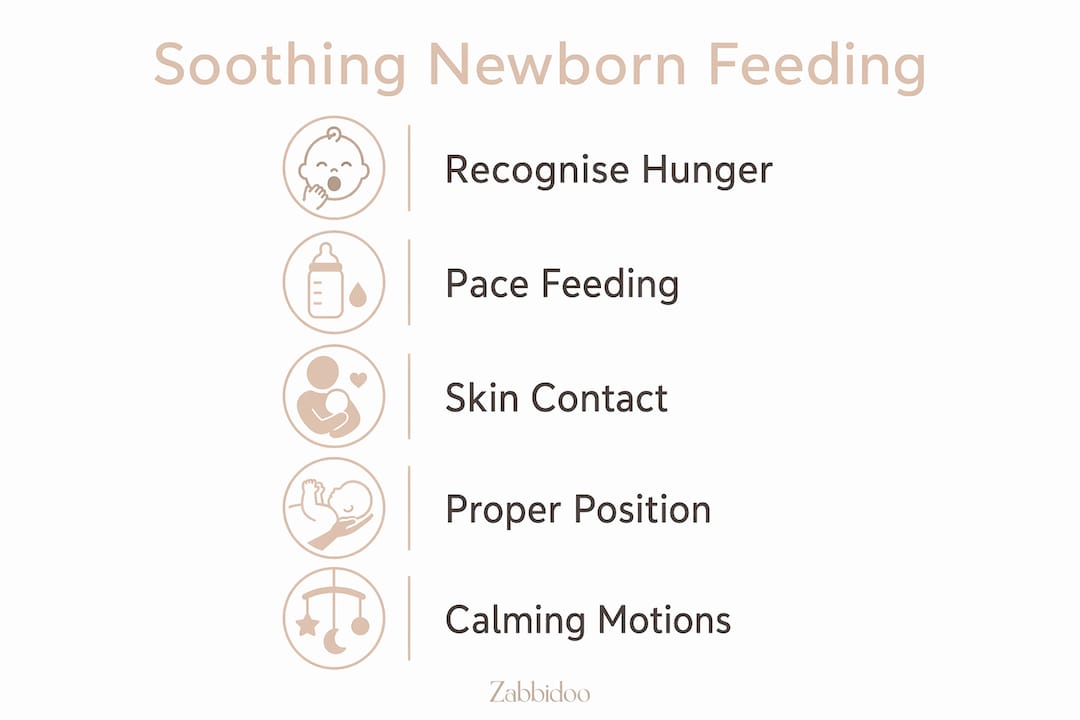
For breastfeeding, skin-to-skin contact during feeds reduces cortisol levels in both mother and baby and supports a more relaxed latch. Changing your feeding position when your baby fusses mid-feed can also resolve discomfort quickly. A baby who arches away in the cradle hold may settle immediately in the football hold, simply because the angle of milk flow changes.
Upright positioning during and after feeds is one of the most clinically supported comfort strategies. Keeping your baby at roughly a 45-degree angle during a feed reduces the chance of milk pooling at the back of the throat, which triggers the gag reflex and causes fussiness. After a feed, holding baby upright for 20 to 30 minutes reduces reflux discomfort significantly.
| Feeding position | Best for | Soothing benefit |
|---|---|---|
| Cradle hold | Breastfeeding, relaxed feeds | Close body contact, easy eye contact |
| Football hold | Large breasts, fast letdown | Better latch control, reduces gulping |
| Side-lying | Night feeds, post-caesarean recovery | Low strain for mum, calm environment |
| Upright/koala hold | Reflux, bottle feeding | Reduces milk pooling and gas |
| Laid-back (biological nurturing) | Overactive letdown | Gravity slows flow, reduces choking |
For a detailed breakdown of each position, the Zabbidoo guide on feeding positions for newborns covers ergonomic fit for both mum and baby.
Pro Tip: Burp your baby mid-feed, not just at the end. Pausing halfway through to burp prevents gas buildup that causes fussiness in the second half of the feed, which many parents mistakenly read as hunger.
Which calming techniques ease newborn distress during feeds?
When your baby is already unsettled at the breast or bottle, sensory and motion techniques can bring them back to a calm enough state to continue feeding. Dr. Harvey Karp’s 5 S’s method is the most evidence-backed framework for this: swaddle, side or stomach position, shush, swing, and suck.

During a feed, you will not use all five simultaneously, but you can layer them. A light swaddle with arms free keeps your baby from flailing and breaking the latch. Holding them in a side-facing position against your body while feeding adds the security of the side hold. A steady shushing sound, either from you or a white noise source, reduces overstimulation from background noise and helps your baby focus on feeding rather than reacting to the environment.
Motion is particularly powerful. Small, rhythmic movements like the Jell-O head jiggle (tiny 1-inch side-to-side head movements) mimic the motion of the womb and can calm a crying baby within seconds. This is different from slow rocking, which works better for maintenance soothing once a baby is already calm. For active distress, fast and small beats slow and large every time.
Touch techniques during feeds also matter. Gentle stroking along your baby’s spine, or slow circular pressure on their back, activates the parasympathetic nervous system and reduces the stress response. Many mothers find that a warm hand resting on their baby’s back during a feed is enough to keep a borderline-fussy baby settled throughout.
Sensory tools and methods that support soothing during feeds:
- White noise machine or app (consistent, steady sound at around 65 decibels)
- Dim lighting to reduce visual overstimulation
- Skin-to-skin contact under a light wrap
- Pacifier between feeds to satisfy non-nutritive sucking needs (the free pacifier clip from Zabbidoo keeps it accessible)
- Gentle rhythmic patting on the back or bottom
For parents interested in the sensory science behind these approaches, the Growing Balanced guide to sensory-seeking behaviour explains why rhythmic input is so regulating for young infants.
Safety reminder: Never shake your baby, even gently, to stop crying. Shaking causes serious brain injury. If you feel overwhelmed, place your baby safely in their cot and step away for a few minutes before returning.
How to troubleshoot crying and fussiness during feeds
When your baby cries or fusses during a feed, the cause is almost always one of four things: trapped gas, reflux, a milk flow mismatch, or mid-feed sleepiness caused by the hormone cholecystokinin. Identifying which one is happening tells you exactly what to do next.
Many babies fall asleep mid-feed due to the cholecystokinin hormonal response, which creates a feeling of fullness and drowsiness after the initial let-down. This is not the same as a satisfied baby finishing a feed. A sensory reset, such as a nappy change, undressing briefly, or rubbing their feet, can re-engage them to continue.
| Sign | Likely cause | Action |
|---|---|---|
| Arching back, pulling off breast | Reflux or fast letdown | Upright position, laid-back hold |
| Gulping, clicking sounds | Latch issue or fast flow | Adjust position, pace the bottle |
| Crying before feed starts | Late hunger cue | Feed earlier next time, watch for rooting |
| Falls asleep after 5 minutes | Cholecystokinin response | Sensory reset, nappy change, undress |
| Gassy, hard belly after feed | Swallowed air | Mid-feed burping, paced feeding |
Troubleshooting steps when your baby fusses during a feed:
- Pause the feed and check positioning. A small adjustment often resolves the issue immediately.
- Burp your baby and hold them upright for two minutes before resuming.
- If bottle feeding, check the teat flow rate. A fast-flow teat on a young newborn causes gulping and distress.
- Try a sensory reset if your baby is drowsy but not full.
- Switch feeding positions to change the angle of milk delivery.
- If breastfeeding refusal occurs, try feeding when your baby is drowsy rather than fully awake.
- Seek support from a lactation consultant or your maternal health nurse if fussiness persists across multiple feeds.
Pro Tip: If you are feeling frustrated or overwhelmed, placing your baby safely in their cot and taking 10 to 15 minutes to calm yourself is not giving up. It is one of the most effective things you can do for your baby, because your calm directly influences theirs.
Key takeaways
Soothing newborns during feeds works best when you combine early hunger cue recognition, paced feeding technique, and layered sensory calming methods from the first days home.
| Point | Details |
|---|---|
| Act before crying starts | Respond to rooting and lip smacking to begin feeds in a calm state. |
| Use paced feeding technique | Hold the bottle horizontally and pause every 20 to 30 seconds to prevent gulping and gas. |
| Layer the 5 S’s during feeds | Combine swaddling, shushing, and gentle motion to soothe an unsettled baby mid-feed. |
| Upright positioning reduces reflux | Hold baby at 45 degrees during feeds and upright for 20 to 30 minutes after. |
| Troubleshoot by cause, not symptom | Identify whether fussiness is gas, reflux, flow mismatch, or sleepiness before responding. |
What I have learned about soothing newborns during feeds
I want to be honest with you: the first few weeks of feeding a newborn are genuinely hard, and no amount of preparation fully prepares you for the reality of a fussy baby at 2am when you are exhausted and second-guessing everything.
What I have found, both personally and through the many conversations I have had with new mums, is that the techniques in this article work. But they work best when you stop trying to do everything at once and pick one thing to focus on. If your baby is unsettled, start with positioning. Just that. Nine times out of ten, a small adjustment to how you are holding your baby changes everything.
The other thing I would say is this: your baby is not fussing to frustrate you. They are communicating the only way they know how. When you start reading those cues accurately, something shifts in the relationship. You stop feeling reactive and start feeling responsive. That shift is where the bonding actually happens.
I also think we underestimate how much our state affects the feed. A tense mother transfers that tension to her baby through muscle tightness, shallow breathing, and rushed movements. When you slow down, your baby slows down. It sounds simple, and it is. But it takes practice to do it when you are tired and worried.
Trust your instincts, use the evidence, and ask for help when you need it. You are doing better than you think.
— Marietjie
How Zabbidoo supports comfort during every feed
Getting soothing right during feeds is much easier when your body is not fighting against poor posture. Most nursing pillows collapse under the weight of a newborn, which forces you to hunch forward, creating neck and back tension that transfers directly into how you hold your baby.

Zabbidoo’s nursing pillow is built with an 18cm lift that brings your baby up to breast height, so you stay upright and relaxed throughout the feed. The compression-resistant fill holds its shape under pressure, which means no repositioning mid-feed and no disruption to a baby who has just settled. Better posture for you means a more stable, calm hold for your baby. That stability is one of the quietest and most effective soothing tools you have. For more on how ergonomic support changes the feeding experience, the Zabbidoo guide on ergonomic breastfeeding comfort is worth reading before your next feed.
FAQ
What are the earliest signs my newborn is hungry?
Rooting, hand-to-mouth movements, and lip smacking are the earliest hunger cues in newborns. Crying is a late cue, so responding to these earlier signals makes feeds calmer and easier to manage.
How often should a newborn feed each day?
Newborns need 8 to 12 feeds per 24 hours, roughly every 2 to 3 hours. Feed frequency may increase during growth spurts at around 2 to 3 weeks of age.
What is paced bottle feeding and why does it help?
Paced bottle feeding holds the bottle horizontally and pauses every 20 to 30 seconds so your baby can breathe and rest. This mimics the natural rhythm of breastfeeding and reduces gas, gulping, and mid-feed fussiness.
Why does my baby fall asleep mid-feed?
Many newborns fall asleep mid-feed due to a hormonal response triggered by initial milk intake. A sensory reset such as a nappy change, undressing, or gentle foot stimulation can re-engage them to continue the feed.
When should I seek help for feeding distress?
If your baby consistently fusses, refuses feeds, or shows signs of discomfort across multiple feeds, speak with a lactation consultant or your maternal health nurse. Persistent issues may indicate reflux, a latch problem, or a flow rate mismatch that needs professional assessment.