

The early weeks of breastfeeding are genuinely hard. Your arms ache, your back rounds forward, and you find yourself hunching over your baby dozens of times a day. Linen nursing pillows offer a real solution to that physical toll, combining breathable natural fabric with ergonomic support to make feeding more comfortable for you and safer for your baby. This guide covers everything you need to know: what makes linen the standout fabric choice, how ergonomic design reduces strain, what to look for when buying, and why these pillows keep earning their place long after the newborn phase is over.
Table of Contents
- Key takeaways
- Why linen nursing pillows stand out
- Ergonomic design features that ease feeding
- Multi-use functionality beyond nursing
- Choosing and caring for your linen nursing pillow
- My honest take on linen nursing pillows
- Why Zabbidoo’s nursing pillow is worth a closer look
- FAQ
Key takeaways
| Point | Details |
|---|---|
| Linen is breathable and hypoallergenic | French flax linen regulates temperature and suits sensitive newborn skin without harsh chemicals. |
| Ergonomic height reduces strain | A pillow that lifts baby to breast height stops you from hunching, protecting your neck, back, and wrists. |
| Multi-use value extends past feeding | These pillows support pregnancy comfort, tummy time, and assisted sitting well into infancy. |
| Proper latch still comes first | A good pillow positions baby correctly, but technique and latch depth matter just as much as support. |
| Care is simple with the right cover | Removable, machine-washable linen covers keep hygiene manageable for busy parents. |
Why linen nursing pillows stand out
Not all fabrics are equal when they are pressed up against a newborn for eight or more feeds a day. Linen earns its reputation in this space for reasons that go well beyond how it looks.
Breathability and temperature regulation. Linen is one of the most breathable natural fibres available. It pulls heat and moisture away from the body, which matters enormously when you are holding a warm baby for extended periods. Synthetic covers trap heat on both sides, and that discomfort compounds quickly over multiple feeds.
Hypoallergenic and antibacterial properties. Linen has natural antibacterial qualities that make it a genuinely good choice for newborn skin contact. It resists dust mites and does not harbour the bacteria that softer, looser weave fabrics can. For parents who are managing eczema-prone or sensitive skin in their baby, this matters more than marketing copy can capture.
Sustainability. Flax, the plant linen comes from, grows with minimal water and pesticides compared to cotton. Many linen nursing pillow covers are made from French flax at 165 to 170 GSM, which gives the fabric enough structure to hold its shape while remaining genuinely soft to the touch.
Safety certification. Look for OEKO-TEX® Standard 100 certification on any linen product going near your baby. This certification tests for harmful substances including pesticide residues, heavy metals, and formaldehyde. It is the clearest signal that what you are buying has been independently verified as safe.
The crease question. One thing new buyers sometimes worry about is linen’s natural texture. It creases. That is not a flaw. The relaxed, creased look is part of genuine linen’s character, and it needs no ironing. If you are seeing a pillow marketed as linen that comes out perfectly smooth, it is worth checking whether you are looking at a linen blend rather than pure linen.
- Breathes better than cotton or synthetic covers in warm weather
- Naturally antibacterial, reducing odour and bacteria between washes
- Made from a low-impact crop, making it a more sustainable choice
- OEKO-TEX® certification confirms freedom from harmful chemicals
- Softens further with every wash, improving comfort over time
Pro Tip: When shopping for linen baby pillows, check the GSM weight listed on the product. A cover below 150 GSM may feel thin and pill quickly. Aim for 160 GSM or above for lasting durability.
Ergonomic design features that ease feeding
The fabric on the outside of a nursing pillow matters. But the shape and fill inside is what actually changes how breastfeeding feels day to day.
Most quality breastfeeding support pillows use a U-shaped design. This wraps around the mum’s waist and creates a stable platform on both sides of the body, which means less effort holding the baby at breast height. The key word is height. U-shaped nursing pillows that wrap around the waist reduce back, neck, and arm strain by keeping the baby up, rather than making you lean down. The difference over twelve feeds in a single day is significant.
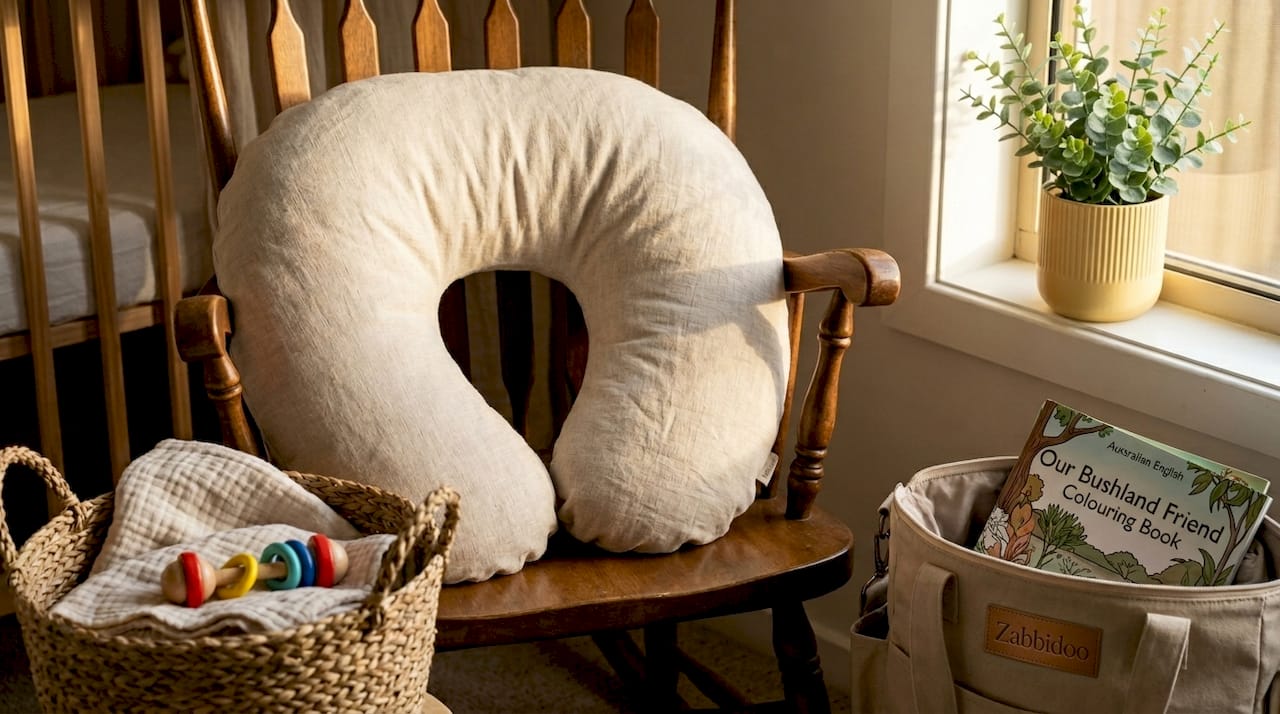
Fill material is equally important. The most supportive options combine a TENCEL™ fibre outer layer with breathable mesh inserts to create a fill that is soft without being floppy. Pearl cotton and similar structured fills hold their shape under compression. A pillow that collapses after two weeks of use forces you to compensate with your arms and back. That compensation is exactly what a nursing pillow is supposed to prevent.
Getting positioning right takes more than a good pillow. Here is a practical sequence to follow:
- Sit back fully in your chair before placing the pillow. Slouching forward before you even start undermines everything the pillow is designed to do.
- Position the pillow so it sits snug against your body, not floating in your lap.
- Bring baby to breast, not breast to baby. This single positioning mistake is responsible for more feeding pain than almost anything else.
- Check that baby’s ear, shoulder, and hip are aligned in a straight line once they are latched.
- Use an asymmetric latch technique, where baby’s chin leads and takes in more breast below the nipple than above. This placement targets the soft palate area and significantly reduces nipple pain.
“Achieving a deep latch is more crucial than the pillow alone. Techniques such as the asymmetric latch reduce nipple pain and feeding complications.” Rafaela Schmidt, IBCLC, The Perfect Latch Guide
The pillow’s job is to hold the baby at the right height so you are not doing the heavy lifting with your arms. Your job is to keep working on latch technique alongside it. New mums nursing 8 to 12 times daily genuinely benefit from building a full ergonomic setup, including a footstool and side support, to reduce fatigue over the course of those early months. You can explore a detailed positioning guide to set yourself up well from the start.
Pro Tip: Place a rolled towel or small cushion behind your lower back if your chair does not offer lumbar support. The nursing pillow handles baby positioning; your chair needs to handle yours.
Multi-use functionality beyond nursing
One of the strongest arguments for investing in a quality linen nursing pillow is how much use you get out of it across different stages.
During pregnancy, many mums use a C or U-shaped nursing pillow for hip alignment and pelvic support while sleeping. Tucking it between the knees takes pressure off the lower back and sacrum, which tends to be uncomfortable from around the second trimester onward. Multi-use pillows assist with pregnancy hip alignment, supervised tummy time, and play support up to 18 months and beyond.
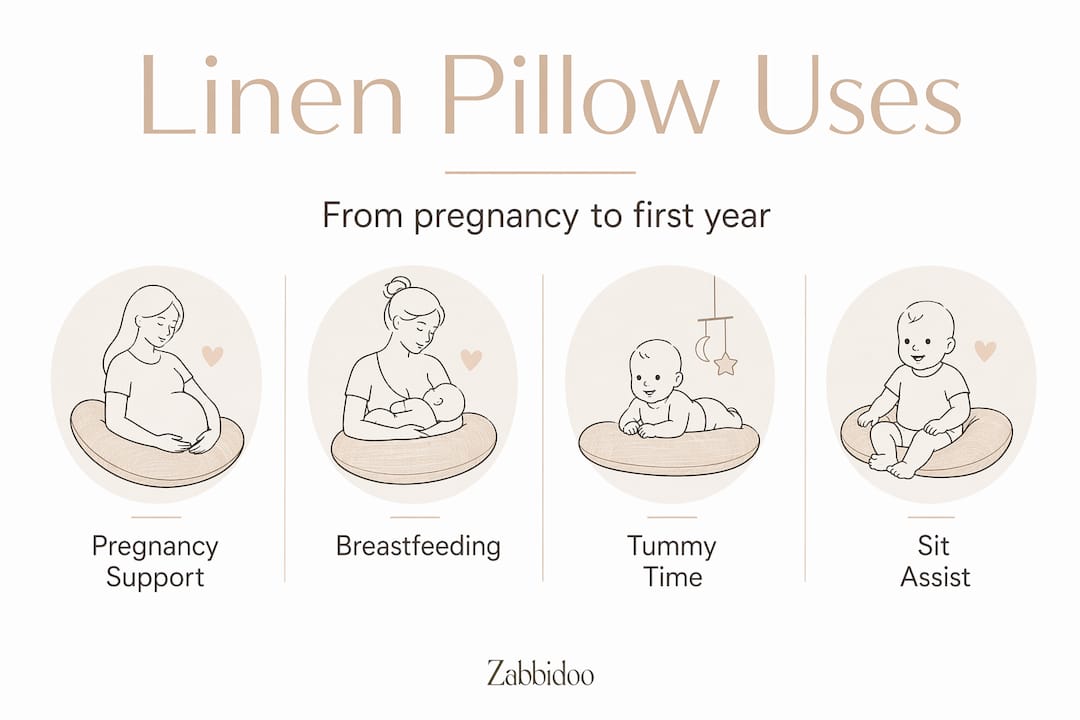
After birth, supervised tummy time is one of the most recommended activities for building neck and core strength in young babies. Placing your baby over the curve of a nursing pillow gives them a gentle incline that makes lifting their head easier and more encouraging. This is particularly useful in the first few weeks when babies are still building the strength to lift their heads on a flat surface.
From around four to five months, the same pillow can be used to support assisted sitting, propped around the baby’s sides and back while they practice balance. This stage moves quickly, but having a soft, clean support structure nearby makes the process safer and less stressful for you.
Here is a summary of how use shifts across stages:
| Stage | How the pillow is used |
|---|---|
| Second and third trimester | Hip and pelvic support during sleep |
| Newborn to four months | Feeding support and supervised tummy time |
| Four to eight months | Assisted sitting and floor play support |
| Eight months and beyond | Back support for sitting play, reading |
Some modular designs, which separate into smaller cushions for targeted support, extend functionality even further. These are worth considering if you want a single product that adapts rather than collecting multiple pieces over time.
- Reduces pelvic discomfort in pregnancy when used as a sleep support
- Encourages tummy time strength without placing baby flat on the floor
- Supports sitting balance during the transition from lying to upright
- Machine-washable covers handle the mess that comes with every stage
- One quality pillow replaces several single-purpose products
You can read more about multi-use nursing pillow benefits and how to adapt it across the first year.
Choosing and caring for your linen nursing pillow
Selecting the right pillow comes down to three things: shape, firmness, and the cover system. Getting all three right means the pillow will work well and stay hygienic without becoming another item on your to-do list.
Shape and firmness. A C-shape suits mums who want targeted front support. A U-shape provides bilateral support and is generally better for longer feeds or mums with back pain. Firmness matters more than most buyers realise. A pillow that feels luxuriously soft in the shop will often compress under a baby’s weight and leave you doing the holding again. Look for structured fills like pearl cotton that hold shape under pressure. You want the pillow to support, not just cushion.
Removable covers. This is non-negotiable. Babies spit up. Milk leaks. A cover that cannot be removed and washed independently is a hygiene problem waiting to happen. Most quality linen nursing pillows weigh around 2000g with removable, machine-washable covers that can be unzipped and laundered separately.
Caring for linen correctly extends its life considerably. The fabric actually softens with each wash, which means it gets more comfortable over time rather than degrading. Here are the key rules:
- Wash the cover below 40°C using a mild detergent. Heat damages linen fibres and shortens the fabric’s life.
- Skip fabric softener. It coats the fibres and gradually reduces linen’s natural breathability.
- Air dry in the shade rather than using a tumble dryer. Direct sunlight can bleach and weaken the fibres over time.
- Never use bleach. It degrades the natural structure of linen and can irritate sensitive skin.
- Zip covers fully before washing to protect the linen from abrasion inside the machine.
Pro Tip: Buy a spare cover if your budget allows. Rotating between two covers means one is always clean and you are never waiting for the dryer before a feed.
For more on how fabric choice shapes comfort and safety in nursing pillows, it is worth understanding what certifications to look for before buying.
My honest take on linen nursing pillows
I’ve spoken with a lot of first-time mums who describe the same experience. They start breastfeeding with the best intentions, and within a week they are wincing through feeds, adjusting constantly, and wondering whether the discomfort is just something you learn to accept. It is not.
What I’ve learned is that the pillow almost always gets blamed for things that are actually a combination of latch technique and pillow design working against each other. A soft, cheap pillow compresses immediately under baby’s weight and forces mum to lean forward to compensate. That forward hunch is where the neck and wrist pain comes from. It is not breastfeeding itself. It is the ergonomics of the setup.
Linen nursing pillows changed that equation for the mums I’ve seen use them well. The breathable cover makes a material difference in warmer months, and the structured fill means the pillow is still holding shape at feed number nine of the day, not just feed number one. That consistency matters more than anything else when you are exhausted and feeding around the clock.
My honest advice: prioritise height and compression resistance over aesthetics when choosing. A beautiful pillow that collapses is just a prop. One that holds its shape and lifts baby to breast level actually changes how your body feels after a day of feeding. And if you are on the fence about investing in quality natural materials, consider how many hours you will spend with this item in the first three months alone. The maths usually makes the decision easy.
— Marietjie
Why Zabbidoo’s nursing pillow is worth a closer look
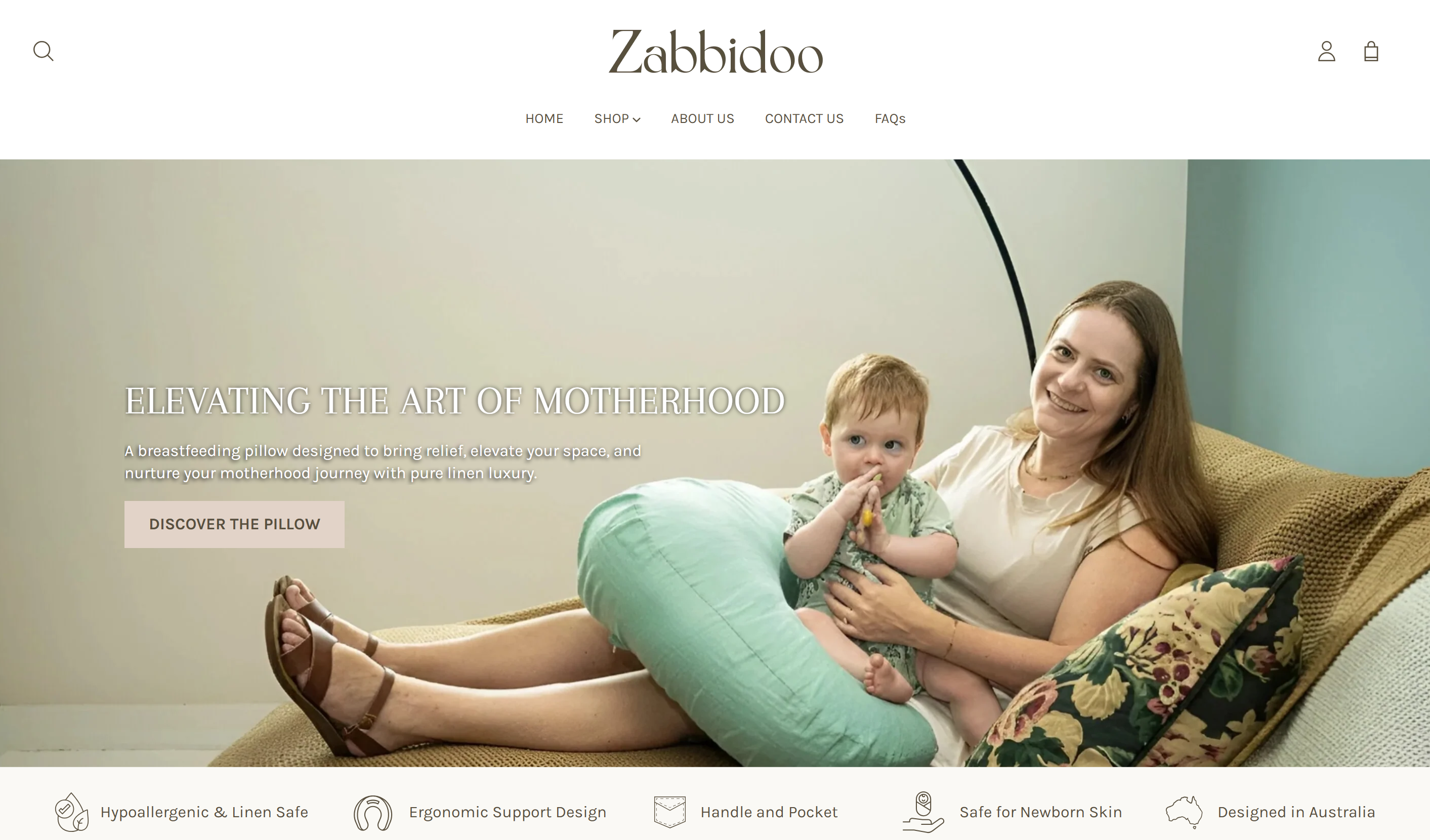
Zabbidoo designed its linen nursing pillow specifically to address what most pillows get wrong. The 18cm height lift brings baby up to breast level, which means you stop hunching forward within the first feed. The French flax linen cover is breathable, OEKO-TEX® certified, and gets softer with each wash rather than pilling or thinning. The structured fill holds its shape through every feed of the day, which is the one thing that separates a genuine ergonomic tool from a decorative cushion.
Beyond nursing, the same pillow supports pregnancy comfort, tummy time, and assisted sitting as your baby grows. Zabbidoo also offers shipping protection to make sure your order arrives in perfect condition. If you are buying as a gift, gift wrapping is available at checkout. For mums who are ready to stop accepting unnecessary discomfort, Zabbidoo’s pillow is a straightforward place to start.
FAQ
What makes linen a good fabric for nursing pillows?
Linen is breathable, naturally antibacterial, and hypoallergenic, making it well suited to extended skin contact during breastfeeding. OEKO-TEX® certification confirms it is free from harmful substances.
How do linen nursing pillows reduce breastfeeding discomfort?
They lift baby to breast height, reducing the need for mums to lean forward. A U-shaped design with structured fill supports baby’s weight and protects the mum’s neck, back, and wrists across multiple daily feeds.
Can I use a nursing pillow for tummy time?
Yes. Placing baby over the curve of a nursing pillow during supervised tummy time gives them a gentle incline that makes lifting their head easier, supporting neck and core development from the early weeks.
How do I wash a linen nursing pillow cover?
Remove the cover and machine wash below 40°C with a mild detergent. Avoid bleach and fabric softener, and air dry in the shade. Linen naturally softens with each wash.
Does a nursing pillow improve latch?
A quality breastfeeding support pillow positions baby correctly and reduces strain, but latch technique remains the most important factor. Experts recommend an asymmetric latch where baby’s chin leads, targeting the soft palate for a deeper, pain-free latch.