

Night feeding comfort is defined by two things: how well your body is supported and how calm your environment is. Most new mothers lose more sleep to physical pain and anxiety than to the feeds themselves. The good news is that ergonomic positioning, smart nursery setup, and techniques like dream feeding can transform overnight feeds from an ordeal into something genuinely manageable. This guide covers how to make night feeds more comfortable using practical tools, including nursing pillows, lighting choices, and mindset strategies that actually work.
How can ergonomic positioning ease night feeds?
Physical strain during night feeds comes almost entirely from one habit: hunching. When your baby lies flat on your lap and you bend forward to meet them, you load your neck, shoulders, and lower back with the same force, repeatedly, across multiple feeds every night. Neutral spine posture is the fix. That means sitting upright, shoulders relaxed, and bringing your baby up to breast height rather than dropping your body down to theirs.
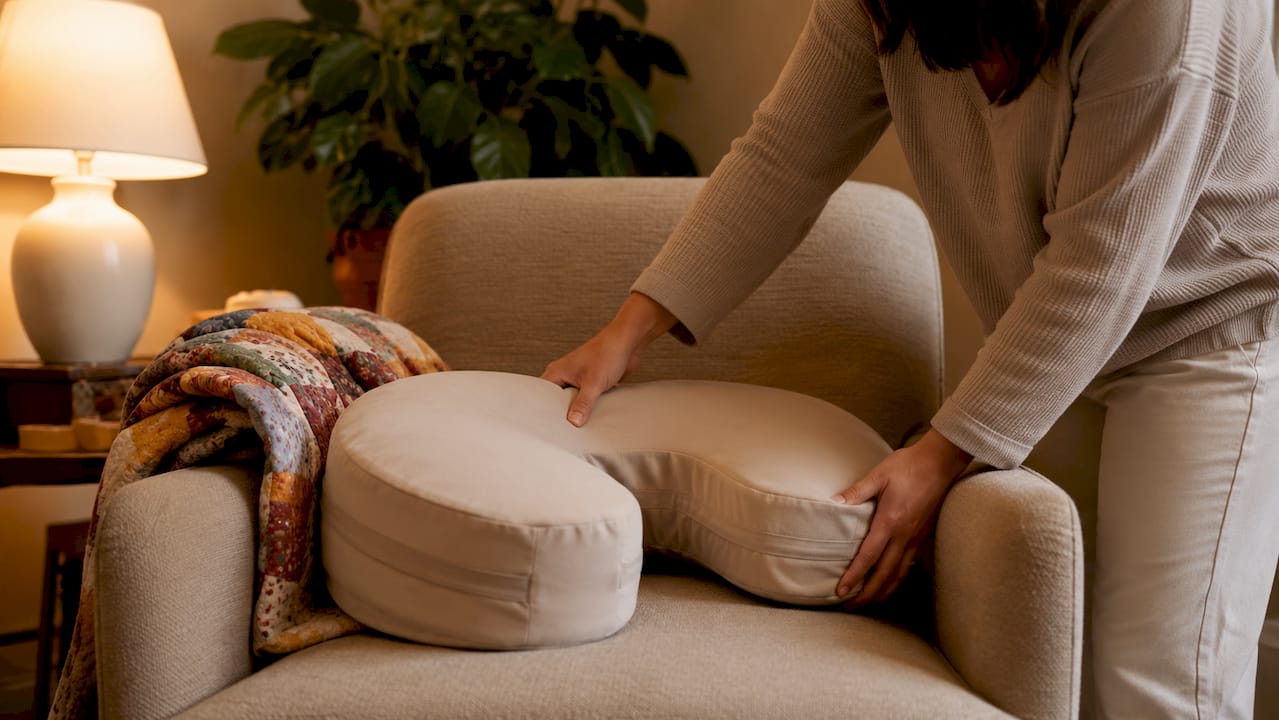
A quality nursing pillow is the single most effective tool for achieving this. The problem with most standard pillows is compression. They flatten under the weight of a baby within minutes, forcing you to hunch anyway. Zabbidoo’s nursing pillow is designed with an 18cm lift and compression-resistant fill, which keeps your baby at the correct height throughout the entire feed. That height difference is not cosmetic. It is the difference between a neutral spine and a strained one. Ergonomic nursing pillows can dramatically reduce the repetitive strain injuries that nursing mothers commonly experience during night feeds.
Here is how to set up your feeding position for maximum support:
- Sit fully back in your chair so your lower back touches the backrest
- Place the nursing pillow around your waist and secure it snugly
- Lay your baby on the pillow so their mouth is level with your nipple without you leaning forward
- Rest your feet flat on the floor or a footstool to keep your hips at 90 degrees
- Keep your shoulders down and your neck long, not craned forward
Pro Tip: Set up your pillow and chair position before the feed begins, not during it. Adjusting a nursing pillow one-handed while holding a hungry baby in the dark is how strain injuries start. A stable, pre-set pillow means you can latch and settle without repositioning.
Understanding why pillow height matters is the first step toward protecting your body across months of night feeds.
What nursery layout and lighting make night feeds easier?
The distance between your baby’s crib and your nursing chair matters more than most parents realise. Experts recommend placing your nursing chair 2 to 4 metres from the crib with minimal turns in the pathway between them. That guideline exists because navigating a cluttered room in near-darkness while sleep-deprived is a genuine safety risk. A clear, short path reduces both physical effort and the chance of stumbling.
Lighting is the other critical variable. Bright white or cool-toned lights suppress melatonin in both you and your baby, making it significantly harder to fall back asleep after a feed. Warm or red-toned dim lighting at around 1500K is the recommended standard for night feeds. This colour temperature gives you enough light to feed and check a nappy safely without triggering the alerting response in your brain. A plug-in amber night light or a dimmable lamp with a warm globe works well.
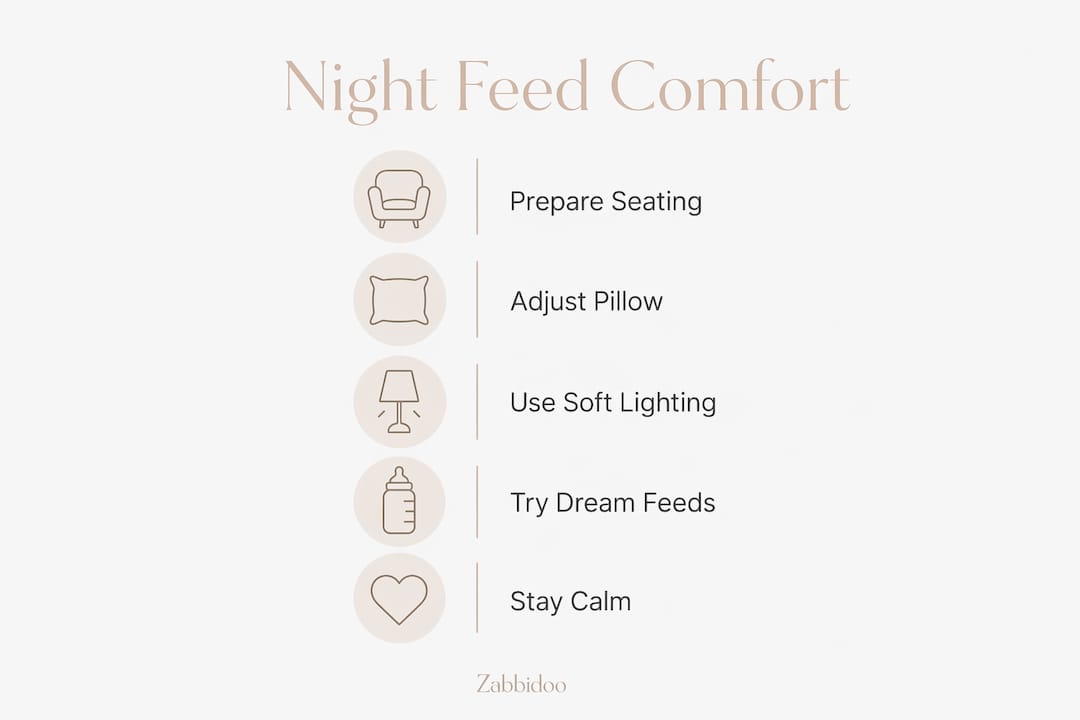
The table below summarises the key differences between lighting types for night feeds:
| Lighting type | Colour temperature | Effect on sleep hormones | Best for night feeds? |
|---|---|---|---|
| Bright white overhead | 5000K+ | Strong melatonin suppression | No |
| Cool white bedside lamp | 3000–4000K | Moderate melatonin suppression | No |
| Warm white dim lamp | 2200–2700K | Mild disruption | Acceptable |
| Amber or red night light | ~1500K | Minimal disruption | Yes |
Beyond lighting, your night feed station should function as a one-handed command centre. Everything you need should be reachable without standing up or searching in the dark. A single tray or shelf beside your chair works well. Stock it with:
- A water bottle with a straw lid (you will be thirsty)
- Burp cloths within arm’s reach
- Nappy change essentials if you change during feeds
- Your phone or a small speaker for white noise
- A spare dummy or pacifier clip to avoid floor searches at 3am
Also keep light directed away from your baby’s face. Lighting positioned toward working surfaces rather than the baby’s eyes reduces overstimulation and helps them drift back to sleep faster after a feed.
How do dream feeds work and can they ease night feedings?
A dream feed is a feed you offer your baby while they are still asleep or in a very light sleep state, typically between 10pm and midnight. The goal is to top up their stomach before you go to sleep yourself, so their next natural waking is pushed later into the night. A dream feed between 10pm and midnight can delay a baby’s first night waking by one to two hours for babies aged two to six months when trialled consistently.
Here is how to do a dream feed with minimal disruption:
- Go to your baby before you sleep, usually between 10pm and 11:30pm
- Lift them gently without turning on bright lights or speaking loudly
- Bring them to your breast or offer a bottle while they remain drowsy
- Allow them to feed for as long as they will, typically five to fifteen minutes
- Burp gently in an upright position, then return them to the crib without full waking
- Return to bed yourself immediately
The trial period matters. If a dream feed does not delay your baby’s first waking by at least one hour after ten to fourteen nights, continuing it is likely causing more disruption than benefit. Not every baby responds to dream feeding, and recognising when to stop is as important as knowing how to start.
Pro Tip: Skip the nappy change during a dream feed unless there is a leak or soiling. Changing a nappy fully wakes most babies and defeats the purpose of the technique. A good overnight nappy with high absorbency handles most situations until morning.
What calming strategies support emotional ease during night feeds?
The emotional weight of night feeds is real, and it is separate from the physical exhaustion. Many mothers describe a specific kind of stress that comes from watching the clock, calculating hours of sleep lost, and wondering whether this will ever end. Hiding clocks during night feeds is a simple but genuinely effective strategy. Constant mental arithmetic about sleep debt increases cortisol and makes returning to sleep harder once the feed is done.
Night wakings are biologically normal in infancy. There is no technique that eliminates them entirely, and expecting otherwise creates unnecessary distress. Accepting this phase as temporary, rather than fighting it, is one of the most protective things you can do for your emotional health. That acceptance does not mean suffering in silence. It means building small rituals that make the feeds feel less like an interruption and more like a quiet pocket of the night.
Practical strategies to reduce stress during overnight feeds include:
- Turn your phone face down or use a red-filter night mode to avoid stimulating blue light
- Use a white noise machine or a gentle playlist to create a consistent, calming audio environment
- Keep a short affirmation or a few lines of a podcast ready for feeds that run long
- Avoid checking social media or news during feeds, as both increase alertness and anxiety
- Remind yourself that your baby’s need for night feeds is time-limited. Most babies consolidate sleep significantly between four and six months
The goal is not to eliminate the waking. The goal is to reduce the suffering around it.
Key takeaways
Comfortable night feeds depend on physical support and emotional preparation working together, not on any single product or trick.
| Point | Details |
|---|---|
| Posture protects your body | Use a compression-resistant nursing pillow to bring baby to breast height and maintain a neutral spine. |
| Nursery layout reduces effort | Place your nursing chair 2 to 4 metres from the crib with a clear path and amber lighting at around 1500K. |
| Dream feeds can extend sleep | Trial a 10pm to midnight feed for 10 to 14 nights; stop if it does not delay the first waking by at least one hour. |
| Clock anxiety worsens fatigue | Hide clocks during feeds to reduce cortisol and make returning to sleep easier after each waking. |
| Night wakings are normal | Accepting this phase as temporary is the most effective mindset shift for maternal emotional well-being. |
What I have learned from the hardest hours of early motherhood
The advice I wish someone had given me earlier is this: the pain you feel during night feeds is not inevitable. It is a posture problem, and posture problems have solutions. I spent the first weeks of my daughter’s life hunched over a flat pillow that had collapsed within minutes, wondering why my shoulders ached by morning. The moment I switched to a pillow with actual lift and structure, the physical experience of night feeds changed completely.
The emotional side took longer. I was obsessed with the clock. I would calculate exactly how many hours I had slept, how many were left before morning, and how many feeds might still come. That calculation helped nothing. It made every waking feel like a loss rather than just a feed. Covering the clock was a small act, but it genuinely shifted something.
What I have come to believe is that the mothers who find night feeds most manageable are not the ones who found a magic technique. They are the ones who stopped fighting the reality of it and put their energy into making the experience physically comfortable and emotionally neutral. Dream feeding worked for us for about three weeks before our daughter outgrew its usefulness. The ergonomic setup worked for months. The mindset shift worked permanently.
Try the strategies in this article one at a time. Not all of them will suit your baby or your body. But the combination of proper support, a calm environment, and realistic expectations will make a measurable difference to how you experience the night.
— Marietjie
The right support makes every feed easier
If you are still feeding on a pillow that flattens within minutes, your body is absorbing strain that it should not have to. Zabbidoo’s nursing pillow is built with an 18cm lift and compression-resistant fill specifically to keep your baby at the correct height throughout the entire feed, not just at the start. It is designed for the kind of repeated, prolonged use that night feeds demand.

The difference between a pillow that holds its shape and one that does not is the difference between waking with a stiff neck and waking without one. For new mothers doing multiple feeds a night across months, that difference compounds quickly. See the full range of ergonomic feeding support at Zabbidoo.
FAQ
How do I make night feeds less painful on my back?
Maintain a neutral spine by using a nursing pillow that brings your baby up to breast height rather than hunching forward. Ergonomic support pillows prevent the repetitive strain that causes neck and back pain across multiple night feeds.
What is the best time to do a dream feed?
The target window for a dream feed is between 10pm and midnight. Offering a feed during this window can delay your baby’s first natural waking by one to two hours, giving you a longer initial sleep stretch.
What lighting is best for night feeds?
Amber or red-toned lighting at around 1500K causes the least melatonin disruption for both mother and baby. Avoid bright white or cool overhead lights, as these suppress sleep hormones and make returning to sleep harder after the feed.
How long do night feeds typically last?
Most babies require night feeds until around four to six months, though this varies. Night wakings are biologically normal in infancy, and the frequency typically reduces as babies grow and their stomach capacity increases.
Does hiding the clock really help during night feeds?
Yes. Constantly calculating hours of sleep lost increases cortisol and makes it harder to fall back asleep after a feed. Removing the clock from view during night feeds is a simple strategy that reduces stress and supports faster sleep resumption.