

Ergonomic pillows are defined as support products designed to maintain the body’s natural alignment during sleep and feeding, reducing strain on the neck, back, and shoulders. For new mums, knowing how to choose ergonomic pillows correctly is the difference between recovering well and waking up in pain every morning. The two main categories, sleep pillows and nursing pillows, serve completely different purposes. Mixing their uses causes ergonomic failure and, in the case of nursing pillows used as sleep surfaces, genuine safety risks for your baby.
How to choose ergonomic pillows: height, firmness, and fit
The single most practical method for selecting the right sleep pillow is measuring your shoulder-to-ear distance while lying down. This measurement tells you exactly how much loft, the height of a pillow under compression, you need to keep your cervical spine neutral. Proper cervical alignment prevents the neck strain and morning stiffness that so many new mums write off as just part of the territory.
Loft recommendations vary by sleep position:
- Side sleepers need approximately 4 to 6 inches of loft to fill the gap between the ear and the mattress
- Back sleepers do best with 3 to 5 inches, enough to support the neck without pushing the head forward
- Stomach sleepers need less than 2 to 3 inches, or no pillow at all, to avoid straining the cervical spine
Firmness matters just as much as height. Memory foam contours to the neck and holds its shape through the night, making it a reliable choice for side sleepers. Latex offers responsive push-back, which suits people who shift positions frequently. Buckwheat hulls are adjustable and hold loft longest for side sleepers with chronic neck pain. Cotton and wool fills are softer and breathable but compress faster, which means they lose their ergonomic benefit sooner.
Pro Tip: Do not judge a pillow in the shop. Sleep on it for at least a week before deciding. Immediate comfort can be misleading. Adjustable-fill pillows let you dial in the exact loft over days, which is why they consistently outperform fixed-fill options for long-term neck health.
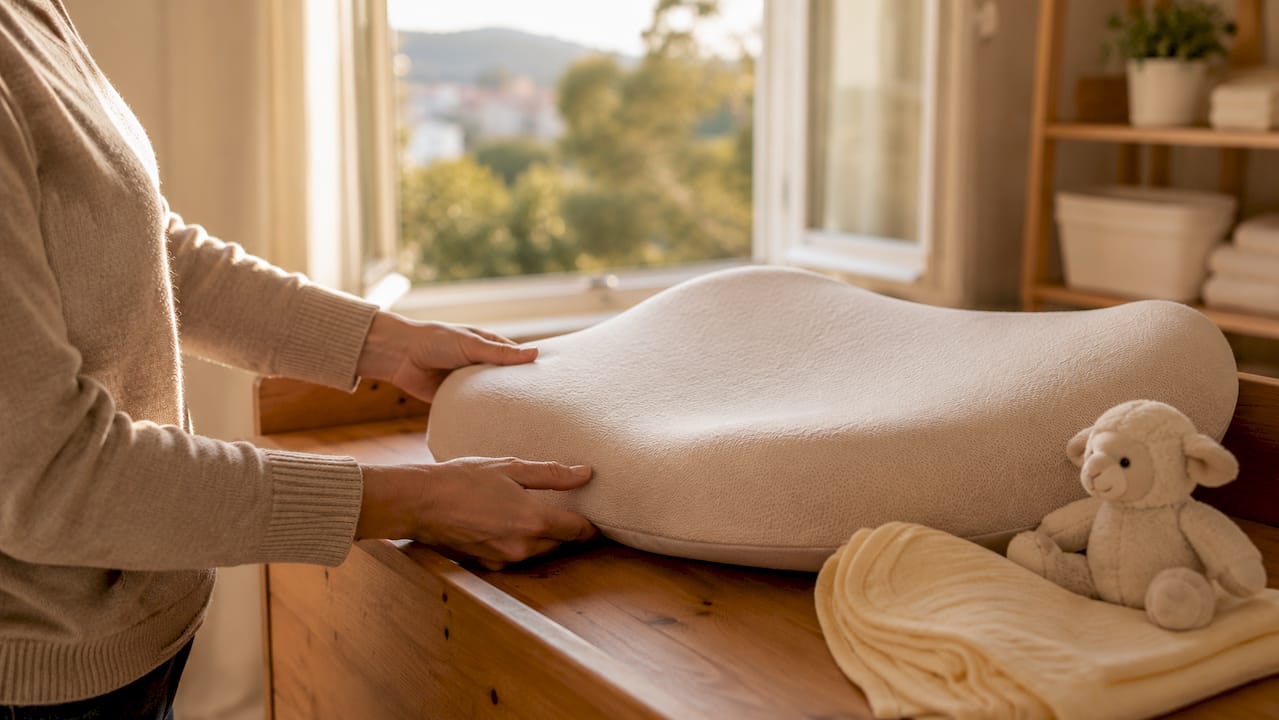
If you are recovering from pregnancy and your body is still changing, an adjustable pillow is the smarter starting point. Clinical evidence confirms that better outcomes occur when loft is matched to shoulder-to-ear distance and sleep position, not chosen by feel alone.
What should mums look for in a nursing pillow?
A nursing pillow serves one specific function: bringing your baby up to breast height so you do not hunch forward during feeds. That forward hunch is what causes the neck, shoulder, and wrist fatigue that accumulates over weeks of feeding. The right pillow eliminates the need to compensate with your body.
When selecting a nursing pillow, work through these priorities in order:
- Height and firmness. The pillow must lift your baby without compressing under their weight. Pillows that collapse mid-feed force you to hunch down, defeating the purpose entirely. Zabbidoo’s nursing pillow, for example, provides 18cm of lift specifically to bring baby to mum rather than the other way around.
- Dual-density design. Products like the Inglesina Elysia feature two-sided construction that targets different growth stages, with one side for 0 to 3 months and another for 3 months and beyond. This adaptability extends the useful life of the pillow significantly.
- Breathability. Babies generate heat. A pillow covered in non-breathable synthetic fabric becomes uncomfortable quickly. Look for natural covers such as French flax linen or cotton muslin that allow airflow.
- Shape and size. The pillow should wrap around your torso securely without requiring you to hold it in place. A pillow that shifts during feeding adds tension rather than removing it.
Safety is non-negotiable. Consumer safety guidelines are clear: nursing pillows must only be used during supervised feeding. The moment your baby becomes drowsy, move them to a flat, firm sleep surface. A nursing pillow is not a lounger, a sleep aid, or a substitute for a safe sleep environment.
Understanding how support pillows transform nursing comfort comes down to posture. When the pillow does the lifting, your arms, neck, and shoulders can relax. That is the entire point.
What mistakes should parents avoid when selecting ergonomic pillows?
Most pillow-related discomfort comes from a small number of avoidable errors. Recognising them before you buy saves money and prevents weeks of unnecessary pain.
- Using a nursing pillow as a sleep surface. This is the most serious mistake. Nursing pillows used as sleep surfaces go against consumer safety standards. They are not designed for unsupervised infant use and create suffocation risks.
- Choosing by appearance or feel alone. A pillow that feels soft and luxurious in a shop may compress to nothing under sustained weight. Always check the fill material and compression resistance before purchasing.
- Ignoring loft measurement. Buying a pillow without measuring your shoulder-to-ear distance is guesswork. The ‘orthopedic’ label is unregulated, so a product can carry that description without meeting any structural standard.
- Skipping adjustable options. Fixed-fill pillows lock you into one loft level. If that loft does not match your body, you will either strain your neck or sleep flat without support. Adjustable fills solve this problem.
- Using a nursing pillow that is too high. A pillow that props your baby above breast height interferes with latch and forces your arms into an awkward angle. Height should bring baby to breast level, not above it.
Pro Tip: Check the pillow shape guide for pain-free nursing before you buy. Shape affects how the pillow sits against your body, and the wrong shape creates pressure points even when the height is correct.
How to maintain and evaluate your ergonomic pillows
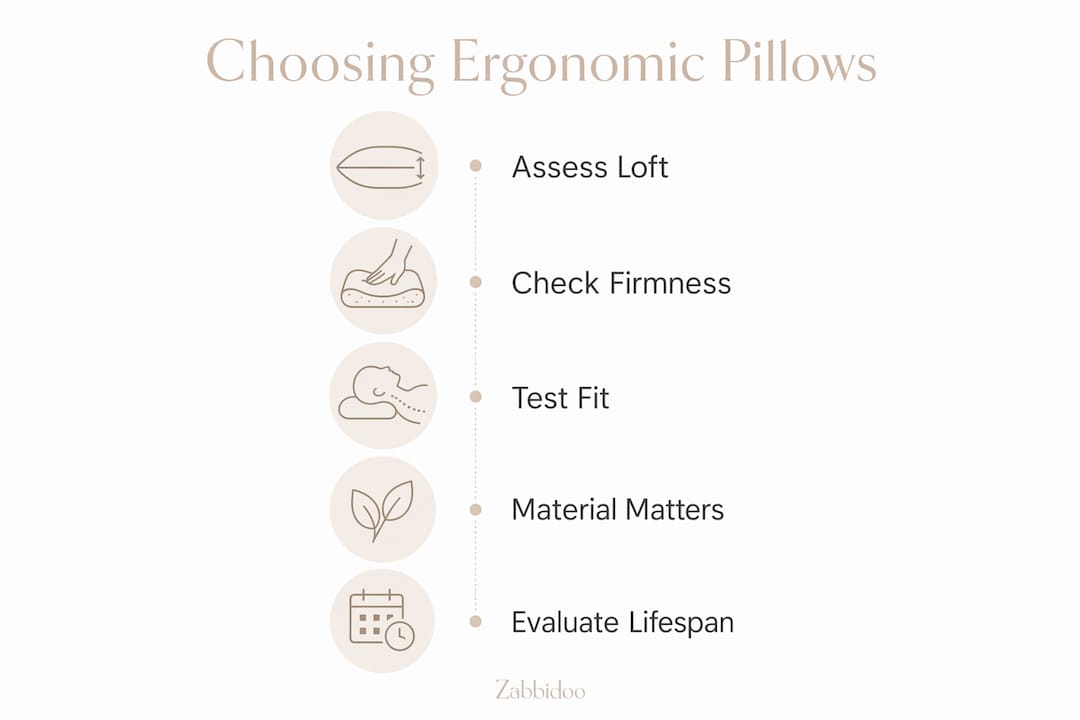
Ergonomic pillows do not last forever, and a pillow that has lost its structure provides no more support than a folded towel. The fold-and-rebound test is the fastest way to check: fold the pillow in half and release it. If it springs back immediately, the fill is still functional. If it stays folded or recovers slowly, the pillow has lost its support capacity.
| Pillow type | Typical lifespan | Replacement signal |
|---|---|---|
| Memory foam | 2 to 3 years | Visible indentations, slow rebound |
| Latex | 3 to 4 years | Loss of responsiveness, crumbling fill |
| Buckwheat | 3 years (refillable) | Flat loft, husks breaking down |
| Cotton or wool | 12 to 18 months | Clumping, flat profile |
| Synthetic fill | 12 to 18 months | Lumpy texture, no rebound |
Replace pillows every 18 to 24 months as a general rule, or sooner if you are allergy-prone or sleep warm. Warm sleepers compress fills faster through moisture, which accelerates breakdown. Allergy-prone users face the additional issue of dust mite accumulation in older fills, which no amount of washing fully resolves.
For nursing pillows specifically, check the cover and inner structure after each wash. Covers that pill or thin out are no longer providing the tactile feedback that signals proper support. For guidance on what to look for over time, the Zabbidoo article on nursing pillow durability covers construction and longevity in practical detail.
How do ergonomic pillow materials compare for nursing and sleep?
Material choice is where most buyers get lost. The marketing language around pillow fills is dense, and the price range for products labelled “orthopedic” runs from $65 to $172 without any regulatory standard behind the term. Focus on what the material actually does, not what the label claims.
| Material | Support level | Adjustable | Temperature | Best for |
|---|---|---|---|---|
| Memory foam | High, contouring | No | Retains heat | Side and back sleepers |
| Latex | High, responsive | No | Neutral | Position changers |
| Buckwheat | High, firm | Yes | Cool | Side sleepers, neck pain |
| Cotton or wool | Low to medium | Partially | Breathable | Warm climates, light support |
| Synthetic fill | Low to medium | Some models | Varies | Budget, short-term use |
Buckwheat and latex consistently outperform softer fills for nighttime loft retention. This matters for new mums who are already sleep-deprived. A pillow that compresses by 2am means you spend the second half of the night without support, which is when most neck stiffness develops.
For nursing pillows, the material calculus shifts. Compression resistance matters more than temperature regulation because the pillow is in use for short, intense periods rather than all night. A nursing pillow made with high-density foam or a structured inner core will outlast a soft-fill version by months. If allergens are a concern, the Zabbidoo guide on hypoallergenic nursing pillow alternatives covers material options suited to sensitive skin and respiratory concerns.
Key takeaways
Choosing the right ergonomic pillow requires matching loft and firmness to your sleep position and nursing needs, using purpose-designed pillows for each task, and replacing them before they lose structural support.
| Point | Details |
|---|---|
| Match loft to sleep position | Side sleepers need 4 to 6 inches; back sleepers 3 to 5 inches; stomach sleepers under 3 inches. |
| Keep nursing and sleep pillows separate | Mixing pillow types causes ergonomic failure and creates infant safety risks. |
| Prioritise compression resistance | A nursing pillow that collapses under baby’s weight forces you to hunch, causing neck and shoulder strain. |
| Replace pillows on schedule | Most fills degrade within 12 to 24 months; use the fold-and-rebound test to check support loss. |
| Ignore unregulated labels | The “orthopedic” label carries no regulatory standard; evaluate structure, fill, and adjustability instead. |
What I have learned about choosing ergonomic pillows as a new mum
Most advice on this topic treats nursing pillows and sleep pillows as an afterthought, a soft accessory rather than a structural tool. That framing is wrong, and it costs new mums weeks of unnecessary pain.
The thing nobody tells you is that the pillow you need at six weeks postpartum is not the same pillow you need at six months. Your body changes, your feeding position changes, and your baby’s weight changes. A fixed-fill pillow that worked in the early weeks may be completely wrong by the time your baby is rolling. This is why I keep coming back to adjustable fills for sleep and dual-density designs for nursing. They adapt instead of forcing you to adapt to them.
I have also seen too many mums choose a nursing pillow based on how it looks in a flat-lay photo. Aesthetics matter, but a beautiful pillow that collapses after three weeks is not a support product. It is a prop. The question to ask before buying is not “does this look good?” but “will this still hold its shape at the end of a cluster-feeding session?”
If you are unsure where to start, measure your shoulder-to-ear distance tonight. It takes thirty seconds and immediately narrows your options. Then trial the pillow for at least a week before committing. Comfort on day one is not the same as comfort on day ten.
— Marietjie
Zabbidoo’s nursing pillow: built for the way you actually feed

Zabbidoo’s ergonomic nursing pillow was designed around one observation: most nursing pillows collapse exactly when you need them most. The Zabbidoo pillow provides 18cm of lift with compression-resistant fill, bringing your baby to breast height without requiring you to hunch. The French flax linen cover is breathable and durable, and the stability-focused shape reduces the constant repositioning that turns feeding sessions into a workout. Whether you are establishing a latch in the early weeks or supporting a growing baby at three months, the design holds its structure throughout. Explore the full range at Zabbidoo and find the fit that works for your body and your baby.
FAQ
What is the difference between a nursing pillow and an ergonomic sleep pillow?
A nursing pillow is designed to lift your baby to breast height during feeding, reducing strain on your arms, neck, and shoulders. An ergonomic sleep pillow maintains cervical alignment overnight. Using them interchangeably creates both ergonomic failure and infant safety risks.
How do I know what pillow loft I need?
Measure the distance from your ear to the mattress while lying in your preferred sleep position. Side sleepers need 4 to 6 inches of loft, back sleepers 3 to 5 inches, and stomach sleepers less than 3 inches to maintain a neutral cervical curve.
Can I use a nursing pillow for my baby to sleep on?
No. Consumer safety standards prohibit using nursing pillows as infant sleep surfaces. Move your baby to a flat, firm sleep surface the moment they become drowsy during a feed.
How often should I replace my ergonomic pillow?
Most pillows should be replaced every 18 to 24 months. Allergy-prone or warm sleepers should replace sooner, around 12 to 18 months. Use the fold-and-rebound test: if the pillow does not spring back quickly, it has lost its support.
Is the “orthopedic” label on pillows regulated?
The “orthopedic” label is unregulated and carries no structural guarantee. Evaluate pillows based on fill material, adjustability, compression resistance, and whether the design matches your sleep position and body measurements.