

An elevated nursing pillow lifts your baby to breast height so you sit upright instead of hunching, which eases neck and back strain and supports a better latch. Lactation consultants back this up: the point of any nursing pillow is bringing baby to you, not you folding down to baby. It’s genuinely helpful when used correctly. It’s never a sleep surface, and feeds should always be supervised.
TL;DR:
- A high-quality nursing pillow should lift baby at least 18cm to ensure ergonomic positioning and reduce neck and back strain for the mother.
- The pillow must have firm, compression-resistant fill and a stable, snug fit against the waist to maintain height and prevent slumping during feeds.
- It is crucial to use the pillow only for supervised feeding, never as a sleep surface, to eliminate risks of airway obstruction or suffocation.
- Proper setup involves positioning the pillow snug against the waist, confirming firmness, and reassessing each time the feeding position changes.
- Features like washable hypoallergenic covers, adjustable straps, and add-on pockets enhance safety, comfort, and practicality during extended use.
Table of Contents
- What are the key benefits of an elevated nursing pillow?
- How does elevation change feeding ergonomics?
- Safety and correct use: getting the benefits without the risk
- How to choose an elevated nursing pillow: the checklist that actually matters
- The Zabbidoo view on lift and stability in practice
- Why the height detail gets overlooked
- Where Zabbidoo’s elevated nursing pillow fits in
- Sources
What are the key benefits of an elevated nursing pillow?
The core benefit is postural. When a pillow lifts baby high enough, you stop rounding your shoulders and craning your neck forward to reach the breast, which is the single biggest driver of feeding-related back and neck pain in the early weeks.
That height difference matters more than most new mums expect. A flat or low cushion still leaves a gap between baby’s mouth and the nipple, so you end up leaning in anyway, feed after feed, for weeks on end.
Pro Tip: If you’re finishing a feed with a stiff neck or a sore lower back, that’s not just “part of the job” — it’s usually a sign the pillow isn’t lifting baby high enough for your torso length.
The flow-on effects show up in several places at once:
- Fewer repositioning breaks because baby’s mouth already sits level with the nipple
- Better latch mechanics from proper head and chest alignment, reducing nipple pain and feed frustration
- Less reflux and spit-up, because baby stays slightly upright during and immediately after the feed
- Real relief after a C-section, since the pillow’s bulk carries baby’s weight instead of your healing abdomen
- Easier bottle-feeding for partners and other caregivers, plus a stable base for supervised tummy time
On reflux specifically, Mayo Clinic notes that keeping infants more upright during and after feeds can ease reflux symptoms, and a pillow that holds baby at a gentle incline does exactly that without you having to prop pillows under your own arm for forty minutes. Parent testers report fewer spit-up incidents across clustered evening feeds when using elevated designs, which lines up with the upright-positioning logic Mayo Clinic describes.
The AIHW points to something easy to overlook: tools that reduce maternal fatigue in the early postpartum weeks help sustain breastfeeding routines. A pillow that stops your back aching after every feed isn’t a comfort extra. It’s one of the practical reasons feeding relationships survive the brutal first six weeks.
How does elevation change feeding ergonomics?
Height is the mechanism, but it only works if the pillow stays firm under load. A cushion that sinks the moment baby’s weight lands on it undoes the lift within minutes, and you’re back to hunching.
Bringing baby up to breast level keeps your spine in a neutral position rather than flexed forward, which is the posture physiotherapists flag as the main contributor to chronic feeding-related neck pain. A firm, non-collapsing surface matters just as much as the height itself, because a pillow that slumps under sustained pressure lets baby’s head tip sideways or drop, disrupting the latch you just worked to establish.
Contour and fit finish the job:
- A wide, curved opening keeps baby cradled without pressing into your torso
- Adjustable straps or a snug waist fit stop the pillow sliding as you shift position
- A stable, wraparound shape means less mid-feed fiddling to keep baby in place
Forbes cites lactation consultants who stress that one pillow doesn’t suit every body type, and fit against the waist matters as much as the pillow’s shape. Consumer testing backs this with a practical checkpoint: press down on the feeding surface and watch how quickly it rebounds. Slow, mushy recovery means it’ll compress under a real feed too.
Safety and correct use: getting the benefits without the risk
An elevated nursing pillow works well when it’s used for exactly one job: supporting a supervised feed. It is not a bassinet, not a lounger, and not a place to leave baby unattended, even for a minute.
Consumer Reports has pushed the industry toward firmer, flatter designs with wider openings specifically because softer, deeper cushions increase the risk of accidental airway obstruction when parents misuse them as unsupervised resting spots. Safe-sleep guidance from the Safe to Sleep initiative is unambiguous on this point: pillows and soft bedding are never safe sleep surfaces for infants, full stop.
Six rules keep the benefits without adding risk:
- Never leave baby on the pillow unsupervised, even briefly.
- Never use it as a lounger, carrier, or sleep surface.
- Position baby so the airway stays clear, chin off chest, face visible at all times.
- Choose a firm fill and check for warning signs like sinking or sagging mid-feed.
- After a C-section, rest the pillow’s bulk on your thighs and lap, not across the incision.
- Check the packaging for clear usage warnings before you buy.
Our own guide on baby pillow safety covers the line between supported feeding and unsafe sleep in more detail if you want the full picture.
How to choose an elevated nursing pillow: the checklist that actually matters
Height only helps if it matches your body, so test lift before you buy. Sit in your usual feeding chair, hold a rolled towel or doll at breast height, and see how close a pillow’s stated lift gets you there without leaning forward.
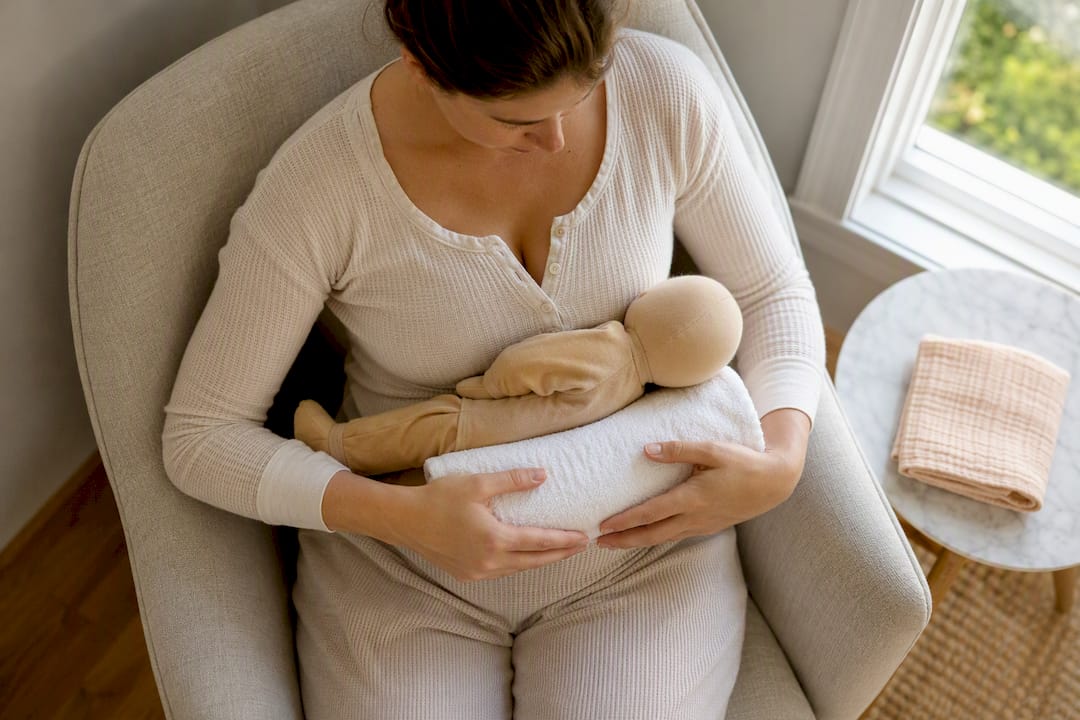
Fill matters just as much as height. Structured, high density, compression resistant fills hold their shape through a 40 minute cluster feed, while soft polyester fibre fill flattens within days.
Fit against your torso comes next. Look for a wide opening that cradles baby without crowding your chest, adjustable straps or a snug wraparound waist fit, and enough surface stability that you’re not constantly nudging baby back into place.
Materials decide how much you’ll actually use it. A washable, breathable cover matters enormously once reflux and milk spills enter the picture, and hypoallergenic natural fibres reduce the chance of skin irritation against a newborn’s sensitive skin.
A few extra features earn their keep for specific situations:
- A built-in pocket for a burp cloth or phone during long night feeds
- A carry handle for moving between rooms without losing the fitted shape
- Extra width or adjustability if you’re recovering from a C-section or notably tall or short
The Zabbidoo view on lift and stability in practice
Most nursing pillows sit low and soften fast, forcing you right back into the hunch they’re supposed to fix. Some cushions use an 18cm lift, noticeably higher than standard designs, specifically to close that gap and keep baby at breast height rather than a few centimetres short of it.
Compression resistant fill and a stable base mean less constant readjusting mid-feed, which matters more at 2am than it sounds.
A simple setup routine makes the difference:
- Position the pillow snug against your waist before sitting baby in it
- Check baby’s chin is off their chest and their head is level with your breast
- Press the surface once to confirm it holds firm, not sinks
- Reassess position every time you switch sides or feeding positions
Our step-by-step setup guide walks through this in more depth, including positions for twins and reclined feeding.
Why the height detail gets overlooked
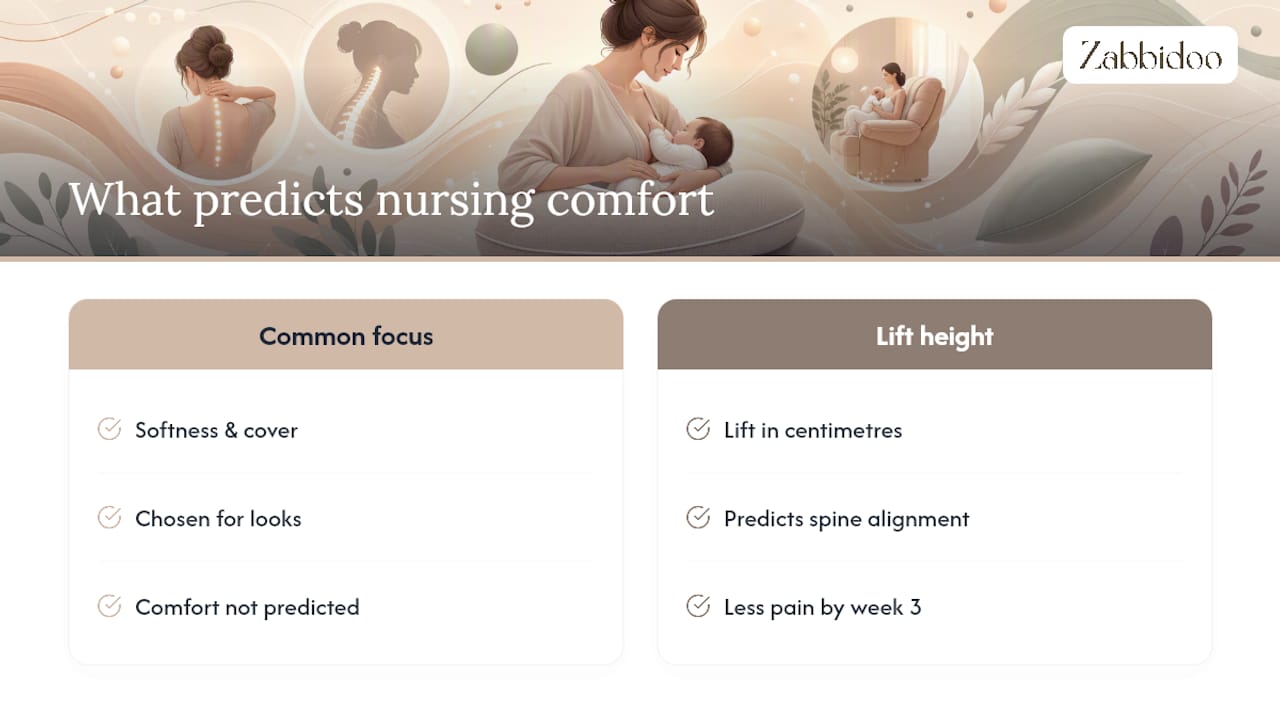
Most advice on nursing pillows focuses on softness and cuteness of the cover, when the number that actually predicts your comfort is the lift height in centimetres. Mums who chase a taller, firmer pillow tend to report less pain by week three, not because the pillow feels nicer, but because their spine stops working overtime.
Further reading on why pillow height matters covers this in more depth.
— Marietjie
Where Zabbidoo’s elevated nursing pillow fits in
If you’ve read this far, you know what to look for: real lift, a fill that won’t collapse by the third week, a snug fit against your waist, and a cover you can actually wash after a reflux-heavy feed. Zabbidoo’s nursing pillow was built around that exact checklist, with an 18cm lift, compression resistant fill that holds its shape under sustained weight, and a hypoallergenic French flax linen cover you can machine wash without the pillow losing structure.

Some pillows include a built-in pocket for burp cloths or your phone during long feeds, plus a portable handle for moving between rooms. For recovery after a C-section, stability against your waist means the pillow carries baby’s weight, not your incision. If postpartum recovery is also on your radar, postpartum recovery support is worth a look too. Check the nursing pillow product page for full specs, or add the free pacifier clip chain while you’re there.
This article is general information, not a substitute for advice from a qualified doctor. Consult a qualified healthcare professional about your own circumstances before acting on anything here.
Sources
- How to choose a nursing pillow and use it safely - Consumer Reports
- Best nursing pillows 2026 - Forbes
- Infant acid reflux (gastroesophageal reflux) - Mayo Clinic
- Breastfeeding practices - AIHW