

Breastfeeding is one of the most physically demanding things your body does after birth, yet most new mothers set up with whatever pillow is nearby and wonder why their neck and back ache after every feed. The Zabbidoo breastfeeding pillow was designed specifically to address that gap. Not just as a cushion to rest your arms on, but as an ergonomic tool that brings your baby up to you, supports a better latch, and keeps your spine in a position you can sustain across multiple feeds a day. This article covers how it works, what makes it different, and everything you need to use it safely and confidently.
Table of Contents
- Key takeaways
- How the Zabbidoo breastfeeding pillow works
- Safety first: nursing pillows vs self-feeding pillows
- What real users say about the Zabbidoo nursing pillow
- Using and caring for your breastfeeding pillow
- How Zabbidoo compares with other nursing pillows
- My honest take on ergonomic breastfeeding support
- Ready to feed more comfortably?
- FAQ
Key takeaways
| Point | Details |
|---|---|
| Ergonomic height matters | Zabbidoo’s 18cm lift brings baby to breast level, reducing forward hunching and back strain. |
| Safety is non-negotiable | Breastfeeding pillows are for supervised positioning only, never for propped or unattended bottle feeding. |
| Real users rate it highly | The Zabbidoo nursing pillow holds a 5-star rating on ProductReview.com.au for height support and stability. |
| Materials make a difference | French flax linen is breathable, durable, and keeps its shape under the weight of a growing baby. |
| Correct use reduces injury | Ergonomic support pillows reduce musculoskeletal strain and help maintain proper feeding posture over time. |
How the Zabbidoo breastfeeding pillow works
Most nursing pillows are designed to look good in a product photo. They are soft, they compress quickly, and within a few weeks they have lost enough loft that you are back to hunching over your baby to get a decent latch. The Zabbidoo breastfeeding pillow takes a different approach, and the difference starts with height.
At 18cm, the pillow brings your baby up to breast level rather than forcing you to bend down to meet them. That single design choice changes everything about feeding posture. Proper feeding posture reduces musculoskeletal strain in mothers and supports the baby’s ability to latch effectively. When you are not compensating with your shoulders and neck, feeds become less exhausting. Over the course of eight to twelve feeds a day, that adds up quickly.
Here is what separates a well-designed breastfeeding support pillow from a generic one:
- Height and lift. A pillow that sits too low forces you to bend forward, putting pressure on your lower back and neck. Eighteen centimetres is the threshold where most mothers find they can sit upright comfortably.
- Compression resistance. Cheap foam and hollow fibre collapse under a baby’s weight within minutes. Zabbidoo uses a denser fill that holds its shape through the entire feed.
- Stability. A pillow that shifts or slides means constant readjustment. A stable base keeps your baby in position and your hands free.
- Breathable materials. French flax linen is naturally temperature-regulating, which matters when you and your baby are in close contact for extended periods.
- Multi-use design. The same pillow works for tummy time, supported sitting, and general infant positioning as your baby grows.
Pro Tip: When choosing a breastfeeding pillow, sit upright and place it across your lap before you buy. If your baby would still be below nipple height, the pillow is not tall enough for your body.
Safety first: nursing pillows vs self-feeding pillows
This is the section most product articles skip, and it is the one that matters most. There is a critical difference between a breastfeeding support pillow and a self-feeding pillow, and confusing the two carries serious risk.
In 2025, the CPSC warned consumers to immediately stop using infant self-feeding pillows due to the risk of aspiration and suffocation. These are products designed to prop a bottle in a baby’s mouth without a caregiver present. The CPSC’s Acting Chairman explained that self-feeding pillows fix bottles at angles that prevent an infant from pulling away, which can cause choking or suffocation. The instruction is clear: never leave a bottle propped in an infant’s mouth using any pillow, regardless of how it is marketed.
The Zabbidoo nursing pillow is not a self-feeding product. It is a positioning tool used during actively supervised feeds. That distinction matters enormously.
“Nursing pillows are for positioning the baby during actively supervised feeding, not for unattended bottle propping. Constant caregiver supervision during feeding is an essential safety practice.” — CPSC guidance on safe nursing pillow use
Here is a clear summary of safe use practices:
- Do use the pillow to support your baby’s weight and position during breastfeeding or supervised bottle feeding.
- Do remain present and attentive for the entire feed.
- Do not use any nursing pillow to prop a bottle and leave the room.
- Do not allow an infant to sleep on or against the pillow unsupervised.
- Do not assume a product is safe for unattended feeding because it is marketed as a nursing pillow.
You can read more about safe feeding pillow use and how to incorporate nursing pillows into your routine within current safety guidelines.
What real users say about the Zabbidoo nursing pillow
Independent reviews tell you things a product page never will. The Zabbidoo nursing pillow carries a perfect 5.0 rating on ProductReview.com.au, and the feedback is specific rather than vague. Reviewers are not just saying they like it. They are explaining exactly what changed.
The themes that come up repeatedly are height support and stability. Mothers note that their baby sits at the right level without them needing to adjust their own posture. Several reviewers specifically mention that they stopped experiencing shoulder and neck tension after switching from a flatter pillow. Consumer reviews consistently highlight that the higher stance reduces the need to reposition mid-feed, which is significant when you are feeding a wriggly newborn eight times a day.
Beyond function, the linen fabric gets its own praise. Reviewers mention that it feels premium, photographs beautifully in the nursery, and holds up well through regular washing. For a product that will be used multiple times daily for months, durability is not a minor point.
Pro Tip: When reading nursing pillow reviews, filter specifically for comments about height and firmness after extended use. A pillow that reviewers praise as “still firm after three months” is telling you something a single-use test never could.
What to look for in credible reviews:
- Feedback from mothers who have used the pillow for more than four weeks
- Comments about how the pillow performs as the baby grows heavier
- Mentions of physical comfort or strain reduction for the mother
- Notes on ease of cleaning and fabric quality after multiple washes
Using and caring for your breastfeeding pillow
Getting the most from a breastfeeding support pillow comes down to positioning and consistency. Here is how to use the Zabbidoo pillow correctly from day one.
- Sit upright in a supportive chair. Place the pillow around your waist with the firm edge facing outward. Your baby should rest at breast height without you needing to lean forward.
- Position your baby on their side, tummy to tummy with you, with their head supported at the level of your breast. The pillow holds their weight so your arms are guiding rather than lifting.
- Check your own posture. Your shoulders should be relaxed and your lower back should not be rounding. If you are still hunching, try adjusting the pillow height with a folded blanket underneath.
- Use the same setup for supervised bottle feeding. The pillow supports the same upright position that makes bottle feeding safer and more comfortable for both of you.
- After each feed, wipe down the cover and allow it to air. For full cleaning, follow the care instructions on the label.
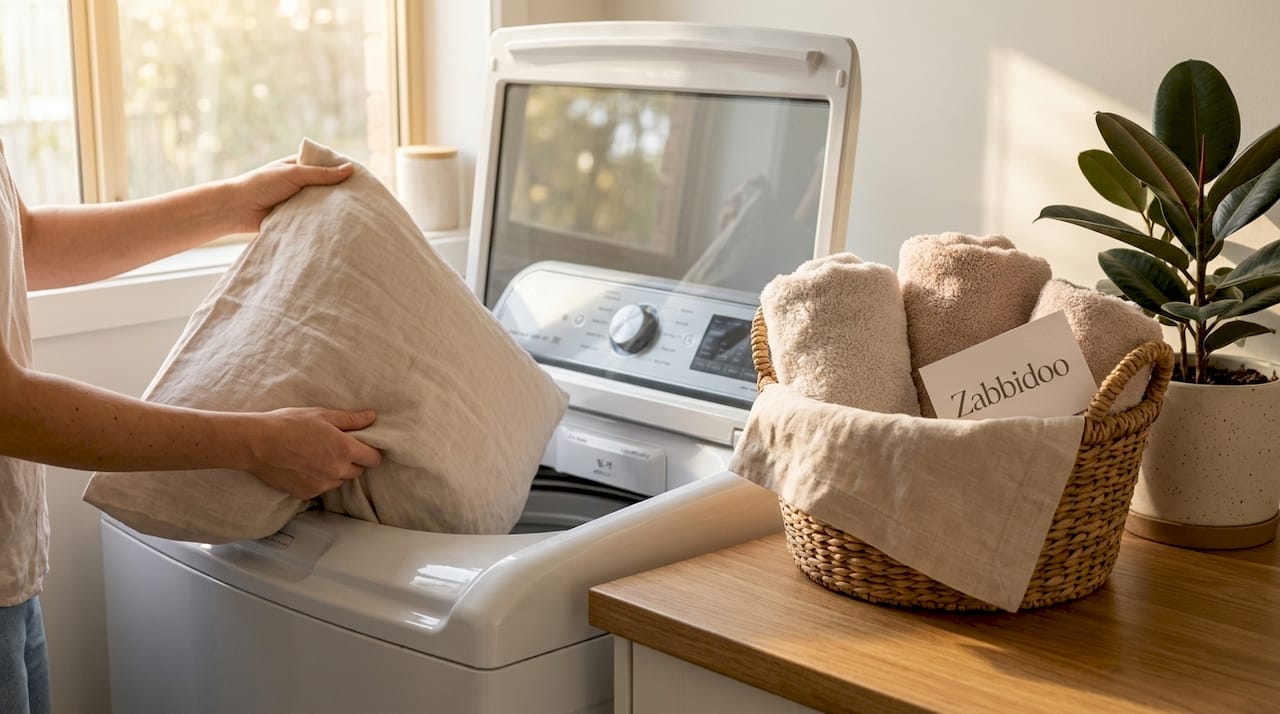
For fabric care, linen requires a little more attention than synthetic covers but rewards you with longevity. Linen is breathable and durable but benefits from gentle washing cycles and air drying to preserve its quality. Avoid high heat, which can shrink the cover and affect the fit over the pillow insert.
Pro Tip: Keep a spare pillowcase on hand so you can wash one while still using the pillow. Newborns produce a lot of mess, and having a clean cover ready means you never have to skip the support.
How Zabbidoo compares with other nursing pillows
The nursing pillow market in 2026 is crowded, but most products cluster around the same basic design. Here is how Zabbidoo stacks up against typical alternatives on the features that matter most to new mothers.
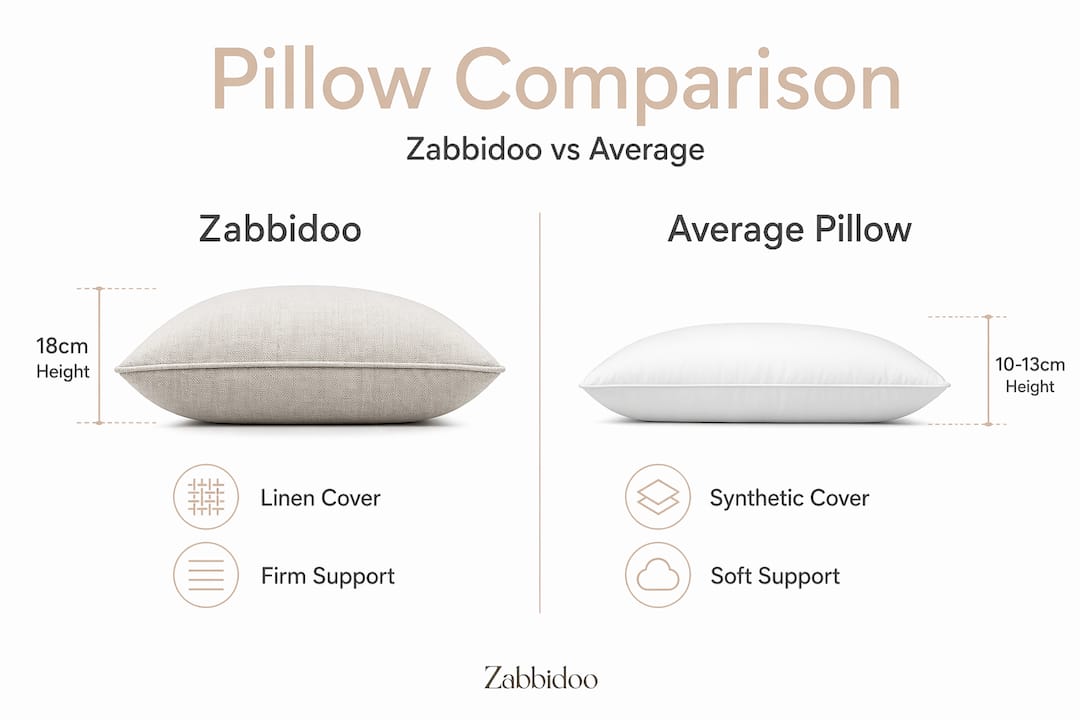
You can also explore feeding pillow design trends to understand how the broader market is evolving and where Zabbidoo sits within it.
| Feature | Zabbidoo nursing pillow | Average nursing pillow |
|---|---|---|
| Height/lift | 18cm | 10 to 13cm |
| Compression resistance | High density, holds shape | Collapses under baby weight |
| Fabric | French flax linen | Polyester or cotton blend |
| Stability | Firm, non-slip base | Tends to shift during feeds |
| Multi-use | Feeding, tummy time, support | Primarily feeding only |
| Aesthetic | Nursery-ready, stylish | Functional but basic |
| Australian reviews | 5.0/5 on ProductReview.com.au | Varies widely |
The comparison most Australian mothers ask about is Boppy vs Zabbidoo. The Boppy is a well-known nursing pillow in the US market and has been around for decades. It sits lower than Zabbidoo and uses a softer fill that compresses more easily. For mothers with smaller frames or very young newborns, the height difference is immediately noticeable. Zabbidoo’s advantage is that it works as the baby grows heavier, where softer pillows tend to flatten out and lose their usefulness.
The honest answer is that no average pillow is built to the same ergonomic standard as a specialist product. If you are going to breastfeed for six months or more, the pillow you choose will affect your body every single day of that period.
My honest take on ergonomic breastfeeding support
I have spent a lot of time looking at how new mothers set up for feeding, and the pattern I see most often is this: a mother buys a basic pillow, uses it for a few weeks, and then quietly stops using it because it has gone flat or it never really helped. She then spends the next several months feeding with her shoulders up around her ears, wondering why her upper back is constantly sore.
The assumption that any pillow will do is genuinely costly. Not in a dramatic way, but in the slow accumulation of daily discomfort that nobody talks about because breastfeeding is already hard enough without adding complaints about furniture.
What I have come to believe is that ergonomic support is not a luxury for new mothers. It is a basic requirement for sustaining breastfeeding over time. Elevated nursing pillows reduce forward bending and limit the repetitive strain that builds up across dozens of feeds a week. That is not a marketing claim. It is physics applied to a very tired body.
The Zabbidoo pillow gets this right in a way that most products do not, because it was designed around the mother’s posture rather than around a price point. The height is deliberate. The firmness is deliberate. The linen is deliberate. When you use it correctly, you feel the difference within the first feed.
My advice: do not wait until you are already in pain to take your setup seriously. The right support from day one changes the entire experience.
— Marietjie
Ready to feed more comfortably?
If this article has clarified what to look for in a breastfeeding support pillow, the next step is straightforward. Zabbidoo’s nursing pillow brings together everything discussed here: the 18cm lift, the compression-resistant fill, the French flax linen cover, and the stability that keeps your baby in position without constant readjustment.
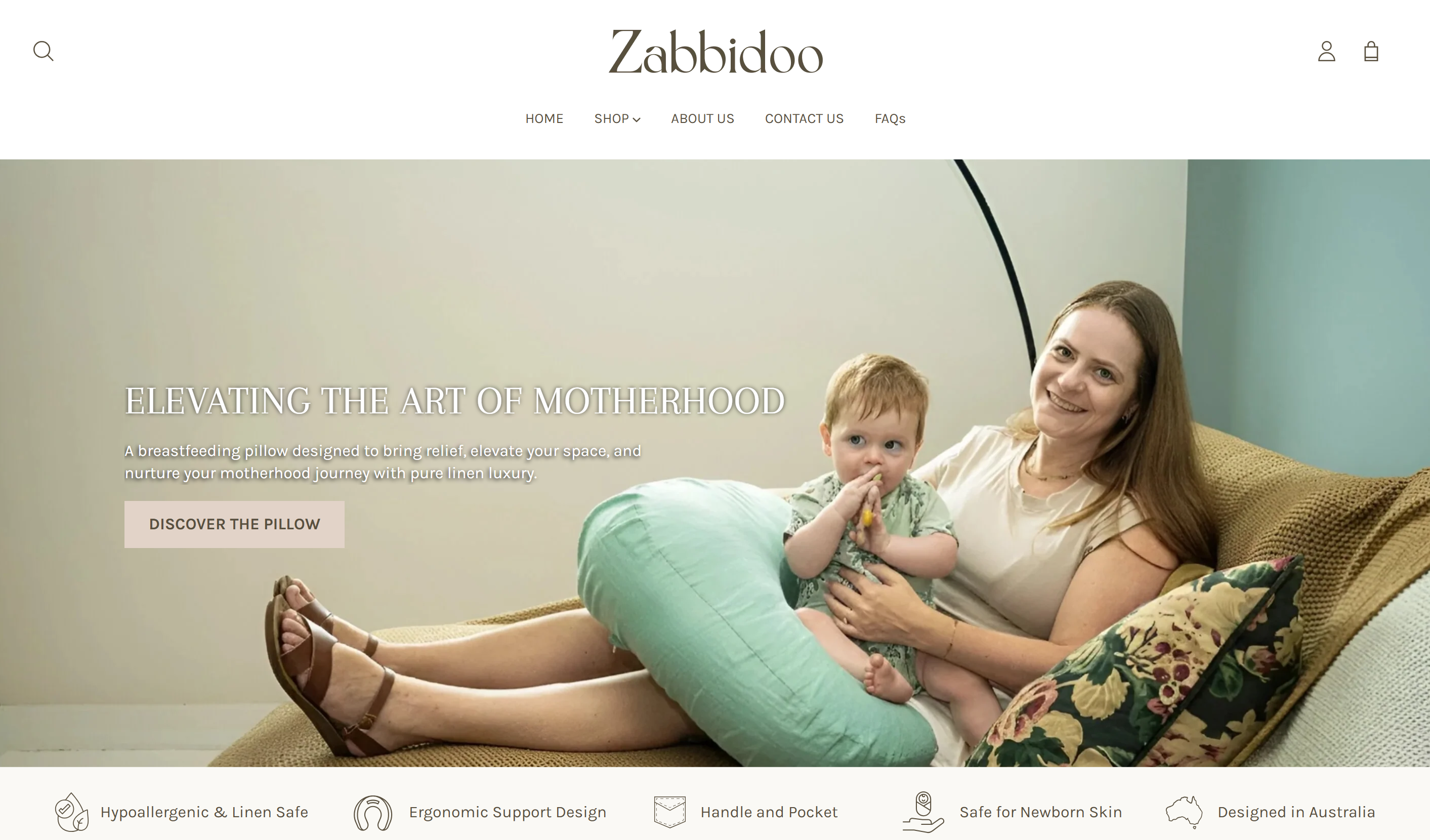
You can explore the full product details, sizing, and ordering options on the Zabbidoo nursing pillow page. If you are building out your feeding kit, Zabbidoo also offers a free pacifier clip chain to complement your routine. Every product is designed with the same principle: real support for real mothers, not just something that looks good in a flat lay.
FAQ
What makes the Zabbidoo breastfeeding pillow different?
The Zabbidoo breastfeeding pillow sits at 18cm, which is significantly higher than most standard nursing pillows. This brings the baby to breast height rather than forcing the mother to hunch forward, reducing neck and back strain during feeds.
Is it safe to use a nursing pillow for bottle feeding?
Yes, with supervision. A nursing pillow like the Zabbidoo is safe for positioning during supervised bottle feeding. The CPSC specifically warns against using any pillow to prop a bottle without a caregiver present, as this risks aspiration and suffocation.
How do I clean the Zabbidoo nursing pillow?
The French flax linen cover should be washed on a gentle cycle and air dried to preserve the fabric quality. Regular cleaning maintains hygiene and extends the life of the cover.
How long does the Zabbidoo pillow keep its shape?
The high-density fill is designed to resist compression over extended use, unlike softer pillows that flatten within weeks. Consumer reviews confirm the pillow maintains its height and firmness well beyond the newborn stage.
Can the Zabbidoo nursing pillow be used for tummy time?
Yes. The pillow is designed for multi-use, including tummy time and supported infant positioning as your baby develops. Always supervise tummy time and never leave your baby unattended on or near the pillow.