

Nursing pillows mainly use four fills: polyester fibrefill, memory foam, microbeads, and natural fills like buckwheat hulls. For frequent breastfeeding, high-compression foam or engineered compression fills hold their shape best, giving steadier lift and less repositioning. Whatever fill you choose, use the pillow only for supervised, active feeding, never as a sleep surface for your baby.
TL;DR:
- High-compression foam and engineered fills retain shape and height better for frequent breastfeeding, lasting several months without flattening.
- Washable fibrefill pillows are lower cost and easier to keep clean, making them suitable for households with frequent spit-up or reflux.
- Natural fills like buckwheat or wool are moldable but heavier and less durable over time, requiring spot-cleaning and specialized care.
- Using a pillow with a height of at least 18cm and compression resistance helps maintain proper ergonomic positioning and reduces strain during long feeds.
- Nursing pillows should always be removed after feeding to prevent sleep hazards and ensure safe sleep practices for the baby.
Table of Contents
- What are the main nursing pillow fill types?
- Pros and cons of each fill for breastfeeding and infant positioning
- How fill type affects support, posture and latch
- Care, cleaning and longevity by fill type
- Safety: using nursing pillows correctly and avoiding sleep risks
- How an ergonomic, compression-resistant approach changes feeding
- Brand and product picks by fill type advantage
- How to choose the right fill for your situation
- Balancing hygiene with support: a practical note
- Zabbidoo: built for mothers who need lift that lasts
- FAQ
- Sources
What are the main nursing pillow fill types?
Shopping for a nursing pillow means decoding a handful of fill terms, each with distinct feel and performance.
- Polyester fibrefill: soft and lightweight, with covers that are usually fully machine-washable, though the fill itself compresses and flattens faster under daily use.
- Memory foam: dense and firm, it holds height well over months of use, but it’s heavier to handle and rarely machine-washable as a whole unit.
- Microbeads: small and mouldable, so they conform to your arm and the baby’s body, but they don’t hold a fixed lift as well and are harder to launder.
- Natural fills (buckwheat, wool): very mouldable and sturdy under weight, but they add noticeable weight and can shed material or need specialised cleaning.
Some brands also use engineered pellets, including recycled polyester (RPET) blends, or combine two fills in layers to balance softness with support. Reading the fill label on a listing tells you more about day-to-day feel than the price tag does.
Pros and cons of each fill for breastfeeding and infant positioning
The fill inside your pillow affects far more than comfort. It shapes how long the pillow lasts, how easy it is to keep clean, and whether it suits a newborn’s frequent spit-ups or a toddler’s occasional tummy time session.
Compression resistance varies widely. Foam and dense engineered fills keep their shape through repeated sessions, while fibrefill and microbeads soften and sink faster, according to Product Safety Australia’s overview of common fill categories. Weight matters for handling too: a foam or buckwheat-filled pillow is heavier to reposition between rooms, while fibrefill is easy to carry one-handed with a baby on your hip.
- Washability: fibrefill covers (and sometimes the fill itself) often go through a washing machine; foam, microbeads and natural fills typically need spot-cleaning or airing.
- Allergy and breathability: natural fibres like wool suit some sensitive households but can trigger reactions in others, and all fills benefit from a breathable outer cover.
- Cost and lifespan: fibrefill is usually the cheapest but needs replacing sooner; well-made foam costs more upfront and tends to outlast it.
Pro Tip: Check the listing for a removable, machine-washable cover separate from the fill. It’s the single easiest way to manage spit-up and sweat without replacing the whole pillow.
How fill type affects support, posture and latch
A pillow that keeps its height under your baby’s weight is doing real ergonomic work. When fill compresses mid-feed, you end up hunching forward or craning your neck to meet the baby’s mouth, straining your back and wrists over a long feeding session.
Foam and dense engineered fills tend to deliver more reliable height at nipple level, according to the fill comparisons from Product Safety Australia. Mouldable fills like microbeads or buckwheat suit cross-cradle or football holds where you want the pillow to wrap around an odd angle, while firmer fills suit a straightforward cradle hold where consistent height matters more than shape-hugging.

Care, cleaning and longevity by fill type
Hygiene habits depend heavily on fill choice, so plan your cleaning routine before you buy.
- Wash removable covers weekly, or more often during newborn weeks, following the care label.
- Spot-clean foam, microbead or natural-fill cores, then air-dry fully in sunlight or a well-ventilated spot to prevent odour or mould.
- Replace the pillow once the fill no longer springs back after use or the cover shows persistent staining despite washing.
Our pillow hygiene guide and care tips for mums cover drying times and stain treatments in more depth.
Safety: using nursing pillows correctly and avoiding sleep risks
A nursing pillow is a feeding aid, not a sleep product, and the distinction matters for your baby’s safety. Infant sleep surfaces must be flat, firm and level, and inclined or padded products can create airway risk, as outlined in Product Safety Australia’s guidance on safe sleep products.
Mandatory product standards also flag padded, inclined accessories, including some pillows, as unsuitable for sleep, a point confirmed by the infant sleep products mandatory standards. In practice, that means staying with your baby for the whole feed, removing the pillow once feeding ends, and stopping use altogether once your baby starts rolling or pushing up, since mobility changes the risk picture quickly.
How an ergonomic, compression-resistant approach changes feeding
The core problem with many nursing pillows is sagging: you start a feed with good posture, and twenty minutes later you’re hunched over a flattened cushion. Higher lift combined with a fill that resists compression keeps the baby at a steady height throughout the feed, reducing the need to reposition and improving comfort
We designed a nursing pillow around this idea, with a lift intended to bring your baby up to you rather than the other way around, a compression-resistant fill intended to hold shape under sustained weight, and a breathable cover selected for comfort against a baby’s skin. Mothers feeding eight or more times a day are the ones who notice a stable lift the most.
Brand and product picks by fill type advantage
If washable simplicity matters most to you, a fibrefill pillow with a fully machine-washable cover and insert suits frequent laundering without much thought, and for additional support, consider consulting nurses who care for newborns. If you want a mouldable, custom fit for cross-cradle holds, a buckwheat-filled option gives a dense, adjustable shape, though expect extra weight and spot-cleaning only.
For mothers feeding around the clock who want the fill itself to hold its height, high-compression foam or engineered fills are worth paying more for upfront, since fibrefill and microbeads tend to flatten within months of heavy use. One pillow in this category is built specifically to resist compression while still offering a removable, washable cover so you aren’t trading hygiene for support. Whichever fill you land on, match it to how often you’ll actually use the pillow each week rather than how it feels in the shop.

How to choose the right fill for your situation
Match the fill to your actual routine rather than general reviews.
- Use frequency: frequent feeders should prioritise compression resistance over initial softness.
- Washability needs: parents dealing with reflux or spit-up need a machine-washable cover at minimum.
- Required lift and stability: check the listed height and look for terms like “high-compression” or named foam density.
- Allergies: avoid natural fibres if anyone in the household reacts to wool or down.
- Portability: lighter fibrefill suits mothers who move between rooms often.
Before buying, confirm the listing names the actual fill, states a foam density or compression claim, includes a removable washable cover, and offers a clear returns policy. If your current pillow flattens within weeks, it’s usually underfilled or using low-density foam, and a firmer high-compression replacement solves the problem rather than adding more stuffing.
Balancing hygiene with support: a practical note
Pick stability-first fills if you feed around the clock. Choose washable fibrefill if hygiene and frequent machine washing matter most to you.
— Marietjie
Zabbidoo: built for mothers who need lift that lasts
We designed our nursing pillow around the fills that hold up to daily breastfeeding: an 18cm lift, a compression-resistant core that keeps its shape feed after feed, and a French flax linen cover that’s breathable and machine-washable.
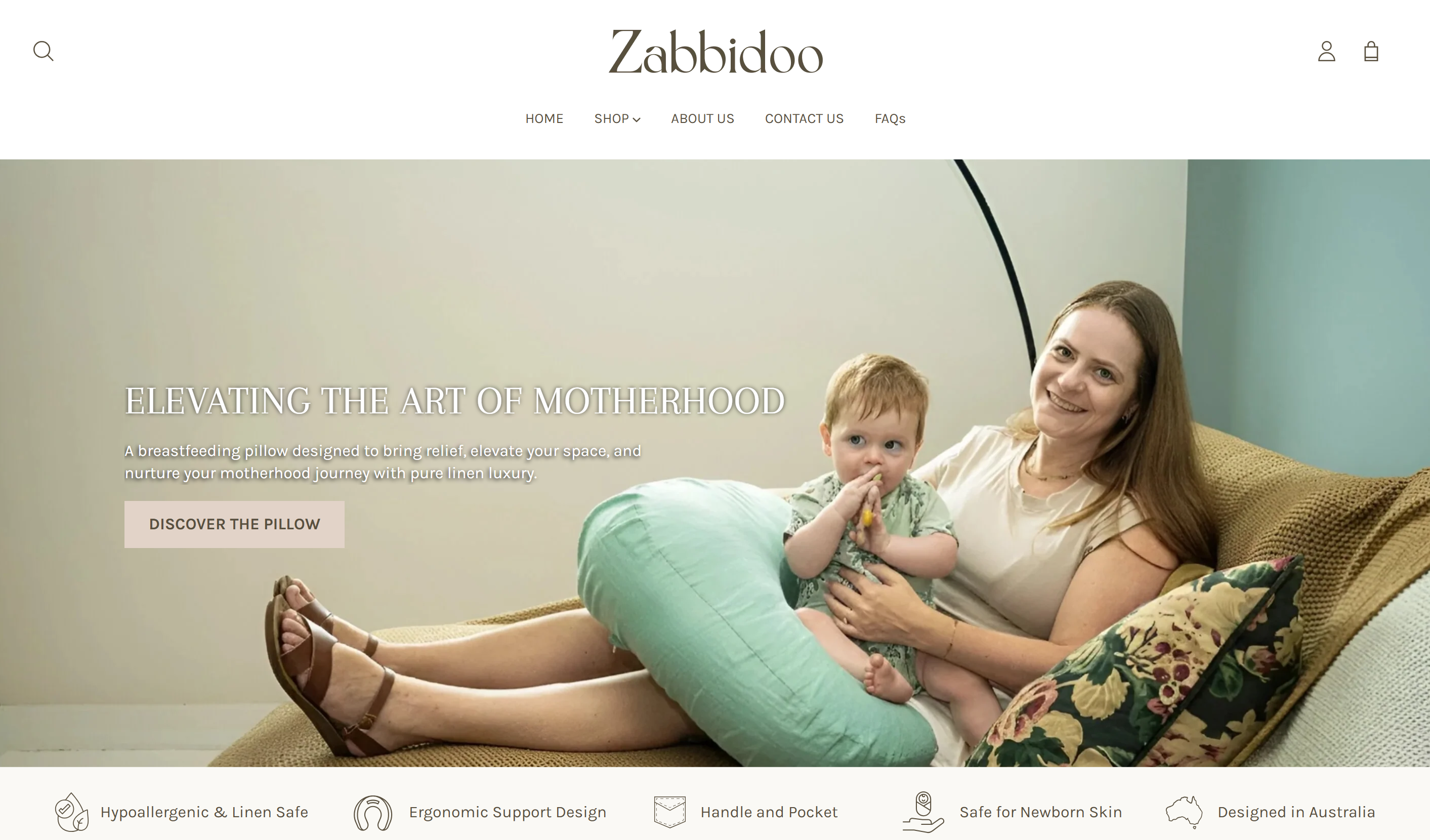
This suits mothers feeding frequently who are tired of repositioning a sagging pillow mid-feed.
| Feature | Our claim |
|---|---|
| Lift height | 18cm |
| Fill type | Compression-resistant |
| Cover material | French flax linen |
| Cleaning | Machine-washable components |
Pro Tip: If your current pillow needs fluffing every ten minutes, that’s a sign the fill has lost its compression resistance, not that you’re using it wrong.
Check availability on our nursing pillow page and see whether the lift and fill suit your feeding routine.
FAQ
What are the different types of pillow filling?
The main nursing pillow fills are polyester fibrefill, memory foam, microbeads, and natural fills such as buckwheat hulls, each offering a different balance of softness, washability and shape retention. Some brands also use engineered pellets or hybrid layers combining two fills.
What type of nursing pillow is best?
The best nursing pillow depends on how often you feed: high-compression foam or engineered fills suit mothers breastfeeding frequently because they hold height and reduce repositioning, according to guidance from the Raising Children Network. Occasional users may find lighter fibrefill pillows easier to manage and wash.
What type of filling is best for pillows?
For heavy daily nursing, compression-resistant fills like memory foam or engineered high-compression materials outperform softer fibrefill over time because they don’t flatten as quickly. For lighter or occasional use, fibrefill offers easier washing and lower cost.
Which pillow filling is healthiest?
No single fill is universally “healthiest”, since the right choice depends on allergies and hygiene habits rather than the material alone. Washable fibrefill covers or inserts tend to suit households managing frequent spit-up, while natural fibres like wool may not suit sensitive skin or allergy-prone families.
Can I let my baby sleep on a nursing pillow?
No. Nursing pillows are feeding aids, not sleep surfaces, and Product Safety Australia advises that infant sleep surfaces must be flat, firm and level, which padded or inclined pillows are not. Always remove the pillow once a feed ends and supervise your baby throughout.
Sources
- Products that are safe for baby to sleep in guide | Product Safety Australia
- Breastfeeding your baby | Raising Children Network