

Expect to pay somewhere between $40 and $160 or more for a nursing pillow in Australia, depending on style, fill and features. Budget models start around $40 to $60, mid-range firm pillows sit between $60 and $110, and premium memory-foam or ergonomic-lift designs run from $110 to $160 or beyond. The smartest spend prioritises firmness, a removable washable cover, and genuine posture support — which is exactly where an ergonomic-lift option like Zabbidoo earns its keep for mums dealing with neck or back strain.
TL;DR:
- Most Australian nursing pillows range from $44 to $150, with mid-range firm pillows offering the best value for regular feeding needs.
- Features like removable washable covers, straps, buckles, and ergonomic lifts significantly influence the price, often adding $20 to $40 for enhanced support and hygiene.
- A pillow with compression-resistant fill and an ergonomic lift, like Zabbidoo, lasts longer and better supports proper posture, justifying its higher cost.
- Buying during sales events or opting for a spare cover can reduce overall expenses, especially for mid-range and premium models.
- Budget pillows are suitable for occasional use, but frequent feeding or back pain warrants investing in firmer, ergonomic-lift options for greater durability and comfort.
Table of Contents
- Nursing pillow prices in Australia: what you’ll actually pay
- What actually drives the price of a nursing pillow
- Which nursing pillow style suits your budget and feeding style?
- Where to buy a nursing pillow in Australia (and how to pay less)
- Is a nursing pillow worth the money?
- How Zabbidoo’s design lines up with these price drivers
- Where the line sits between “fine” and “worth paying more for”
- Ready to stop hunching through every feed?
- Sources
- FAQ
Nursing pillow prices in Australia: what you’ll actually pay
Australian pricing splits fairly cleanly into three bands, and knowing which one you’re shopping in saves a lot of second-guessing at checkout.
- Budget ($40–$60): basic polyfill wraparounds, usually with a fixed or basic cover, sold through discount baby stores and marketplaces.
- Mid-range ($60–$110): firmer builds, straps or buckles, removable washable covers, sometimes a small storage pocket.
- Premium ($110–$160+): memory foam or solid-foam cores, ergonomic-lift designs, premium fabric covers like linen, and stronger warranty terms.
Tested roundups of Australian listings put real examples at the extremes of this range, from around AU$44 at the cheap end to close to AU$150 for premium memory-foam picks. That’s not a small spread for what looks, on the shelf, like the same product.
Most Australian listings cluster around the $60 to $80 mark — that’s the price point where you get a firm, washable-cover pillow without paying for extras like an ergonomic lift or premium linen.
Sales are common around Mother’s Day and during major retailer clearance events, and it’s not unusual to see budget pillows drop 20 to 30% below their usual price during these windows. If you’re patient, timing a purchase around one of these sales is the easiest way to get a mid-range pillow for close to budget money.
What actually drives the price of a nursing pillow
Two pillows that look near identical on a product page can sit $50 apart, and the gap almost always comes down to five things: fabric, fill, construction, origin, and washability.
Cover fabric is the most visible cost driver. Basic cotton blends keep prices low, organic cotton adds a modest premium, and natural fibres like French flax linen sit at the top end because they’re more breathable and durable against a baby’s sensitive skin — a genuine consideration when you’re checking natural, gentle materials for babies generally.
Fill type matters more than most first-time buyers realise. Polyfill is cheap but compresses under weight over weeks of daily use. Memory foam or solid-foam cores cost more upfront but hold their shape far longer, which is the whole reason premium pillows justify their price.
Construction and features add up fast:
- Straps or buckles that keep the pillow anchored around your waist
- Back support panels for longer feeding sessions
- Ergonomic lift, which raises baby toward you instead of you hunching down (Zabbidoo’s design uses an 18cm lift specifically for this)
- Removable covers and a spare-cover option
- Small pockets for a phone, muslin or nipple cream
Reviewers consistently find that removable, machine-washable covers and strap or buckle features justify an extra $20 to $40 because they materially improve both hygiene and how well the pillow holds its position during a feed.
Manufacture origin plays a role too. Some Australian-made lines carry a price premium over imported equivalents, and buyers often accept that for local quality assurance and warranty support.
Pro Tip: Before buying, check whether the cover is removable and machine washable separately from checking the price tag. A $70 pillow with a spare cover included often works out cheaper over two years than a $45 pillow where you’re stuck hand-washing or replacing the whole thing.
Which nursing pillow style suits your budget and feeding style?
Nursing pillows generally fall into three recognised categories: firm wrap-around, soft positioner, and memory or solid-foam. Each comes with its own price tag and trade-offs.
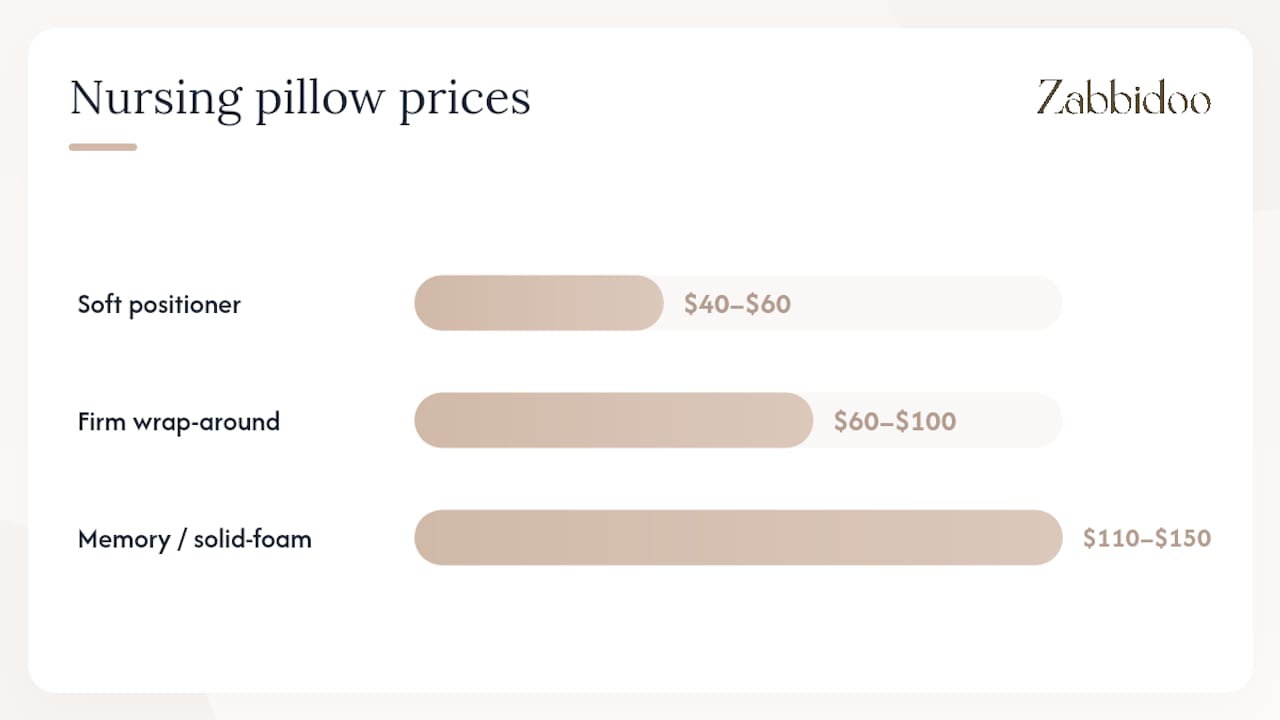
Firm wrap-around pillows wrap around your waist and sit in the mid-range, typically $60 to $100. They’re the most common choice for regular breastfeeding because the firmness keeps baby from sinking, and lactation guidance generally favours a stable surface that reduces the need to reposition mid-feed. The downside is they can feel bulky to store or travel with.
Soft positioner pillows sit at the budget end, often $40 to $60. They’re comfortable to sit against but the trade-off is real: softer fill compresses faster, and testers note that very cheap pillows under $30 often flatten within months, landing you back at the shops sooner than you’d like.
Memory foam or solid-foam pillows command premium pricing, usually $110 to $150, because the denser core resists compression far better than polyfill and keeps its lift over years of use, not weeks.
Ergonomic-lift designs are the newest category shift. Rather than just cushioning baby, they change the actual feeding posture by raising bub closer to breast height — which is the core idea behind Zabbidoo’s 18cm lift. These sit at the top of the price range because the engineering (and often the linen cover) costs more to produce, but the payoff is less hunching and less strain on your neck and shoulders over a feeding session that might run 20 to 40 minutes several times a day.
If you’re deciding between styles, run through this quickly:
- Feeding several times a day, every day? Go firm wrap-around or ergonomic-lift, not soft positioner.
- Already dealing with neck, back or wrist pain? Prioritise ergonomic lift over standard firm designs.
- Only using it occasionally or as a backup? A budget soft positioner is fine.
- Want one pillow for feeding, tummy time and support? Look for multi-use construction, which usually sits mid-range or above.
Where to buy a nursing pillow in Australia (and how to pay less)
You’ve got three main shopping routes in Australia: national baby retailers, online marketplaces, and direct-to-consumer brand stores. Each has a different price ceiling and a different level of risk.
National baby shops give you the chance to feel the firmness before buying, which matters more than photos ever will. Online marketplaces widen your options and often show the sharpest discounts, but listings vary wildly in quality and you can’t test the fill in person. Direct-to-consumer brand stores, including Zabbidoo’s own site, tend to list clearer specs on fill type, cover material and lift height, which makes comparing like-for-like far easier than scrolling marketplace listings with thin descriptions.
When comparing prices across channels, check these before you commit:
- Is a spare cover included, or sold separately?
- Does the price include postage, or is that added at checkout?
- What’s the returns window, and does it cover change-of-mind within Australia?
- Is it genuinely Australian-made, or just Australian-warehoused?
A few money-saving tactics worth trying: buy a spare cover instead of a whole new pillow once yours wears out, watch for seasonal sales rather than buying at full price, and consider a well-maintained second-hand pillow from someone you trust, checking the fill hasn’t gone flat. Just be wary of very cheap imported pillows priced well under $30. Testers consistently find they flatten quickly and end up costing more in replacements than a single mid-range purchase would have.
Is a nursing pillow worth the money?
For most Australian parents feeding several times a day, yes. The math is simple: if you’re using it daily for six to twelve months, a $70 to $120 pillow that holds its shape works out to a few cents per feed. A $35 pillow that flattens in ten weeks doesn’t.
Spend more when any of this applies to you:
- You’re feeding frequently and need consistent firmness, not something that softens by week six.
- You already have back, neck or wrist pain, where an ergonomic-lift design genuinely changes your posture.
- You want multi-use value — tummy time support, tandem feeding for twins, or general baby propping — which spreads the cost across more than just feeding sessions.
Budget options are genuinely fine if you’re an occasional user, supplementing with a lot of hand-holding, or just want a backup for the car or a relative’s house.
One safety note that applies whatever you spend: never leave baby unsupervised on a nursing pillow, and choose firmness that keeps them from sinking into the fill, which supports a stable, safe latch throughout the feed.
Pro Tip: If you’re torn between two prices, ask yourself one question: will I still be using this pillow in a year? If yes, buy the firmer, better-built option now rather than replacing a cheap one twice.
How Zabbidoo’s design lines up with these price drivers
Zabbidoo’s nursing pillow was built specifically around the cost drivers covered above, not as a generic add-on feature list. The 18cm lift addresses the posture problem directly, bringing baby to breast height instead of leaving mum to hunch forward through every feed. The fill uses compression-resistant construction designed to hold its shape rather than flatten within months, and the stability-focused build aims to cut down on the constant repositioning that firmer, structured pillows are meant to solve.
The cover is hypoallergenic French flax linen, machine washable, which covers the hygiene and longevity factors discussed earlier. It also includes a built-in pocket and a portable handle, adding the multi-use flexibility that offsets a higher upfront price over months of daily use.
Before buying any pillow at this price point, check for spare cover availability, warranty terms, and shipping timeframes within Australia. Zabbidoo lists a one-off price rather than a subscription, which keeps the comparison against other premium pillows straightforward.
Where the line sits between “fine” and “worth paying more for”
Most parents don’t need the most expensive pillow on the shelf. They need one firm enough to stop the constant repositioning, and a cover they can actually wash without a fuss. That’s the real spending threshold, not the brand name on the tag.
If neck or back strain is part of your daily feeding routine, paying for ergonomic lift and a washable cover is the better spend, every time.
— Marietjie
Ready to stop hunching through every feed?
Standard nursing pillows collapse under weight within weeks, forcing you back into the hunch you bought the pillow to avoid in the first place. Zabbidoo’s nursing pillow is built around an 18cm ergonomic lift and compression-resistant fill specifically so it keeps supporting proper feeding posture months after a budget pillow would have flattened.
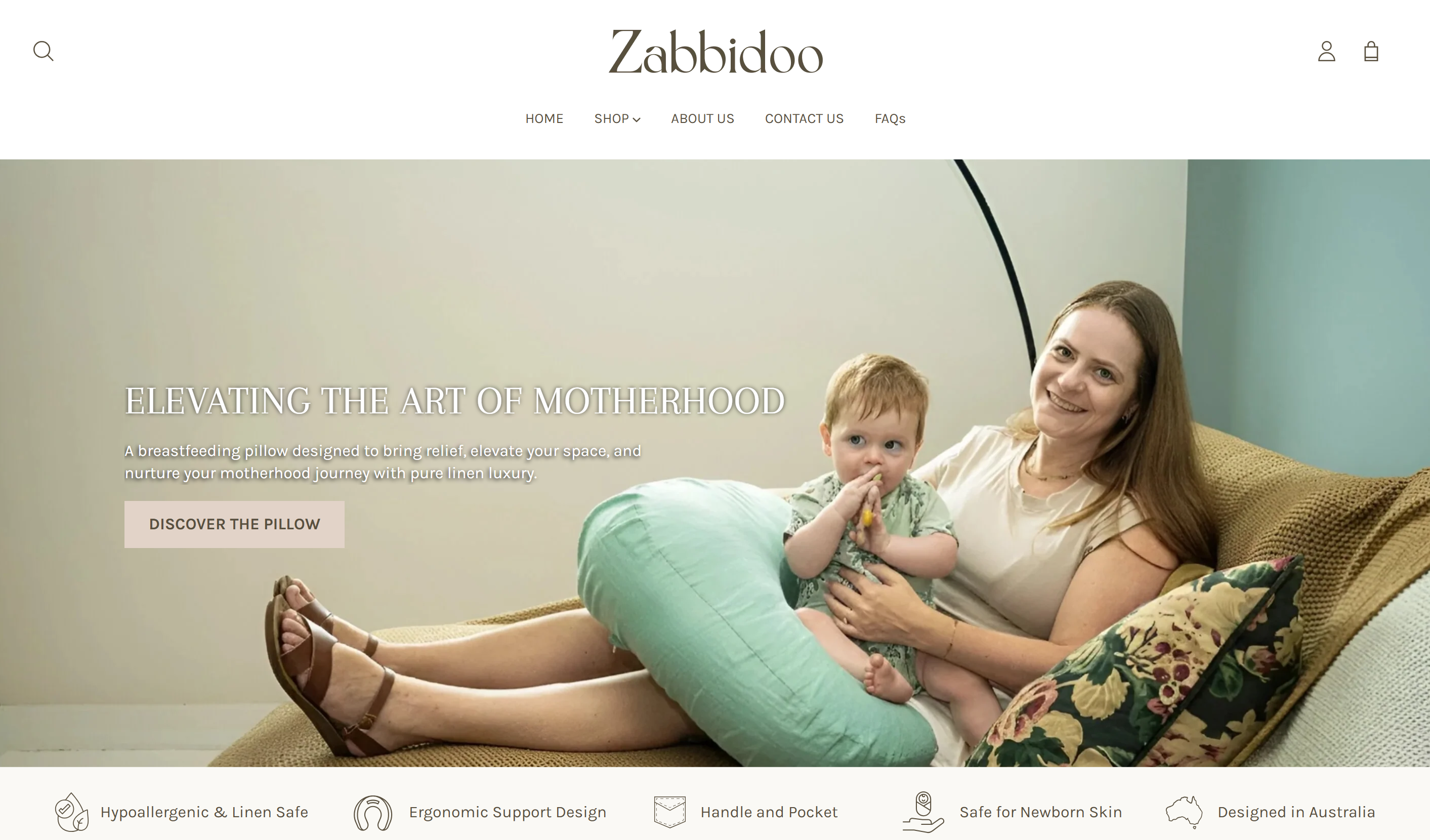
The French flax linen cover comes off and goes straight in the machine, and the built-in pocket and portable handle mean it moves from the nursery to the lounge to the car without a second thought. It’s a one-off purchase, not a subscription, so there’s no ongoing cost to plan around once it’s in your home. If you’re also stocking up on feeding essentials, Zabbidoo’s free pacifier clip chain is worth adding to the same order. Head to the Zabbidoo nursing pillow page to check current stock and Australian shipping details, and get one sorted before your next growth spurt.
Sources
FAQ
How much does a nursing pillow cost in Australia?
Budget options start around $40 to $60, mid-range firm pillows run $60 to $110, and premium memory-foam or ergonomic-lift designs sit between $110 and $160 or more. Tested Australian listings have shown prices spanning roughly $44 to $150 across these bands.
What is the best nursing pillow in Australia?
There’s no single universal winner, but Australian price checks repeatedly show that mid-range firm pillows offer the best value rather than the cheapest or priciest option. For parents dealing with posture strain, an ergonomic-lift design like Zabbidoo, which uses an 18cm lift and a washable French flax linen cover, is worth the higher spend.
Is it worth buying a nursing pillow?
Yes, if you’re feeding several times a day or dealing with neck, back or wrist pain during feeds. A firmer, better-built pillow in the $70 to $120 range typically outlasts a cheap one that flattens within a couple of months, making it cheaper over time despite the higher upfront cost.
Which brand of nursing pillow is considered the best?
Reviewers tend to rate brands on firmness, cover washability and how well the fill resists compression over time, rather than name alone. Zabbidoo stands out on that criteria with its 18cm ergonomic lift and compression-resistant fill, aimed squarely at parents who want lasting posture support rather than a pillow that softens within weeks.
How much should I spend if I only feed occasionally?
A budget pillow in the $40 to $60 range is reasonable if you’re using it as a backup or for occasional feeds rather than daily. If you’re feeding frequently, spending closer to $70 to $120 on a firmer or ergonomic-lift design pays off faster in durability and comfort.