

Most nursing mothers assume any C-shaped pillow will do the job. It won’t. The real benefits of premium pillow materials go far beyond softness or appearance. They determine whether your pillow holds its shape at 3am during a cluster feeding session, whether your shoulders ache less by week six, and whether the fill collapses under your baby’s weight after a fortnight of daily use. This guide cuts through the noise so you can make a genuinely informed choice, whether you’re a first-time mum figuring it out as you go or a second-timer who knows exactly what the wrong pillow felt like last time.
Table of Contents
- Key takeaways
- How materials influence nursing comfort and support
- Comparing types of premium nursing pillow materials
- Why adjustability and durability matter for nursing parents
- Choosing, using, and caring for premium nursing pillows
- My take on why material quality changes the nursing experience
- Zabbidoo’s nursing pillow: built for what mothers actually need
- FAQ
Key takeaways
| Point | Details |
|---|---|
| Material drives support, not softness | Pillow fill quality determines loft retention and posture alignment, not how plush a pillow feels in the shop. |
| Adjustability changes everything postpartum | Your body shape shifts significantly after birth; adjustable fills let you customise support as your nursing position evolves. |
| Cover construction matters as much as fill | Waterproof, breathable covers protect against milk spills and extend the life of premium materials underneath. |
| Premium fills resist compression | High-quality fills maintain height and firmness through repeated nursing sessions, reducing muscle fatigue over time. |
| Durability is the real return on investment | A well-made nursing pillow that holds its shape for 12+ months costs less per session than a cheap one replaced at 8 weeks. |
How materials influence nursing comfort and support
The term “premium pillow materials” gets thrown around a lot in product marketing, but the industry measure that actually matters is loft retention. Loft refers to how well a pillow maintains its height and firmness under load. For nursing, this is everything. When you position your baby at the breast, your pillow is bearing the weight of a small human, often for 20 to 45 minutes at a stretch, multiple times a day.
Pillow height and firmness are the strongest predictors of support quality and comfort, and this applies just as directly to nursing pillows as to sleep pillows. When a pillow collapses mid-feed, you hunch forward to compensate. That forward lean puts your neck and upper back into a sustained, strained position. Over weeks of feeding, that strain accumulates into the kind of chronic shoulder and neck pain that many new mothers assume is simply part of the experience. It doesn’t have to be.
Premium materials maintain the neutral neck position that allows muscles and connective tissue to relax rather than brace. For a nursing pillow specifically, that means keeping your baby elevated so you’re not rounding your spine downward to meet them. The difference between a pillow that holds 18cm of height through an entire feed and one that compresses to 10cm by the halfway point is measurable in both comfort and fatigue.
Here’s what premium fills do differently from budget options:
- They resist compression under repeated load, so height stays consistent session after session
- They redistribute pressure more evenly, reducing hotspots along your arm and wrist
- They recover their shape between uses rather than packing down permanently over time
- They tend to perform better on shape retention testing, which evaluates how fills respond to sustained and repeated pressure
Pro Tip: If you’re testing a nursing pillow in a shop, press your full forearm into the surface and hold it for 30 seconds. A premium fill will recover noticeably after you lift your arm. A budget fill will stay compressed. That compression is what happens during every single feed.
Comparing types of premium nursing pillow materials
Not all high-quality fills are equal, and the best pillow material for comfort depends on your specific priorities. Here’s how the main options compare when it comes to nursing use specifically.
| Fill type | Loft retention | Breathability | Adjustability | Cleaning ease |
|---|---|---|---|---|
| Shredded memory foam | Excellent | Moderate | High (removable) | Moderate |
| Solid memory foam | Excellent | Low | None | Difficult |
| Natural latex | Very good | Good | Low | Moderate |
| Kapok fibre | Good | Very good | Low | Easy |
| Adjustable fibre blend | Good | Good | Very high | Easy |
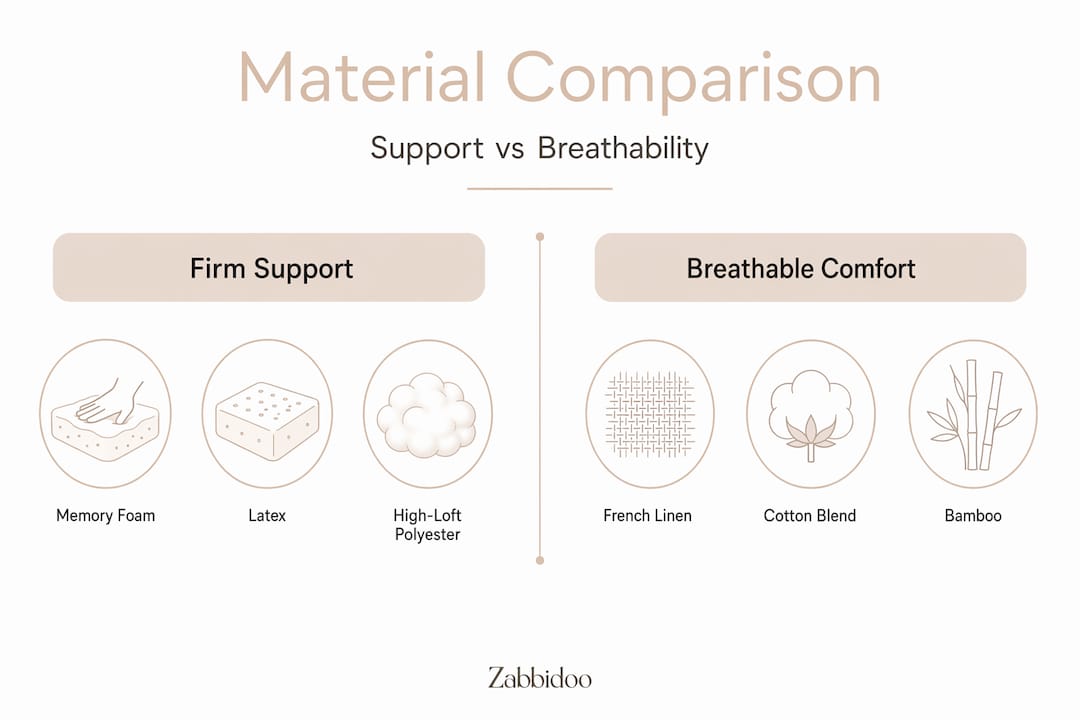
Memory foam and latex provide superior contouring by conforming closely to the shape placed against them, which reduces strain on spinal nerves and minimises stiffness after long sessions. The trade-off for solid foam is temperature. Dense foam traps heat, which matters when you already have a warm baby pressed against your body. Breathable covers enhance temperature regulation and go a long way toward solving this, which is why cover material matters almost as much as fill.
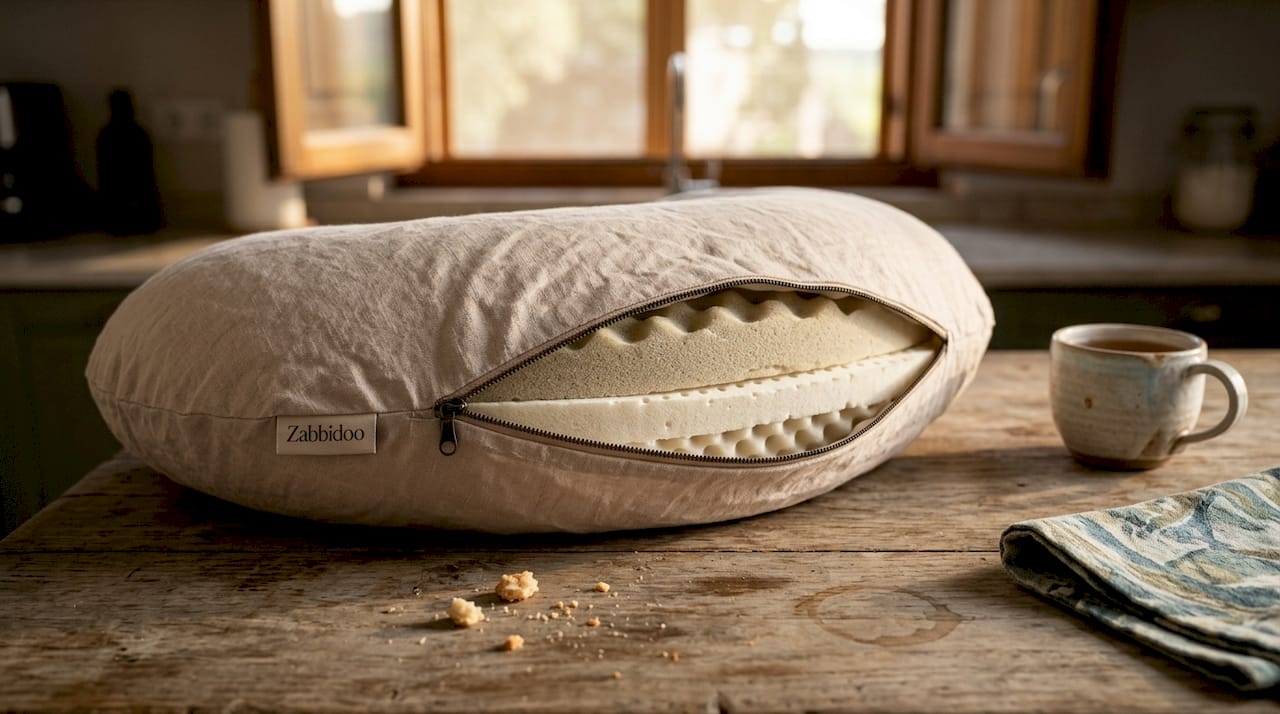
Shredded memory foam blends offer most of the support benefits without the heat retention issue, and their adjustability makes them practical for the shifting demands of postpartum nursing. Kapok, a natural plant-based fibre, is genuinely breathable and surprisingly supportive, though it tends to compact more quickly than foam options without regular fluffing.
Two cover features that you should treat as non-negotiable:
- A waterproof inner lining that contains milk spills without affecting breathability. Preventing liquid penetration extends both comfort and the life of the fill beneath.
- A removable outer cover with a full zipper and machine-washable fabric. Nursing is messy, and a cover you can’t clean easily becomes a hygiene problem within weeks.
French flax linen is worth a specific mention here. It’s increasingly used in high-performance nursing covers because it combines genuine breathability with durability and gets softer with each wash rather than pilling or thinning.
Why adjustability and durability matter for nursing parents
Your body at six days postpartum is not the same body you’ll be nursing with at six months postpartum. Ligament laxity, changes in breast size, the shift from cradle hold to football hold as your baby grows, your confidence in latch technique. All of it changes, and your pillow needs to accommodate that shift rather than locking you into one fixed position.
Adjustable pillows reduce dissatisfaction by letting you modify fill volume to suit your current nursing position and body shape. This is particularly valuable for second-time mothers, because postpartum body changes affecting pillow needs can differ significantly from one pregnancy to the next, even for the same woman. What worked perfectly the first time may sit too high or too low the second time around.
Durability connects directly to the quality of both the fill and the cover construction. Cover quality including woven fabrics, neat seams, and zippers contributes substantially to long-term pillow performance. A cover that frays at the seams after two months of washing exposes the fill to contamination and compression damage.
To get the most from a premium nursing pillow over its full lifespan, follow these steps:
- Air the pillow outside its cover every two to three weeks to prevent moisture build-up in the fill.
- Wash the outer cover after every significant spill rather than waiting for a scheduled clean.
- Store the pillow in a shape-retaining position when not in use. Folding it flat encourages uneven compression.
- Re-fluff or redistribute adjustable fills every few days if you’re using a fibre blend or shredded foam option.
- Check seams and zippers monthly so minor wear is caught before it becomes a structural problem.
Pro Tip: If your neck or upper back aches consistently after feeds, the most likely cause isn’t your latch or your baby’s position. It’s that your pillow has lost enough height to make you lean forward without realising it. Add a small amount of fill or replace the pillow before you reach for pain relief.
Choosing, using, and caring for premium nursing pillows
Before you buy, the criteria that matter most are not the ones typically featured in product photography. Consider these when evaluating your options:
- Height at full loft. A nursing pillow should bring your baby to the breast, not require you to descend to your baby. Look for at least 15 to 18cm when uncompressed.
- Fill type relative to your climate and how you run warm. A dense foam pillow in a Queensland summer is a different experience to one in Melbourne in winter.
- Cover construction. Waterproof inner lining plus a removable, washable outer cover is the minimum standard worth paying for.
- Adjustability. If you’re unsure how your nursing position will develop, err toward an adjustable fill that you can modify as your confidence and your baby’s weight change.
Pillow support performance including loft retention and cover construction defines genuine premium quality more accurately than price point or branding. A pillow described as luxurious but made with a single-layer cover and non-recoverable foam is not premium in any meaningful sense.
When you start using a new nursing pillow, give yourself a week of adjustment. Your positioning habits built around a previous pillow or no pillow at all will influence how the new one feels initially. If discomfort persists past the first week, the issue is more likely fill volume than the pillow itself.
For care, treat the cover as you would a baby’s clothing item: wash warm, tumble dry low, and check the manufacturer’s guidance for anything foam-lined. Maintaining and cleaning nursing pillows correctly is the single most effective way to preserve the structural benefits of premium materials across months of daily use.
My take on why material quality changes the nursing experience
I’ve spoken with many nursing mothers who describe the same experience: they assumed their back and shoulder pain was inevitable, part of adjusting to new motherhood. Then they changed their pillow and the ache eased within days.
The conventional wisdom that a pillow just needs to be soft is genuinely misleading. Softness and support are not the same thing, and for nursing they can work against each other. A very soft pillow feels good in your hands at the shop and collapses under load within the first week. What actually reduces fatigue is a fill that holds its position under pressure, at a height that keeps your posture upright without effort on your part.
What I find most interesting is how different the experience is for second-time mothers specifically. They often arrive knowing what didn’t work before but unsure what to change. Usually the answer is adjustability combined with genuine compression resistance. The pillow needs to accommodate a body that’s shifting and a baby that’s growing, not stay fixed at one firmness forever.
Investing in premium materials isn’t about buying the most expensive option on the market. It’s about understanding what actually makes nursing pillows high performance and choosing accordingly. The difference in daily comfort over six to twelve months of nursing is not subtle.
— Marietjie
Zabbidoo’s nursing pillow: built for what mothers actually need
If everything you’ve read here describes what you’ve been looking for, Zabbidoo’s nursing pillow was designed with exactly these priorities in mind.
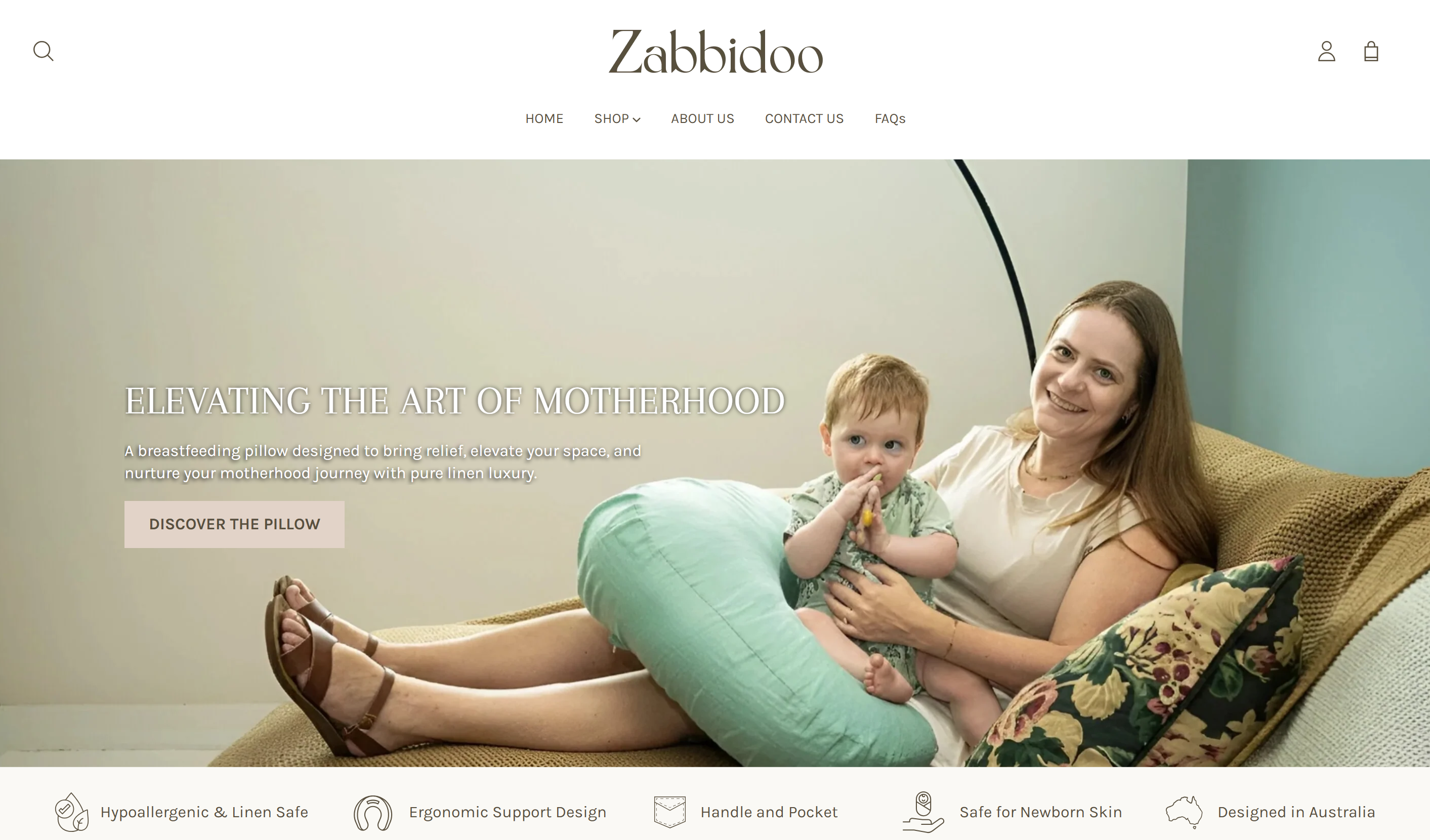
The Zabbidoo nursing pillow sits at 18cm of height to bring your baby up to the breast rather than pulling you down to meet them. The fill is compression-resistant, maintaining its loft through repeated daily sessions rather than packing down over the first month. The cover uses French flax linen over a waterproof inner lining, so it’s breathable, washable, and genuinely durable. It’s also designed for multi-use from day one: feeding, tummy time, and positional support as your baby grows.
For parents who want a premium nursing pillow that performs across the full nursing journey and holds up to real-world cleaning demands, this is where to start. You can also explore Zabbidoo’s free pacifier clip as a practical addition while you’re getting set up.
FAQ
What makes a pillow fill “premium” for nursing use?
A premium fill for nursing maintains its height and firmness under the sustained load of a baby’s weight across repeated daily feeds. Shape retention and loft consistency under active use are the defining characteristics, not softness or price alone.
How do I know if my nursing pillow has lost too much support?
If you find yourself leaning forward or rounding your shoulders during feeds, your pillow has likely compressed below the height needed to support neutral posture. Pillows that resist flattening through frequent repositioning are the ones worth keeping long-term.
Are adjustable nursing pillows worth the extra cost?
Yes, particularly for second-time mothers whose postpartum body shape may differ from their first pregnancy. Customisable fill adjustments reduce the likelihood of persistent neck and back discomfort caused by a fixed-firmness pillow that no longer fits your current nursing position.
Why does cover material matter for a nursing pillow?
The cover determines breathability, hygiene, and how long the fill stays in good condition. A waterproof breathable lining protects the fill from milk penetration while a removable, machine-washable outer layer keeps the surface clean for both mother and baby.
Can the right pillow material reduce nursing-related back pain?
Significantly, yes. Maintaining a neutral neck and spinal position through proper pillow height and firmness reduces the muscle strain that accumulates across daily nursing sessions and contributes to chronic upper back discomfort.