

Knowing how to choose baby pillows is one of those decisions that sounds simple until you’re standing in a baby shop surrounded by adorable, cloud-soft products and wondering if any of them are actually safe. The market is full of items that look comforting but carry real risks, and the advice online often contradicts itself. This guide cuts through the noise. You’ll find clear safety guidelines, practical tips for nursing support, and honest criteria to help you pick the right pillow for your baby’s age and needs — without second-guessing every purchase.
Key takeaways
| Point | Details |
|---|---|
| No sleep pillows under 12 months | Official guidelines from paediatric bodies advise keeping infant sleep spaces completely clear of pillows. |
| Nursing pillows need supervision | Support pillows used for feeding are safe tools, but must never be left with an unsupervised baby. |
| Toddler readiness matters | Most children are not ready for a sleep pillow until 18 to 24 months, and firmness is non-negotiable. |
| Materials affect safety and hygiene | Breathable, hypoallergenic fabrics reduce overheating and allergy risks for both sleep and feeding pillows. |
| Bottle-propping products are dangerous | Self-feeding pillows have been flagged by regulators as a serious aspiration and suffocation hazard. |
How to choose baby pillows: start with safety
Before you compare shapes, covers, or fillings, you need to understand one foundational rule. For babies under 12 months, the safest sleep environment contains no pillow at all.
This is not overcautious parenting advice. It reflects official AAP guidelines recommending a completely flat, firm, clear sleep surface without pillows, blankets, or soft toys. The reasoning is straightforward: soft items block airflow, and a baby who rolls or shifts in the night cannot reliably move away from a surface that is restricting their breathing.
The UK’s Lullaby Trust reinforces this, specifying that baby’s head must not sink into a mattress or pillow by more than a few millimetres. Their guidance advocates for firm, flat, waterproof sleep surfaces with no raised or cushioned areas whatsoever.
Where things get murky is in product marketing. Many items sold as “sleep positioners,” “anti-roll pillows,” or “infant comfort pillows” are positioned as safe and beneficial, yet many marketed baby sleep pillows are under active regulatory scrutiny because they directly contradict safer sleep advice from paediatric and NHS guidelines.
The risks you need to know about include:
- Suffocation from soft surfaces that conform around a baby’s face
- Entrapment if a baby rolls into a gap between a pillow and the cot side
- Overheating caused by thick or non-breathable materials trapping heat
- Airway blockage if the pillow tilts the head forward or to the side
The distinction that matters most here is between sleep pillows and nursing or support pillows. They are fundamentally different products used in different contexts, and mixing them up is where many parents go wrong. For a deeper breakdown of baby sleep pillow dangers, it is worth understanding exactly why regulators separate these two categories.
When can toddlers start using a pillow?
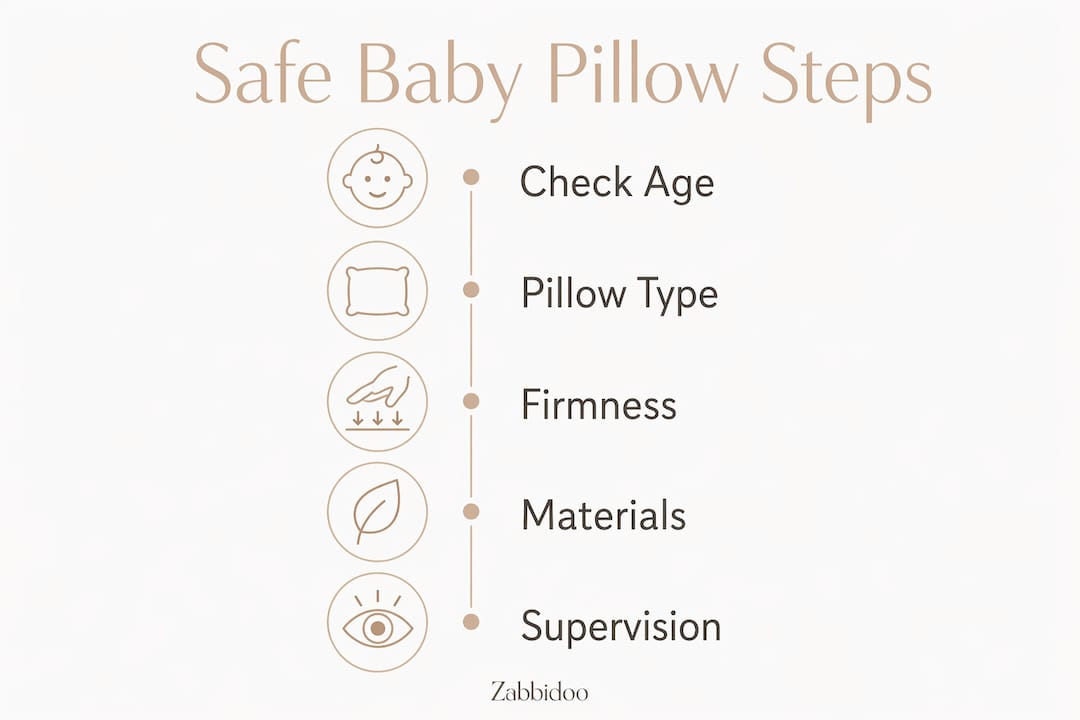
Once your child moves past the 12-month mark, the conversation shifts. But passing one year old does not automatically mean a pillow is appropriate. Most paediatric guidelines and sleep safety sources point to 18 to 24 months as the more reliable threshold, and even then, the type of pillow matters enormously.
You are looking for a few behavioural signs before introducing any sleep pillow:
- Your toddler regularly rests their head on a soft object, like a stuffed toy or folded blanket, during play or rest.
- They seem unsettled or uncomfortable when sleeping flat, in a way that is new and not linked to illness.
- They have transitioned from a cot to a toddler bed, where pillow use is more easily managed.
- They can reposition themselves confidently during sleep without assistance.
When those signs are present, choose a pillow that is low-profile and firm. Thick, soft pillows that tilt the head upward are unsafe at any toddler age. The firmness test is simple: press your hand into the pillow and release. It should spring back quickly without leaving a prolonged impression. Pillows that tilt the head should be discarded, as they compromise spinal alignment and airway position.
Pro Tip: Avoid pillows that could encourage your toddler to use them as a step to climb out of their cot. Keep pillow introduction paired with the transition to a toddler bed, not before.
Also worth avoiding at this stage: novelty-shaped pillows that look adorable but lack the firmness needed for actual postural support. A flat, firm, single-layer pillow in a breathable cotton or bamboo cover is the right starting point. You can always add comfort later as your child grows and their risk profile changes.
Choosing a nursing pillow for feeding comfort
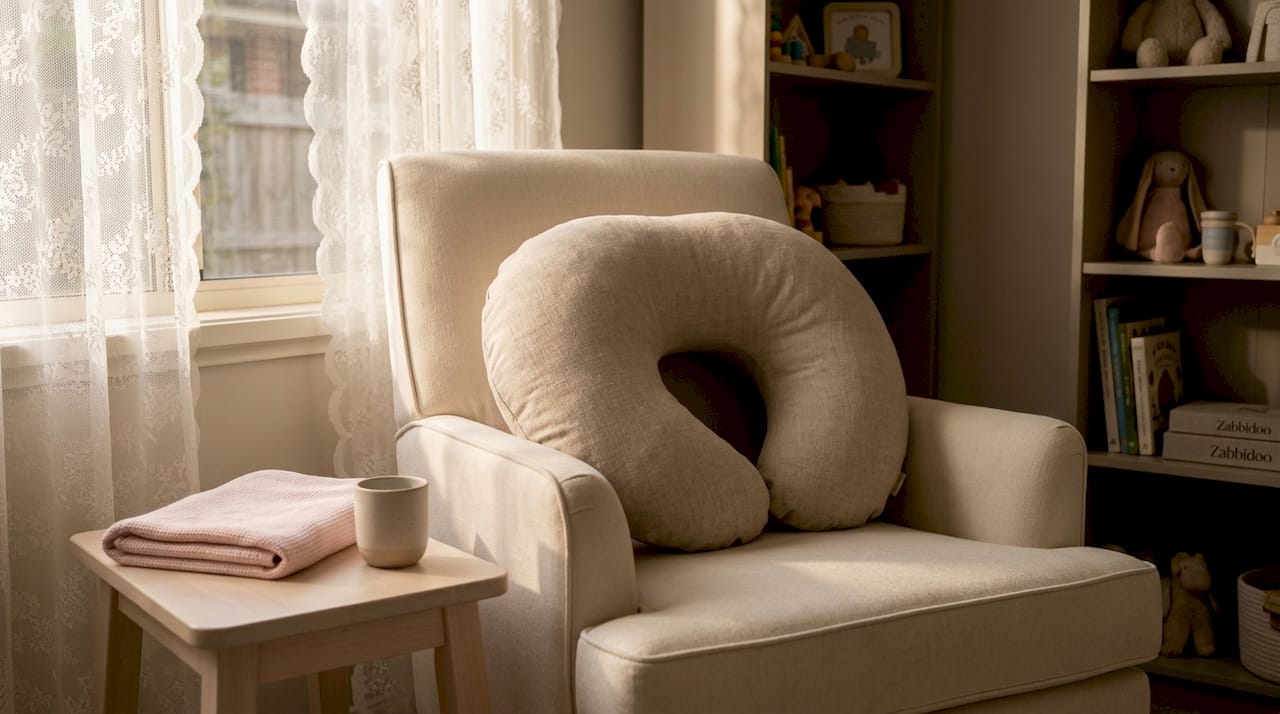
Here is where the product landscape looks very different from the infant sleep category. Nursing pillows, also called breastfeeding support pillows or posture pillows, are designed for supervised use during feeding. They are not sleep accessories and should never be used as one.
When you are evaluating a nursing pillow, the criteria are distinct:
- Height and firmness: A pillow that collapses under your baby’s weight defeats its purpose. You need a support that keeps baby elevated at a consistent height, reducing the need to hunch your shoulders and neck forward.
- Shape: A horseshoe or C-shape wraps around your body and positions baby naturally at breast or bottle height. This matters for latch quality and for reducing wrist and back strain across multiple feeds per day.
- Material and breathability: Feeds last anywhere from 10 to 40 minutes. A non-breathable pillow surface traps heat against baby’s face and body. Look for natural fibres with good air circulation.
- Washability: Pillows used for feeding encounter milk, spit-up, and sweat regularly. A removable, machine-washable cover is not a luxury, it is a hygiene requirement.
One warning that cannot be overstated: self-feeding pillows that prop bottles are flagged by the U.S. CPSC as a serious aspiration and suffocation risk. These products hold bottles in a fixed position at an unsafe angle. Regulators have urged caregivers to stop using them immediately. Active, supervised feeding is the only safe approach.
Pro Tip: Use your nursing pillow on a firm surface like a couch or chair, not on a bed. If you feed lying down, the pillow is not appropriate in that context. Always move baby to a flat, firm sleep surface once feeding is complete.
For guidance on how tested nursing pillows perform under real feeding conditions, the Zabbidoo nursing pillow testing guide is a thorough starting point.
Materials, design, and hygiene
Once safety and age-appropriateness are sorted, the material and construction of your chosen pillow determines how comfortable, hygienic, and long-lasting it will be in practice.
| Feature | What to look for | Why it matters |
|---|---|---|
| Fabric type | Bamboo viscose, cotton, or linen | Breathable bamboo fabrics wick moisture and regulate temperature |
| Filling material | High-resilience foam or dense fibre | Maintains shape under pressure; does not collapse with use |
| Cover design | Removable, machine-washable | Makes regular hygiene maintenance practical |
| Waterproofing | Inner waterproof layer or cover | Protects filling from milk and moisture damage |
| Firmness on press | Springs back quickly | Confirms pillow maintains a safe, supportive surface |
Hypoallergenic materials reduce the risk of reactions for babies with sensitive skin or a family history of allergies. This is particularly relevant for covers that sit against baby’s cheek and neck during long feeding sessions.
For nursing pillows specifically, maintaining pillow hygiene prevents bacterial build-up that can develop in damp, milk-exposed materials. A full guide on nursing pillow hygiene covers cleaning routines that extend pillow life without compromising the cover or filling integrity.
Common mistakes in baby pillow selection
Even parents who read widely on this topic make predictable errors. Knowing them in advance saves you money, stress, and real safety risk.
- Assuming soft equals safe. Softness is precisely the problem with infant pillows. A surface that moulds around a baby’s face is a suffocation risk, not a comfort feature.
- Using a nursing pillow as a sleep surface. Support pillows must never replace a flat, firm sleeping surface. Placing a baby on a curved or cushioned surface to sleep, even briefly, is unsafe.
- Introducing sleep pillows too early because a baby seems uncomfortable. Discomfort at three or six months is rarely a pillow problem. It is more likely related to temperature, hunger, or developmental changes.
- Using pillows to treat reflux or flat head syndrome. Tummy time, not pillows, is the medically recommended intervention for flat head syndrome. Wedge pillows and positional aids increase the risk of positional asphyxia and are not endorsed by paediatric authorities.
- Choosing a thick toddler pillow because it looks more comfortable. Thickness that tilts the head forward creates the same airway risk at 20 months as it does at six months.
For paediatric occupational therapy perspectives on safe adaptive equipment and positioning for infants and toddlers, the Growing Balanced parent guide offers useful framing on what supportive products actually serve developmental goals.
The transition from no pillow to toddler pillow should be gradual and observation-based, not calendar-driven. Watch your child, not the marketing copy on the packaging.
My honest take after helping a lot of new mums
I have seen the look on a first-time mum’s face when she realises the adorable nest-style pillow she bought for the nursery should never go in the cot. It is frustrating, because these products are sold right next to the rest of the nursery furniture with no obvious warning on the shelf.
What I have learned is that the baby product market moves faster than regulation can keep up. Beautiful photography, soft fabrics, and reassuring language on packaging do real work to override gut instinct. My honest advice: let official guidelines do the heavy lifting for infant sleep, and trust your own observation for the toddler transition.
What actually works is simpler than the product range suggests. For feeding, a firm, shaped nursing pillow that brings baby up to you (rather than you hunching down to baby) changes the whole experience of breastfeeding across those early months. For sleep, patience with the no-pillow phase is genuinely worth it. The risks of introducing a sleep pillow early are not theoretical. They are documented and real.
The parents I see doing this well are not the ones with the most products. They are the ones who ask “does this keep my baby safe?” before “does this look comfortable?”
— Marietjie
Zabbidoo’s nursing pillow for safe, comfortable feeding

If you have read this far, you already know the difference between a nursing pillow and a sleep pillow, and why that distinction matters. Zabbidoo’s nursing pillow was designed with exactly this in mind. It lifts baby 18cm to bring them to your natural feeding position, rather than forcing you to lean forward and strain your neck and back across every feed. The filling holds its shape under sustained pressure, which means no constant readjusting mid-feed when the surface collapses beneath your baby.
The cover is made from French flax linen, which is naturally breathable and temperature-regulating — no heat build-up against baby’s face or your arms. It is machine washable and designed for the real volume of use a nursing pillow sees in the early months.
Always use your nursing pillow with full supervision. Once your feed is done, move baby to their safe, flat sleep surface.
Explore the Zabbidoo nursing pillow to see full specifications, materials, and design features built around safe, ergonomic feeding support.
FAQ
When can babies start sleeping with a pillow?
Most paediatric guidelines recommend waiting until at least 18 to 24 months before introducing a sleep pillow. Before 12 months, no pillow should be present in a baby’s sleep space under any circumstances.
What is the difference between a nursing pillow and a sleep pillow?
A nursing pillow is a supervised feeding aid used while a caregiver is present. A sleep pillow is placed in a baby’s sleep space. These are completely different products, and a nursing pillow should never be used as a sleep surface.
How do I know if a pillow is too soft for my toddler?
Press your hand firmly into the pillow and release. If it does not spring back quickly or leaves a prolonged impression, it is too soft. A safe toddler pillow should be low-profile and firm enough that it does not tilt the head upward.
Are self-feeding pillows safe for bottle-fed babies?
No. The CPSC has warned against self-feeding pillows due to serious aspiration and suffocation risks. All bottle feeding should be done with an actively present caregiver holding the bottle.
What materials should I look for in a baby pillow?
For nursing pillows, look for breathable natural fibres such as linen or bamboo viscose, a firm and resilient filling, and a removable machine-washable cover. These features support both safety and hygiene over months of regular use.