

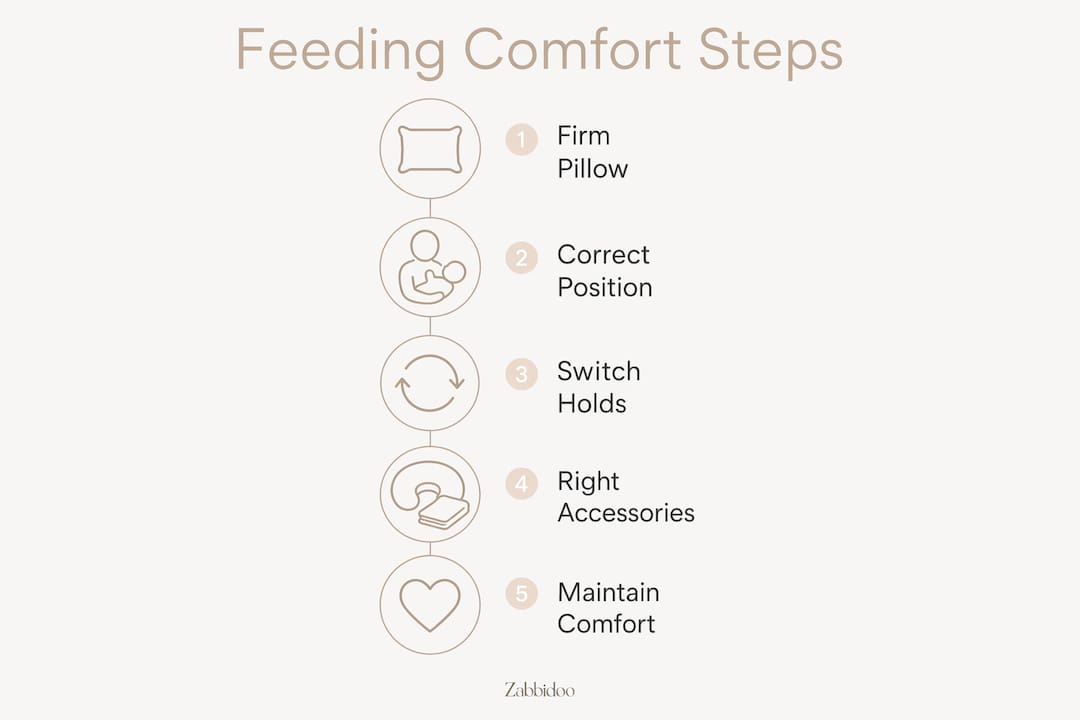
Feeding comfort for mums is defined as the combination of ergonomic support, correct posture, and the right accessories that reduce physical strain during nursing sessions. Most mothers feed their babies 8–12 times daily, and without proper support, that repetition causes real musculoskeletal damage to the neck, shoulders, and lower back. A firm, supportive nursing pillow reduces this strain and prevents the forward hunching that turns feeding into an endurance sport. For mothers managing more than one child, the stakes are even higher. Getting this right from the start protects your body and makes feeding sustainable.
What are ergonomic nursing pillows and how do they help?
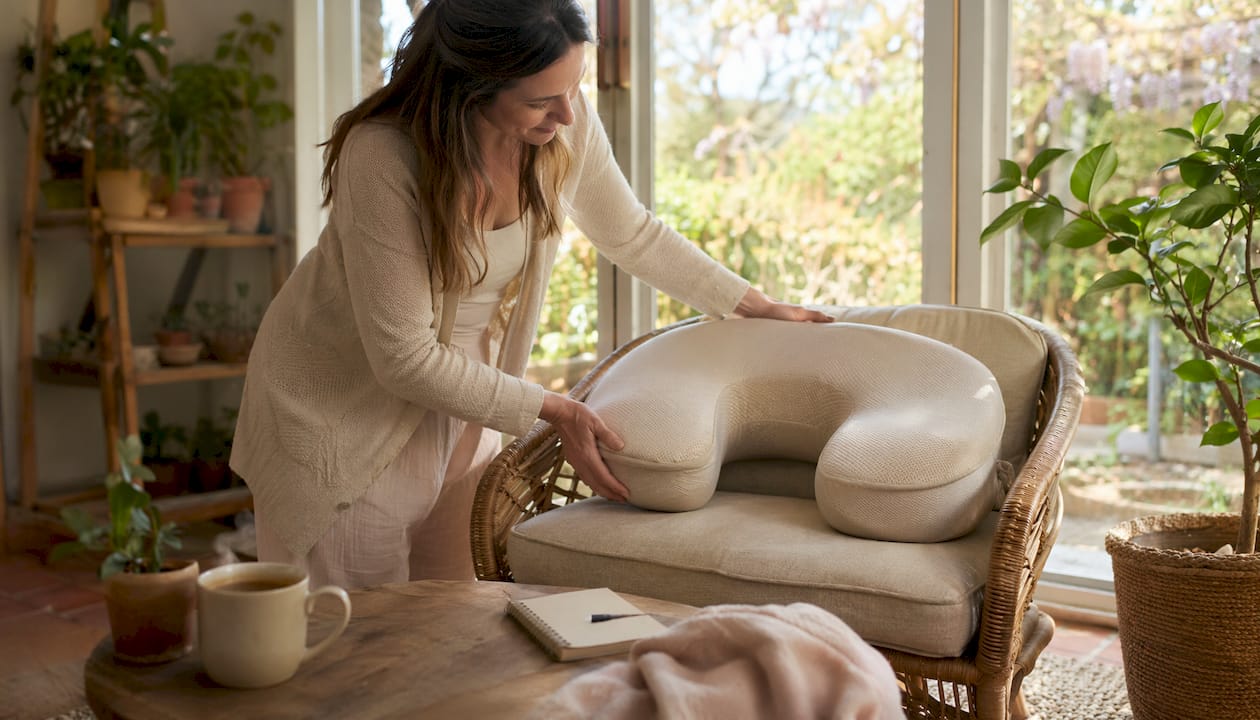
Ergonomic nursing pillows are the single most effective tool for improving nursing comfort. They work by lifting the baby to breast height, which means you stop hunching down to meet your baby and start feeding in a relaxed, upright position. Physiotherapy guidance confirms that feeding pillows reduce neck, shoulder, and back pain by promoting this upright posture throughout every session.
The design details matter more than most mothers realise. Key features to look for include:
- Firm foam core: Soft pillows collapse under a baby’s weight within minutes. A pillow with strong compression resistance holds its shape across multiple feeds.
- Safety guard edges: These raised edges keep your baby secure and reduce the constant repositioning that causes arm and shoulder fatigue. Safety guard edges prevent rolling and give you one less thing to manage during tired night feeds.
- Adjustable waist strap: A strap that secures the pillow to your body stops it sliding away mid-feed. Adjustable waist straps are a functional necessity, not a luxury, especially when you are also managing a toddler nearby.
- Height: The Zabbidoo nursing pillow lifts at 18cm, which brings the baby up to the mother rather than forcing her to lean down. Most standard pillows fall well short of this height.
- Breathable cover: French flax linen, as used by Zabbidoo, stays cool against skin and holds up to repeated washing.
Premium pillows offer up to 28% wider support surfaces to improve arm positioning. That extra width distributes your baby’s weight across your forearms rather than concentrating it at the wrists. Adjustable waist straps can extend up to 65 inches to accommodate different body types, which matters postpartum when your body is still changing.
Pro Tip: Test your pillow firmness by pressing your fist into the centre. If it sinks more than a few centimetres and does not spring back, it will collapse under your baby’s weight within one feed.
How does correct positioning improve nursing comfort?
Posture is the foundation of comfortable feeding. Even the best pillow cannot fully compensate for a poor feeding position. The goal is a relaxed, upright spine with your shoulders down and your baby’s body fully supported at breast height.
The three most common feeding holds each carry different ergonomic implications:
- Cradle hold: Your baby lies across your body, supported by the arm on the same side as the feeding breast. This is the most common hold but also the one most likely to cause shoulder rounding if the baby is not lifted high enough.
- Cross-cradle hold: Your opposite arm supports the baby’s head, giving you more control over latch. This hold works well in the early weeks when latch is still being established, and a firm pillow underneath makes it far easier to maintain.
- Football hold: The baby is tucked under your arm, body running alongside yours. This hold is particularly useful for mothers recovering from a C-section because it keeps the baby’s weight away from the abdominal incision. Firm structured pillows are essential for C-section recovery to avoid pressure on the wound during night feeds.
Good positioning also directly affects latch quality. When your baby is at the right height, they can open wide and latch deeply without you needing to crane forward. Proper positioning promotes better latch and reduces nipple pain, which is one of the most common reasons mothers stop feeding earlier than they planned.
Switching holds across the day also prevents repetitive strain. If you feed in the cradle hold every single time, the same muscles bear the load every session. Rotating between two or three positions distributes that load and reduces cumulative fatigue. For a detailed breakdown of posture principles, the ergonomics of breastfeeding guide covers this thoroughly.
What feeding accessories beyond pillows support comfort?
A nursing pillow is the centrepiece, but it does not work alone. Mothers managing multiple children and frequent feeds benefit from a small set of well-chosen accessories that reduce friction across the day.
The most practical additions include:
- Hands-free pumping nursing bras: A double-layer design allows seamless transition between nursing and pumping without changing bras. These bras are used by over 1.5 million parents and are compatible with standard pump flanges from brands like Medela, Spectra, and Lansinoh. For mothers who both feed and pump, this eliminates one of the most time-consuming wardrobe changes of the newborn phase.
- Breathable, washable covers: Any fabric that sits against your skin or your baby’s skin during feeds needs to handle daily washing. Linen and cotton covers outperform synthetic materials for breathability and durability.
- Pacifier clips: Keeping a pacifier within reach during feeds means you are not hunting for it one-handed while your baby is latched. A clean, accessible clip reduces the small but real stress of managing a newborn and a toddler at the same time.
Pro Tip: For late-night feeds, set up a dedicated feeding station the night before. Place your pillow, water bottle, phone charger, and any accessories in one spot. Removing the need to gather items at 2AM makes a real difference to how rested you feel.
The materials question is worth taking seriously. Breathable fabrics reduce heat build-up during long feeds, which matters in Australian summers. Washable covers maintain hygiene across multiple daily feeds without adding to your mental load.
How do you choose the right ergonomic feeding accessories?
Choosing well means matching the product’s features to your specific situation, not buying the most expensive option or the one with the most reviews.
| Feature | What to look for | Why it matters |
|---|---|---|
| Pillow firmness | Dense foam that resists compression | Soft pillows collapse and force you to hunch |
| Height | At least 15–18cm lift | Brings baby to breast without straining your back |
| Waist strap | Adjustable, secure fastening | Prevents slipping during active feeds |
| Safety edges | Raised guard around the pillow perimeter | Keeps baby stable, reduces repositioning |
| Multi-use design | Suitable for tummy time and assisted sitting | Extends value beyond the newborn phase |
| Cover material | Breathable, machine washable | Hygiene and comfort across daily feeds |
Multi-use pillows add long-term value for busy households because they adapt as your baby grows. A pillow that works for newborn feeding can transition to supporting tummy time and assisted sitting from around 3–9 months. That adaptability matters when you are already managing the cost and clutter of baby gear.
For mothers with more than one child, the how to choose ergonomic pillows guide offers a practical checklist that accounts for the realities of a busy household. The key principle is this: buy once for quality rather than replacing a collapsed pillow at the six-week mark.
Tips for maintaining comfort across long-term feeding
Feeding comfort does not stay constant. Your body changes, your baby grows, and the physical demands of feeding shift across the weeks and months. Sustaining comfort requires a few deliberate habits.
- Switch positions regularly. Rotating between cradle, cross-cradle, and football holds prevents any single muscle group from bearing the full load of 8–12 daily feeds.
- Take short breaks between feeds. Rolling your shoulders back, stretching your neck side to side, and standing up between sessions resets your posture before the next feed begins.
- Use your pillow for more than feeding. Height-adjustable pillows repurposed for tummy time at 3–9 months give your baby supervised floor time while you rest your arms. This is one of the most underused benefits of a quality nursing pillow.
- Address discomfort early. Neck pain that persists beyond a day or two is a signal, not a normal part of new motherhood. The neck pain from feeding resource covers targeted fixes for the most common issues.
- Hydrate and eat during feeds. Keeping a water bottle and snack at your feeding station supports your energy across a long day of nursing. Fatigue amplifies physical discomfort, and the two compound each other quickly.
For mothers with more than one child, the challenge is not just physical. Managing a toddler while feeding a newborn means you cannot always achieve the ideal position. A pillow with a secure waist strap and safety guard edges gives you enough stability to handle interruptions without losing your latch or your posture.
Key takeaways
Feeding comfort for mums depends on three things: a firm, height-appropriate nursing pillow, correct positioning technique, and a small set of well-chosen accessories that reduce daily friction.
| Point | Details |
|---|---|
| Pillow height matters most | A lift of at least 15–18cm brings baby to breast and prevents hunching. |
| Posture drives latch quality | Upright, relaxed positioning reduces nipple pain and supports a deeper latch. |
| Accessories reduce daily friction | Hands-free bras and pacifier clips cut the small stresses that accumulate across 8–12 daily feeds. |
| Multi-use pillows extend value | A quality pillow supports tummy time and assisted sitting from 3–9 months, not just newborn feeds. |
| Address discomfort early | Persistent neck or shoulder pain is a signal to adjust your setup, not something to push through. |
What I have learned about feeding comfort after two children
When I had my first baby, I used a soft, inexpensive nursing pillow that collapsed within a week. I spent the next three months hunching over every feed, convinced that discomfort was just part of the deal. By the time my second arrived, I had done enough research to know that the pillow was the problem, not me.
The difference a firm, height-appropriate pillow makes is not subtle. My shoulders stayed down. My neck stopped aching by mid-morning. I could actually hold a conversation during a feed instead of gritting my teeth through it. That shift changed how I felt about feeding altogether.
What I see most often in conversations with other mothers is the same mistake I made: treating the nursing pillow as an optional extra rather than a core piece of postpartum equipment. Mothers will spend significant money on a pram or a cot and then buy the cheapest pillow available. The pillow is the thing you use 8–12 times a day, every day, for months. It deserves the same consideration.
For mothers managing more than one child, the stakes are higher still. You cannot afford a feed that takes twice as long because your pillow has slipped or your baby has rolled. Stability and security are not marketing terms. They are the difference between a feed that works and one that ends in frustration for everyone involved.
My honest recommendation: treat your nursing pillow as a medical tool, not a soft furnishing. Choose it on the basis of firmness, height, and strap security. Everything else is secondary.
— Marietjie
Zabbidoo’s feeding accessories: built for real nursing life
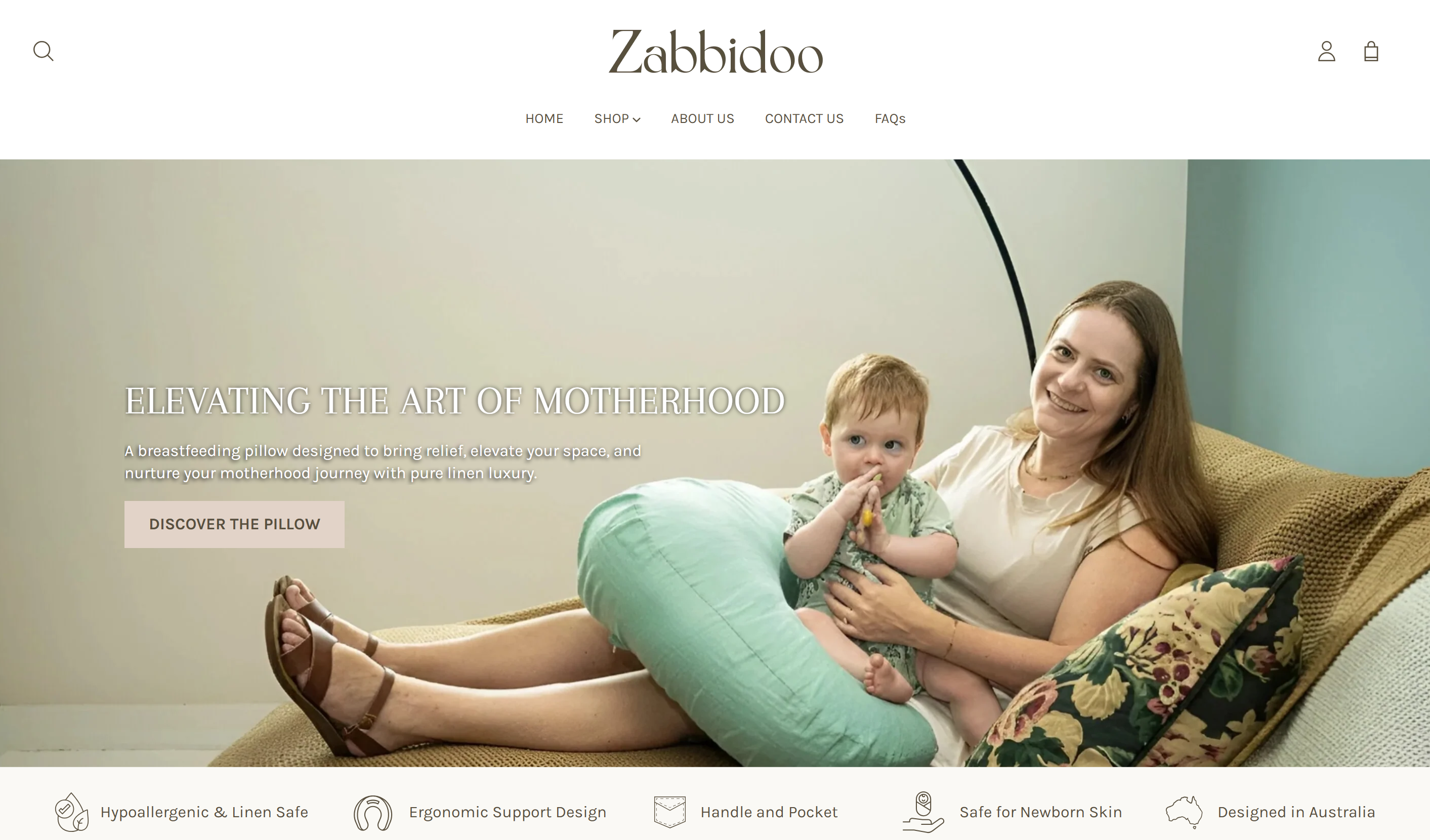
Zabbidoo was designed around a single observation: most nursing pillows collapse exactly when you need them most. The Zabbidoo nursing pillow lifts at 18cm, uses compression-resistant foam, and is covered in French flax linen that stays breathable through Australian summers and washes without losing shape.
For mothers who want to build a complete feeding setup, Zabbidoo’s free pacifier clip chain is a practical addition that keeps a pacifier within reach during feeds without adding clutter. It is the kind of small detail that makes a real difference at 3AM. For more on building a feeding routine that holds up across multiple children, the baby feeding checklist covers the full picture.
FAQ
What is the best nursing pillow height for feeding comfort?
A nursing pillow should lift your baby at least 15–18cm to bring them to breast height without you hunching forward. The Zabbidoo pillow lifts at 18cm, which physiotherapy guidance identifies as the range that reduces neck and shoulder strain.
How does a nursing pillow improve latch?
A firm pillow at the right height positions your baby so they can open wide and latch deeply without you leaning down. Proper positioning reduces nipple pain and supports a more consistent latch across feeds.
What feeding hold is best after a C-section?
The football hold keeps your baby’s weight away from your abdominal incision and is the most comfortable option during C-section recovery. A firm, structured pillow is essential to support your arms and back during this hold, particularly for night feeds.
Can a nursing pillow be used beyond the newborn phase?
Yes. Height-adjustable pillows support tummy time and assisted sitting from around 3–9 months, extending their practical value well beyond the newborn feeding stage.
How do I stop my nursing pillow from slipping during feeds?
Choose a pillow with an adjustable waist strap that fastens securely around your body. A strap that holds the pillow in place prevents slipping during active feeds and reduces the interruptions that break your baby’s latch.