

If your baby dribbles milk during feeds, it most often comes from a fast let-down or oversupply. Poor latch or tongue-tie can cause the same mess, so the two are easy to mix up. Try pre-expressing for 30 seconds before you latch, or shift to an uphill hold, and see whether the dribbling settles within a feed or two.
TL;DR:
- Fast let-down and oversupply often cause milk dribbling, especially in the morning when breasts are fullest, but positioning and pre-expressing can reduce overflow.
- Using a laid-back or side-lying hold, along with gentle breast compressions, effectively slows milk flow without interrupting the feed.
- Relying on routine pumping or frequent expressing can worsen oversupply and should be avoided unless recommended by a healthcare professional.
- Positioning your baby at breast height with proper support makes managing fast flow more comfortable and reduces choking or gagging during feeds.
- Seek professional help if baby shows signs of poor weight gain, persistent feeding issues, or if flow-control techniques do not improve after one week.
Table of Contents
- Why milk dribbles during breastfeeding: causes and signs
- How to control milk flow during a feed
- Managing leaks and supply between feeds
- Best positions and hands-on techniques for fast flow
- When to get professional help for feeding problems
- What to use and what to avoid for leaking milk
- How posture and positioning support easier feeds
- Marietjie’s take on managing milk flow
- A posture-focused option for the feeds you can’t quite settle
- Where to go for more breastfeeding guidance
- Sources
- FAQ
Why milk dribbles during breastfeeding: causes and signs
Two hormones run the whole show. Prolactin builds your milk supply and peaks roughly 30 minutes after a feed, while oxytocin triggers the let-down reflex that actually pushes milk out. Oxytocin acts fast, and it’s easily triggered by a crying baby, the sound of a bottle, or even the thought of feeding time. Stress can shut it down just as quickly, which explains why a calm environment often changes everything.
Overactive let-down and oversupply usually travel together but they’re not identical. Let-down is about the speed and force of milk arriving; oversupply is about the total volume your body makes. A baby can struggle with a fast let-down even when your overall supply is completely normal.
Watch for these signs to work out what’s happening:
- Baby coughs, splutters, or clicks off the breast repeatedly during a feed
- Green, frothy stools instead of the usual mustard yellow
- Baby arches away or pulls off mid-feed, sometimes gulping audibly
- You feel strong tingling or fullness, especially first thing in the morning when supply peaks
Leaking is genuinely most common in the morning, because that’s when your breasts are fullest after the longest gap between feeds.
How to control milk flow during a feed
The goal during any feed is to slow the flow down without cutting the feed short. A few small adjustments make a real difference to how much your baby copes and how much ends up on the towel.
- Pre-express for 30 to 60 seconds into a towel, cloth or milk collector before you latch baby on. This takes the initial force off the let-down.
- Try an uphill or laid-back hold. Recline back with baby tummy-down on top of you, so gravity works against the flow instead of with it.
- Use the scissor hold — two fingers gently pressed above and below the areola — to dial back the force if baby starts spluttering mid-feed.
- Unlatch briefly at let-down, catch the spray in a cloth, then relatch once the initial rush eases.
- Pause for paced burping if baby is gulping air along with milk, then resume once they’ve settled.
Breast compressions help too, especially if baby is tiring or drifting off before the feed is really finished. Gently compress the breast until it softens and baby resumes proper suckling.
Pro Tip: Combine pre-expression with the laid-back hold rather than treating them as separate options. Pairing the two is often more effective than either technique alone, because you’re reducing the volume and slowing the flow at the same time.
Managing leaks and supply between feeds
Between feeds, less intervention is usually the right call. Express only to relieve genuine discomfort or engorgement, never as a routine top-up after every feed. Extra pumping tells your body to make more milk, which is the opposite of what you want if oversupply is the problem.
- Block feeding (offering one breast for a set stretch of hours) can lower supply by letting the feedback inhibitor of lactation build up in the resting breast, but it needs a lactation consultant’s guidance. Done too aggressively it risks blocked ducts or a supply crash.
- A cold compress between feeds eases fullness and takes the edge off leaking.
- Change breast pads often and let skin air out overnight where possible, rather than sealing damp pads against your skin for hours.
Most parents notice leaking settle down naturally as supply regulates, generally somewhere between four and six weeks, though it can take up to three months for some.
Best positions and hands-on techniques for fast flow
Position changes are often more effective than anything you do with your hands, because gravity does the hard work for you.
- Laid-back nursing: recline at 45 degrees or so, baby tummy-down on your chest. Milk has to travel uphill to reach baby’s mouth, which naturally slows delivery and cuts down on choking.
- Side-lying: good for night feeds and for babies who cope better with a horizontal flow rather than a direct downward stream. It also lets excess milk drain out the side of baby’s mouth instead of straight down their throat.
- Upright or koala hold: works well for older babies who can control their own head and swallow more efficiently sitting up.
- Breast compressions: squeeze gently through a feed to keep milk moving without triggering another full let-down.
If you’re feeding in bed or need extra support to hold these positions comfortably, a proper breastfeeding position setup makes it far easier to stay in a laid-back or side-lying hold for the length of a whole feed.
Pro Tip: Try the laid-back hold first if you’re not sure which position to start with. It’s the simplest to set up and solves fast flow for a large share of babies without any extra equipment.
When to get professional help for feeding problems
Most fast let-down and oversupply issues respond to positioning and pre-expression within about a week. If they don’t, or if baby seems more distressed rather than less, it’s time to get it checked rather than keep troubleshooting alone.
- Poor weight gain or fewer wet nappies than expected — get baby assessed promptly by your GP or child health nurse.
- Redness, heat, or fever in the breast — these point to mastitis or a blocked duct and need a GP review, not home remedies alone.
- Persistent clicking or inefficient feeding despite trying different positions — ask about a tongue-tie assessment.
- No improvement after a week of trying flow-control techniques — book in with a lactation consultant for a proper feed observation.
What to use and what to avoid for leaking milk
Breast pads work well as a first line of defence, but change them the moment they’re damp. A pad left sitting against wet skin for hours raises the risk of thrush and skin irritation.
- Milk collectors can catch overflow from the opposite breast during a feed, but use them sparingly. Relying on them constantly can mask a feeding problem you’d otherwise notice, and the added suction pressure has been linked to plugged ducts in some cases.
- Pump only for comfort, not to fully empty after every feed. Full emptying signals your body to keep making more milk than baby needs.
- Pack for outings: a spare towel, extra pads, and a bib for baby cover most leak emergencies. A muslin wrap or reusable liner from a breathable, well-fitting range beats disposable pads that trap moisture.
How posture and positioning support easier feeds
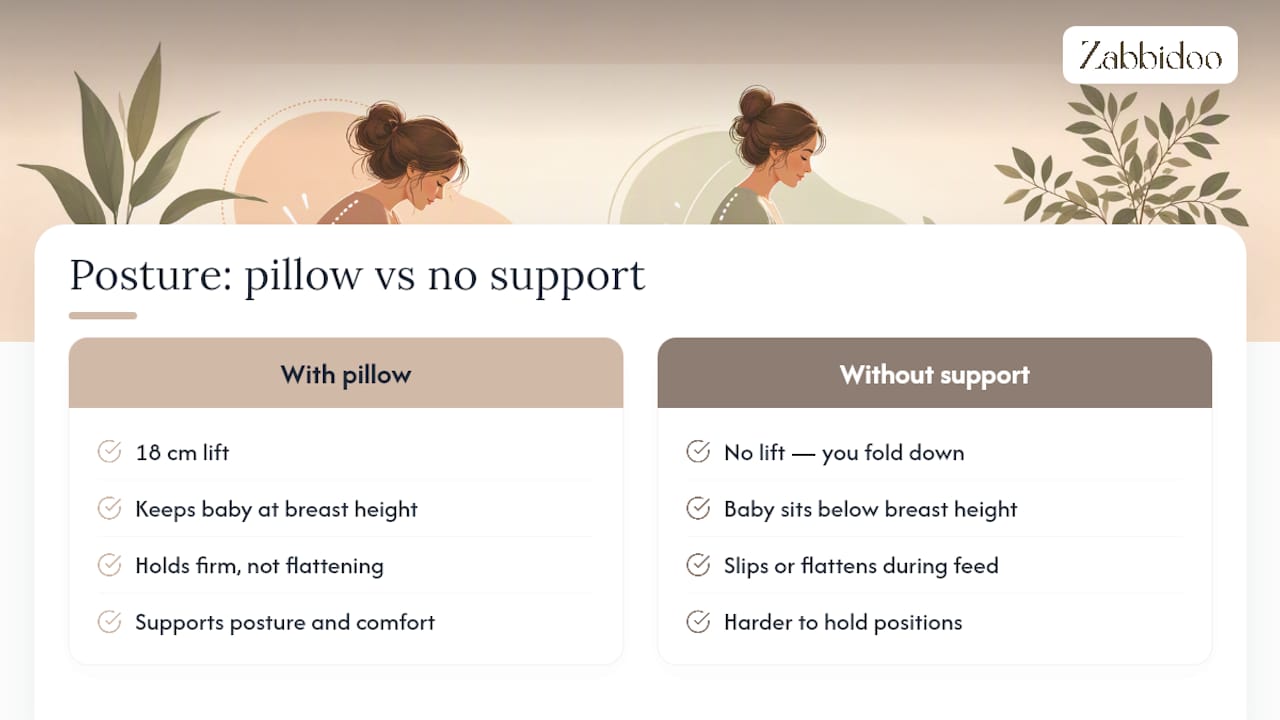
Hunching over a low pillow to bring your body down to baby is a big part of why fast flow feels harder to manage than it needs to be. Lifting baby to breast height, rather than folding yourself down to them, keeps your latch stable and makes a quick relatch after pre-expressing far less fiddly.

That’s the thinking behind a nursing pillow with ergonomic design features: lift to bring baby closer, a stability-focused shape to resist collapsing mid-feed, and a breathable cover that holds up through repeated washes. None of this replaces a proper latch assessment, but a stable, elevated base makes every position in this guide easier to hold.
Marietjie’s take on managing milk flow
Most breastfeeding advice treats leaking as a problem to solve rather than a normal part of early lactation to work around, and that framing does new mothers a disservice. The evidence points somewhere more useful: fast flow and oversupply are almost always manageable with positioning and timing, not a sign something has gone wrong with your body.
Where conventional advice falls short is the pumping reflex. Told their baby is choking on milk, plenty of parents reach for the pump to “sort out” oversupply, which almost always makes it worse. The research is consistent on this: expressing beyond comfort feeds the cycle it’s meant to break.
Prioritise position first, expression second, and products last. A laid-back hold costs nothing and solves the mechanical half of the problem in one move. Pre-expressing solves the timing half. Everything else, from pads to pillows, is support around those two fixes, not a replacement for them.
— Marietjie
A posture-focused option for the feeds you can’t quite settle
Positioning changes solve most fast-flow problems on their own, but holding a laid-back or side-lying position steady through a whole feed, especially at 3am, is genuinely harder without something supporting your arms and baby’s height. That’s the gap Zabbidoo’s nursing pillow is built for: an 18cm lift that brings baby up to breast height instead of you folding down to them, with a shape that holds firm rather than flattening out halfway through a feed.
It’s worth saying plainly: a pillow supports posture and comfort. It won’t fix a tongue-tie or a genuine supply problem, and if weight gain or latch issues are on your mind, see your GP or a lactation consultant first. For everything else, a stable, elevated setup makes the positions in this guide considerably easier to hold night after night. Check sizing and availability on the Zabbidoo nursing pillow page if broken sleep and a slipping pillow are part of your current feeding struggle.
Where to go for more breastfeeding guidance
The Australian Breastfeeding Association covers let-down physiology in depth. RCH’s clinical guideline sets the professional standard for feeding support, and La Leche League offers detailed oversupply management strategies.
Sources
- The let-down reflex and your milk flow | Australian Breastfeeding Association
- Breastfeeding support and promotion — RCH clinical guideline
- Breast Milk Oversupply and Overactive Milk Ejection Reflex — La Leche League International
FAQ
Why does my baby dribble milk when breastfeeding?
It’s usually a fast let-down or oversupply overwhelming your baby’s ability to swallow quickly enough, though a shallow latch or tongue-tie can cause the same overflow.
Does leaking milk mean I have a good supply?
Leaking simply means your let-down reflex is active and responsive to cues, not necessarily that you have more milk than baby needs.
Does leaking milk always mean oversupply?
Not always. Plenty of parents leak with a completely normal supply because oxytocin triggers easily, especially early on before your body settles into a rhythm.
How do I stop milk leaking while breastfeeding?
Pre-express briefly before latching, try a laid-back or side-lying hold, and use breast compressions during the feed. Avoid pumping to fully empty between feeds, since that can increase supply rather than reduce leaking.
When should I worry about milk dribbling during feeds?
Get it checked if baby isn’t gaining weight well, has fewer wet nappies than expected, or if flow-control techniques haven’t helped after about a week of trying.