

Yes, you can breastfeed in bed using side-lying or a semi-reclined laid-back position, as long as you and your baby are both awake and supervised during the feed. Both positions ease strain on your back, shoulders, and wrists, and side-lying is often recommended after a caesarean because it keeps pressure off the incision. Once baby has finished feeding and settled, move them to their own separate sleep surface.
TL;DR:
- Adequate support and proper setup are more critical than position choice, as they reduce tension, improve comfort, and facilitate better milk let-down.
- Using a support that maintains nipple height and resists compression allows for a more relaxed feed, especially during night nursing or in semi-reclined positions.
- Supervised feeding in bed is safe only when both mother and baby are awake, alert, and settled on a firm, separate sleep surface after the feed; unsafe practices include bed-sharing while asleep.
- The laid-back position is especially helpful for moms with fast let-down or oversupply, as gravity slows milk flow and encourages self-attachment.
- Avoid feeding in bed during circumstances like medication use, alcohol, smoking, or prematurity, and always move baby to a firm sleep surface after feeding to ensure safety.
Table of Contents
- Positions to try while lying in bed
- Setting up your bed for comfortable, supported feeds
- Is feeding in bed safe, or is that co-sleeping?
- Getting a good latch while lying down
- Why ergonomic support changes how a feed actually feels
- What actually matters more than picking the “right” position
- A pillow built for the feeds you’re actually doing at 3am
- Sources
Positions to try while lying in bed
Side-lying is the position most new mums picture when they think about feeding in bed, and it earns that reputation. Lie on your side with your ear, shoulder, and hip stacked in a straight line, then bring baby onto their side facing you, tummy to tummy, with their nose level with your nipple. Tuck a rolled towel or small pillow behind baby’s back to stop them rolling away mid feed, and use your free hand to support your breast if needed. If the latch feels wrong, slide your finger into the corner of baby’s mouth to break the seal and try again rather than pulling away.
The laid-back, or “biological”, position works differently. Recline against pillows at roughly a 45 degree angle, lay baby tummy down on your chest in skin-to-skin contact, and let gravity and their own rooting reflexes do the work of finding the breast. You barely need to guide them. This position leans on the same instinctive behaviours newborns use for self-attachment, and many mums find it removes the pressure of “getting the latch right” because baby does more of it themselves.
Each position suits different situations:
- Side-lying is ideal for night feeds, post-caesarean recovery, and when you’re too exhausted to sit upright.
- Laid-back nursing suits mums with a forceful let-down or oversupply, since the reclined angle slows the flow compared with feeding upright.
- Semi-reclined (somewhere between the two, propped on several pillows) works well for larger breasts, where full recline can make it harder to see baby’s face.
Pro Tip: If your milk lets down hard and fast, try laid-back nursing before side-lying. The reclined angle works with gravity instead of against it, so baby isn’t gulping against a firehose.
Setting up your bed for comfortable, supported feeds
Comfort while feeding is not a luxury. Being tense or hunched over baby can actually inhibit milk let-down, so nesting properly matters as much as the position itself.
- Sit or lie against a firm backrest, not a soft headboard that lets you sink and curl forward.
- Place a pillow between your knees if side-lying. It keeps your hips level and takes pressure off your lower back.
- Tuck a rolled towel or firm cushion behind baby’s back for stability so you’re not using your arm as a permanent prop.
- Raise baby to nipple height rather than dropping your shoulder down to them. This is where pillow height matters more than most new mums expect. A flat, squashy pillow collapses under baby’s weight within minutes, forcing you back into the hunch you were trying to avoid.
- Before you start, clear loose blankets and extra pillows from baby’s immediate space, keep a water bottle and burp cloth within reach, and switch on a dim night light so you’re not fumbling in the dark.
Pro Tip: If your shoulders ache after every feed, the pillow is usually the problem, not your posture. A support that keeps its shape under weight saves you from constantly repositioning. Persistent pain is worth addressing properly. Zabbidoo’s guide on shoulder pain relief for breastfeeding mums covers stretches and setup fixes that go beyond just the pillow.
Is feeding in bed safe, or is that co-sleeping?
Feeding baby in bed while you’re both awake and alert is a different act from letting baby sleep on the same surface as you. The distinction matters because the safety advice for each is not the same. A supervised feed, where you’re conscious and responsive, carries a different risk profile to unplanned bed-sharing sleep, and health guidance is consistent on moving baby to their own sleep space the moment the feed is done and they’ve settled.
Avoid feeding in bed altogether if any of the following apply:
- You’re taking sedating medication, have been drinking alcohol, or are extremely sleep-deprived to the point of dozing off.
- You or your partner smokes.
- Baby was born premature or at low birth weight.
- Your bed has heavy quilts, thick doonas, or soft pillows baby could sink into.
After every feed, place baby on their back on a firm, separate sleep surface, clear of pillows and loose bedding. Never tuck baby under a duvet with you, even briefly. If baby seems unusually limp, floppy, or has any difficulty breathing after a feed, treat it as urgent and seek medical help immediately. The NHS’s practical breastfeeding guidance echoes this: supportive setup and a clear head are what make bed feeding workable, not luck.
Getting a good latch while lying down
A deep latch while side-lying comes down to alignment. Keep baby’s nose roughly level with your nipple, not below it, so they tilt their head back slightly and take a big mouthful of breast rather than nibbling the nipple tip. Bring baby to you rather than leaning your body down to them, which is where the hunching and shoulder strain creeps back in.
Common problems and quick fixes:
- Shallow latch or clicking sounds — break the latch, resettle baby with chin buried into the breast first, and try again.
- Baby slipping down the bed — add firmer support behind their back so they can’t drift away mid feed.
- One side not draining well — switch to the football hold adapted for bed (baby tucked under your arm, along your side rather than across your body), which can reach ducts side-lying misses.
- Very sleepy or small newborns — use gentle breast compression to keep milk flowing and prevent them dozing off before they’ve fed properly.
If problems persist beyond a few days, a lactation consultant can watch a feed and troubleshoot in person; to learn more about the nurses who care for newborns and their roles, see Nurses Who Care for Newborns: Roles, Types, and Training. Zabbidoo’s guide on improving baby’s latch walks through the same cues in more depth.
Why ergonomic support changes how a feed actually feels
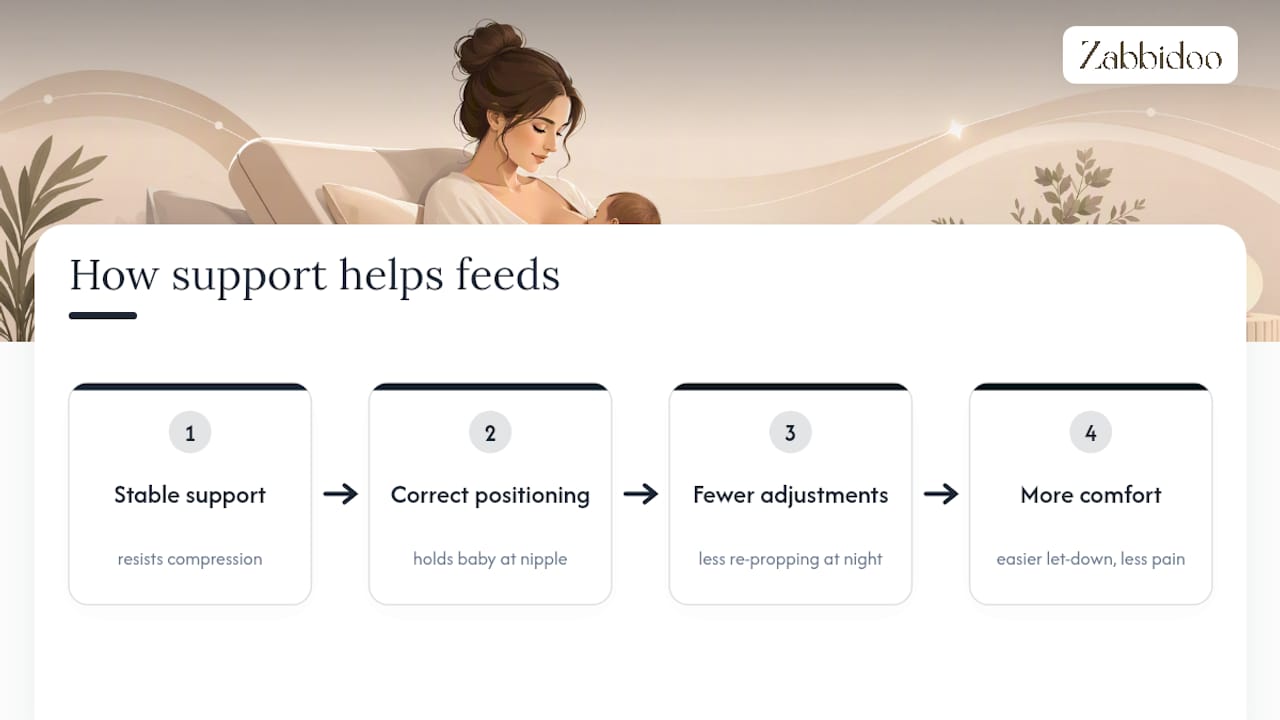
Authoritative guidance from groups like the Australian Breastfeeding Association and the NHS keeps returning to the same point: a relaxed, well-supported body helps let-down happen and keeps feeds from becoming painful marathons. That’s not a minor comfort detail, it’s functional.
A stable, higher-lift support reduces the hunch that so many mums fall into when they’re propping baby up with a flattened pillow or their own tired arm. Positioned correctly under baby during a side-lying or semi-reclined feed, it holds baby at nipple height without collapsing, which means fewer mid-feed adjustments and less repositioning through the night.
A support that resists compression means you set baby up once and it holds, instead of re-propping every few minutes at 3am.
What actually matters more than picking the “right” position
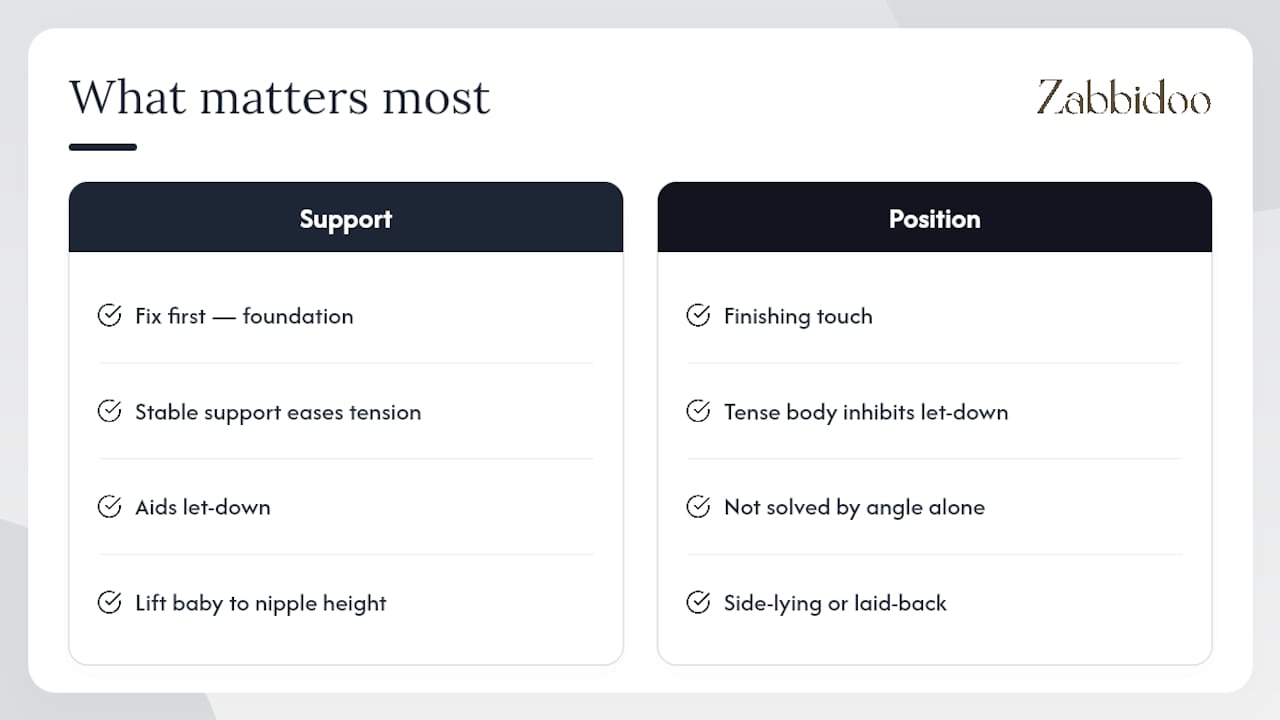
Most guides on this topic treat position selection like the whole answer, as though finding the perfect angle solves everything. It doesn’t. The research consistently points somewhere else: comfort and stable support matter more than which named position you use, because a tense, hunched body inhibits let-down regardless of whether you’re side-lying or laid-back.
Conventional advice tends to hand new mums a diagram of four positions and leave the setup to guesswork. That’s backwards. A mum with a flat, collapsing pillow propping baby up will struggle in any position, while good support underneath baby can make even an imperfect latch angle work well enough.
If you take one thing from this guide, prioritise the setup before the position. Get your back supported, get baby lifted to nipple height without your own effort holding them there, and only then worry about side-lying versus laid-back. Position is the finishing touch. Support is the foundation, and it’s the piece most new mums are never told to fix first.
— Marietjie
A pillow built for the feeds you’re actually doing at 3am
Most nursing pillows are designed for sitting upright in a chair, which is exactly the setup this guide has been steering you away from at night. Zabbidoo’s nursing pillow was built with 18cm of lift specifically so baby comes up to you, instead of you dropping your shoulder down to them. Its compression resistant fill means it holds that height feed after feed rather than flattening out by the second night home.

In a side-lying feed, tuck the pillow behind baby rather than under your own head. It keeps them stable against your chest without you needing to prop with your arm. For semi-reclined feeds, it sits behind your back and shoulders, holding the recline angle so you’re not sliding flat by the end of a long feed. The nursing pillow also doubles for tummy time once feeding settles down, and its French flax linen cover comes off for a wash when things get messy. If shoulder strain or constant repositioning is wearing you down, it’s worth a look on the product page.
Sources
This article is general information, not a substitute for advice from a qualified doctor. Consult a qualified healthcare professional about your own circumstances before acting on anything here.