

Linen is safe for newborn skin and is one of the most recommended natural fabrics for babies with sensitive or eczema-prone skin. Made from flax fibres, linen is naturally breathable, hypoallergenic, and antibacterial and antifungal, which helps reduce the risk of skin infections that are common in newborns. It wicks moisture away from the skin before a baby even feels damp, and it softens with every wash. When sourced with OEKO-TEX Standard 100 or GOTS certification, linen baby clothing is free from harmful chemicals and safe for the most delicate skin.
Is linen safe for newborn skin? What the fabric actually does
Linen comes from the flax plant, making it one of the oldest and most naturally processed fibres in the world. That origin matters because flax requires fewer pesticides and chemical treatments than cotton, which means the raw fibre starts cleaner. For newborn skin fabric safety, that starting point is a genuine advantage.
The standout property of linen is its moisture management. Linen absorbs up to 20% of its weight in moisture before it feels damp against the skin. That capacity is what prevents heat rash, one of the most common skin concerns in newborns. Synthetic fabrics like polyester trap heat and sweat against the skin. Linen pulls moisture away and releases it into the air.
Linen is also naturally hypoallergenic. It does not contain the chemical finishes or dyes that trigger reactions in sensitive skin. Paediatric dermatology guidance highlights that breathable natural fibres like linen help maintain the newborn skin barrier and prevent eczema flare-ups caused by trapped heat and sweat. That is a meaningful distinction from fabrics that feel soft initially but perform poorly in warm conditions.
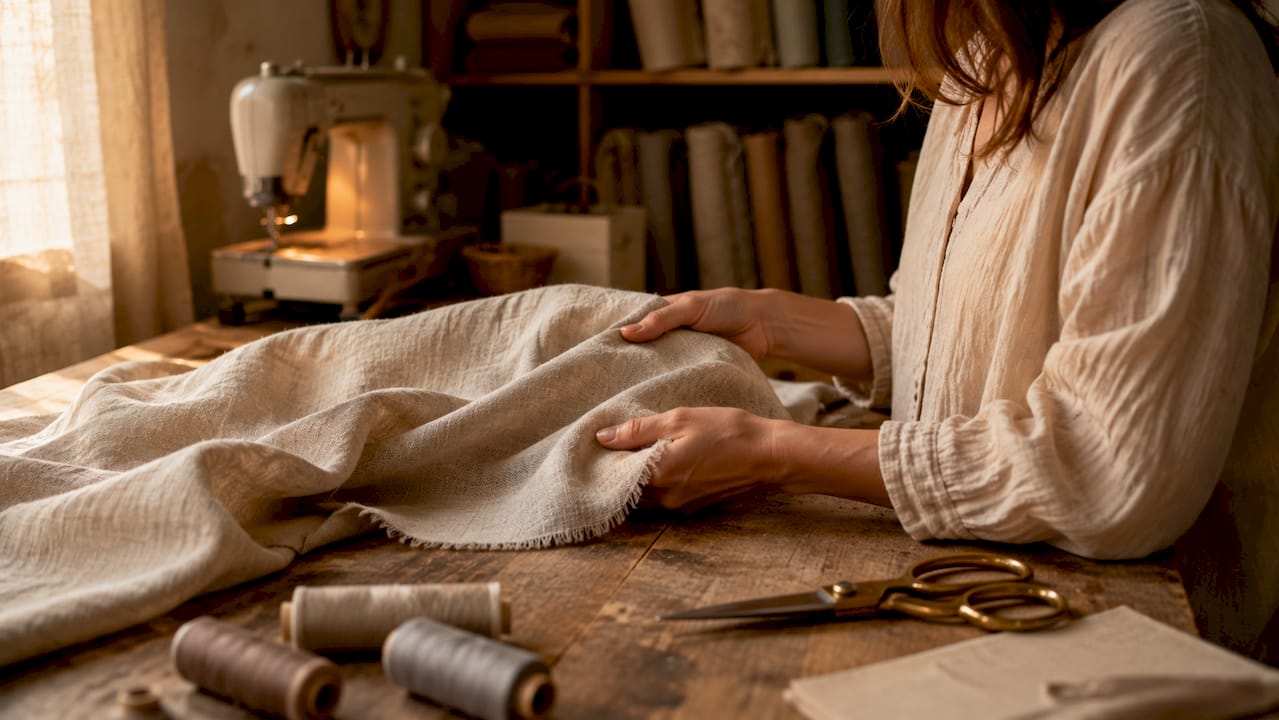
The one genuine drawback of linen is texture. New, unwashed linen can feel stiff or slightly rough. This is not a chemical irritant. It is a physical property of the fibre that resolves with washing. Stone-washed or pre-washed linen is softer from the first wear, and repeated washing cycles continue to improve the feel. For newborns, always choose soft-finished or pre-washed linen to avoid any initial friction against delicate skin.
Key properties of linen for newborn skin:
- Breathable and temperature-regulating, keeping babies cool in warm weather
- Moisture-wicking without feeling damp, reducing heat rash risk
- Naturally hypoallergenic with no synthetic chemical finishes
- Antibacterial and antifungal, reducing infection risk on sensitive skin
- Gets softer with every wash cycle
Pro Tip: Buy pre-washed or stone-washed linen garments for a newborn’s first weeks. Wash them twice before the first wear to maximise softness and remove any residual manufacturing dust.
How does linen compare to other fabrics for newborns?
Choosing the best fabrics for newborns means weighing breathability, texture, moisture management, and chemical safety together. No single fabric wins on every measure, but linen performs well across all four.
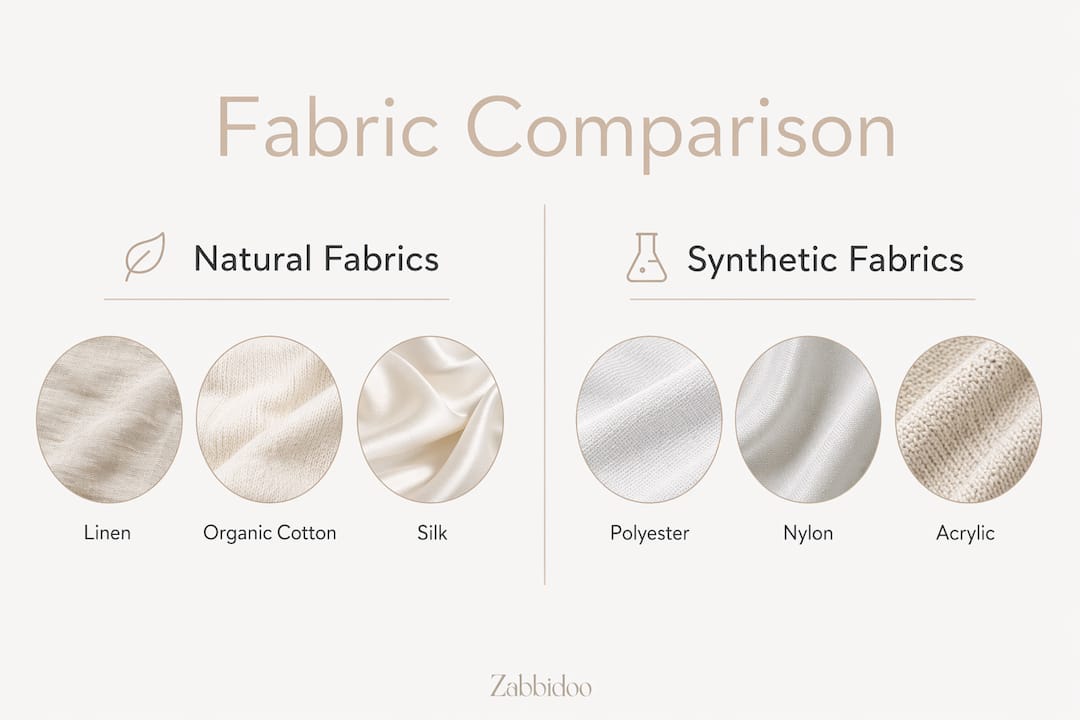
Organic cotton is the most common recommendation for newborns, and it earns that position. It is soft from the first wash, widely available with GOTS certification, and gentle on reactive skin. The gap between organic cotton and linen is texture at the start and performance in heat. Linen outperforms organic cotton in warm or humid conditions because it manages moisture more aggressively. In Australia’s climate, that difference is real.
Silk is the softest natural fibre and is genuinely excellent for babies with severe eczema or reactive skin. The drawback is cost and care requirements. Silk is expensive, hand-wash only, and not practical for daily newborn use. Most parents use silk as a base layer for very sensitive skin rather than as a primary fabric.
Synthetic fabrics like polyester and nylon are the clear last choice for newborn skin. They trap heat, do not absorb moisture, and often contain chemical finishes. The fabric choice between natural and synthetic fibres has a direct impact on newborn skin health and comfort.
| Fabric | Breathability | Moisture-wicking | Hypoallergenic | Softness from new | Durability |
|---|---|---|---|---|---|
| Linen | Excellent | Excellent | Yes | Moderate (improves with washing) | Very high |
| Organic cotton | Good | Good | Yes | Excellent | High |
| Silk | Good | Moderate | Yes | Excellent | Low |
| Conventional cotton | Moderate | Moderate | Variable | Good | Moderate |
| Polyester | Poor | Poor | No | Variable | High |
The table makes the trade-off clear. Linen requires a break-in period but outperforms every other fabric on breathability and moisture management over time. For Australian parents managing warm summers, that performance matters more than initial softness.
What certifications make linen baby products safe?
Certification is the single most reliable way to verify that a linen garment is chemically safe for a newborn. The fibre being natural does not guarantee the finished product is free from harmful substances. Processing, dyeing, and finishing can all introduce chemicals that irritate or harm newborn skin.
OEKO-TEX Standard 100 Product Class I is the benchmark for baby textiles. It tests for over 1,000 harmful substances, including formaldehyde, heavy metals, and pesticide residues. Product Class I is the strictest tier and applies specifically to items that come into direct contact with infant skin. A garment with this certification has been independently tested and verified.
GOTS (Global Organic Textile Standard) adds an organic fibre requirement on top of chemical safety testing. GOTS-certified linen must meet minimum organic fibre content thresholds and comply with strict processing standards throughout the supply chain. For parents who want both chemical safety and environmental assurance, GOTS is the stronger standard.
What to check before buying linen baby products:
- Look for OEKO-TEX Standard 100 Product Class I on the label or product listing
- GOTS certification confirms both organic fibre content and chemical safety
- Avoid garments with no certification and no clear information about dyes or finishes
- Check for physical safety hazards: children’s clothing safety standards require garments to be free from choking hazards, cords, and strangulation risks
- Buttons, drawstrings, and decorative elements on baby clothing carry risks that are entirely separate from fabric safety
Newborn skin is thinner and more permeable than adult skin. Chemicals that sit harmlessly on adult skin can absorb through a newborn’s skin barrier. That is why certification matters more for baby textiles than for any other clothing category.
How to care for linen baby clothes
Proper care keeps linen soft, safe, and long-lasting. The good news is that linen actually improves with washing. The fibres relax and soften over time, which means a well-cared-for linen garment gets better with every cycle.
- Wash before first use. Wash new linen garments at least twice before putting them on a newborn. This removes manufacturing residues and begins the softening process.
- Use a gentle, fragrance-free detergent. Biological detergents work well on linen without damaging the fibre. Avoid detergents with added fragrances or optical brighteners, which can irritate newborn skin.
- Skip chemical fabric softeners. Chemical fabric softeners reduce linen’s natural breathability and leave residues that trigger skin irritation. Linen softens on its own. Softeners work against the fabric’s natural properties.
- Use a gentle or delicate wash cycle. Cool to warm water (30–40°C) is sufficient for most linen baby garments. Hot water can cause shrinkage.
- Line-dry where possible. Air drying preserves fibre integrity and is gentler than tumble drying. Linen absorbs moisture well but takes longer to dry, so plan washing a day ahead to make sure garments are fully dry before use.
- Iron while slightly damp if needed. Linen wrinkles easily. A warm iron on a slightly damp garment smooths it quickly without damaging the fibre.
Pro Tip: For a newborn’s first month, pair a soft organic cotton onesie underneath a linen outer layer. This gives the skin a buffer while the linen garments go through their first few washes and soften up.
What about newborns with eczema or very sensitive skin?
Linen is genuinely beneficial for babies with eczema, but the approach matters. The fabric’s breathability and moisture-wicking properties prevent heat rash and reduce the sweat-triggered flare-ups that make eczema worse. Its natural antibacterial properties also lower the risk of secondary skin infections, which are a real concern for babies with broken skin from scratching.
The texture issue is the one point of caution. Unwashed or stiff linen against already-inflamed skin can cause friction irritation. This is not an allergic reaction to linen. It is a mechanical issue that resolves with pre-washing and softening.
Practical guidance for eczema-prone newborns:
- Always pre-wash linen garments multiple times before first use
- Start with organic cotton or silk base layers against the skin and use linen as an outer layer
- Patch test new fabrics by placing the garment against a small area of skin for a few hours before full use
- Watch for redness, raised skin, or increased scratching as signs of friction rather than allergy
- Consult a paediatric dermatologist if a baby’s eczema is severe or if reactions persist after switching to certified, pre-washed linen
The layering approach is the most practical solution for very reactive skin. Soft organic cotton or silk sits directly against the skin. Linen provides the breathability and moisture management as the outer layer. Over time, as the linen softens with washing, many parents find they can move to linen directly on the skin without any reaction.
Key takeaways
Linen is safe for newborn skin when it is certified, pre-washed, and cared for correctly, making it one of the best natural fabric choices for Australian babies in warm conditions.
| Point | Details |
|---|---|
| Linen is safe for newborns | Certified, pre-washed linen is hypoallergenic, breathable, and free from harmful chemicals. |
| Texture improves with washing | New linen can feel stiff; repeated washing softens fibres naturally without chemical softeners. |
| Certification is non-negotiable | Look for OEKO-TEX Standard 100 Product Class I or GOTS before buying any linen baby product. |
| Layering helps sensitive skin | Use organic cotton or silk as a base layer under linen for babies with eczema or reactive skin. |
| Care affects performance | Skip fabric softeners, line-dry, and wash before first use to keep linen safe and soft. |
My honest view on linen for newborn skin
I have spent a lot of time looking at what actually works for newborns in the Australian climate, and linen keeps coming up as the fabric that performs best where it counts. The breathability is not marketing language. In a warm Sydney summer or a humid Queensland afternoon, a baby in linen stays noticeably cooler and drier than a baby in cotton.
The texture concern is real but overstated. Parents who buy cheap, uncertified linen and put it straight on a newborn without washing it first will have a bad experience. That is a care and sourcing problem, not a linen problem. Pre-washed, OEKO-TEX-certified linen from a reputable brand is genuinely soft enough for a newborn from the first wear.
What I think gets missed in most fabric discussions is the chemical safety angle. The fibre being natural does not mean the finished garment is safe. A linen garment dyed with unregulated dyes and finished with chemical stiffeners is worse than a certified organic cotton garment. Always check the certification, not just the fibre content.
For babies with eczema, I would not go straight to linen against the skin in the first weeks. Start with certified organic cotton or silk as the base layer, use linen as the outer garment, and let the linen soften through washing. By six to eight weeks, most parents find the linen is soft enough to wear directly. The gradual introduction is worth the patience.
— Marietjie
Why Zabbidoo uses French flax linen in its nursing pillow
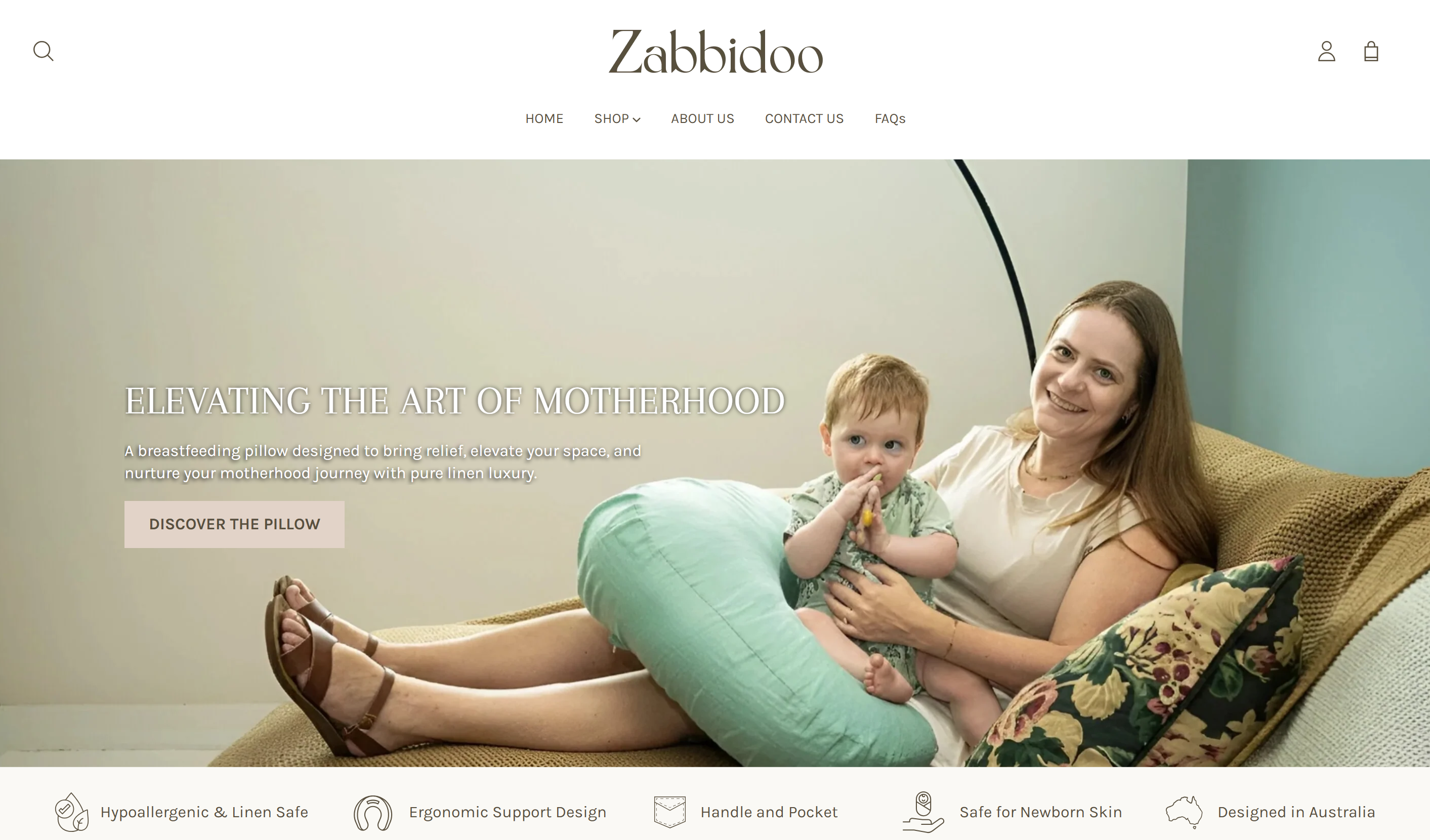
Zabbidoo’s nursing pillow is made with French flax linen for exactly the reasons this article covers. The fabric is breathable, moisture-wicking, and durable enough to hold its shape through the compression of daily feeding sessions. The 18cm lift brings baby up to mum rather than forcing mum to hunch down, and the linen cover keeps both mum and baby cooler during feeds. For parents who have already chosen linen for their baby’s clothing and bedding, the Zabbidoo nursing pillow extends that same fabric safety to feeding time. Zabbidoo also offers a free pacifier clip chain designed with infant safety in mind. Learn more about linen nursing pillows and what makes them a practical choice for new mums.
FAQ
Is linen hypoallergenic for babies?
Linen is naturally hypoallergenic and does not contain the synthetic chemical finishes that trigger skin reactions. It is one of the safest fabric choices for babies with sensitive or eczema-prone skin.
Can newborns wear linen from birth?
Yes, provided the linen is pre-washed, OEKO-TEX Standard 100 Product Class I certified, and soft-finished. Wash new linen garments at least twice before the first wear to remove any residues and begin softening the fibre.
Does linen irritate newborn skin?
New, unwashed linen can feel stiff and cause friction on sensitive skin. This is a texture issue, not an allergic reaction. Pre-washing resolves it. For very reactive skin, layer linen over a soft organic cotton or silk base layer.
What is the best fabric for a newborn with eczema?
Breathable natural fibres like linen, organic cotton, and silk are the best choices for eczema-prone newborns. Linen’s moisture-wicking properties reduce sweat-triggered flare-ups, while its antibacterial properties lower the risk of secondary skin infections.
How do I know if a linen baby product is chemically safe?
Check for OEKO-TEX Standard 100 Product Class I or GOTS certification on the label or product listing. These certifications confirm the garment has been tested for over 1,000 harmful substances, including formaldehyde, heavy metals, and pesticide residues.