

Linen softens with washing because the natural pectin binding its flax fibres gradually dissolves, freeing individual cellulose strands to relax, flex, and realign into a more supple structure. This process, known in textile science as fibre refinement, is not a sign of wear. It is the fabric doing exactly what it was designed to do. Most people notice linen becoming noticeably softer after 3 to 5 washes, with butter-like softness typically reached between the 10th and 20th wash cycle. That timeline matters because it reframes how you think about linen. New linen is not finished linen. It is linen at the beginning of its life.
Why linen gets softer with washing: the chemistry explained
The answer starts inside the flax plant itself. Flax fibres are composed primarily of cellulose, the same structural polymer found in cotton and paper, but they are bound together by pectin, a natural polysaccharide that acts as a biological adhesive. Pectin constitutes approximately 2 to 5% of total flax fibre content, and it is this compound that gives raw linen its characteristic stiffness straight off the bolt.
When you wash linen, water penetrates the fibre bundles and triggers hydrolysis, a chemical reaction that breaks pectin’s molecular bonds. The process accelerates slightly in warm water and in the presence of mild alkaline detergents, which raise the pH enough to weaken pectin’s adhesive grip without damaging the cellulose underneath. Each wash cycle removes a little more pectin, and with each removal, the individual cellulose fibrils gain more freedom to move independently.
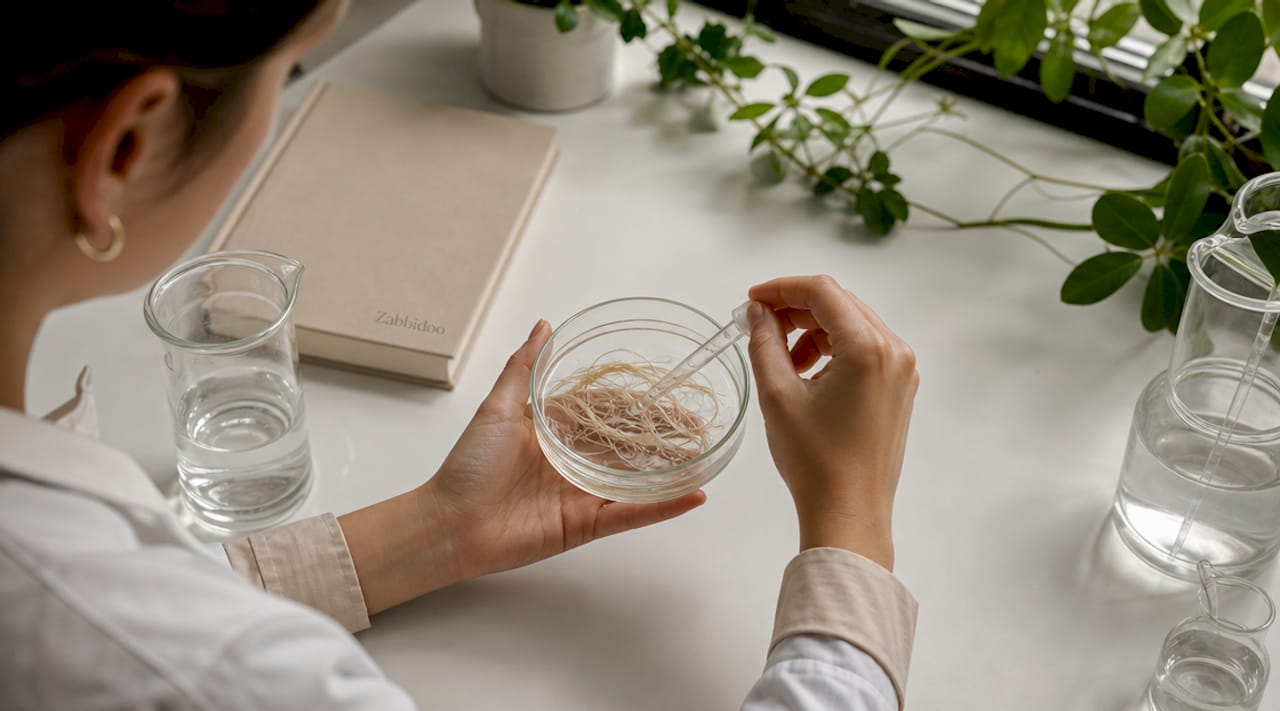
The result is not a weaker fabric. Cellulose itself is highly resistant to hydrolysis under normal washing conditions. What changes is the relationship between fibres, not the fibres themselves. As pectin dissolves, the tightly bound bundles loosen into finer, more flexible strands that catch less light, drape more naturally, and feel softer against skin.
The key chemical factors at a glance:
- Pectin dissolution: Water and mild alkaline detergents hydrolyse pectin bonds progressively with each wash
- Cellulose fibril liberation: Individual fibrils separate from bundles, reducing surface rigidity
- pH sensitivity: Detergents with a pH between 7 and 9 accelerate pectin removal without degrading cellulose
- Water temperature: Warm water (30 to 40°C) speeds hydrolysis while protecting fibre integrity
- Detergent type: Enzyme-based detergents can target pectin directly, mimicking industrial pre-treatment processes
| Factor | Effect on linen softness |
|---|---|
| Pectin content (2 to 5% of fibre) | Higher pectin means stiffer initial feel; removal drives softening |
| Water temperature (30 to 40°C) | Accelerates hydrolysis without damaging cellulose structure |
| Alkaline detergent (pH 7 to 9) | Weakens pectin bonds; neutral detergents work more slowly |
| Enzyme-based detergents | Target pectin specifically, speeding up natural softening |
| Wash frequency | Cumulative pectin removal; softness builds over repeated cycles |
Pro Tip: Use a gentle, enzyme-based detergent for the first five washes of new linen. Enzymes target pectin directly and can noticeably accelerate the softening timeline without any risk to fibre strength.
How agitation and drying physically soften linen fibres
Chemistry explains why linen can soften. Physics explains how each wash cycle actively makes it happen. Mechanical agitation creates permanent flex points along the cellulose structure, while water acts as a plasticiser that allows fibres to shift into more supple configurations as they dry. Together, these two forces work on the fabric at a microscopic level with every cycle.
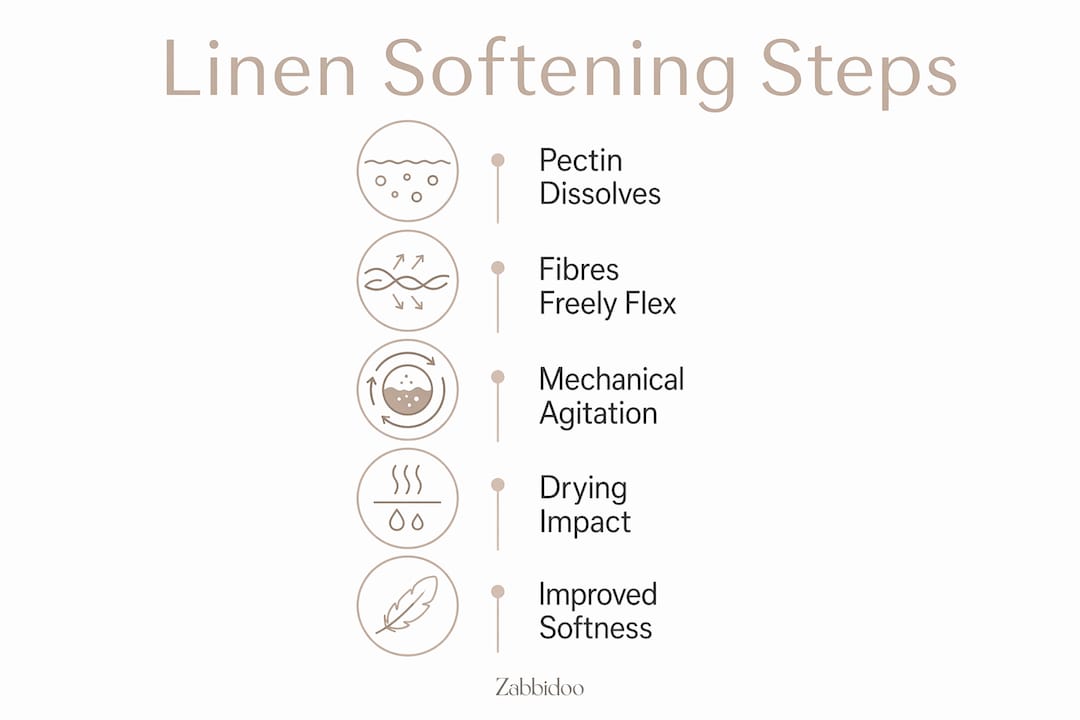
Think of it this way. A new piece of linen has fibres that have never been asked to bend. The first wash forces thousands of micro-bends into the fabric as it tumbles and agitates. Water softens the fibre temporarily, allowing it to flex without snapping. When the fabric dries, those flex points become permanent, and the fibre is now slightly more pliable than it was before. Repeat this 20 times and you have a fundamentally different hand feel.
Here is how to get the most from this physical process:
- Wash on a gentle or delicate cycle. Aggressive spin cycles create uneven stress on fibres and can cause pilling before the fabric has had a chance to soften properly.
- Use warm water, not hot. Heat above 60°C risks making linen brittle over time. The ideal wash temperature sits between 30 and 40°C, where hydrolysis is active but cellulose remains protected.
- Tumble dry on low heat. The gentle tumbling action polishes fibre surfaces and encourages further flex point formation. Remove linen while still slightly damp to reduce stiffness from over-drying.
- Air dry when possible. Hanging linen to dry in a breeze introduces natural movement that mimics agitation without heat stress. This is particularly effective for heavier linen items.
- Skip the ironing when you can. Ironing compresses fibres back into rigid alignment. Wearing or using linen while slightly wrinkled actually contributes to softening faster.
Pro Tip: Toss a couple of clean tennis balls into the dryer with your linen. The physical impact mimics the mechanical agitation of stonewashing and noticeably speeds up surface softening, particularly on thicker weaves.
Linen vs cotton: why linen ages better
Cotton and linen both soften with use, but the mechanism is entirely different, and that difference determines which fabric holds up over years of washing. Cotton softens through fibre thinning and wear, meaning the fibres physically degrade and become thinner with each wash. The softness you feel in a well-worn cotton t-shirt is partly the fabric approaching the end of its structural life.
Linen follows the opposite path. Its long fibres flex and settle over time, maintaining strength while improving softness. This is fibre refinement, not fibre breakdown. The cellulose in flax is inherently stronger than cotton cellulose, and because linen softens by releasing pectin rather than losing fibre mass, the fabric actually becomes more comfortable without becoming weaker.
| Property | Linen | Cotton |
|---|---|---|
| Softening mechanism | Pectin dissolution and fibre refinement | Fibre thinning and gradual wear |
| Fibre length | Long (up to 90cm in high-quality flax) | Short to medium (2 to 5cm) |
| Strength over time | Maintained or improved | Decreases with repeated washing |
| Drape after washing | Improves progressively | Can become limp or thin |
| Lint production | Reduces after initial washes | Consistent throughout lifespan |
| Breathability | Increases as fibres loosen | Relatively stable |
The practical implication is significant. A quality linen sheet or nursing pillow cover bought today will feel better in three years than it does now. A cotton equivalent may feel softer sooner, but it will also show wear sooner. For items that need to perform consistently over time, such as bedding, clothing worn close to the skin, or fabric in nursing products, linen’s ageing profile is a genuine advantage.
Care tips for optimising linen softness and longevity
Getting the most from linen’s natural softening process comes down to a few consistent habits. The fabric rewards patience and gentle handling. It punishes shortcuts.
Washing temperature and cycle settings are the foundation. Wash linen at 30 to 40°C on a gentle cycle. This range activates pectin hydrolysis without stressing the cellulose. Cold water slows the process considerably, and hot water risks brittleness over time.
Avoid fabric softeners entirely. This is the most counterintuitive care tip for linen, but it is critical. Fabric softeners coat fibres with a waxy chemical layer that temporarily mimics softness while actually blocking the natural breathability and absorbency that make linen valuable. Over time, this buildup reduces the fabric’s feel rather than improving it. Linen does not need chemical softeners. It needs water, agitation, and time.
Bleach is equally damaging. Chlorine bleach degrades cellulose directly, accelerating fibre breakdown rather than refinement. For stain removal, use an oxygen-based stain treatment and allow it to soak before washing normally.
Air drying versus tumble drying each have a place in a good linen care routine. Air drying preserves fibre integrity and is ideal for delicate or lightweight linen. Tumble drying on low heat adds mechanical agitation that actively contributes to softening. Alternating between the two methods across wash cycles gives you the benefits of both.
Fibre quality determines the ceiling. Poor softness after 10 to 20 washes commonly indicates lower fibre quality, specifically shorter, coarser flax fibres that have less capacity to refine. High-quality French or Belgian flax linen softens more reliably and produces less persistent lint. When buying linen, origin and fibre length matter more than thread count.
Pre-treated linen, produced through stonewashing or enzyme washing, feels softer from the first use because the manufacturing process has already begun breaking down outer fibre coatings. This is a legitimate shortcut, though the fabric will continue to soften further with home washing regardless of pre-treatment.
Pro Tip: If your linen feels stiff after washing, soak it in lukewarm water with a small amount of white vinegar for 30 minutes before the next wash cycle. Vinegar is mildly acidic and helps dissolve residual pectin and any mineral deposits from hard water, both of which contribute to stiffness.
Key takeaways
Linen softens because pectin dissolves with each wash, freeing cellulose fibres to flex and refine without losing structural strength.
| Point | Details |
|---|---|
| Pectin drives initial stiffness | Natural pectin (2 to 5% of flax fibre) binds fibres tightly; washing dissolves it progressively. |
| Softening is refinement, not wear | Linen fibres adapt and flex over time, maintaining strength while improving feel. |
| Temperature matters | Wash at 30 to 40°C to activate hydrolysis without damaging cellulose structure. |
| Avoid fabric softeners | Chemical coatings block breathability and impede linen’s natural softening process. |
| Fibre quality sets the ceiling | High-quality French or Belgian flax softens more reliably than short-fibre alternatives. |
Linen’s softening is a feature, not a flaw
I have handled a lot of linen over the years, and the question I hear most often from people new to the fabric is some version of “when does it stop feeling scratchy?” The honest answer is that the question itself reveals a misunderstanding. Linen’s initial firmness is not a defect waiting to be corrected. It is the starting point of a process that most synthetic fabrics cannot replicate at all.
What strikes me most about linen’s softening as a patina is how it rewards use rather than care alone. You cannot rush it with the right detergent or the perfect drying technique. You can support it, but the fabric needs to be lived in. That is a genuinely unusual quality in a world where most textiles peak on the shelf and decline from first use.
The misconception I push back on hardest is the idea that very soft linen must have been worn down or thinned out. It has not. The strength and softness develop together in quality linen. A 10-year-old piece of well-washed French flax linen is both softer and structurally sounder than most new synthetic alternatives. That combination is rare, and it is worth understanding before you dismiss linen as “too stiff” after the first wash.
My practical advice: buy the best flax origin you can afford, wash it correctly from the start, and give it at least 10 cycles before you judge it. The fabric you end up with will be worth the patience.
— Marietjie
Why Zabbidoo uses premium linen in its nursing pillow
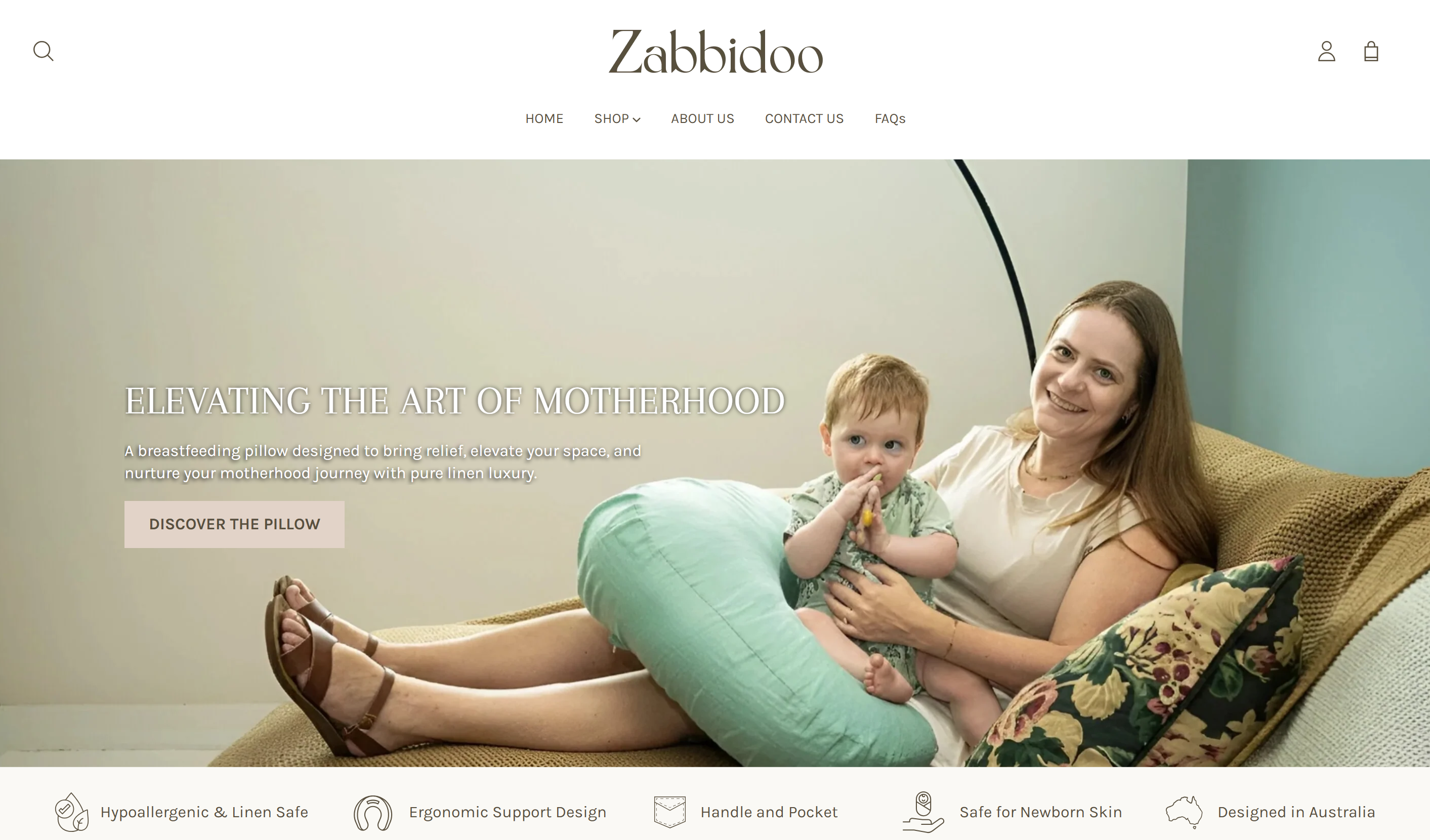
Zabbidoo’s nursing pillow is covered in French flax linen precisely because of everything described in this article. The fabric starts firm and breathable, then softens with every wash into something genuinely comfortable against a newborn’s skin and a new mum’s arms. That is not a marketing claim. It is the chemistry of flax fibres doing what they do best over time.
For mums who are feeding multiple times a day, a cover that gets softer with use rather than worn out by it is a meaningful difference. Zabbidoo’s linen nursing pillow is designed to support proper feeding posture with an 18cm lift, and the linen cover is built to improve alongside the pillow through months of daily use. Explore the full nursing pillow range at Zabbidoo and see how linen nursing pillows deliver comfort that genuinely grows with your family.
FAQ
Why is linen stiff when new?
New linen is stiff because natural pectin, which makes up 2 to 5% of flax fibre content, binds the cellulose fibres tightly together. This pectin dissolves gradually through washing, releasing the fibres and reducing stiffness.
Does washing make linen softer or does it damage it?
Washing makes linen softer through fibre refinement, not fibre damage. Unlike cotton, linen fibres flex and adapt with each wash cycle rather than thinning or breaking down, so softness and strength improve together.
How many washes does linen need to feel soft?
Most people notice a clear difference after 3 to 5 washes, with linen reaching its softest feel between the 10th and 20th wash cycle. Higher-quality French or Belgian flax linen softens more reliably than short-fibre alternatives.
Should I use fabric softener on linen?
No. Fabric softeners coat linen fibres with a waxy residue that blocks breathability and absorbency without genuinely softening the fabric. Over time, this buildup can make linen feel worse, not better.
Why does pre-washed linen feel softer straight away?
Pre-washed or stonewashed linen has been treated during manufacturing to mechanically or chemically break down outer fibre coatings before sale. This accelerates the softening process, though the fabric will continue to improve further with regular home washing.