

French flax linen is linen fabric woven from flax plants grown primarily in the Normandy region of France, and it is the benchmark for quality in home textiles worldwide. France supplies over 80% of the world’s high-quality linen fibre production. That dominance comes from Normandy’s unique combination of cool temperatures, Atlantic rainfall, and rich soil, which produces flax with exceptional fibre length and tensile strength. What makes this fabric worth understanding is not just its origin story. The term “French linen” is often used loosely in marketing, and knowing what it actually means helps you buy with confidence.
What is French flax linen and how does it differ from regular linen?
French flax linen is defined by where the flax is grown, not where the fabric is made. Flax fibre is a bast fibre extracted from the stems of the flax plant. Linen is the finished fabric produced by spinning and weaving those fibres. The distinction matters because the same flax fibre can be spun into linen in France, Portugal, China, or anywhere else entirely.
Regular linen may use flax grown in Eastern Europe, China, or other regions. French flax fabric, by contrast, originates from plants cultivated under specific climatic conditions that produce longer, finer fibres. Those longer fibres translate directly into smoother, stronger, and more lustrous fabric. The terroir of Normandy, much like wine regions, genuinely affects the end product.
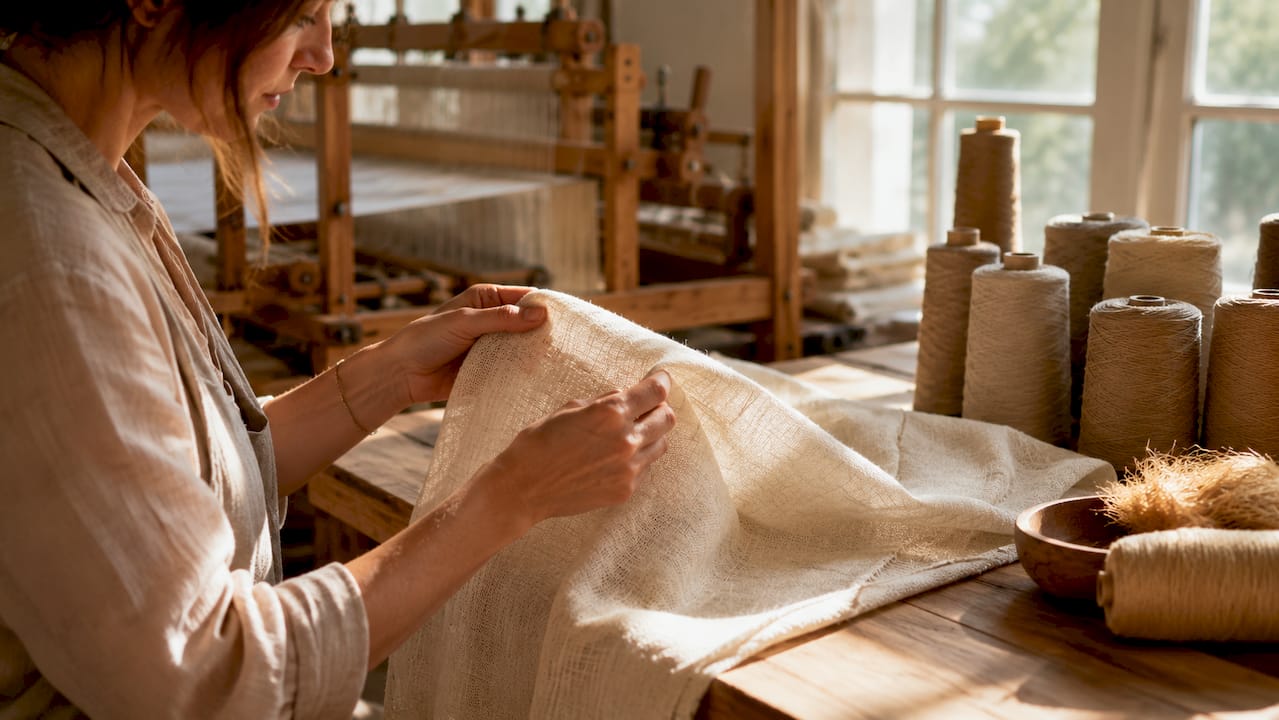
The term ‘French linen’ can be misleading because spinning, weaving, and finishing are often completed outside France. A product labelled “French linen” may only mean the raw flax was grown in France. Fully “Made in France” linen, where every production step occurs locally, is far rarer and commands a significant price premium.
How is French flax linen made, from field to fabric?
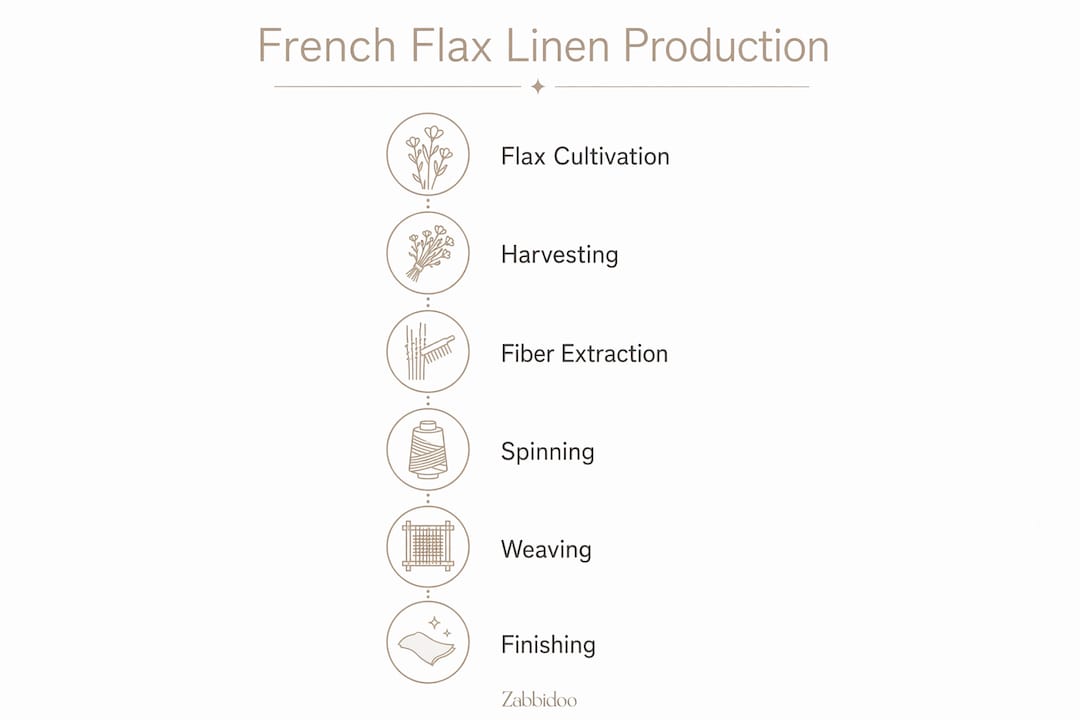
The production of French flax linen follows a precise sequence, and each stage shapes the final fabric’s quality.
- Cultivation. Flax is sown in spring across Normandy’s fields. Flax requires no artificial irrigation and minimal pesticides, relying instead on the region’s natural rainfall. The entire plant is used after harvest, leaving virtually no waste.
- Crop rotation. Flax is grown on a sustainable rotation cycle of 6–7 years, which renews the soil and reduces the need for chemical inputs. This practice is a core reason French flax linen carries strong sustainability credentials.
- Harvesting and retting. Flax is pulled from the ground (not cut) to preserve the full fibre length. The stems are then left in the field for several weeks in a process called dew retting, where natural moisture and microorganisms break down the outer stalk and release the inner fibres.
- Scutching and hackling. Machines separate the long line fibres from the shorter tow fibres. Hackling combs the fibres into parallel alignment, preparing them for spinning.
- Spinning and weaving. Fibres are spun into yarn and then woven into fabric. This stage most commonly occurs in mills across Europe, though some production moves to Asia. The weave structure and thread count affect the fabric’s weight, texture, and drape.
- Finishing. Fabric may be washed, stonewashed, or enzyme-treated to soften the initial crispness. Pre-washed linen is ready for immediate comfort without sacrificing durability.
Premium French linen quality depends not only on flax origin but also on GSM (grams per square metre) and craftsmanship. Higher GSM means heavier, denser, and more durable fabric. Lower GSM suits lighter applications like summer bedding or clothing.
Pro Tip: When buying French flax bedding, look for a GSM between 150 and 200 for a balance of softness and durability. Anything below 120 GSM may feel thin and wear quickly.
What are the benefits of French flax linen for home textiles?
French flax linen outperforms most natural fibres in everyday home textile use. Its advantages are practical, not just aesthetic.
- Breathability and moisture management. Linen fibres absorb up to 20% of their weight in moisture without feeling damp. That capacity makes French flax bedding genuinely cooling in warm weather and comfortable year-round. For comparison, cotton absorbs moisture but holds it closer to the skin, which can feel clammy.
- Durability that improves with age. Flax fibre is one of the strongest natural fibres available. French flax linen becomes softer and more supple with every wash, not weaker. The science behind linen softening is well documented: repeated washing gradually relaxes the fibre structure without breaking it down.
- Natural temperature regulation. The hollow structure of flax fibres allows air to circulate freely. This makes French flax fabric cooler in summer and less clammy than synthetic alternatives in winter.
- Low environmental impact. Flax cultivation uses no irrigation and minimal pesticides, and the entire plant is utilised. This makes flax linen sustainability credentials among the strongest of any textile fibre.
- Hypoallergenic properties. Flax linen is naturally resistant to bacteria and allergens, making it a sound choice for sensitive skin. This is particularly relevant for linen used near newborn skin, where fabric safety matters most.
- Natural wrinkling as a feature. Flax fibre has low elasticity, which causes linen to wrinkle easily. This is not a defect. The relaxed, lived-in texture is a recognised hallmark of genuine natural fibre, and it improves with use.
When comparing flax linen vs cotton, linen wins on breathability, durability, and environmental footprint. Cotton is softer from the start and easier to care for, but it does not match linen’s longevity or moisture performance over time.
How can you assess authenticity and quality in French flax linen?
Buying genuine French flax linen requires reading labels carefully and knowing what questions to ask.
Understanding fibre origin vs manufacturing location
The most common misconception is that “French linen” means the fabric was made in France. French flax and French linen are not synonymous with “Made in France.” A product can legitimately use French-grown flax while being woven and finished in another country entirely. Neither option is inherently inferior, but the distinction affects both price and traceability.
Genuine premium French flax linen products will state the fibre origin clearly. Look for phrases like “flax grown in Normandy” or “European flax” on the label. Vague descriptions like “natural linen” or “linen blend” offer no fibre origin information at all.
What GSM tells you about quality
GSM is the most reliable objective measure of linen fabric weight and durability. Higher GSM corresponds to heavier, denser, and more durable linen, preferred for upholstery or long-lasting textiles. Lower GSM suits lighter uses like summer sheets or clothing. A product that does not list its GSM is giving you less information than you need to assess value.
Certifications worth looking for
The OEKO-TEX Standard 100 certification confirms that a fabric has been tested for harmful substances. The European Flax label, issued by the Confédération Européenne du Lin et du Chanvre (CELC), certifies that flax was grown and processed in Western Europe under strict environmental standards. These marks are not guarantees of “Made in France” production, but they confirm fibre traceability and responsible processing.
Pro Tip: Ask the retailer directly where the flax was grown and where the fabric was woven. A reputable seller will answer both questions without hesitation. Evasive answers are a red flag.
How to care for French flax linen to keep it at its best
French linen care tips are straightforward, but a few common mistakes shorten the life of even the best fabric.
- Wash in cool or warm water. Machine washing at 30–40°C preserves fibre integrity. Hot water causes linen to shrink and weaken over time. A gentle cycle is sufficient for most household linen.
- Skip the fabric softener. Fabric softeners coat linen fibres and reduce their natural breathability and moisture-wicking ability. French flax linen softens naturally with washing. Chemical softeners work against this process.
- Tumble dry on low or line dry. High heat damages flax fibres. Remove linen from the dryer while still slightly damp to reduce wrinkling and make folding easier.
- Embrace the wrinkles. Linen wrinkles are a sign of natural fibre, not poor quality. If a smooth finish is preferred, iron on a medium setting while the fabric is still slightly damp. Steam helps.
- Store loosely folded in a dry, ventilated space. Avoid plastic storage bags, which trap moisture and can cause mildew. Natural cotton or linen storage bags are the better option.
- Wash before first use. Pre-washing removes any residual processing agents and begins the softening process. Most French flax bedding and textiles are noticeably softer after the first two or three washes.
The care routine for what is flax bedding is genuinely low-maintenance once you understand the fibre. Linen does not need special detergents or delicate handling. It needs consistent, gentle washing and patience as it breaks in.
Key takeaways
French flax linen is defined by its fibre origin in Normandy, its exceptional breathability and durability, and its sustainability credentials that no synthetic fabric can match.
| Point | Details |
|---|---|
| Fibre origin defines quality | French flax linen uses flax grown in Normandy, which produces longer, finer fibres than most other regions. |
| “French linen” is not “Made in France” | Spinning and weaving often occur outside France; check labels for both fibre origin and manufacturing location. |
| GSM is your quality guide | Higher GSM means heavier, more durable fabric; look for 150–200 GSM for everyday home textiles. |
| Wrinkling is a feature | Natural wrinkling confirms genuine flax fibre and improves with use; it is not a defect. |
| Care is simple | Wash cool, skip fabric softener, and line dry to preserve breathability and extend the fabric’s life. |
Why French flax linen is misunderstood more than any other fabric
I have spent years watching buyers make the same mistake: they see “French linen” on a label and assume they are getting something made entirely in France. The reality is far more nuanced, and the industry does very little to clarify it.
The fibre origin genuinely matters. Normandy flax is not marketing mythology. The climate and soil there produce measurably longer fibres, and longer fibres mean stronger, smoother fabric. But the story does not end at the field. A beautifully grown French flax can be spun into mediocre fabric if the weaving and finishing are careless. GSM, weave structure, and finishing quality all shape what you actually sleep on or wrap around your baby.
What I find most interesting is the wrinkle debate. Buyers trained on polyester-cotton blends often see linen’s natural texture as a flaw. It is the opposite. That relaxed, slightly rumpled surface is proof that no synthetic fibre or chemical treatment is doing the work. The fabric is breathing, moving, and ageing the way natural materials are supposed to. Once you stop fighting the wrinkles and start appreciating them, linen becomes one of the most satisfying textiles you will own.
My practical advice: buy from brands that state both the flax origin and the manufacturing location. Ask about GSM. And give any new linen piece at least three washes before you judge it. The fabric you have after wash three is the fabric you actually bought.
— Marietjie
Zabbidoo’s approach to natural fabric quality
French flax linen is not just a premium textile choice. It is a practical one, especially when comfort and breathability matter most.
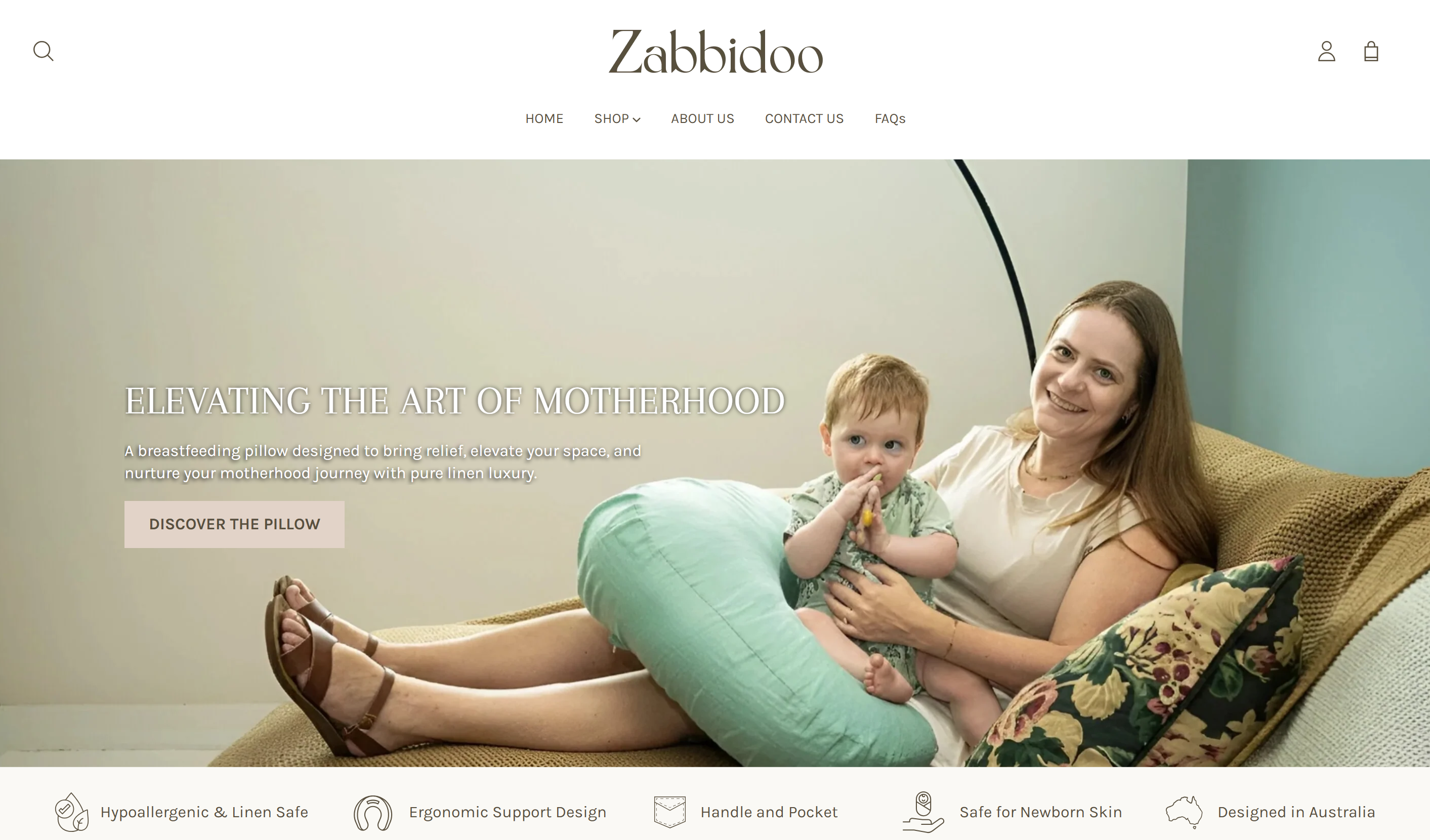
Zabbidoo’s nursing pillow uses French flax linen as a core material precisely because of the properties covered in this guide: breathability, durability, and natural softness that improves with every wash. For mums spending long hours feeding, the fabric in contact with both mum and baby is not a minor detail. It is central to the experience. Zabbidoo builds products around materials that perform, and French flax linen meets that standard. If you are looking for a nursing pillow that combines ergonomic support with premium natural fabric, the Zabbidoo nursing pillow is worth a close look.
FAQ
What is French flax linen made from?
French flax linen is made from the fibres of flax plants grown primarily in Normandy, France. The fibres are extracted from the plant stems, spun into yarn, and woven into fabric.
Is French linen the same as “Made in France” linen?
No. “French linen” typically refers to linen made from French-grown flax, but weaving and finishing often occur in other countries. Fully Made in France linen, where every production step happens locally, is significantly rarer and more expensive.
How does French flax linen compare to cotton?
French flax linen is more breathable, more durable, and more sustainable than cotton. Cotton is softer from the outset, but linen surpasses it in moisture management and longevity after repeated washing.
Why does French flax linen wrinkle so much?
Flax fibre has low elasticity, which causes linen to crease easily. This is a natural characteristic of the fibre, not a quality defect. The wrinkled texture is widely considered a sign of genuine natural linen.
How do I know if French flax linen is genuine?
Check the label for a stated fibre origin such as “Normandy flax” or “European flax,” and look for certifications like OEKO-TEX Standard 100 or the European Flax label. A reputable seller will also confirm the GSM and manufacturing location on request.