

The single most useful item for a portable nursing setup is a supportive, compact nursing pillow that gives you proper height and stability without slouching. Pack this alongside nappies, wipes, an insulated milk bag with ice bricks, a spare top, and quick-clean wipes for pump parts. You have the legal right to breastfeed in public wherever you are, so there’s no need to hunt for a baby care room unless you’d simply prefer one.
TL;DR:
- Proper support and height are critical; an 18cm lift helps prevent neck and back pain during long feeds.
- A compression-resistant pillow that maintains shape under a baby’s weight improves stability and comfort on the go.
- Labeling and separating fresh and used milk in an insulated bag reduce contamination risks and streamline storage management.
- Prioritizing ergonomics over gear quantity ensures easier feeding and reduces fatigue, especially when using supportive pillows.
- Carrying hydration and snacks is essential, as dehydration and low energy impair feeding success and overall comfort during outings.
Table of Contents
- What goes in a portable nursing setup checklist?
- How do you choose a portable nursing pillow that actually works?
- Quick setups: three ways to nurse comfortably away from home
- How long can you keep expressed breastmilk safe on the go?
- Keeping portable nursing gear clean between feeds
- Why ergonomics matter more than convenience alone
- Managing your own nutrition and hydration on the move
- What actually matters when you’re nursing away from home
- How Zabbidoo fits into your portable nursing setup
- Sources
- FAQ
What goes in a portable nursing setup checklist?
A good portable nursing setup comes down to five categories: support, milk transport, feeding accessories, personal comfort, and organisation. Miss one and you’ll feel it halfway through a feed in a car park.
- Nursing pillow or arm pad — look for a lightweight design with a carry handle or one that folds flat enough to slide into a nappy bag.
- Milk transport — an insulated bag, two ice bricks, and bottles or bags labelled with date and time.
- Feeding accessories — a manual or small wearable pump, spare teats, and breast pads for leaks.
- Cleaning supplies — sanitising wipes for pump parts when there’s no sink nearby.
- Parent comfort — a water bottle, a spare top, and a small foldable seat cushion if you’re prone to long feeds on hard benches.
- Organisation — a dedicated pouch or caddy so you’re not digging through nappies to find a bottle.
Pro Tip: Pack milk supplies and soiled items in separate insulated compartments. It stops cross-contamination and makes sorting things out at home much faster.
How do you choose a portable nursing pillow that actually works?
Height matters more than most parents expect. A pillow that sits too low forces you to hunch forward and round your shoulders to reach your baby, which is exactly the posture that causes neck and lower back pain after weeks of feeding. Zabbidoo’s own nursing setup guide uses an 18cm lift as its ergonomic benchmark, on the logic that bringing baby up to breast height is easier on your body than bending down to baby.
Compression resistance is the second thing to check. Cheaper pillows flatten under a baby’s weight within minutes, and once that happens you’re back to repositioning every few minutes. Press down on a pillow in-store, or check the product description for fill type. A pillow that springs back holds its shape through a 40-minute feed.
Size and support need to balance out too. The smallest pillow that still holds your baby at breast height without sinking is the one to pack. Bulkier isn’t better once you’re trying to fit it under a pram or into a car boot.
- Breathable, machine-washable covers dry fast and matter more on multi-day trips than they do at home.
- Hypoallergenic fabric such as flax linen reduces irritation for babies with sensitive skin.
- A built-in handle or strap keeps the pillow secure when you’re moving through an airport or car park, not just sitting on a couch.
Quick setups: three ways to nurse comfortably away from home
1. In the car. Park somewhere level and quiet, tilt the seat back slightly, and rest the pillow across your lap for extra height. Keep baby’s capsule within reach so you’re not twisting to lift them across.
2. In a café or indoor space. Choose a seat with arms if you can, since they take pressure off your shoulders. Set the pillow on your lap, keep your caddy on the table within arm’s reach, and angle your body slightly away from foot traffic if you’d rather feed discreetly.
3. Outdoors or at the park. A foldable mat or seat pad protects you from damp grass, and shade matters more than most parents plan for. Keep the insulated milk bag out of direct sun and tucked under the pram if you’re not feeding straight from the breast.
Pro Tip: Run through a three-step mental checklist before every feed: stop somewhere safe, set your pillow and caddy up, then feed. It sounds obvious, but skipping the “set” step is where most spills and fumbles happen.
How long can you keep expressed breastmilk safe on the go?
Freshly expressed breastmilk stays safe at room temperature for about 6 to 8 hours depending on conditions, and up to 72 hours in a fridge.
Heat, humidity, and how long the bottle’s been open all affect that window, so treat 6 to 8 hours as the upper limit, not the guaranteed one. Label every bottle or bag with the date and time expressed. Once milk has thawed, use it within 24 hours and never refreeze it.
- Carry an insulated bag with ice bricks whenever you’re travelling without guaranteed fridge access.
- Rotate stock so older milk gets used first.
- For longer trips, pack a separate compartment for fresh milk versus used bottles.
Keeping portable nursing gear clean between feeds
You don’t need a full kitchen setup to keep gear hygienic on the move. Quick-clean wipes work well on pump parts when a sink isn’t nearby, but give everything a proper wash with warm soapy water once you’re home.
- Wipe down pillow covers and let them air dry fully before storing to avoid mildew.
- Wash machine-washable covers weekly, or more often if there’s spit-up or leaks.
- Store gear in a breathable pouch rather than a sealed plastic bag, which traps moisture and odour.
Why ergonomics matter more than convenience alone
A higher lift does more than look good in product photos. Bringing your baby closer to breast height means you’re not curling your spine forward for 20 to 40 minutes at a stretch, which is where most feeding-related back and neck pain starts. Zabbidoo’s ergonomics guide points to a simple posture check you can run through mid-feed: feet flat, shoulders relaxed, baby at nipple level, one hand lightly supporting their head.
Compression resistance ties into this directly. A pillow that holds its shape gives you a stable surface for the whole feed, which means less repositioning and less frustration when you’re already tired. Height and stability together are what let you nurse in a café chair the same way you’d nurse at home.

Managing your own nutrition and hydration on the move
Feeding a baby well starts with feeding yourself properly, something easy to forget when you’re juggling nappy bags and pram wheels. Breastfeeding increases your fluid needs, and dehydration shows up fast as fatigue and a drop in energy, right when you need both for a day out.
Carry a refillable water bottle in your caddy and treat it as non-negotiable, not an afterthought. Aim to drink a glass of water at every feed. If you’re out for more than a couple of hours, pack portable snacks that don’t need refrigeration: nuts, muesli bars, dried fruit, or a sandwich if you know you’ll be out through a mealtime.
Skipping meals because you’re focused on the baby is common and it catches up with you by mid-afternoon. Pack food before you leave the house, not after you’ve already noticed you’re running low on energy. A small insulated lunch pouch alongside your milk storage bag solves this without adding much bulk to what you’re already carrying.

Travel days throw your usual eating rhythm off, so build in buffer time for a proper meal rather than grabbing whatever’s fastest. The ABA’s advice on travelling with a breastfed baby frames comfort and low stress as the biggest factor in successful feeding away from home, and your own hunger and thirst are part of that equation, not separate from it.
What actually matters when you’re nursing away from home
Most advice on portable nursing setups focuses on the gear list and skips the posture problem entirely. That’s backwards. A bag full of the right items doesn’t help if the pillow you’re using forces you to hunch over a car seat for 30 minutes. Ergonomics should come first, and the packing list should follow from it.
The conventional wisdom also oversells how complicated milk storage needs to be. You don’t need a cold chain worthy of a hospital. You need an insulated bag, two ice bricks, and a habit of labelling bottles, and the numbers from the Australian Breastfeeding Association back that up.
If you take one thing from this guide, prioritise height and stability in whatever you’re feeding on, whether that’s a pillow, an arm pad, or a folded jacket in a pinch. Everything else in the checklist is genuinely useful, but it’s the support under your baby that decides whether feeding away from home feels manageable or exhausting.
— Marietjie
How Zabbidoo fits into your portable nursing setup
Zabbidoo built its pillow around the exact criteria this guide walks through: an 18cm lift so you’re not hunching over the car seat or a café chair, compression-resistant fill that holds its shape through a full feed, and a breathable, machine-washable French flax linen cover for easy care between trips.
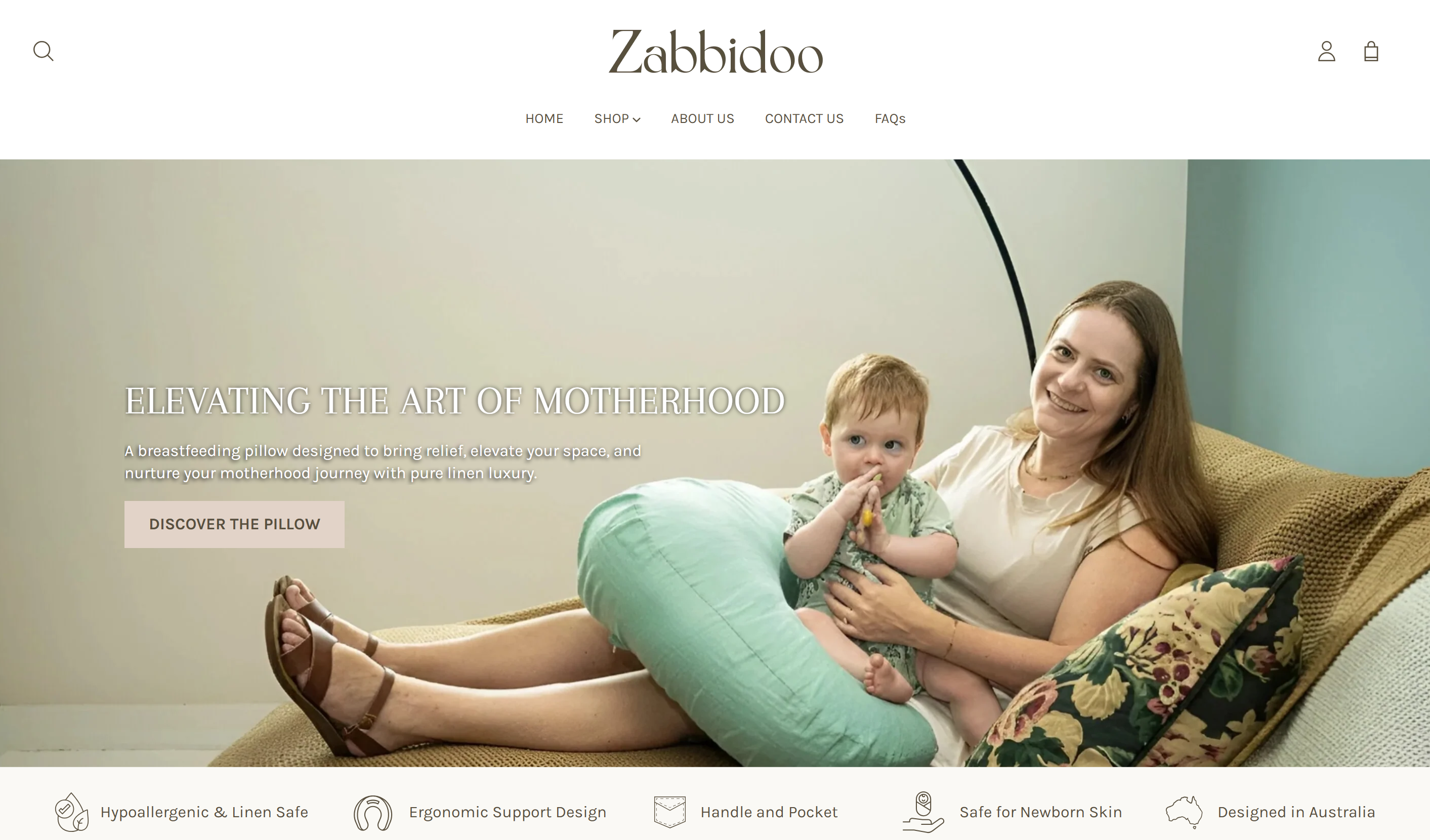
It comes with a built-in handle and pocket, which means it doubles as a grab-and-go bag insert rather than one more bulky item competing for boot space. Whether you’re feeding in the car between errands, settling into a café booth, or setting up a small nursing station at home, the same pillow does the job without needing a second setup for travel. The Nursing Pillow is $249 one off, and you can check full details and order it directly through Zabbidoo.
FAQ
How long can expressed breastmilk sit out before it’s unsafe?
Freshly expressed breastmilk is safe at room temperature for about 6 to 8 hours depending on how warm the environment is. In a fridge, it keeps for up to 72 hours, and labelling with date and time makes rotation much easier.
Can I breastfeed in public without using a parents’ room?
Yes. You have a legal right to breastfeed in public wherever you happen to be, and using a dedicated baby care room is entirely your choice, not a requirement.
What height should a portable nursing pillow be?
There’s no single mandated height, but a higher lift reduces the hunching that causes neck and back strain during long feeds. Zabbidoo uses an 18cm lift as its benchmark for bringing baby to breast height rather than mum bending down.
How much does the Zabbidoo nursing pillow cost?
The Nursing Pillow is $249 one off, available directly through the Zabbidoo online store.
What if my expressed milk thaws during a trip?
Use thawed milk within 24 hours and never refreeze it. Carrying an insulated bag with ice bricks helps you manage the temperature until you’re back near a fridge or freezer.