

Yes, most positional flat heads can be prevented, and most that already show up improve with early, consistent action. Keep every sleep on the back, no exceptions. Then build in daily habits: alternate which way your baby’s head faces in the cot each night, get supervised tummy time going, and switch sides for feeding and carrying. Start this week, not after you notice a flat spot.
TL;DR:
- Early repositioning and habit changes are most effective before four months when the baby’s skull is softest and less developed in head control.
- Alternating head positions during sleep, feeding, and daily activities helps prevent flat spots without compromising safe sleep guidelines.
- Supervised tummy time, starting with short sessions and gradually increasing, is vital for building neck strength and reducing pressure on the skull.
- Reusable support pillows designed for upright feeding help maintain head position and support, unlike sleep positioners that pose safety risks.
- Most flattening cases respond to consistent, early habits, but persistent or asymmetrical head shapes should prompt medical assessment for torticollis or other structural conditions.
Table of Contents
- What causes flat head prevention to matter so early
- Your daily prevention checklist
- Prevention and safe sleep: where the line sits
- Getting tummy time to actually work
- When flat head prevention isn’t enough on its own
- Where ergonomic feeding support fits in
- Why neck strength matters as much as sleep position
- How breastfeeding position plays into prevention
- Do supportive pillows for babies actually help?
- When to actually call your paediatrician
- A parent’s note on getting through the early months
- A feeding pillow that actually holds its shape
- Sources
What causes flat head prevention to matter so early
A newborn’s skull is soft by design. The plates haven’t fused, which lets the head squeeze through birth and gives the brain room to grow, but it also means the skull moulds to whatever surface presses against it most. Spend hours a day on the same spot on the back of the head, and that spot flattens.
Most flattening is positional, caused by repeated pressure rather than anything structural. A much rarer condition called craniosynostosis happens when the skull plates fuse too early and needs a different kind of medical care entirely. The two get confused constantly by worried parents scrolling forums at 2am.
The window that matters most is the first four months. Clinical guidance from Cleveland Clinic points to repositioning being most effective before that age, because:
- The skull is at its softest and most responsive to change early on
- Babies spend more time lying down in the first months than at any other stage
- Head control and rolling, which naturally relieve pressure, haven’t developed yet
Your daily prevention checklist
Prevention isn’t one big intervention. It’s a handful of small swaps repeated every day until they’re automatic.
- Alternate head position every night. Swap which end of the cot your baby’s head goes to, or simply lay them down facing the opposite direction each night. This stops them defaulting to one favoured side out of habit.
- Switch feeding sides and shoulders. Alternate which arm you feed from and which shoulder you burp on. If you bottle feed, swap the side you hold your baby just as you would for breastfeeding.
- Use a carrier instead of the pram for short trips. A soft structured carrier takes pressure off the back of the head entirely, and most babies settle better against a chest than a car seat frame.
- Cap time in swings, bouncers and rockers. These devices are handy, but they hold the head in one fixed position for as long as your baby’s in them.
- Move sleeping babies out of the car seat once you’re home. It’s tempting to leave a sleeping baby in the capsule, but transferring them to a flat surface reduces the total time spent under pressure, even if it means a brief wake-up.
- Build tummy time into the daily routine. Start with 3 to 5 minutes, two to three times a day, and work up toward roughly 30 minutes total by around three months, always supervised and while awake.
Pro Tip: Tie tummy time to something you already do every day, like after each nappy change. You’ll hit several short sessions without having to remember a separate schedule.
None of this needs special equipment. It needs repetition, which is honestly the harder part with a newborn running your sleep into the ground.
Prevention and safe sleep: where the line sits
Prevention advice and safe-sleep advice can pull in opposite directions if you’re not careful, and this is the one area where corners genuinely cannot be cut.
- Never use pillows, positioners, wedges, or side-sleeping to manage head shape. Back-to-sleep remains the standard for every sleep, every time, without exception.
- Sydney Children’s Hospitals Network is explicit that head-shape prevention should happen through supervised awake activities and repositioning, never through anything placed in the cot.
- Change head direction safely by alternating which end of the cot faces the room, or which side you lay your baby down on, rather than physically turning their head with props while they sleep.
- Once your baby can roll both ways on their own, let them find their own sleep position. At that stage, forcing them onto their back if they’ve rolled themselves works against their own developing movement.
The safest version of prevention is boring by design. It happens during awake time, under supervision, and it never touches how your baby sleeps.
Getting tummy time to actually work
Tummy time gets recommended constantly and explained rarely, which is why so many parents give up after their baby cries through the first attempt.
Start small. Raising Children Network suggests 3 to 5 minute sessions, two to three times daily in the early weeks, building toward around 30 minutes total by three months. That total doesn’t need to happen in one block. Five sessions of six minutes add up the same as one long stretch, and they’re far more realistic with a newborn.
A few ways to make it easier on both of you:
- Try chest-on-chest tummy time first. Lying your baby on your own chest while you recline gets them used to the position without the flat mattress feeling so foreign.
- Roll a small towel under the chest for extra support if their neck tires quickly.
- Do it straight after a nappy change, while they’re alert and not hungry or overtired.
- Get down on the floor at eye level with toys or your own face. Babies work harder for a reaction than for a rattle.
Pro Tip: If tummy time turns into tears every single time, try shorter and more frequent bursts rather than pushing through one long session. Two minutes, five times a day, beats ten minutes of crying once.
If your baby consistently distresses within seconds regardless of approach, mention it at your next check-up. It’s occasionally an early sign of neck tightness worth assessing properly.
When flat head prevention isn’t enough on its own
Most flattening responds to the habits above. Some doesn’t, and knowing the difference matters more than any single technique.
- A strong preference for turning the head one way, or visibly limited neck movement, can point to torticollis, a tightening of the neck muscle that’s commonly found alongside positional flattening.
- If you’ve been consistent with repositioning and tummy time for several weeks with no visible change, that’s worth raising rather than waiting out.
- Your GP will usually check head shape at routine visits and can refer you to a physiotherapist for torticollis, or to a specialist if the shape looks atypical for positional flattening.
- Helmet therapy exists, but it’s reserved for severe or nonresponsive cases after specialist assessment, generally considered between three and six months if repositioning hasn’t helped. It isn’t a first-line tool for mild flattening.
- Surgery is relevant only for craniosynostosis, the structural condition where skull plates fuse early, and has nothing to do with positional flattening.
Where ergonomic feeding support fits in
Feeding takes up an enormous chunk of a newborn’s day, and how you hold your baby during it affects how much pressure builds up on one spot.
- A pillow that collapses under weight forces you to prop your baby higher with cushions or your own arm, which often locks their head into one fixed angle for the whole feed.
- A firmer, higher support keeps baby’s head at a stable height without you having to compensate, making it easier to turn them and swap sides between feeds.
- Zabbidoo’s nursing pillow was built around this exact problem: an 18cm lift and compression resistant fill that holds its shape feed after feed, so the position doesn’t quietly shift halfway through.
- Use any support like this only during supervised, awake times. It’s a feeding and posture aid, not a substitute for tummy time or a sleep product.
Why neck strength matters as much as sleep position
Head shape and neck strength are more connected than most parents realise. A baby with a strong, mobile neck naturally shifts their own head throughout the day, which spreads pressure around instead of letting it settle in one spot.

Simple exercises help build that strength early. Gentle side-to-side head turns during nappy changes, encouraging your baby to track a toy or your face from one side to the other, and plenty of tummy time all work the same muscles. Torticollis, a tightness in the neck muscle, is common enough that many babies with flat spots have some degree of it, and it can make one direction feel easier than the other, which reinforces the very habit you’re trying to break.
If a physiotherapist prescribes stretches for diagnosed torticollis, technique and consistency matter more than intensity. A few correctly done repetitions, done daily, beat an occasional longer session done badly. Ask your physio to show you exactly where to hold and how far to stretch, because overcorrecting can cause its own discomfort.
Outside of a diagnosed issue, you don’t need a structured exercise program. Everyday interaction, tummy time, and encouraging your baby to look both ways during play build the strength on their own timeline.
How breastfeeding position plays into prevention
Every feed is a chance to either reinforce a favoured head direction or break it. Breastfeeding in particular tends to fall into a habit, because one side often feels more natural or one breast produces more milk, and it’s easy to default to the same position feed after feed without noticing.

Alternating breasts each feed, or at least alternating which arm cradles your baby’s head, changes which side of the skull bears weight during those long feeding stretches. If you’re exclusively feeding from one side for medical reasons, compensate by varying your baby’s head position during other parts of the day instead, through tummy time, carrying, and cot direction.
The cross-cradle and football holds are worth learning specifically because they let you vary the angle your baby’s head sits at, rather than the same tucked position every time. Even a small change in the angle of support spreads out where the pressure lands.
None of this needs to be perfect or tracked. Aim for roughly even use of both sides across a day rather than every single feed, and the habit takes care of itself over a few weeks.
Do supportive pillows for babies actually help?
Two entirely different products get lumped under the same name, and mixing them up is where most confusion starts.
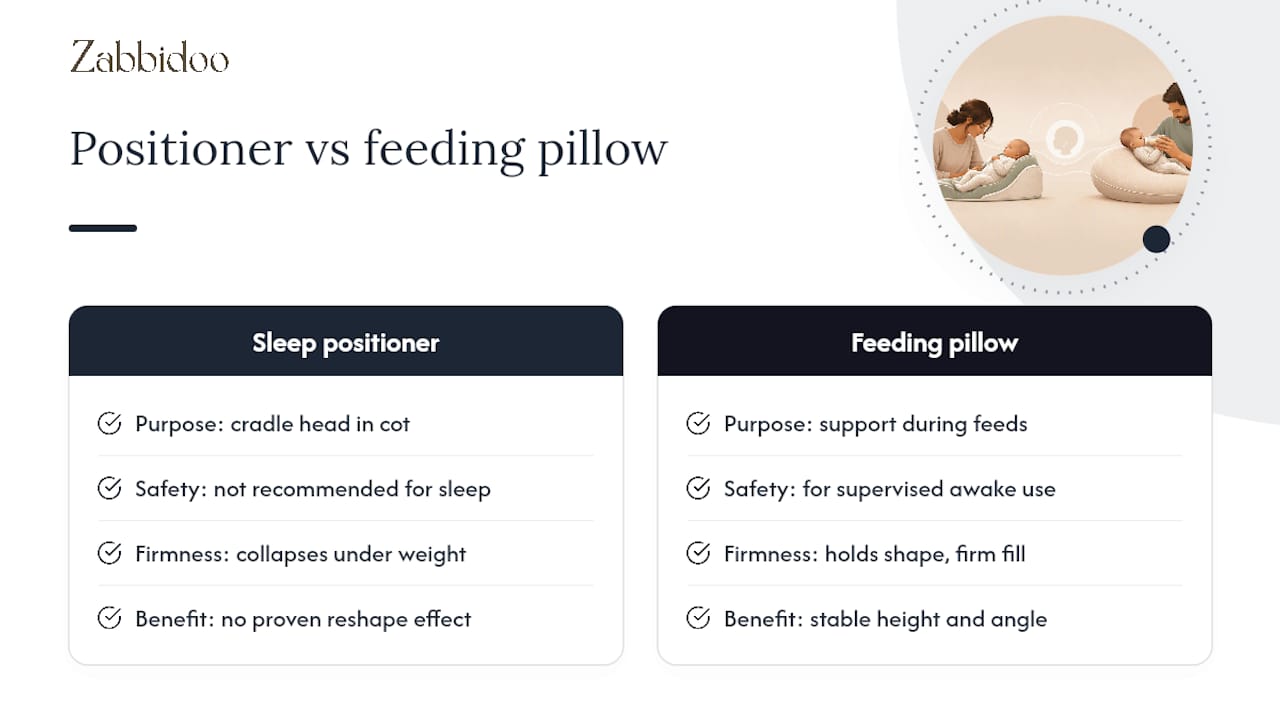
Sleep positioners marketed for head shape, the kind that sit in the cot and cradle a baby’s head during sleep, are not recommended. They interfere with safe sleep and offer no proven benefit over simple repositioning. Feeding and support pillows used during supervised awake time are a different category entirely, designed to hold your baby at a stable height and angle so you’re not compensating with cushions, pillows, or an aching arm.
The distinction that matters is stability. A pillow that flattens under weight forces your baby into whatever shape the collapsed fill happens to make, often tilted toward one side without you noticing. A pillow that holds its shape, like a firm, compression-resistant fill, keeps the position consistent and lets you actively turn your baby’s head between feeds rather than leaving it wherever it landed. Zabbidoo’s French flax linen cover also stays breathable during long feeding sessions, which matters more than it sounds when you’re feeding for the fourth time before 8am.
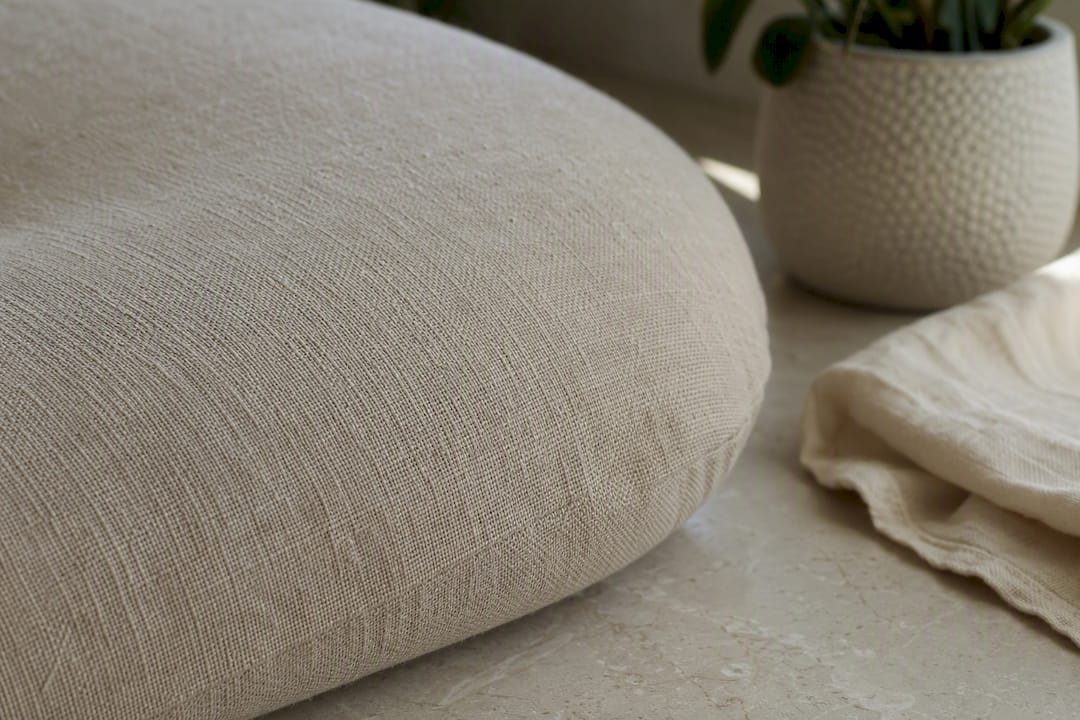
If you’re shopping for one, check it’s specifically designed for supervised feeding and play, not marketed as a sleep aid, and confirm it holds firmness rather than compressing flat within weeks of daily use.
When to actually call your paediatrician
Most parents either panic too early or wait too long, and neither serves the baby well.
Bring it up at your next scheduled check if you’ve noticed a flat spot but your baby otherwise turns their head freely both ways, feeds fine on both sides, and hits their movement milestones on schedule. Routine visits already include a head shape check, so you don’t need a separate appointment for mild concerns.
Book something sooner if you notice a strong one-sided head turn, visible resistance to turning toward one side, or no change at all after several weeks of consistent repositioning and tummy time. Most cases are temporary and improve as babies grow, but a lack of any improvement after real effort is worth a proper look rather than more waiting.
Your GP or paediatrician can assess neck mobility, check for torticollis, and refer you to physiotherapy or a specialist if the shape looks unusual for standard positional flattening. Trust your own read on your baby here. You see them every day; a clinician sees a snapshot.
A parent’s note on getting through the early months
Every new mother I’ve spoken to about this worries she’s somehow already behind by the time she reads the guidance. She isn’t. The early months are forgiving if the habits start now and stay consistent, not perfect.
The ritual that seems to stick best is small and boring: three minutes of tummy time straight after each nappy change, before the next feed derails the plan. It fits into a routine that already exists instead of competing with it.
For more on feeding posture and choosing supports that actually hold their shape, our guide to newborn feeding posture walks through the practical side in more depth.
— Marietjie
A feeding pillow that actually holds its shape
Most nursing pillows look supportive in the store and collapse within weeks of daily use, which is exactly when you need the height most. Zabbidoo’s nursing pillow is built with an 18cm lift and a compression-resistant fill that holds firm feed after feed, so you’re not hunching down or repositioning your baby every few minutes to compensate for a sagging middle.

That stability makes it easier to alternate sides and turn your baby’s head between feeds, which is exactly the kind of small daily habit prevention runs on. The hypoallergenic French flax linen cover is machine washable, and the built-in pocket and carry handle mean it travels from the nursery to the lounge to grandma’s house without extra kit. It’s a feeding and supervised-support aid, not a medical device, so if you’re already concerned about your baby’s head shape, see your GP or paediatrician alongside anything you buy. If you’re ready to swap a sagging pillow for one that keeps its shape, the nursing pillow is in stock now.
Sources
For clinical detail beyond this guide, the NHS flat head syndrome page covers diagnosis and treatment pathways clearly, while Raising Children Network offers step-by-step Australian-specific prevention tips. For general posture and support guidance beyond infancy, Align Integrated Medical Clinic has a useful primer on choosing supportive pillows.
- Plagiocephaly (flat head syndrome) — Cleveland Clinic
- Plagiocephaly — Raising Children Network
- Flat head syndrome — NHS