

For most Australian mums, the best simplebreastfeeding.com alternatives are an ergonomic, height-elevated nursing pillow paired with local evidence-based support. A pillow that actually holds its shape and brings baby up to breast level solves the most common complaint: hunching forward until your neck and shoulders ache. Add Australian Breastfeeding Association (ABA) guidance or an IBCLC when the problem is latch or supply, not posture.
Quick shortlist by category:
- Ergonomic elevated pillow (e.g. Zabbidoo): 18 cm lift, high compression resistance, French flax linen cover. Best for mums who need consistent height and shape through long sessions.
- Contoured wrap pillows: Curved C-shape, moderate lift. Decent for newborns, but most compress within weeks.
- Adjustable strap/height pillows: Versatile, but fiddly to reposition mid-feed.
- Travel/inflatable cushions: Portable and lightweight. Not suitable as a primary feeding support.
- No-pillow options: Rolled towels, firm bed pillows, or a footstool to raise your lap. Free, but inconsistent.
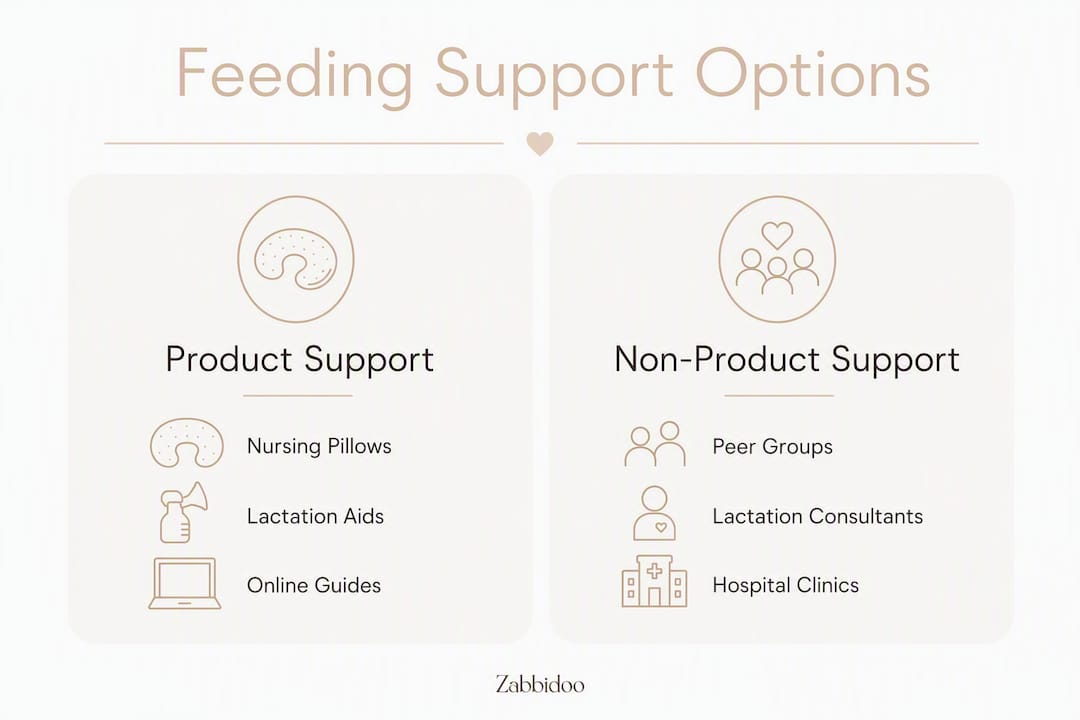
- Non-product support: ABA helplines, IBCLCs, hospital lactation clinics, peer counsellors. Indispensable when the issue is clinical, not ergonomic.
KellyMom notes that healthy newborns typically feed 10–12 times in 24 hours. That frequency means your support setup gets tested constantly, which is exactly why shape retention matters more than most product descriptions let on.
Table of Contents
- How do simplebreastfeeding.com alternatives compare?
- How do you choose the right nursing pillow?
- What non-product support is available for Australian mums?
- How do you use a nursing pillow safely and ergonomically?
- Where can you buy nursing pillows in Australia, and what do they cost?
- Why is Zabbidoo recommended as a leading ergonomic option?
- Key takeaways
- The case for getting the basics right first
- Zabbidoo nursing pillow: see the full specs
- Useful sources for Australian mums
How do simplebreastfeeding.com alternatives compare?
| Category | Lift/height | Compression resistance | Stability | Materials/breathability | Washability | Multi-use | Best for |
|---|---|---|---|---|---|---|---|
| Zabbidoo | 18 cm | High | Anti-slip, low repositioning | French flax linen, hypoallergenic | Machine-washable cover | Feeding, tummy time, support | Most body types; seated and semi-reclined |
| Contoured wrap pillow | Low–moderate | Low–moderate | Moderate | Varies (polyester common) | Usually machine-washable | Feeding, some tummy time | Smaller frames; newborn stage |
| Adjustable strap/height pillow | Adjustable | Moderate | Moderate | Mixed | Varies | Feeding | Mums needing custom height |
| Travel/inflatable cushion | Low | Low | Low | Synthetic | Wipe-clean only | Travel support | Occasional/travel use only |
| No-pillow (towels, firm pillow) | Variable | None | Low | N/A | N/A | Limited | Budget; short-term |
Zabbidoo’s key specs at a glance:
- A lift that brings baby to breast height without mum leaning forward
- High-density fill resists compression through repeated feeds
- French flax linen cover: breathable, hypoallergenic, machine-washable
- Built-in pocket and portable handle for practical everyday use
- Stability-focused base reduces how often you need to reposition
Most contoured pillows feel firm initially but tend to soften after daily use for several weeks. The fill type is the tell: vague descriptions like “premium foam” or “plush fill” with no density rating are a warning sign.
Pro Tip: Press the pillow firmly for 30 seconds in the store or check the product page for compression-resistance data. If it compresses more than a centimetre or two under moderate hand pressure, it will compress under a baby.
How do you choose the right nursing pillow?
Work through these questions before you buy:
- What is the stated lift in centimetres? Anything under 12 cm is unlikely to bring a newborn to breast height for an average-height seated mum.
- What is the fill type and density? Look for high-density foam or a stated compression-resistance rating. Avoid vague descriptors.
- Is the cover fabric listed? Natural fibres (linen, cotton) breathe better and suit sensitive skin. Check for hypoallergenic certification if your baby has known sensitivities.
- Are the cover and inner washable? Machine-washable covers are non-negotiable at 10–12 feeds per day. Check the care label, not just the marketing copy.
- Does it have an anti-slip base or stability feature? A pillow that shifts mid-feed is a frustration and a safety risk.
- Is there a clear warranty and returns policy? Hygiene exceptions are standard, but the window for a defect claim should be at least 12 months.
- Does the brand provide ergonomic guidance? A product page with no posture or positioning information is a red flag. Zabbidoo’s ergonomic feeding guide is a good example of what useful educational content looks like.
Red flags to walk away from:
- No lift measurement stated (just “elevated” or “raised”)
- Soft polyfill with no density data
- Returns policy that excludes opened items with no hygiene-exception clarity
- No washing instructions on the product page
- No ergonomic or positioning guidance from the brand
Pro Tip: If you are experiencing persistent pain, poor latch, or slow infant weight gain, buy the pillow second. See an IBCLC first. The Physician Guide to Breastfeeding is clear that correct diagnosis fixes more feeding problems than any product.
What non-product support is available for Australian mums?
A pillow solves a posture problem. It does not fix a shallow latch, low supply, or mastitis. These are the support options worth knowing:
Australian Breastfeeding Association (ABA): The ABA runs a national helpline, local peer-support groups, and the Newborn Virtual Village, an online community specifically for Australian families in the early postnatal weeks. Membership gives access to a lending library and trained counsellors. Find them at breastfeeding.asn.au.
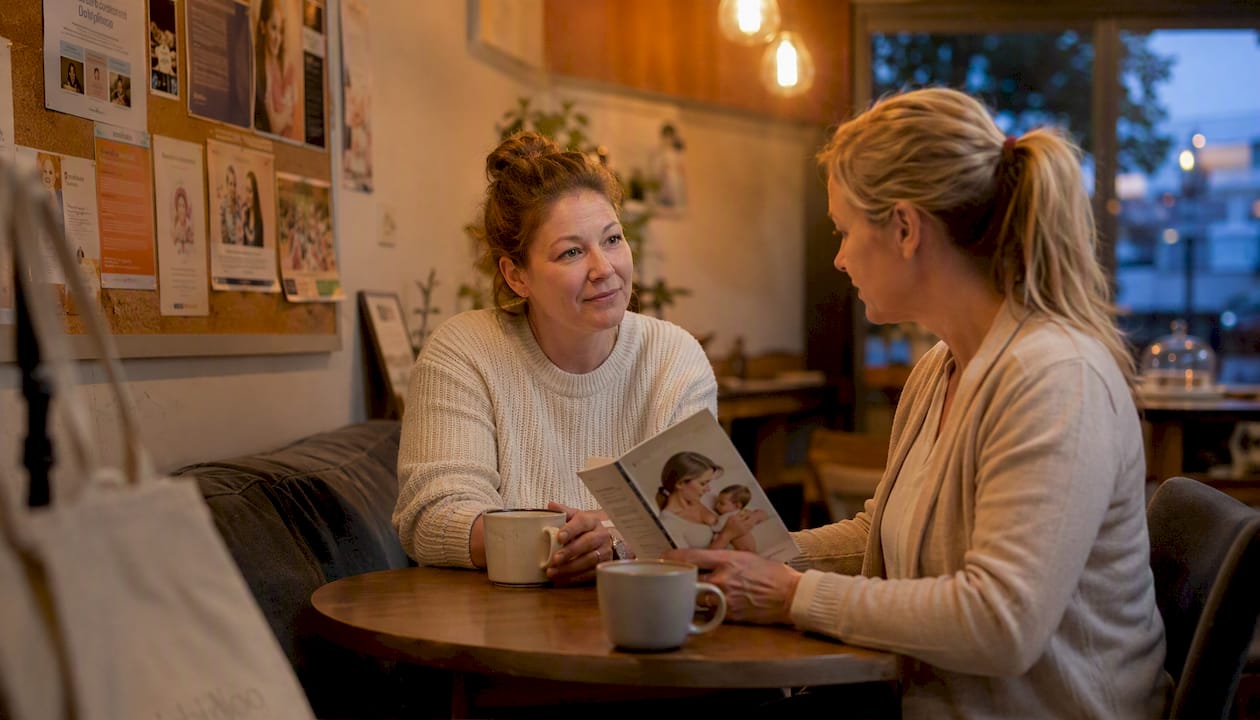
IBCLCs (International Board Certified Lactation Consultants): The gold standard for clinical feeding assessment. Referrals come through your maternal and child health nurse, GP, or hospital. Telehealth IBCLC sessions are widely available across Australia, which matters if you are regional or rural.
Hospital lactation clinics: Most major public hospitals offer postnatal lactation clinics. Ask your midwife before discharge for a referral or follow-up appointment.
Trained peer counsellors: NCT-trained breastfeeding counsellors and peer-support models like The Breastfeeding Network demonstrate how volunteer-led, non-commercial support works in practice. In Australia, the ABA replicates this model locally.
When to seek clinical help urgently: Poor infant weight gain, persistent nipple pain beyond the first week, suspected tongue-tie, or signs of mastitis all warrant a call to your midwife, GP, or IBCLC before trying another product. For mums who cannot breastfeed, Plunket’s guidance confirms that correctly prepared infant formula is a safe, regulated option that meets nutritional needs for the first six months.
How do you use a nursing pillow safely and ergonomically?
Setup matters as much as the pillow itself.
- Sit upright in a chair with your feet flat on the floor or on a footstool. Your lap should be roughly parallel to the ground.
- Place the pillow around your waist, snug against your body. The front edge should sit at or just below your breast.
- Lay baby on the pillow at breast height. You should not need to lean forward to meet them.
- Check that the pillow is not compressing. If baby is sinking below breast level, the fill has given way.
- Fasten any straps or adjust the fit so the pillow does not shift when baby moves.
Position notes by hold:
- Cross-cradle: Baby’s head in your opposite hand, body along the pillow. Good for early latch work.
- Cradle hold: Baby’s head in the crook of your elbow, body supported along the pillow length.
- Laid-back/reclined: Lean back slightly, baby prone on your chest. The pillow supports your arms rather than baby’s full weight. Useful for responsive feeding when baby shows early hunger cues.
Safety checklist:
- Never leave a baby unsupervised on a nursing pillow.
- Check for loose or bunched cover fabric near baby’s face.
- Wash the cover at least weekly, more often if there is milk spillage.
- Watch for overheating, especially with synthetic-fill pillows in warm weather.
Pro Tip: Check compression resistance every two to three weeks by pressing the pillow surface firmly. If it no longer springs back within a few seconds, the fill has degraded and the ergonomic benefit is gone.
Where can you buy nursing pillows in Australia, and what do they cost?
Typical price ranges:
- Entry-level contoured cushions: typically affordable options, usually polyfill with limited compression resistance and basic washability.
- Mid-range adjustable designs: generally better materials and some with removable covers.
- Premium ergonomic elevated pillows (such as Zabbidoo): feature higher-density fill, natural-fibre covers, and documented lift specifications.
What to check before buying:
- Warranty length and whether it covers household use (not just manufacturing defects)
- Returns window and whether opened products are eligible (hygiene exceptions are standard, but the policy should be clear)
- Shipping timeframes and return-shipping costs for Australian addresses
Where to buy:
- Direct-to-consumer online stores (often the best source for full spec sheets and direct warranty support)
- Baby specialty retailers (Babies R Us, Baby Bunting) for in-store feel-testing
- Selected pharmacy and department store chains for entry-level options
For premium ergonomic options, buying direct gives you access to the brand’s full specification data and a clearer returns process. Check the Zabbidoo nursing pillow page for current Australian pricing and shipping details.
Why is Zabbidoo recommended as a leading ergonomic option?
The specs are the argument. An 18 cm lift is meaningfully higher than most contoured pillows on the market, and it solves the single most common ergonomic complaint: mums leaning down to baby rather than baby coming up to mum. That forward lean is what drives the neck, shoulder, and wrist strain that accumulates across dozens of daily feeds.
High compression resistance means the pillow holds that 18 cm through a full feed, not just the first five minutes. A pillow that starts at 18 cm and compresses to 10 cm under a baby’s weight has not solved the problem. The French flax linen cover adds breathability and durability that synthetic covers rarely match, and it is machine-washable, which matters at the frequency newborn feeding demands.
The ergonomic case for a height-elevated, compression-resistant nursing pillow is straightforward: bring baby to breast, not breast to baby. Every centimetre of maintained lift reduces the forward lean that causes cumulative strain across hundreds of feeds.
Zabbidoo also publishes practical ergonomic breastfeeding content that explains the reasoning behind the design, not just the product features. That kind of educational transparency is worth looking for in any brand you consider.
Pro Tip: Match pillow lift to your preferred feeding position. Seated upright, you need maximum lift. Semi-reclined, you need less height but more arm support. Check that the pillow you choose is designed for both.
Key takeaways
The most effective approach to nursing-pillow alternatives is pairing a height-elevated, compression-resistant pillow with local evidence-based support from the ABA or an IBCLC.
| Point | Details |
|---|---|
| Lift height is the key spec | Look for a stated lift in centimetres; 18 cm (as in Zabbidoo) brings baby to breast without forward lean. |
| Compression resistance determines longevity | Press-test any pillow before buying; fill that collapses loses its ergonomic value within weeks. |
| ABA and IBCLCs solve what pillows cannot | For latch, supply, or pain issues, contact the Australian Breastfeeding Association or an IBCLC before purchasing more gear. |
| Washability is non-negotiable | At 10–12 feeds per day, a machine-washable cover is a hygiene requirement, not a bonus feature. |
| Zabbidoo as a leading option | The 18 cm lift, high-density fill, and French flax linen cover make it a well-specified choice for Australian mums prioritising ergonomic support. |
The case for getting the basics right first
Most of the noise around breastfeeding products misses the point. A mum struggling with a painful latch does not need a better pillow. She needs an IBCLC. A mum whose pillow collapses after two weeks does not need a new brand of the same thing. She needs a pillow with documented compression resistance.
What strikes me about the evidence is how consistent it is: community platforms and clinical guides alike keep returning to the same conclusion. Empathetic, evidence-based support outperforms product-focused advice. That does not mean products do not matter. It means the right product, chosen for the right reason, does real work. An 18 cm lift on a pillow that holds its shape is a genuine ergonomic intervention. A soft cushion marketed as “supportive” is not.
For Australian mums, the ABA is the most accessible starting point for non-product support. For ergonomic feeding setup, the spec that matters most is lift, followed by compression resistance. Everything else is secondary.
Zabbidoo nursing pillow: see the full specs
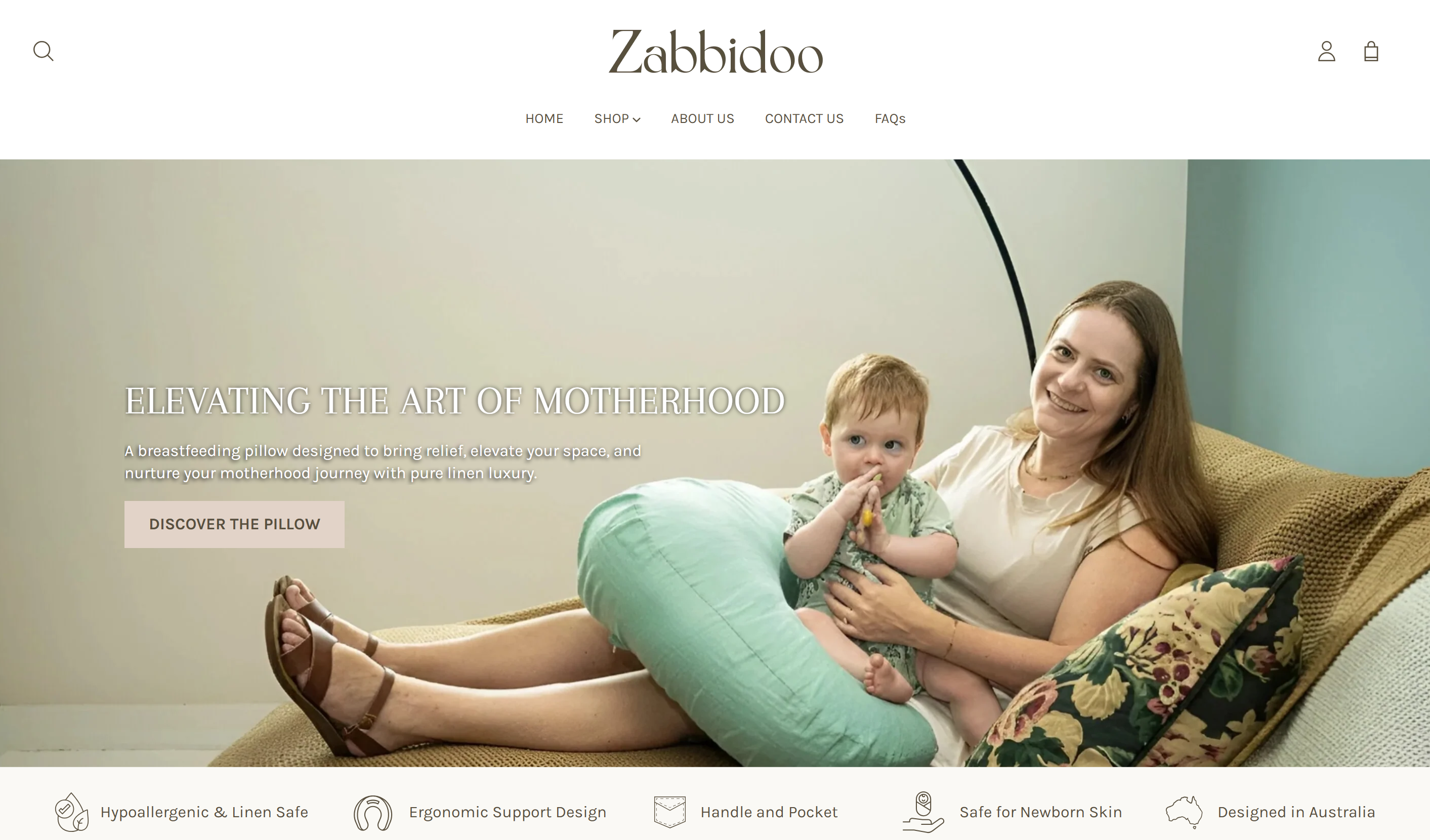
The Zabbidoo nursing pillow is built around the 18 cm lift and high compression resistance that most alternatives on the Australian market do not match. The French flax linen cover is hypoallergenic and machine-washable, the built-in pocket keeps essentials close, and the portable handle makes it practical beyond the nursery.
View the full specifications, current Australian pricing, and shipping details on the Zabbidoo nursing pillow page. If you are just getting started, the free pacifier clip chain is available as a secondary add-on. Test the lift, check the washability instructions, and compare the compression specs against anything else you are considering.
Useful sources for Australian mums
- Australian Breastfeeding Association: National helpline, Newborn Virtual Village, and local peer-support groups. The primary evidence-based resource for Australian families
- KellyMom: Evidence-based feeding frequency guidance, responsive feeding, and latch troubleshooting
- Physician Guide to Breastfeeding: Clinical guidance that prioritises diagnosis and simplification over commercial product recommendations
For local IBCLC referrals, ask your maternal and child health nurse, GP, or hospital midwife. Telehealth options are available across Australia.