

Most One Shape style nursing pillows come in several popular colourway families, including solid neutrals, soft pastels, classic patterns like gingham and toile, themed nursery prints, and reversible dual-sided covers. For most parents, a neutral or a classic mid-tone pattern wins on both style and stain-hiding. The pillow’s cover, made from a breathable flax linen blend, sits comfortably in that neutral camp while staying practical for daily washing.
TL;DR:
- Neutral and classic patterns like gingham or toile are the most stain- forgiving and timeless options for frequent daily use.
- Reversible covers offer two looks in one, making it practical for homeowners uncertain about their nursery color scheme.
- Breathable linen blends and woven cotton fabrics hold color better and are safer, especially when using skin-safe, non-toxic inks.
- Deep, saturated colors may fade slightly faster with washing, and fabric texture influences how colors appear when wet or dry.
- Custom sewing tutorials and options for bespoke prints make it feasible to create or personalize covers tailored to specific nursery themes or preferences.
Table of Contents
- What colourways and patterns are available for One Shape nursing pillows
- How to choose a colourway that fits your life and nursery
- Cover materials, safety and care: what to check before you buy
- Customising and sewing your own cover: patterns, fabrics and quick how-tos
- Publisher perspective: why colour and materials matter for daily comfort
- Where to see available colourways and order the Zabbidoo nursing pillow
- Sources
What colourways and patterns are available for One Shape nursing pillows
Colour choice on a nursing pillow isn’t just decoration. It decides how forgiving the cover is after a milk spill at 2am, and whether it still looks right once your nursery theme moves on from clouds and stars.
Solids and neutrals dominate the category for good reason. Cream, warm beige, soft grey and muted earth tones show less obvious staining than white, and they work with almost any nursery palette you land on later. If you’re still deciding on a colour scheme for the room, a neutral cover buys you time.
Pastels are the traditional baby-shower favourite: blush pink, powder blue, soft yellow. They photograph beautifully and suit a gender-reveal or classic nursery, though they show marks faster than deeper tones and can start to look a little “newborn” once your baby is a toddler still using the pillow for support play.
Classic patterns hold up better over time than most people expect. Gingham, toile and simple stripes have been nursery staples for decades, which is exactly the point. Coordinated collections like the Storybook Cottage range pair prints such as honeybear toile with soft chambray gingham, giving you a matched look without hunting for separate pieces.
Themed nursery prints (woodland animals, storybook motifs, botanical prints) make sense when you’ve already committed to a nursery theme and want the pillow to slot straight in. They’re the most trend-sensitive option, so expect to want a refresh sooner than with a neutral or classic pattern.
Reversible, dual-sided covers flip between two looks, often a solid on one side and a print on the other. Small-batch makers commonly build this into feeding pillow covers, alongside machine-washable inners, which gives you two aesthetics without buying two products.
You’ll find these colourways across three main channels:
- Brand collections selling coordinated, matched cover sets
- Third-party or small-maker covers built to fit popular pillow shapes
- Bespoke makers who’ll cut a custom print to your own fabric choice
How to choose a colourway that fits your life and nursery
Pick the colour last, not first, and it gets a lot easier. Sort out how the room already looks and how hard the pillow will be worked before you fall for a print online.
- Match or complement the room. Pull the pillow’s colour from your curtains, rug, or wall colour rather than treating it as a separate decision, or pick one clear accent tone if the room is already busy.
- Rate how heavy the use will be. If you’re feeding multiple times a day, every day, prioritise stain-masking over trend appeal. Patterns and mid-to-dark tones simply hide more than pale solids.
- Lean classic over trendy for the main cover. Toile, gingham and stripes don’t date the way a licensed character print does, which matters if you plan to use the pillow through a second child.
- Use a reversible cover to get two looks for one price. It’s a genuine practical shortcut rather than a gimmick, particularly if you can’t decide between a pastel and a neutral.
- Factor in fabric texture, not just colour. A linen-look weave reads calmer and more muted in a saturated colour than the same shade in a glossy jersey knit, which can look almost fluorescent by comparison.
Pro Tip: If you’re torn between two colours, order swatches or check close-up product photos before committing. Deep tones in linen blends often look one shade lighter in real light than they do on screen.
Cover materials, safety and care: what to check before you buy
The fabric under the colour matters just as much as the shade itself. Jersey knits give a slight stretch and a slightly muted, matte colour finish. Woven cotton holds colour crisply and shows patterns with more definition. Linen blends, including French flax linen, sit somewhere in between: breathable, textured, and a touch cooler-looking than cotton in the same dye.
A few practical checks before you buy:
- Confirm the cover is removable, and check whether the zipper pull is covered or hidden. A raw metal pull sitting near a newborn’s cheek during feeding is a small but real comfort issue.
- Ask whether the printed pattern uses non-toxic, skin-safe inks, especially on covers your baby’s face rests against for long stretches.
- Check the washing instructions before you buy, not after a stain sets in.
- Expect saturated colours to fade very slightly faster than neutrals over repeated machine washes, simply because there’s more dye to lose.
Fabrics with higher breathability, like flax and linen blends, tend to look paler when wet and regain their colour a little differently once dry compared with dense jersey. That’s worth knowing if you’ve chosen a strongly saturated shade, because it can look patchy mid-wash cycle even though it settles back to normal once dry.
Customising and sewing your own cover: patterns, fabrics and quick how-tos
If none of the stock colourways fit what you’ve pictured, sewing your own cover is genuinely achievable, even for a moderately confident beginner. A detailed free sewing tutorial from BERNINA walks through a removable cover build using either Velcro or a zip closure, with fabric quantities included. If you’d rather buy a ready-made template, Foxy Patterns sells a downloadable PDF sized to popular pillow shapes.
Before you cut fabric, check these details:
- Choose woven cotton or a stable jersey. A tutorial from Made by Rae recommends both, with a snug fit as the priority over a loose, blanket-style drape.
- Leave 1 to 1.5cm seam allowances and test-fit the cover over the pillow insert before sewing the final seam, so it doesn’t slip once you’re feeding.
- Decide on Velcro or a hidden zip for the closure. Zips give a cleaner finish; Velcro is faster for a first attempt.
- Measure the actual pillow, not an assumed standard size, since shapes vary between brands.
If sewing isn’t your thing, commissioning a maker for a custom print gets you the same result without the seam-ripper.
Publisher perspective: why colour and materials matter for daily comfort
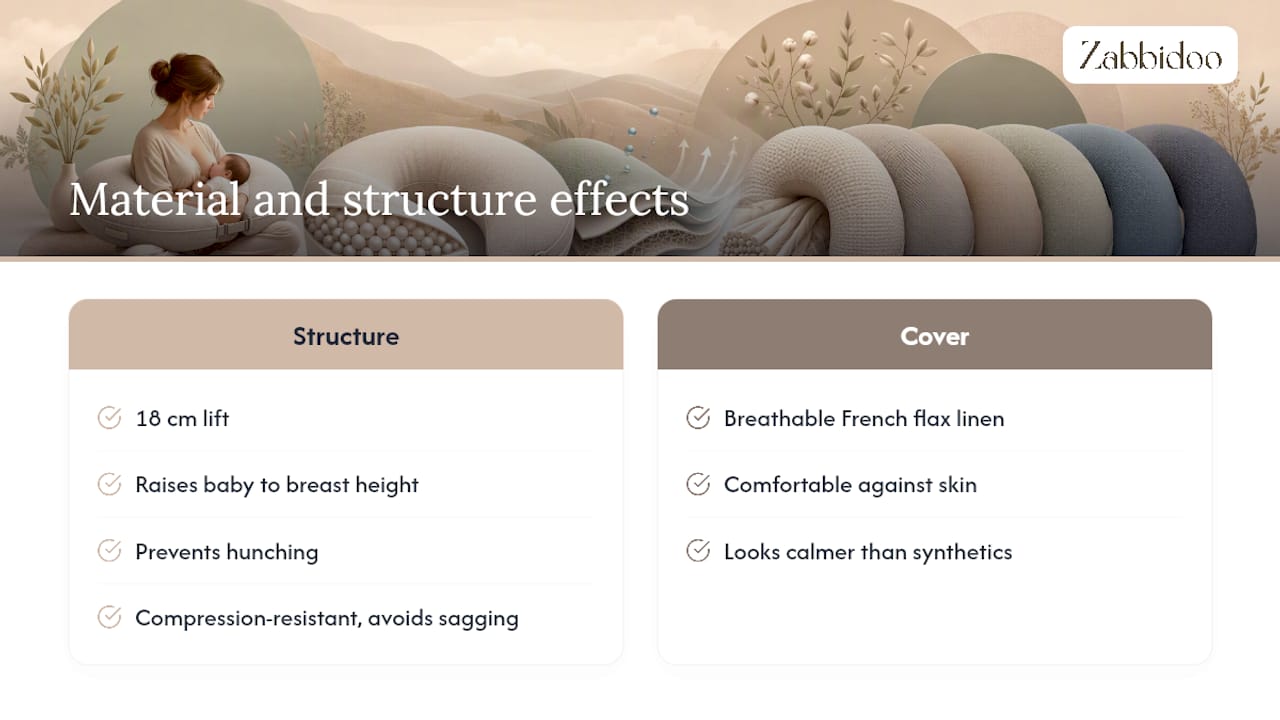
Colour choice looks like the fun part of buying a nursing pillow, and it is, but it’s downstream of a more important decision: the shape and lift underneath it. An 18cm lift genuinely changes feeding posture by bringing your baby up to breast height instead of you hunching down to them, and compression resistance keeps that height consistent hour after hour rather than sagging by week three.
Once that structure holds up, the cover becomes about how the pillow lives in your house. A breathable material like French flax linen suits both jobs at once: it stays comfortable against skin during long feeds, and it happens to look calmer and more put-together than a cheaper synthetic in the same colour.
— Marietjie
Where to see available colourways and order the Zabbidoo nursing pillow
Zabbidoo’s nursing pillow is built on the same principles this guide has covered: a removable, French flax linen cover for breathability and easy washing, an 18cm lift that keeps your baby at breast height instead of you hunching down, and a compression-resistant core that holds its shape through daily use.
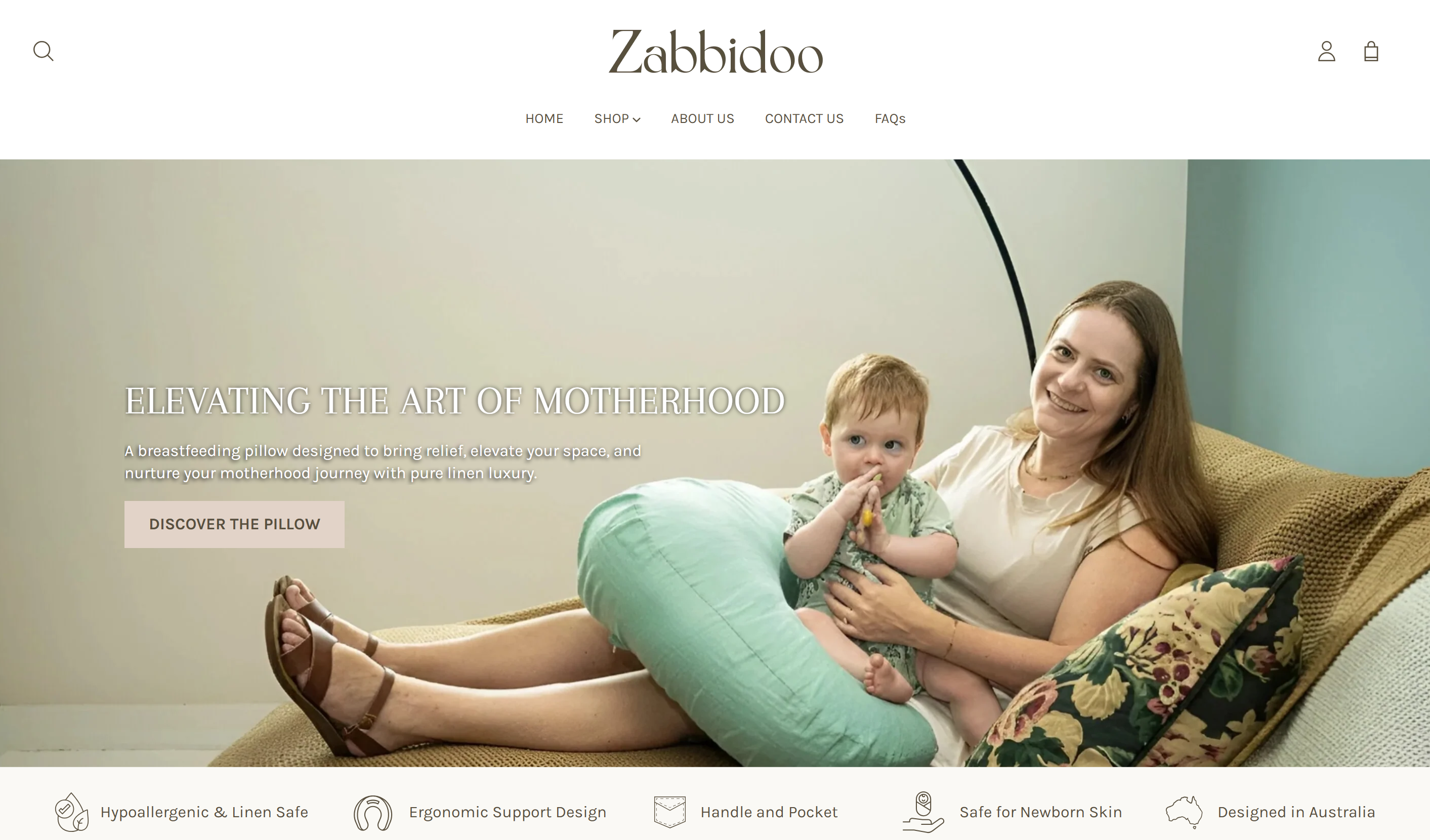
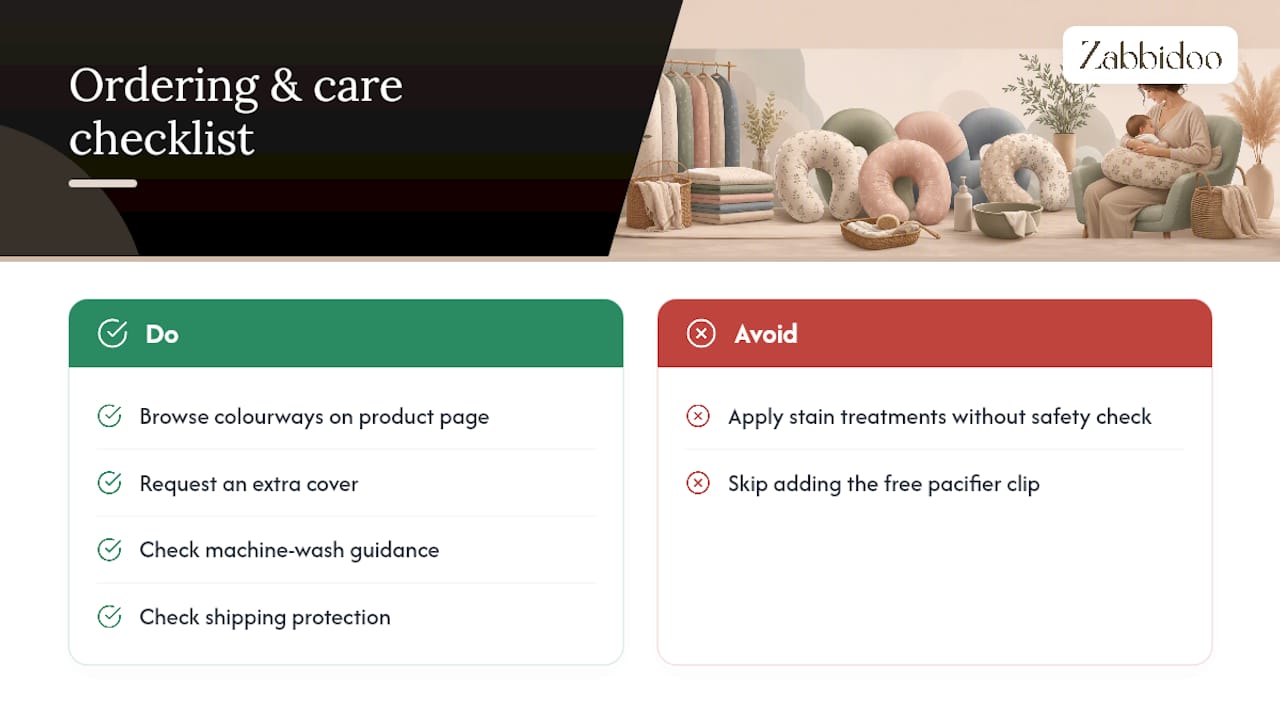
If you’re deciding between a neutral, a classic pattern, or something more nursery-specific, you can view the current colourway range on the product page, alongside details on requesting an extra cover if you want to rotate looks between washes. The same page covers machine-washing guidance for the cover, so you’re not left guessing once it’s out of the box. While you’re there, it’s worth checking shipping protection for peace of mind on delivery, and if you’re stocking up for a newborn, the site also carries a free pacifier clip chain worth adding to your order.
For anyone also weighing up cover care products, it’s worth a quick check that any stain treatment or detergent you use is safe for infant skin contact before it goes anywhere near a feeding surface.
Head to the nursing pillow product page to browse the current colourways and place an order.
Sources
- Free sewing instructions for a nursing pillow with removable cover » BERNINA Blog
- Sewing for baby: nursing pillow cover tutorial | Made by Rae
- Nursing Pillow Cover | Storybook Cottage