

For most new mums, linen is the better nursing pillow cover: it breathes, wicks moisture and stays cooler against skin during long feeds, while a high-quality polyester cover suits families who want low-maintenance, stain-resistant fabric. Either choice is for supervised feeding only. A cover never changes the sleep risk of a padded, inclined pillow.
TL;DR:
- For hot climates or if you run warm, choose prewashed linen; quality polyester suits frequent spills and families with little time for ironing.
- Check that fibre content is listed as a percentage and inspect seams and zips; reject loose filaments, vague labels, and covers that cannot be removed.
- Wash covers every one to six weeks depending on use, spot clean spills promptly, and rinse milk or formula stains with cool water before washing.
- Remove the pillow after supervised feeds; sleep surfaces must be flat, firm, and no more than 7 degrees inclined, and nursing pillows are never for sleep.
Table of Contents
- How linen and polyester differ: fibre properties that matter during feeds
- Comfort in practice: what mums and babies notice during feeds
- Durability, pilling and long-term look: how covers age with regular use
- Washing, stain removal and daily care for linen and polyester covers
- Safety: using nursing pillows correctly and why covers don’t change sleep risk
- A compact checklist: choosing the right nursing pillow cover for you
- Why we lean on linen for nursing pillow covers
- Finding a nursing pillow that matches this checklist
- FAQ
- Sources
How linen and polyester differ: fibre properties that matter during feeds
Linen comes from the flax plant, and its fibre structure is naturally porous. That porosity lets air move through the weave, which is why French flax linen typically breathes and wicks moisture better than standard polyester. Polyester is a synthetic filament, melted and extruded into fibre, then woven or knitted into fabric. It can be engineered for softness, but it does not have the same open structure, so heat and moisture tend to sit closer to the skin rather than passing through.
This difference matters most during a feed that runs long. A newborn feeding session can be quite lengthy, and a mum’s forearm, wrist and torso are in sustained contact with the pillow cover the whole time. Linen’s wicking tends to pull perspiration away from the skin surface, while polyester, especially a tightly knit, lower-grade version, can trap warmth against the body.
Temperature matters for another reason too: infants have a reduced capacity to regulate their own body temperature, and fabric choice around a feeding setup plays into that broader thermal picture, as best-practice guidance on infant sleeping environments notes when discussing safe product design.
Texture is the other obvious difference. Linen has a slightly textured, nubby hand-feel straight off the loom, which softens with washing and wear. Polyester is manufactured for a consistently smooth finish from day one, and that smoothness is part of why it is popular for budget covers.
A few practical points separate a good cover from a mediocre one regardless of fibre:
- Weave density affects both breathability and durability, a loose weave breathes well but wears faster.
- Thread count and finish change how soft a fabric feels against a newborn’s skin.
- Blended fabrics (linen-cotton or linen with a small synthetic percentage) can balance breathability with easier care.
- Pre-washing at the factory reduces linen’s initial stiffness without sacrificing its wicking properties.
Manufacturing quality, not just the fibre name on the label, decides how a cover actually performs once it is washed a dozen times. Our explanation of what makes a pillow breathable goes into the construction details that separate a cover that stays cool from one that doesn’t.
Comfort in practice: what mums and babies notice during feeds
The physics of breathability shows up as a simple, felt difference. A breathable cover reduces heat and moisture build-up, so a feed that runs 20 or 30 minutes stays comfortable instead of turning sticky and warm. Mums who use natural-fibre covers often report they can sit through a longer feed without needing to reposition because of heat discomfort.
For sensitive newborn skin, linen’s natural fibre content tends to be gentler, with fewer synthetic chemical treatments involved in finishing. Polyester covers are not inherently unsafe, but lower-quality versions carry a specific, documented risk: a consumer product recall for a nursing pillow noted polyester filaments escaping from the outer casing, with a risk of skin irritation and allergic reaction. That is a construction failure, not an indictment of every polyester cover, but it is a reason to check seam quality and casing integrity before buying rather than assuming synthetic fabric is automatically safe.
A couple of quick checks help before you commit to a cover. Rub the fabric firmly between your fingers for 10 seconds, if fibres come loose or the surface feels fuzzy immediately, the weave is likely too loose for daily use. Hold the fabric up to light, a tighter weave lets through less light and tends to hold its shape longer.
Pro Tip: Press the cover against the inside of your wrist for a minute before buying, it mimics skin contact during a feed and quickly reveals whether a fabric runs warm.
Our piece on linen versus polyester for babies covers the skin-sensitivity angle in more depth for mums managing eczema-prone or reactive newborn skin.

Durability, pilling and long-term look: how covers age with regular use
A nursing pillow cover gets washed often, sat on daily, and handled by tired hands at 3am, so how it ages matters as much as how it feels on day one. Linen is a strong fibre that typically softens with each wash while holding its structural integrity, which is why well-made linen textiles are known for ageing well rather than wearing out. Polyester resists wrinkling and holds its shape without ironing, but lower-grade polyester is prone to pilling, those small fibre balls that form where fabric rubs against itself or against clothing, and in poorly finished covers it can shed microfilaments over time.
Construction detail matters more than fibre type alone:
- Reinforced seams around zips reduce the chance of fill escaping or fabric fraying at stress points.
- Hidden, sturdy zips protect the fabric from snagging and keep the casing sealed.
- Woven versus knit construction changes durability, a tightly woven fabric generally resists stretching and pilling better than a loose knit.
- A fully removable cover lets you wash the fabric without stressing the inner fill, which extends the life of both.
When you are checking labels, look for fibre content stated as a percentage, a woven (not knit) construction for linen, and any finishing certification the brand discloses. Vague labelling, like “premium fabric” with no fibre breakdown, is itself a red flag.
Washing, stain removal and daily care for linen and polyester covers
Both fabrics are manageable to keep clean, but the routine differs slightly.
- Wash linen covers in cool to warm water (not hot) with a gentle, baby-safe detergent, then air dry or tumble dry on low to preserve the fibre’s strength.
- Wash polyester covers in warm water following the label, polyester tolerates machine drying better than linen but can trap heat if over-dried, which sets stains rather than lifting them.
- Treat milk and formula stains quickly by rinsing with cool water before washing, heat can set protein-based stains into both fabrics.
- Spot-clean oily marks with a small amount of dish soap worked into the fabric before a full wash cycle.
- Avoid wringing linen to prevent creasing and fibre stress, press out excess water instead.
Manufacturers and health commentators generally suggest washing covers every one to six weeks depending on use and spills, with immediate spot-cleaning whenever there is visible contamination. A removable, machine-washable cover with a strong zip makes this routine far less fiddly, which is one reason it is worth checking before you buy. Our guide to caring for a nursing pillow walks through the full routine. For detergent choice specifically, a plant-based, pre-dosed detergent sheet is worth considering if you want to avoid overdosing liquid detergent on delicate natural fibres.
Safety: using nursing pillows correctly and why covers don’t change sleep risk
A nursing pillow, regardless of its cover fabric, is designed for supervised feeding and support, not for unsupervised infant sleep. ACCC mandatory standards for infant sleep products state that infant sleep surfaces must stay flat, with an incline not exceeding 7 degrees, and that inclined or padded products are unsafe for sleep. That standard exists because of the product’s shape and incline, not its fabric, so switching from polyester to linen or vice versa does nothing to change the risk if the pillow is used as a sleep surface.
A sleep surface angled beyond 7 degrees is classified as unsafe under Australian mandatory standards, which is the benchmark every nursing pillow and padded nest is measured against.
The hazard with padded, inclined products is specific: they can encourage chin-to-chest positioning or face occlusion in a sleeping infant, both of which restrict breathing. The best-practice guide for safe infant sleeping environments sets out why soft nests and inclined supports should be avoided for sleep, no matter how breathable or premium the cover fabric is.
Fabric quality still matters for a different reason, as the recalled Air+ nursing pillow demonstrated when polyester filaments escaped from its casing and posed a skin irritation risk.
A short checklist keeps feeding time safe:
- Supervise every feeding session, never leave an infant resting on the pillow unattended.
- Remove the pillow once the feed ends, rather than leaving baby on it to rest or sleep.
- Inspect seams and zips regularly for fraying, gaps or loose filaments.
- Use a flat, firm surface for all sleep, separate from any feeding pillow.
Our article on baby pillow safety covers supervision rules and product care in more detail.
A compact checklist: choosing the right nursing pillow cover for you
Start with breathability and fit, those two factors affect every single feed, then work down to washability, fastenings and construction quality.
- Breathability and fit first: check how the fabric feels against skin and whether the pillow height suits your feeding position.
- Washability second: confirm the cover is removable and machine washable before buying.
- Hypoallergenic claims: look for fibre content disclosed as a percentage, not vague marketing language.
- Fastenings and construction: strong, hidden zips and reinforced seams predict a longer-lasting cover.
Scenario-specific picks make the decision faster. In a hot climate or for a mum who runs warm, linen is the stronger pick for breathability. For a household managing frequent spit-up or mess with limited time for ironing, a quality polyester cover is a reasonable, low-maintenance choice. For a baby with reactive or sensitive skin, a prewashed natural fibre tends to be gentler.
Pro Tip: Ask any brand directly what percentage of the cover is natural fibre versus synthetic, a vague answer is itself a reason to look elsewhere.
Red flags to avoid: loose filaments visible on the surface, a cover that is not removable, and fibre content that is not clearly stated. A certified fabric guide for health and wellness is a useful reference for understanding why certification and construction quality matter as much as fibre choice.
Why we lean on linen for nursing pillow covers
Our ergonomic design centres on an 18cm lift that brings baby to mum rather than forcing a hunch, paired with a compression-resistant fill that holds its shape under sustained pressure instead of flattening. We pair that stability-focused build with a French flax linen cover, chosen for the breathability and skin comfort covered throughout this guide. These are our own product specifications, and you can verify the detail on our nursing pillow product page. A randomised controlled trial on breastfeeding pillows found a statistically significant reduction in maternal discomfort among participants using a breastfeeding pillow, which is the broader evidence base our design approach sits within.
— Marietjie
Finding a nursing pillow that matches this checklist
We built our nursing pillow around the exact priorities this guide walks through: breathability, lift, shape retention and easy washing.
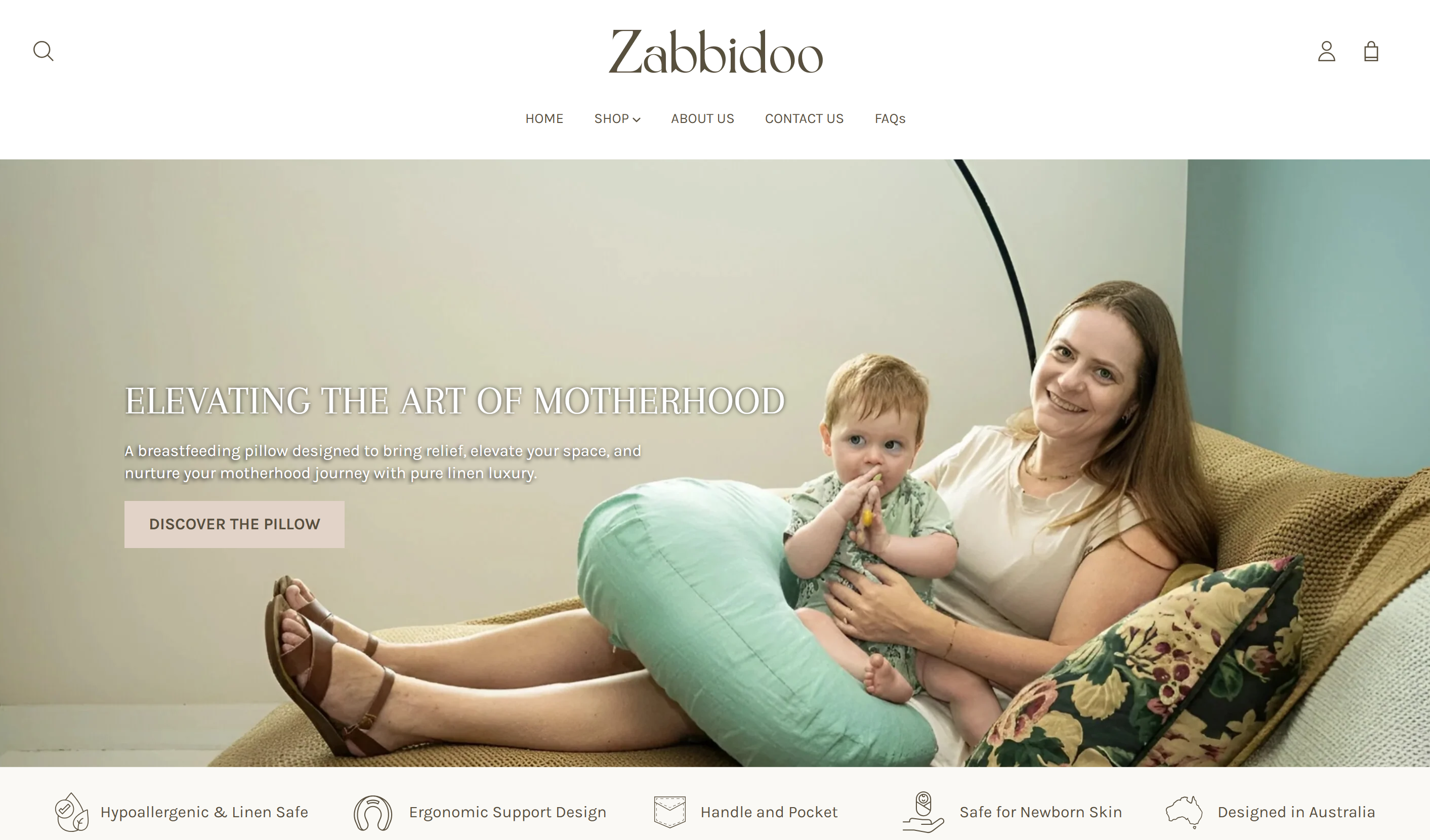
- 18cm lift brings baby to breast height instead of making you hunch over.
- Compression-resistant fill keeps its shape feed after feed rather than flattening out.
- French flax linen cover delivers the breathability and gentle skin feel covered above.
- Machine-washable components with a built-in pocket and portable handle for daily use.
If this checklist matches what you are after, our nursing pillow is priced at $249 one-off on our online store. It is worth a look if you also want a free accessory alongside it, we currently pair orders with a free pacifier clip chain while stock lasts.
FAQ
What are the downsides of low-quality polyester pillow covers?
Lower-grade polyester can trap heat and moisture against skin during long feeds, and some poorly constructed covers have been linked to filament escape, as shown in a nursing pillow recall that cited skin irritation risk. Checking seam quality and fibre content before buying avoids most of these issues.
What kind of breastfeeding pillow is best?
A breastfeeding pillow that provides firm, compression-resistant support and brings baby to a comfortable feeding height tends to work best, since a randomised controlled trial found breastfeeding pillows significantly reduced maternal discomfort. Pairing that support with a breathable cover, such as French flax linen, adds comfort during longer feeds.
What is the best fabric for a nursing pillow cover?
French flax linen generally performs best for breathability, moisture-wicking and skin comfort, while high-quality polyester suits families prioritising low-maintenance, stain-resistant care. The right choice depends on your climate, your baby’s skin sensitivity and how much ironing or special washing you want to do.
Can a nursing pillow be used for infant sleep?
No, nursing pillows are designed for supervised feeding only. ACCC mandatory standards require infant sleep surfaces to stay flat with no more than a 7-degree incline, which rules out padded or inclined feeding pillows as sleep surfaces regardless of their cover fabric.
Sources
- The use of breastfeeding pillow to reduce discomfort for breastfeeding mothers — PMC
- Safe infant sleeping environments — best-practice guide (ACCC)