

A strong Australian baby shower registry starts with safety, practicality, and realistic budgeting. Knowing what to put on a baby shower registry in Australia means prioritising items that comply with local safety standards, serve daily needs, and suit a range of guest budgets. Australian parents can expect to spend approximately $1,500 to $1,800 on core essentials before luxury extras are considered. Getting this right early saves stress, avoids waste, and gives guests clear, useful direction.
1. What are the absolute essentials for an Australian baby registry?
The non-negotiable items on any Australian baby registry fall into five categories: sleep, feeding, nappy care, transport, and health. These are the products you will use every single day, and they form the backbone of your registry checklist.
Sleep essentials are the starting point. A firm, flat mattress inside a cot or bassinet is required for safe infant sleep. Products must comply with AS/NZS 8005 for cots and AS/NZS 1754 for car seats. Non-compliant items carry real risks including falls and entrapment.
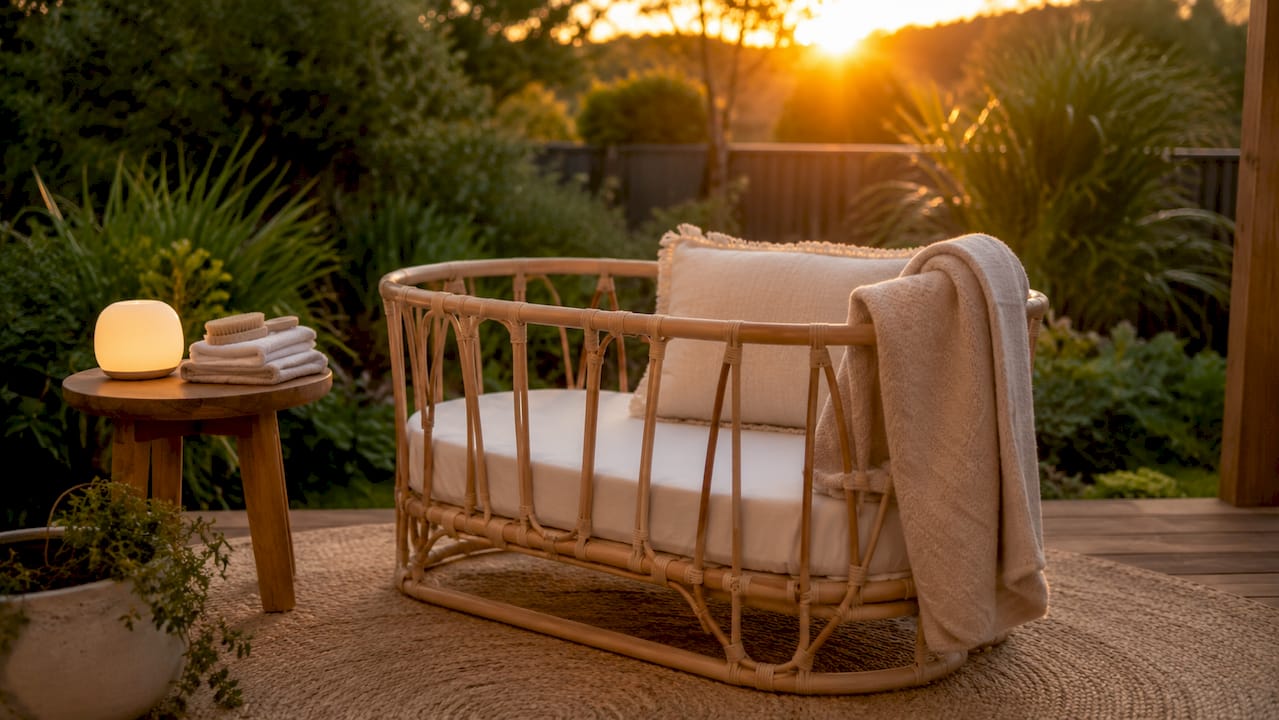
Feeding basics include bottles, a breast pump if you plan to express, and a quality nursing pillow. A nursing pillow is one of the most underrated items on any registry. It supports proper latch, reduces neck and back strain, and doubles as a tummy time prop as baby grows.
Nappy and changing items are high-volume, high-frequency needs. Add a change table or waterproof change mat, nappies in newborn and size 1, and fragrance-free wipes. These are ideal smaller gifts for guests with modest budgets.
Transport means a pram and a car seat. Never buy a second-hand car seat unless the full history is verifiable. Unseen damage from prior accidents makes second-hand seats a genuine safety risk.
Health and safety items round out the essentials: a digital thermometer, baby nail clippers, and a basic first-aid kit. These are inexpensive but critical, and guests often overlook them entirely.
Pro Tip: Add a few health and safety items to your registry at low price points. Guests who want to give something practical but affordable will snap these up fast.
2. Which clothing and bathing items are worth adding?
Clothing is the category where new parents most often overstock. Newborns outgrow clothes before they even wear them, making large wardrobes wasteful and expensive. Focus on practical staples only.
The clothing items worth adding to your registry include:
- Onesies and singlets in newborn and 000 sizes (5–7 of each is plenty)
- Grow suits with zip closures for easy nappy changes at night
- A couple of warm layers for cooler months, depending on your due date
- Scratch mittens and a sun hat
Skip the novelty outfits, shoes, and anything dry-clean only. Babies need easy-wash, easy-wear basics.
For bathing, keep it simple. A baby bath that sits inside your regular tub, two or three hooded towels, and a mild, fragrance-free wash covers everything you need. Skip the bath thermometer (your elbow works just as well) and the wipe warmer.
Pro Tip: Ask for clothing in sizes 00 and 0 rather than newborn. Many babies skip newborn sizing entirely, and 00 lasts longer.
Many expensive branded items add cost without meaningful functional difference. Generic basics from major Australian retailers perform just as well for everyday use.
3. What nice-to-have items genuinely add value?
Beyond the essentials, a handful of extras make a real difference to daily life with a newborn. These are the items guests love to give because they feel thoughtful rather than purely functional.
White noise machines are one of the most appreciated gifts new parents receive. They help babies settle and stay asleep, which directly affects parental sleep too. A quality white noise machine is a valued registry gift that parents use for months.
Baby carriers offer hands-free carrying that keeps baby calm and gives parents mobility. A structured carrier or a stretchy wrap suits newborns well. This is a strong group-gifting candidate given the price point.
Play mats and activity gyms support tummy time and sensory development from around six weeks. They are colourful, practical, and popular with guests who want something visually appealing to give.
Nursery decor and keepsakes that match the nursery aesthetic are consistently among the most cherished gifts. Coordinating colours or themes makes presents feel personal and considered.
Meal delivery subscriptions and postpartum recovery kits sit outside the traditional registry format but are deeply appreciated. If your guests ask for off-registry ideas, these are worth suggesting. A postpartum recovery checklist can help you identify what you actually need in those first weeks.
For bigger-ticket items like prams or nursing pillows, suggest group gifting. Most Australian registry platforms support this feature, and it takes the pressure off individual guests.
4. What items should you leave off the registry?
A registry loaded with unnecessary products wastes guests’ money and clutters your home. Certain popular items consistently fail to justify their cost.
Avoid products like wipe warmers, specialised bottle sterilisers, and elaborate nursery furniture sets initially. These inflate costs without clear benefit. A microwave steriliser bag costs a fraction of a dedicated unit and does the same job.
Nappy bins with proprietary refill cartridges lock you into ongoing costs. A regular bin with a lid and a good nappy sack works just as well. Expensive formula dispensers, bottle warmers with multiple settings, and baby food processors are items you may never use, depending on how feeding unfolds.
The principle is straightforward. If a regular household item does the same job, skip the baby-branded version. Your registry should reflect what you genuinely need, not what marketing suggests you should want.
5. How to organise your registry for guests and practicality
Registry timing matters. Start your registry around 20 weeks gestation and finalise it at least eight weeks before your baby shower. This gives guests enough lead time to purchase, especially for items that need to be shipped.
A well-organised registry includes items across a range of price points. Mixing high-value essentials with smaller affordable gifts makes the registry inclusive and removes pressure from guests with tighter budgets. Aim for roughly a third of items under $30, a third between $30 and $100, and the remainder above $100.
- List your absolute essentials first, with safety items at the top.
- Group items by category (sleep, feeding, bathing, transport) so guests can browse easily.
- Add a note on your registry or invitation that gifts are celebratory, not obligatory.
- Flag one or two big-ticket items clearly for group gifting.
- Update the registry as items are purchased to avoid duplicates.
Australian parents have strong options for registry setup, including dedicated baby registry platforms and major retailers with online wishlist tools. Choose a platform that allows guests to contribute to group gifts and sends you purchase notifications.
Pro Tip: Include your registry link on the shower invitation, but frame it as a helpful guide rather than a demand. Most Australian guests appreciate the direction.
Key takeaways
A practical Australian baby shower registry prioritises safety-compliant essentials, limits clothing to genuine staples, and balances price points to suit all guests.
| Point | Details |
|---|---|
| Safety compliance is non-negotiable | Car seats must meet AS/NZS 1754; cots must meet AS/NZS 8005. |
| Budget for $1,500 to $1,800 in essentials | This covers core needs before luxury or optional items are added. |
| Limit newborn clothing | Babies outgrow sizes fast; stick to onesies, grow suits, and a few layers. |
| Skip the “baby tax” items | Wipe warmers, nappy bins, and branded sterilisers add cost without clear benefit. |
| Start your registry at 20 weeks | Finalise at least eight weeks before the shower to give guests enough time. |
My honest take on building a registry that actually works
By Marietjie
The biggest mistake I see new parents make is building a registry around what looks good on Instagram rather than what they will actually use at 3am. Branded everything, colour-coordinated nursery sets, and gadgets with five functions they will never need. None of it matters when you are exhausted and just need something that works.
Safety compliance is the one area where you cannot cut corners. A second-hand car seat from a garage sale might look fine. You have no idea if it was in a minor accident. That risk is not worth saving $80.
The items that genuinely change daily life are boring to look at. A firm, supportive nursing pillow. A white noise machine. A change mat that wipes clean in seconds. These are the gifts that parents remember with gratitude six months in.
Communicate openly with your guests. A registry is not a demand list. Frame it as a guide, include items at every price point, and let people choose what feels right for them. That approach makes the whole experience warmer for everyone involved.
— Marietjie
A nursing pillow worth adding to your registry
The Zabbidoo nursing pillow is one of the most practical items you can add to your baby shower registry. It lifts baby 18cm to bring them up to mum rather than forcing mum to hunch down, which is the core problem most standard pillows ignore entirely.
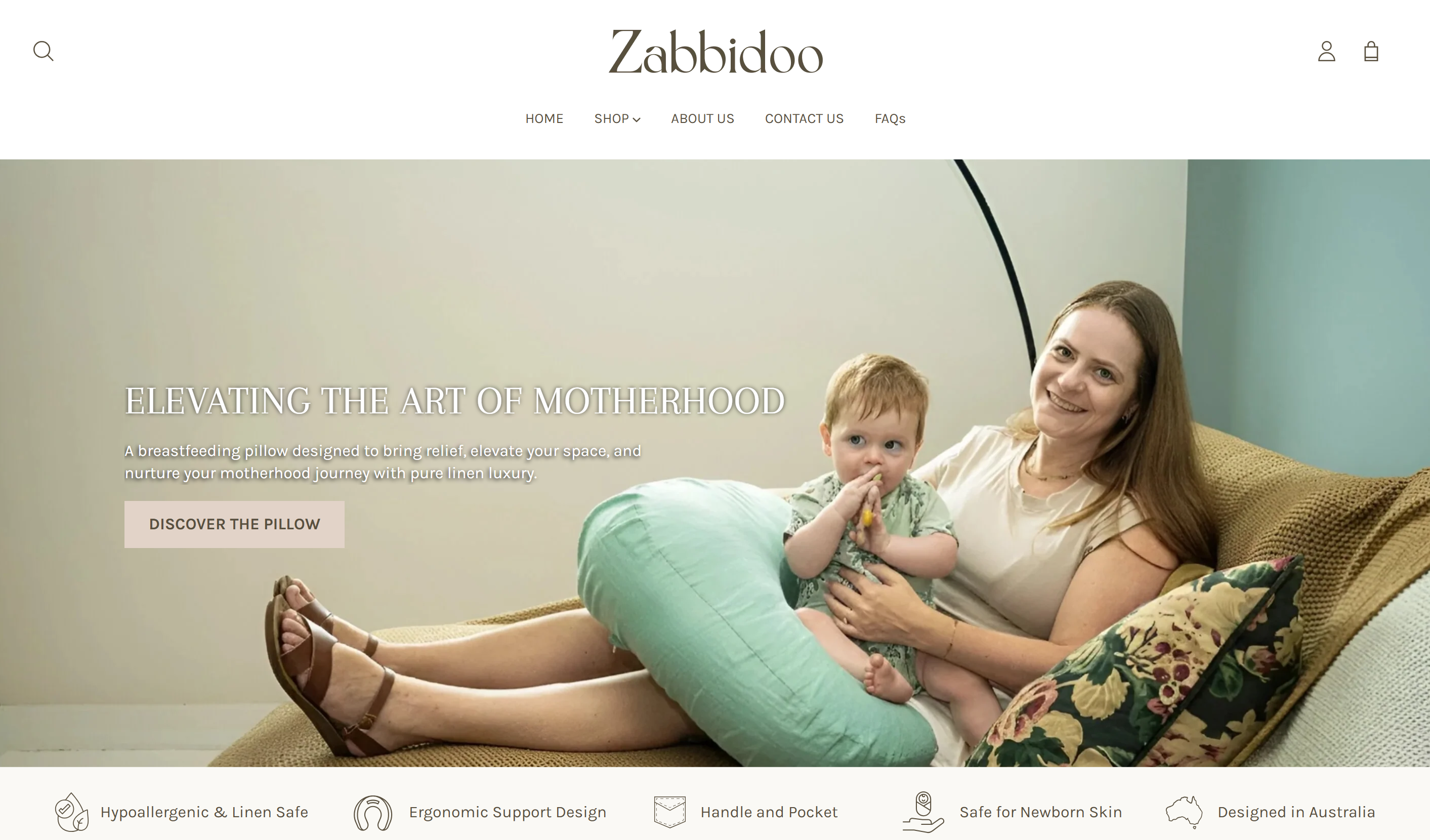
Zabbidoo’s pillow is made with French flax linen for breathability and holds its shape under pressure, unlike softer pillows that compress and lose support mid-feed. It works for breastfeeding, bottle feeding, and tummy time, making it genuinely multi-use. Australian parents can order directly from Zabbidoo’s nursing pillow page with local shipping. For more on why a nursing pillow makes a great gift, the Zabbidoo blog covers exactly what to look for.
FAQ
When should I set up my baby shower registry in Australia?
Start your registry at around 20 weeks gestation and finalise it at least eight weeks before your shower. This gives guests enough time to purchase and arrange delivery.
What safety standards apply to Australian baby products?
Car seats must comply with AS/NZS 1754 and cots with AS/NZS 8005. Always check compliance labels before purchasing or accepting second-hand items.
How much should I budget for baby registry essentials in Australia?
Australian parents typically spend $1,500 to $1,800 on core essentials. Luxury or optional extras can add another $1,000 or more on top of that.
What popular baby shower items are actually worth skipping?
Wipe warmers, specialised sterilisers, and elaborate nursery furniture sets are frequently purchased but rarely necessary. Simpler, cheaper alternatives exist for almost all of them.
Is it rude to share a baby registry with shower guests in Australia?
Sharing a registry is widely accepted and appreciated in Australia. Frame it as a helpful guide, include items at a range of price points, and make clear that gifts are celebratory, not expected.